Enhancing mathematical skills Math Worksheets for Ages 7-9
3 filtered results
-
From - To
Discover our engaging "Enhancing Mathematical Skills Math Worksheets for Ages 7-9"! Designed to bolster foundational math concepts, these worksheets provide a fun and interactive way for children to explore addition, subtraction, multiplication, and division. Each worksheet is thoughtfully crafted to promote critical thinking and problem-solving skills, helping students build confidence in their mathematical abilities. With a diverse range of activities, including puzzles, games, and real-world applications, our resources cater to various learning styles. Whether in the classroom or at home, these worksheets are perfect for nurturing a love for math and supporting academic growth. Start your child’s math journey today!
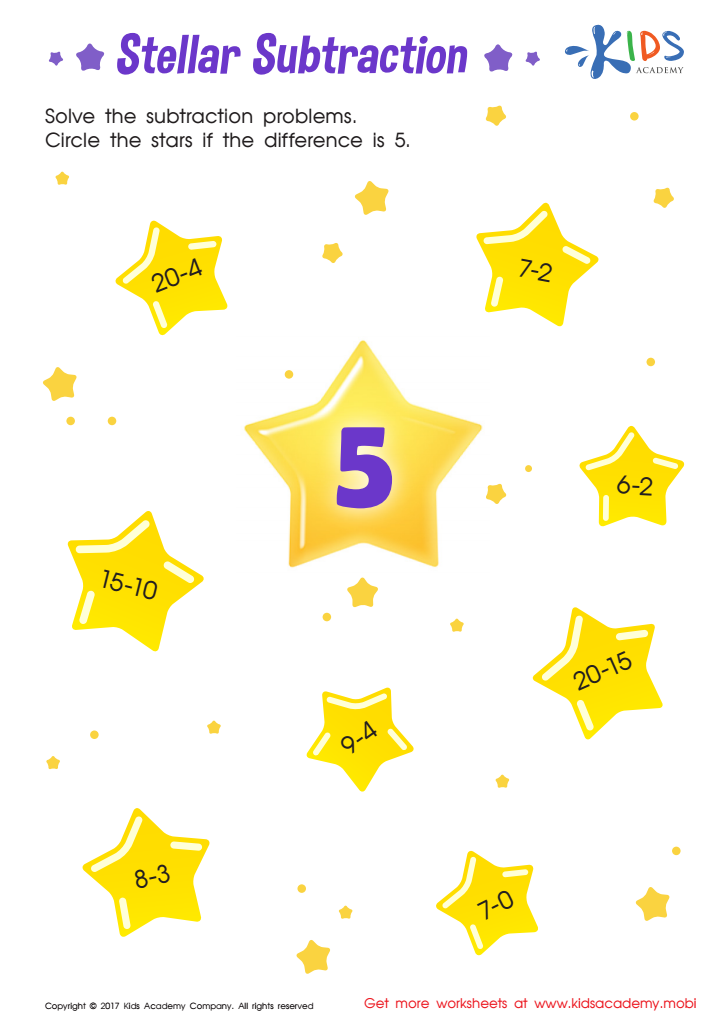
 Assign to My Students
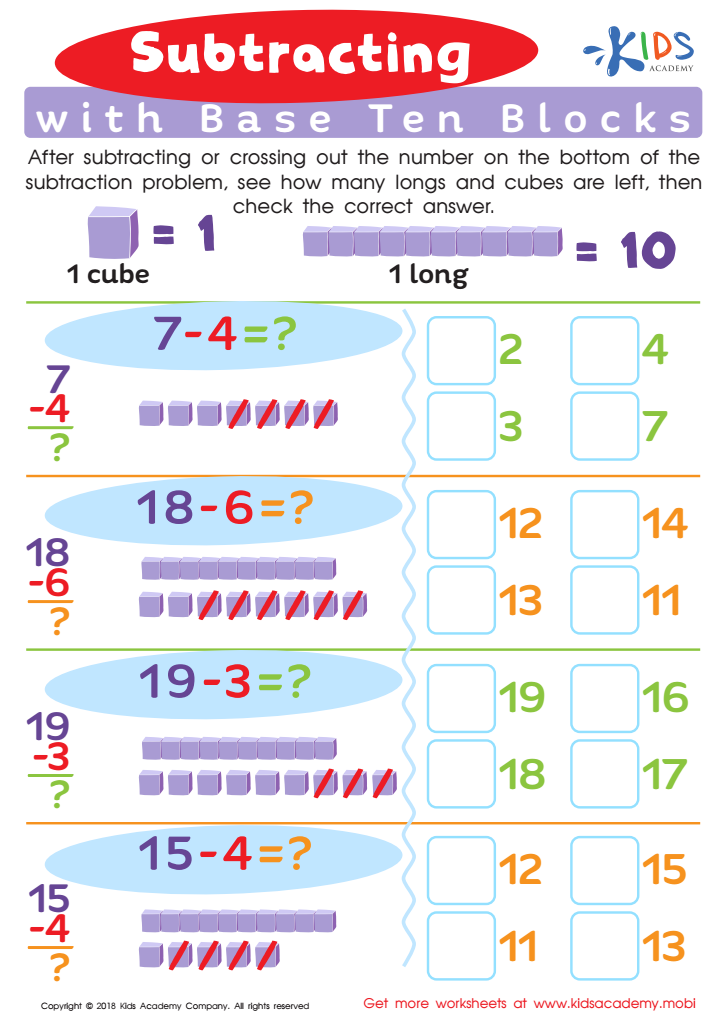
Subtracting With Base 10 Blocks Worksheet
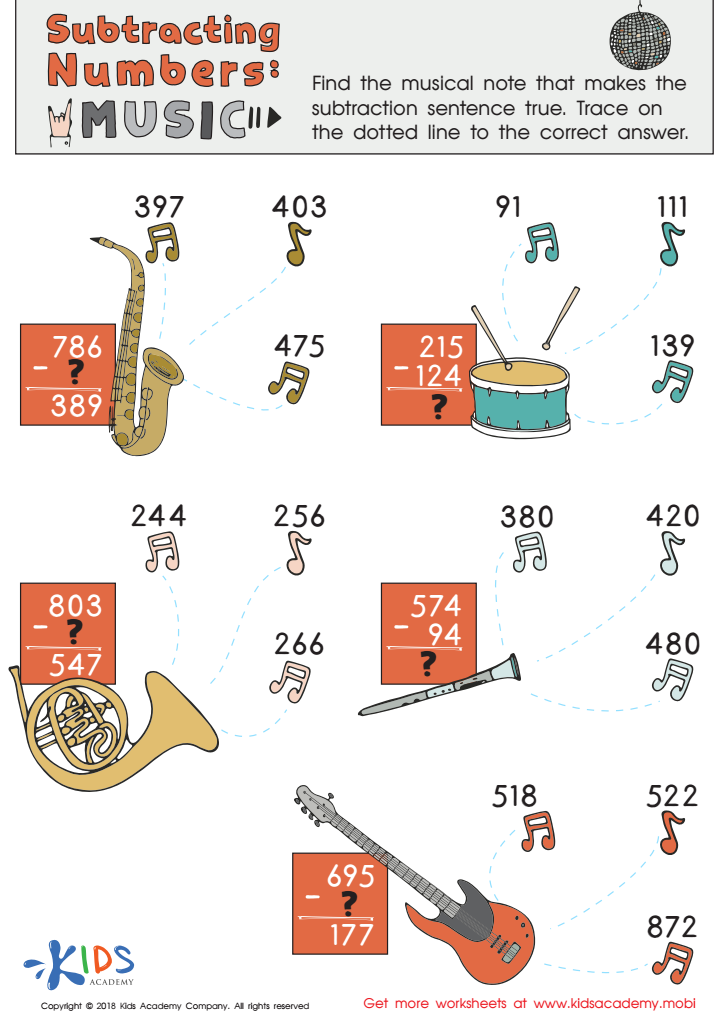
Subtracting Numbers: Music Worksheet






.jpg)
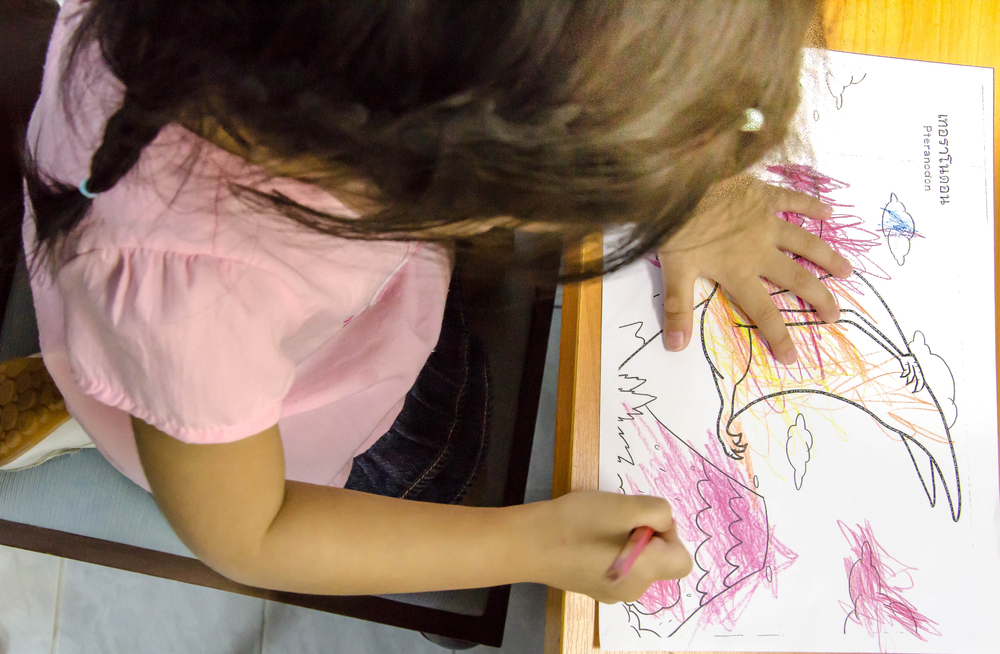
Enhancing mathematical skills in children aged 7 to 9 is crucial for their cognitive development and future academic success. At this age, children develop foundational numeracy skills, which form the basis for more complex mathematical concepts they will encounter in higher grades. Strengthening these skills helps improve critical thinking, problem-solving abilities, and logical reasoning.
Mathematics is not only vital for academic achievement but also for everyday life. Children learn to manage money, work with measurements, and understand time and quantity, equipping them with essential skills for practical situations. Moreover, proficiency in math boosts children’s confidence in their academic abilities, encouraging a positive attitude towards learning and exploration.
Parents and teachers play a key role in this developmental phase. Engaging children in fun, interactive math-related activities can foster a love for learning and make math enjoyable. By providing support and resources, they can help children tackle challenges, thus reducing math anxiety.
Finally, focusing on early mathematical skills promotes equity in education. It sets a strong foundation, especially for children from underserved backgrounds, helping bridge the achievement gap and ensuring all children have the opportunity to succeed academically. Prioritizing math education at this age is essential for fostering skillful, confident learners.








