Enhancing observation skills Math Worksheets for Ages 7-9
7 filtered results
-
From - To
Enhance your child's observation skills with our engaging math worksheets designed specifically for ages 7-9! These expertly crafted resources encourage young learners to recognize patterns, analyze data, and develop critical thinking abilities through interactive activities. Kids will explore various mathematical concepts while honing their observational skills, ensuring a solid foundation for future learning. Our worksheets not only make math enjoyable but also foster essential problem-solving techniques. Perfect for classroom use or at-home learning, these printable sheets are a great way to keep your child intellectually stimulated. Start sparking curiosity and building confidence in math today with our fun observation skills worksheets!
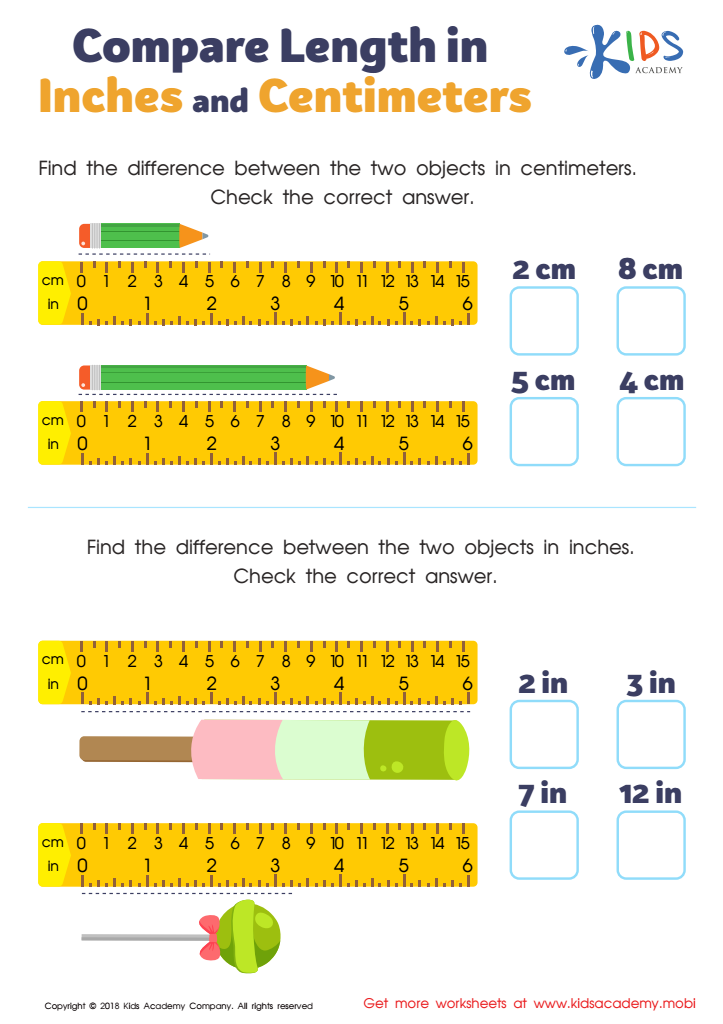
Compare Length in Inches and Centimeters Worksheet
 Assign to My Students
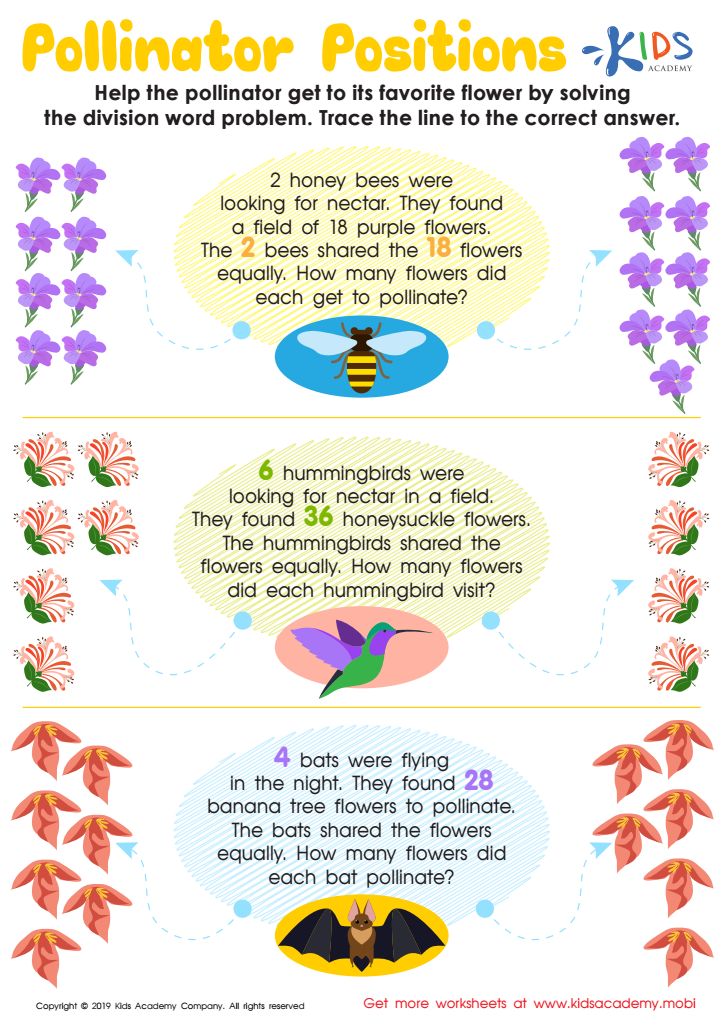
Pollinator Positions Worksheet
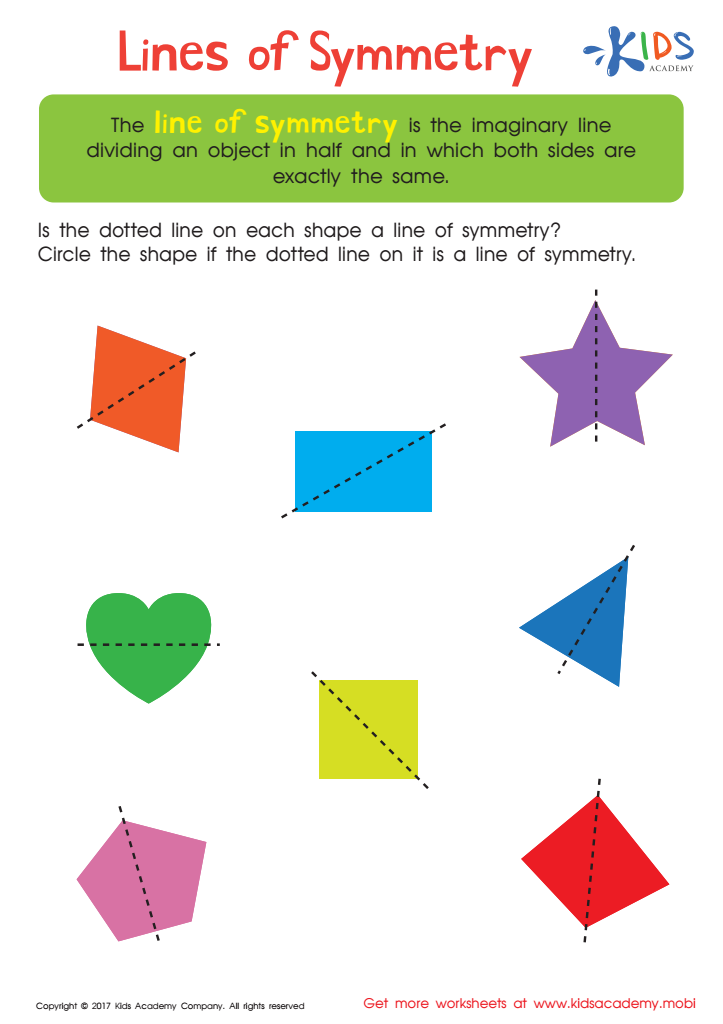
Lines of Symmetry Printable

Pets Tally Chart Worksheet
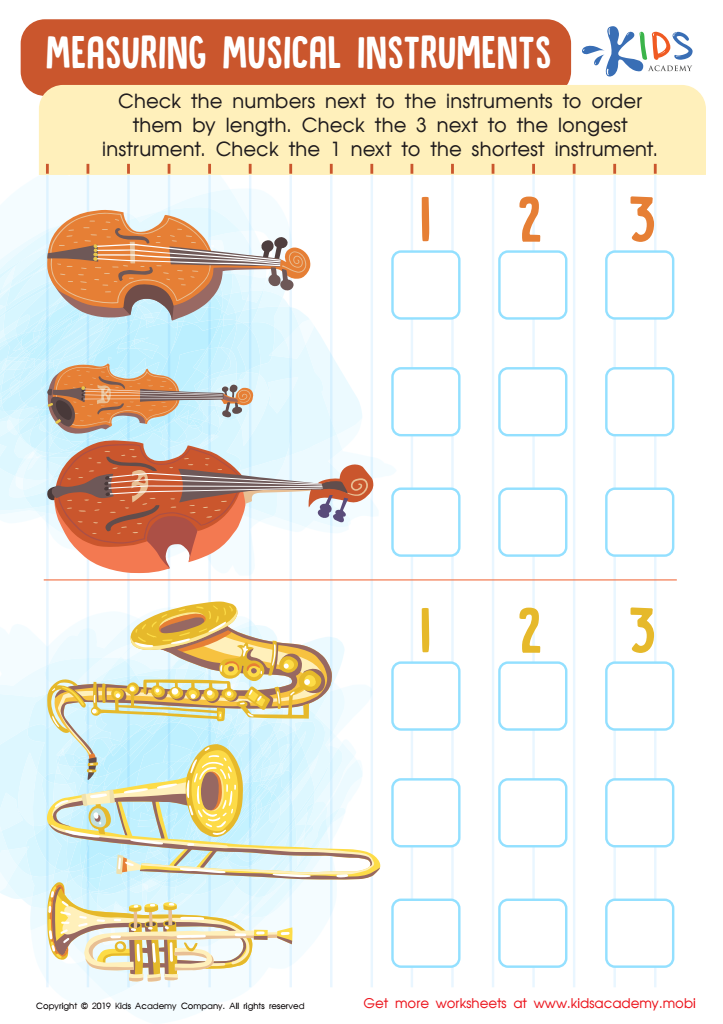
Measuring Musical Instruments Worksheet








Enhancing observation skills in math for children aged 7 to 9 is crucial for their development and understanding of mathematical concepts. At this stage, students are transitioning from basic arithmetic to more complex problem-solving. Observation skills allow children to examine patterns, relationships, and structures in numbers and shapes, fostering a deeper comprehension of mathematics.
Parents and teachers should care about strengthening these skills because they lay the foundation for critical thinking and analytical abilities. Children who can observe and identify patterns are better equipped to tackle mathematical challenges and engage in logical reasoning. This skill is not only beneficial for academic success but also for everyday problem-solving in real life.
Furthermore, nurturing observation skills promotes curiosity and exploration, encouraging children to ask questions and seek relationships between different concepts. It helps develop persistence as they learn to analyze situations thoughtfully before arriving at solutions. Ultimately, investing time in enhancing observation skills at this formative age cultivates confident learners who are not intimidated by math, setting the stage for lifelong mathematical understanding and success. By prioritizing these skills, parents and teachers contribute significantly to their children's academic Journey and overall cognitive development.








