Fine motor skills development Math Worksheets for Ages 7-9
7 filtered results
-
From - To
Discover engaging fine motor skills development math worksheets specially designed for children ages 7-9. Our collection helps fortify essential hand-eye coordination while enhancing mathematical understanding. These interactive worksheets feature a variety of fun activities that encourage tracing, cutting, and connecting, making mathematics an enjoyable hands-on experience. Ideal for at-home learning or classroom environments, these resources aim to build confidence and encourage skill mastery. Tailored to align with educational standards, our fine motor skills worksheets ensure that children simultaneously develop their dexterity and mathematical skills, laying a strong foundation for future learning. Start your child's learning journey today!
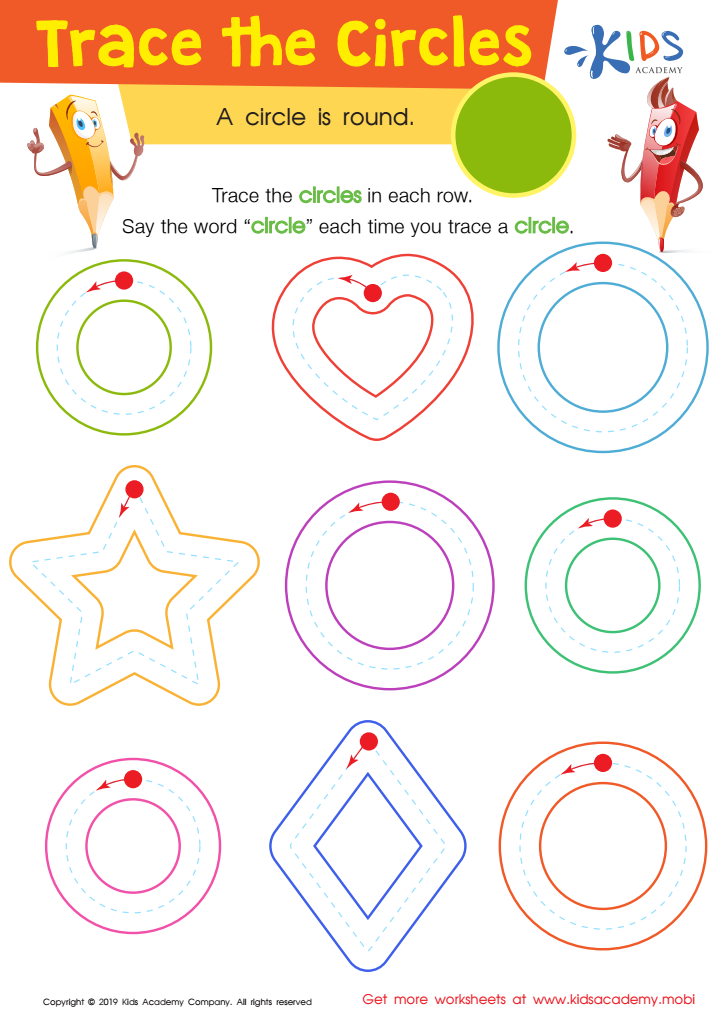
Trace The Circles Worksheet
 Assign to My Students
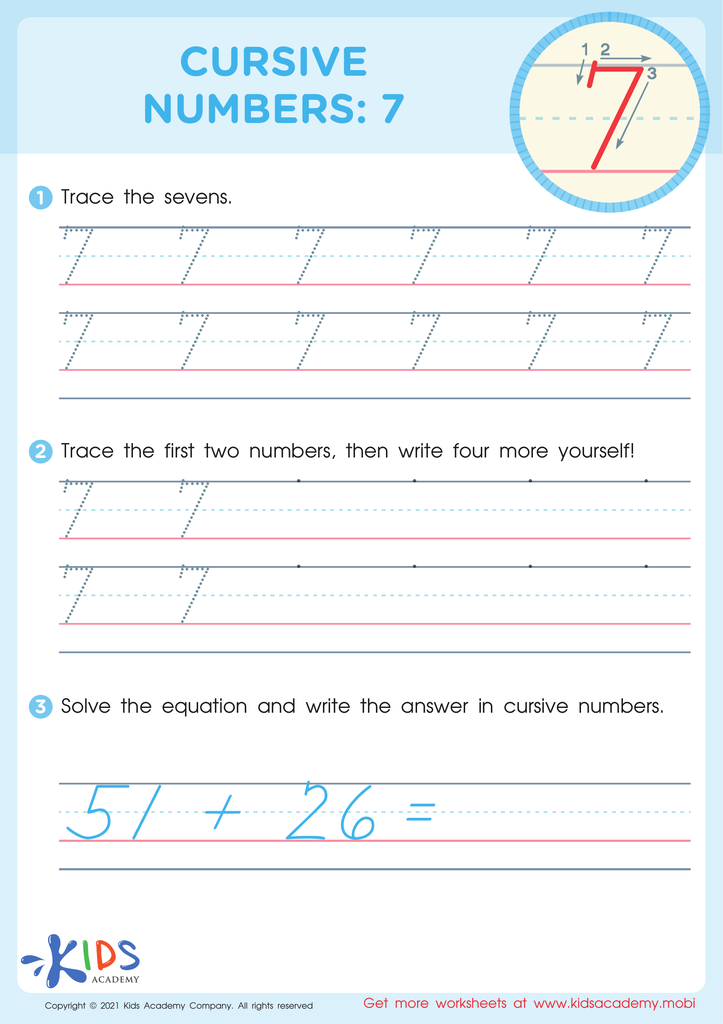
Cursive Numbers: 7 Worksheet
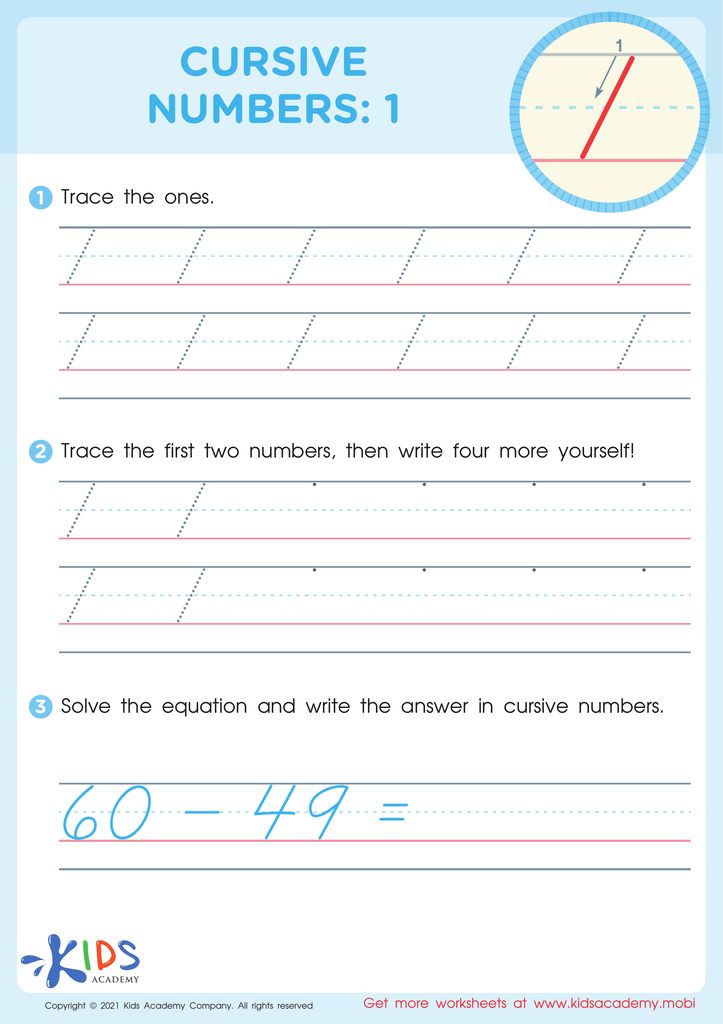
Cursive Numbers: 1 Worksheet
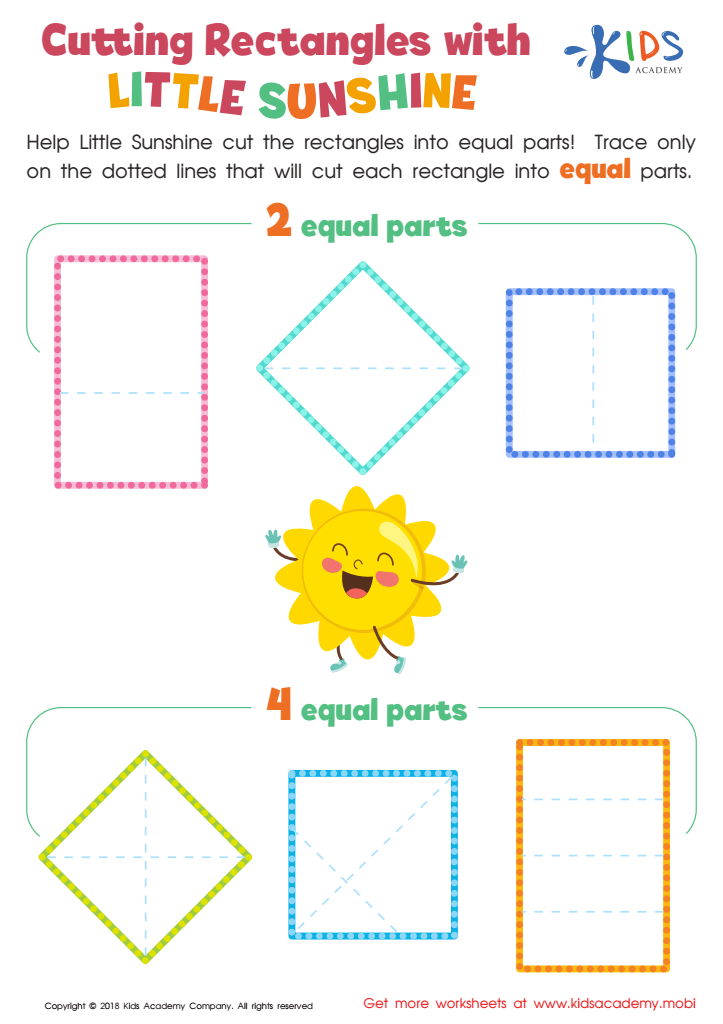
Cutting Rectangles with Little Sunshine Worksheet
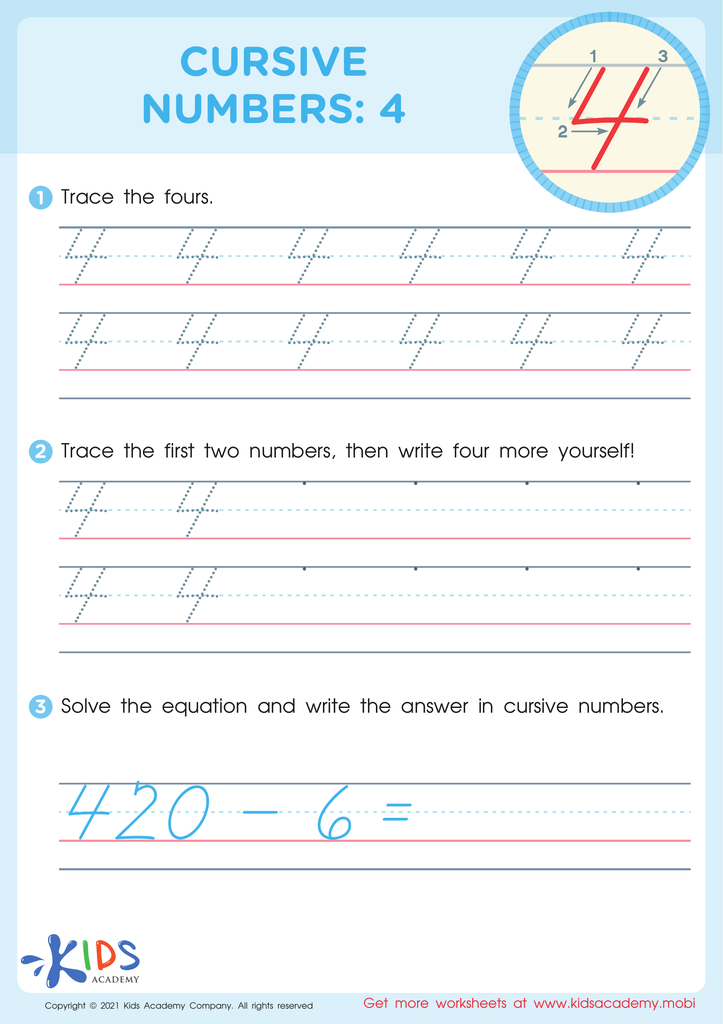
Cursive Numbers: 4 Worksheet



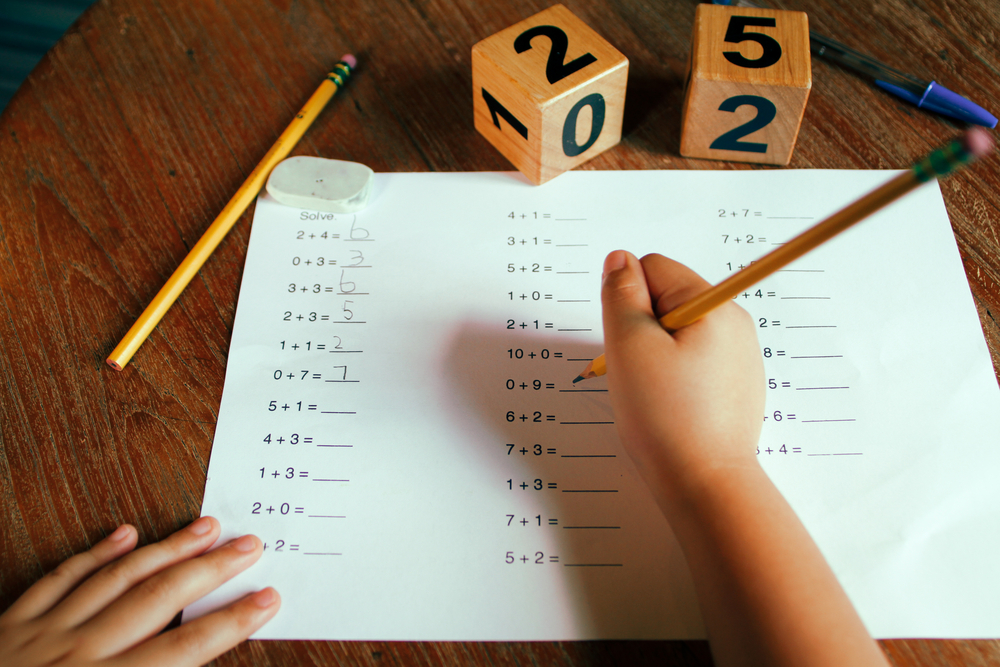




Fine motor skills development is crucial for children aged 7-9, especially in the context of math. As children at this age transition into more complex mathematical concepts, they also engage in activities that require precise hand-eye coordination and dexterity, such as drawing shapes, measuring with rulers, and using manipulatives like counting beads or blocks.
Strong fine motor skills allow children to write numbers legibly, perform calculations using tools, and ultimately foster a positive attitude towards learning math. When children can effectively manipulate objects, they become more confident problem-solvers. Moreover, fine motor development helps improve focus and concentration, which are essential for understanding and applying mathematical concepts.
Parents and teachers should prioritize these skills because they are foundational for academic success and independence. If fine motor skills lag, children may struggle with activities in math that seem simple but require accurate hand movements. This can lead to frustration and a negative perspective on math as they progress in their education. Therefore, supporting fine motor skills development enhances children’s math experiences, promotes a love for learning, and equips them with the necessary tools for success in their educational journey.








