Numerical reasoning Math Worksheets for Ages 7-9
3 filtered results
-
From - To
Our "Numerical Reasoning Math Worksheets for Ages 7-9" are designed to enhance critical thinking and problem-solving skills through engaging numerical activities. Each worksheet challenges young learners with real-world math scenarios, ensuring they grasp core math concepts in a fun, interactive way. From basic arithmetic to complex reasoning problems, these worksheets nurture a deep understanding of numbers, patterns, and mathematical relationships. Ideal for classroom use or at-home practice, they support curriculum standards and build a solid foundation in mathematics, empowering children to tackle everyday math challenges confidently. Download today and make learning math an adventure!
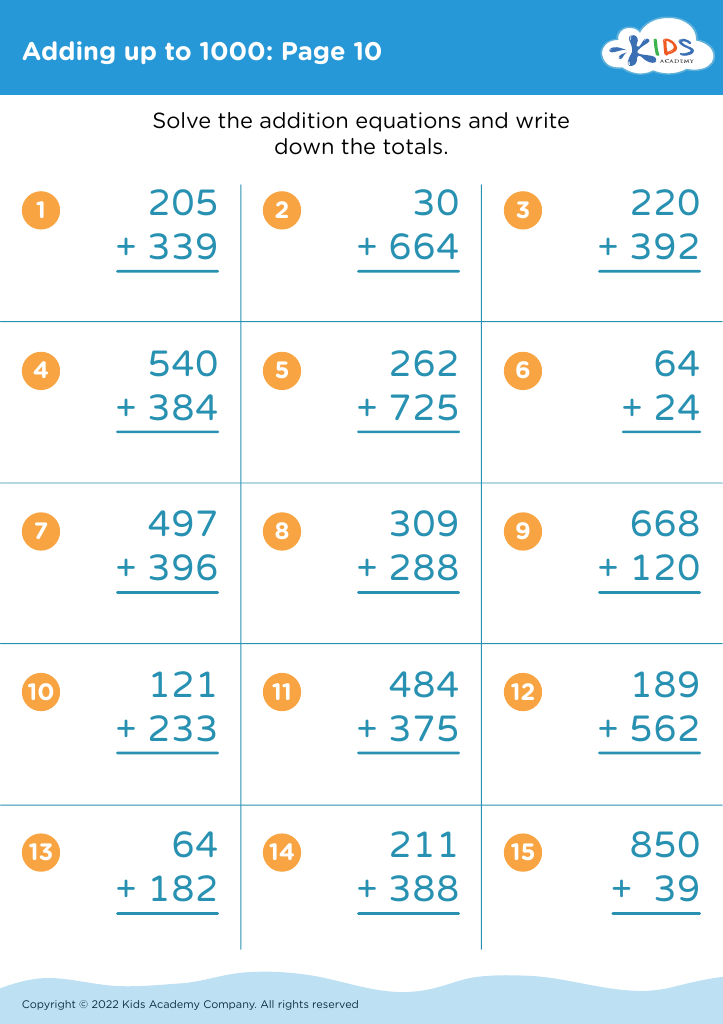
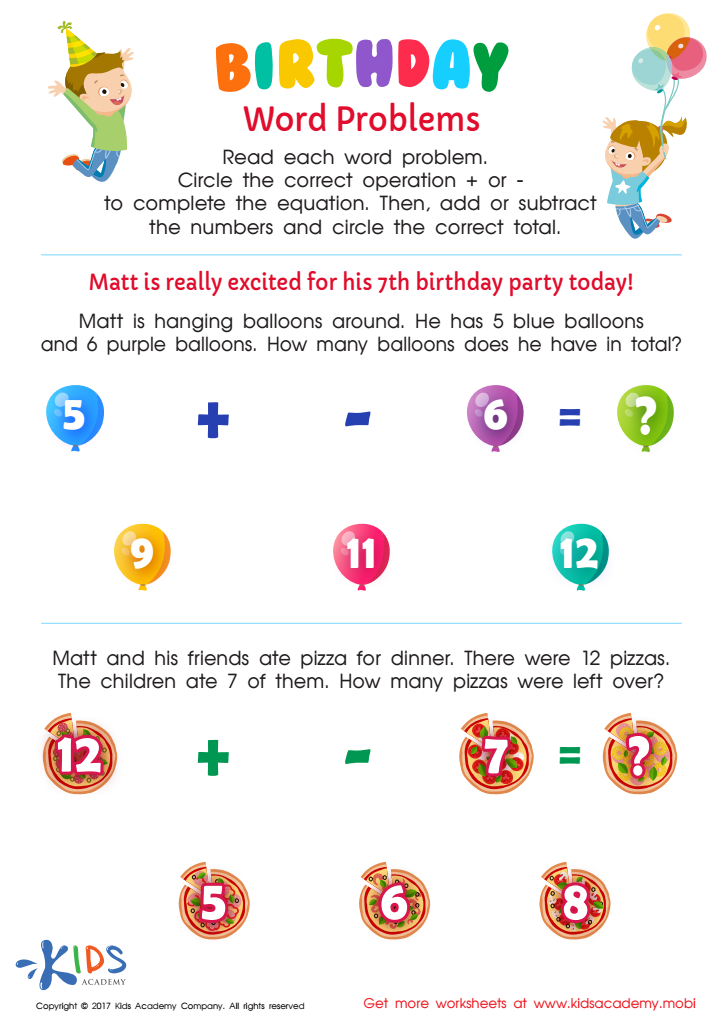
Birthday Word Problems Substraction Worksheet
 Assign to My Students








Numerical reasoning math for ages 7-9 is foundational for several critical reasons, and both parents and teachers should care deeply about it. During these early elementary years, children are not just learning to add, subtract, multiply, and divide; they are developing the ability to think logically and solve problems, skills that are essential throughout life.
Firstly, numerical reasoning enhances cognitive development. It requires children to make connections, see patterns, and understand the relationships between numbers. These abilities are transferable to all areas of learning and are particularly important in developing critical thinking and analytical skills.
Secondly, solid numerical reasoning skills build confidence. Children who grasp these concepts early on are more likely to enjoy math and less likely to develop math anxiety, which can impede academic progress in later years. Confidence in math can also boost their overall academic self-esteem.
Furthermore, numerical reasoning is practical. It underpins everyday tasks, such as shopping, cooking, and managing time. When children understand numbers and operations, they gain tools that support everyday decision-making and financial literacy.
Lastly, strong numerical reasoning is critical for future STEM (Science, Technology, Engineering, and Mathematics) opportunities. By nurturing these skills early, we open doors to advanced educational and career choices. Parents and teachers, therefore, play a pivotal role in fostering numerical reasoning, laying the groundwork for lifelong learning and success.








