
Practice counting Math Worksheets for Ages 7-9
6 filtered results
Difficulty Level
Grade
Age
-
From - To
Subject
Activity
Standards
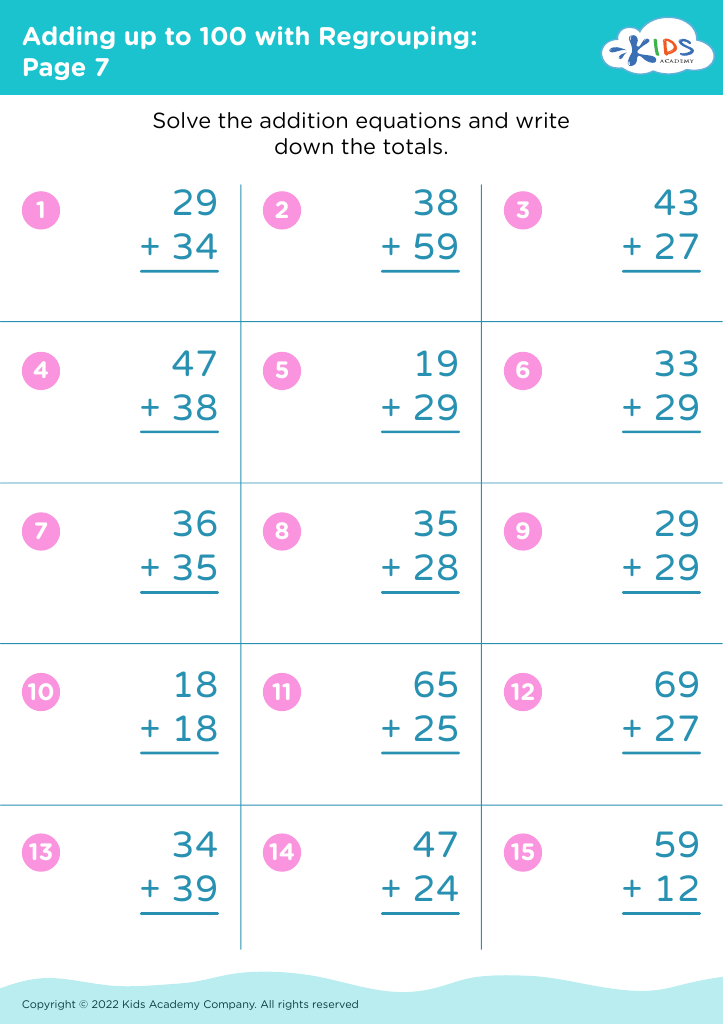
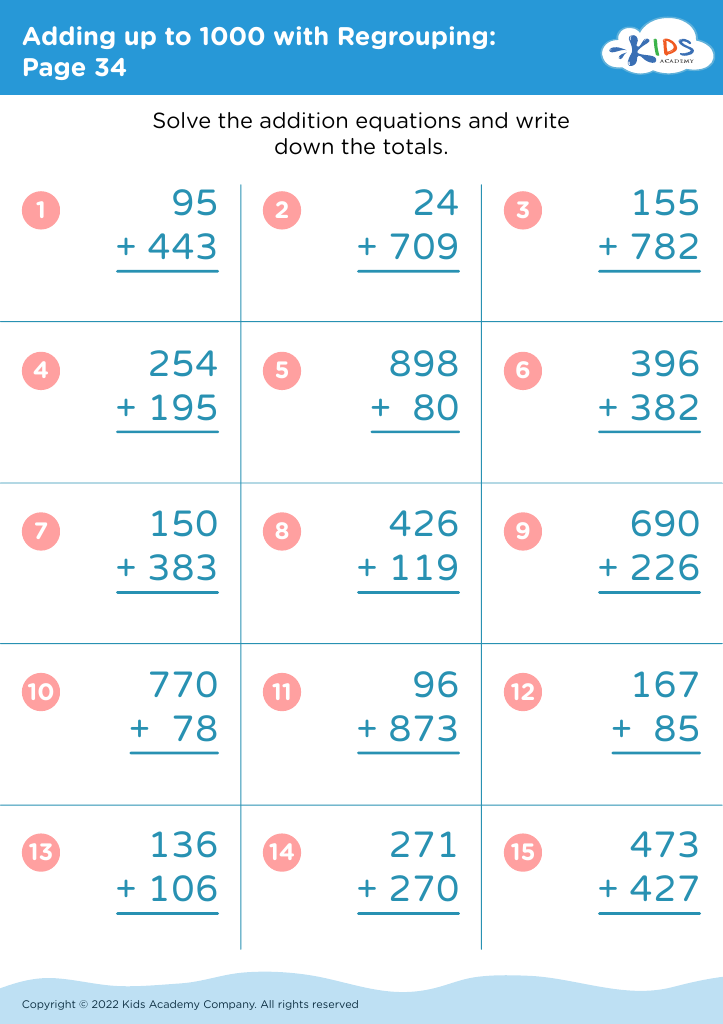
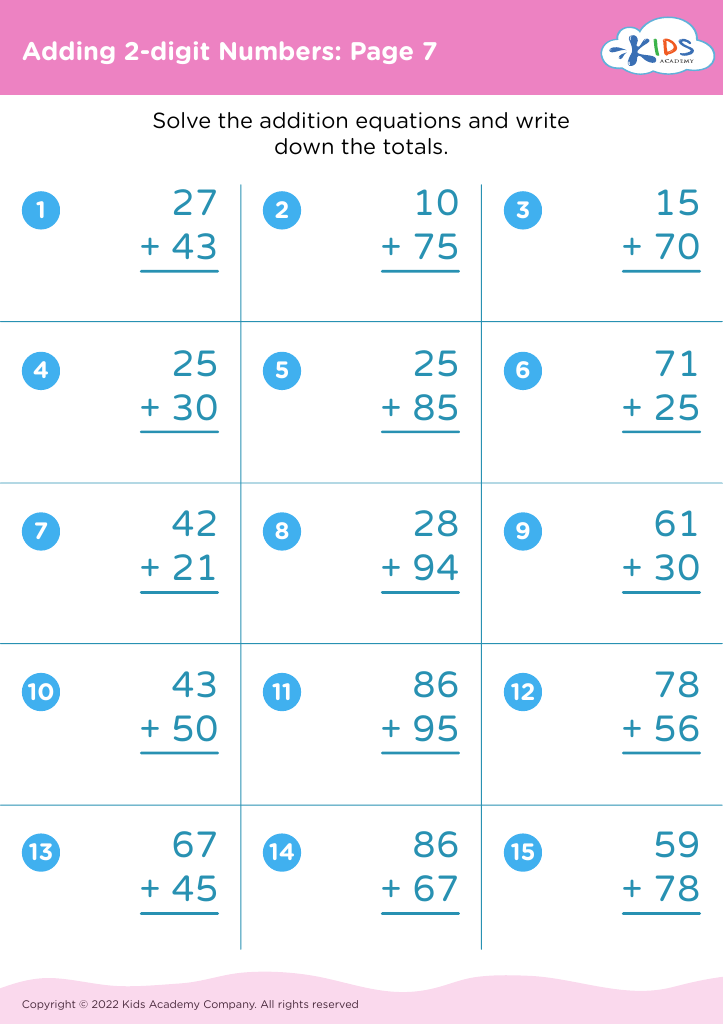
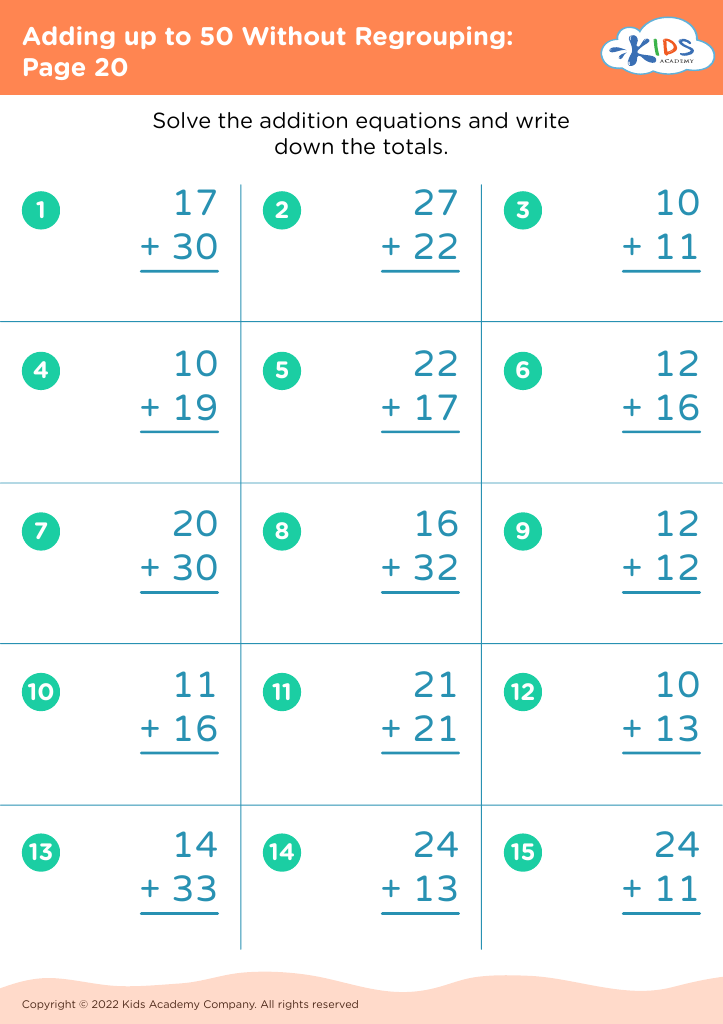
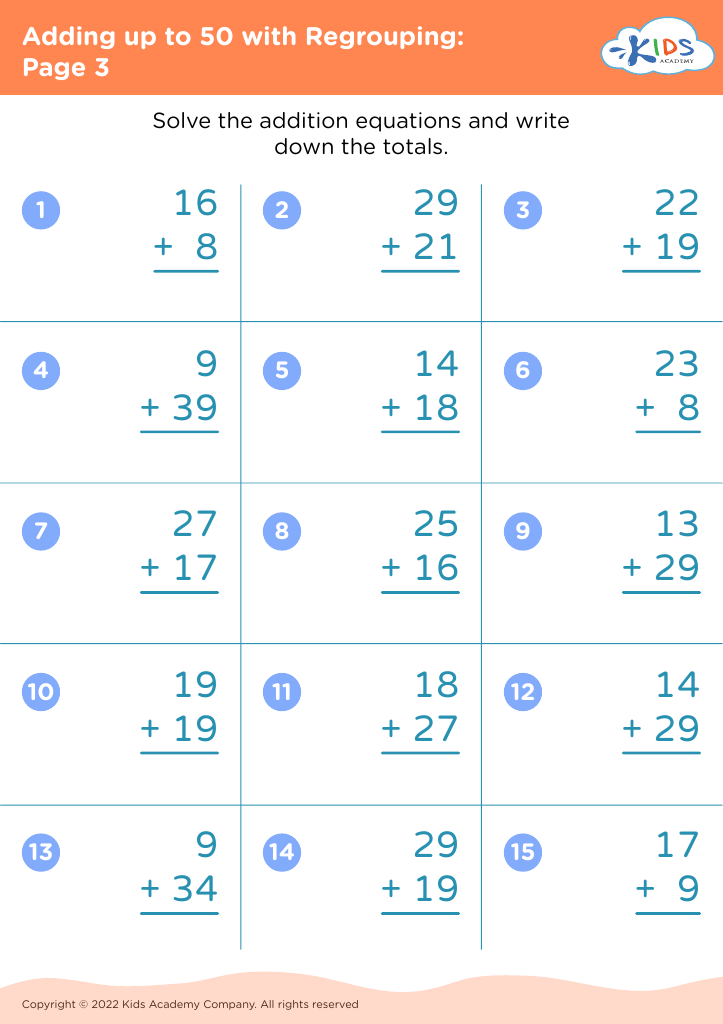
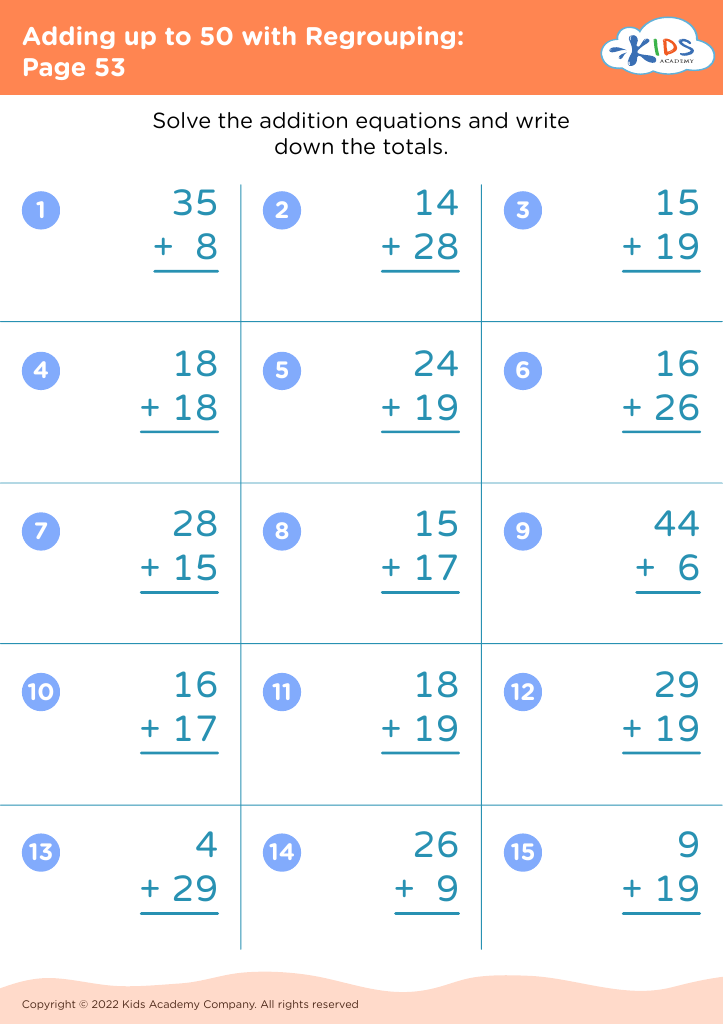
Enhance your child’s math skills with our engaging Practice Counting Math Worksheets designed specifically for ages 7-9. These worksheets provide fun and interactive activities that help young learners master counting, reinforcing essential numerical concepts through colorful visuals and relatable contexts. From basic counting exercises to more complex sequences, each worksheet is crafted to make learning enjoyable while building confidence in math proficiency. Perfect for both classroom use and at-home practice, our counting worksheets promote critical thinking and foster a love for math. Download them today and watch as your child transforms counting practice into an exciting educational adventure!
Favorites
With answer key
Interactive
Join Kids Academy for Free
Who is primarily going to use this learning content?







Practice counting math for ages 7-9 is crucial for children's overall mathematical development and cognitive skills. At this age, children are transitioning from basic counting to more complex mathematical concepts, such as addition, subtraction, and understanding place value. Consistent counting practice enhances their numeracy skills, which are foundational for future learning.
Parents and teachers should care about counting practice because it builds children's confidence in math. When they successfully count, they develop a sense of achievement, fostering a positive attitude toward math. This confidence plays a significant role in their willingness to tackle more challenging concepts later on.
Moreover, counting helps improve children's focus and attention. Engaging in practice encourages them to concentrate and persevere through challenges. Additionally, these skills promote critical thinking and problem-solving abilities, essential in both academic and real-world situations.
Lastly, counting practice can be a fun, interactive experience. Parents and teachers can incorporate games, songs, and activities, making learning enjoyable and engaging. These experiences not only deepen children's understanding of numbers but also strengthen the bond between adults and children through shared learning moments. Overall, nurturing counting skills lays the groundwork for mathematical proficiency and a lifelong appreciation for learning.








