
Understand number relationships Math Worksheets for Ages 7-9
3 filtered results
Difficulty Level
Grade
Age
-
From - To
Subject
Activity
Standards
Discover our "Understand Number Relationships" math worksheets designed for children aged 7-9! These engaging, printable resources enhance critical thinking by exploring essential concepts such as comparing quantities, recognizing patterns, and understanding addition and subtraction relationships. Ideal for reinforcing classroom learning, our worksheets promote independent practice and make mastering number relationships fun. Each activity encourages kids to develop problem-solving skills and numerical understanding through interactive challenges. With colorful illustrations and a variety of exercises, these worksheets capture young learners' interest while building a solid foundation in mathematics. Empower your child’s mathematical journey—download our comprehensive worksheets today!
Favorites
With answer key
Interactive
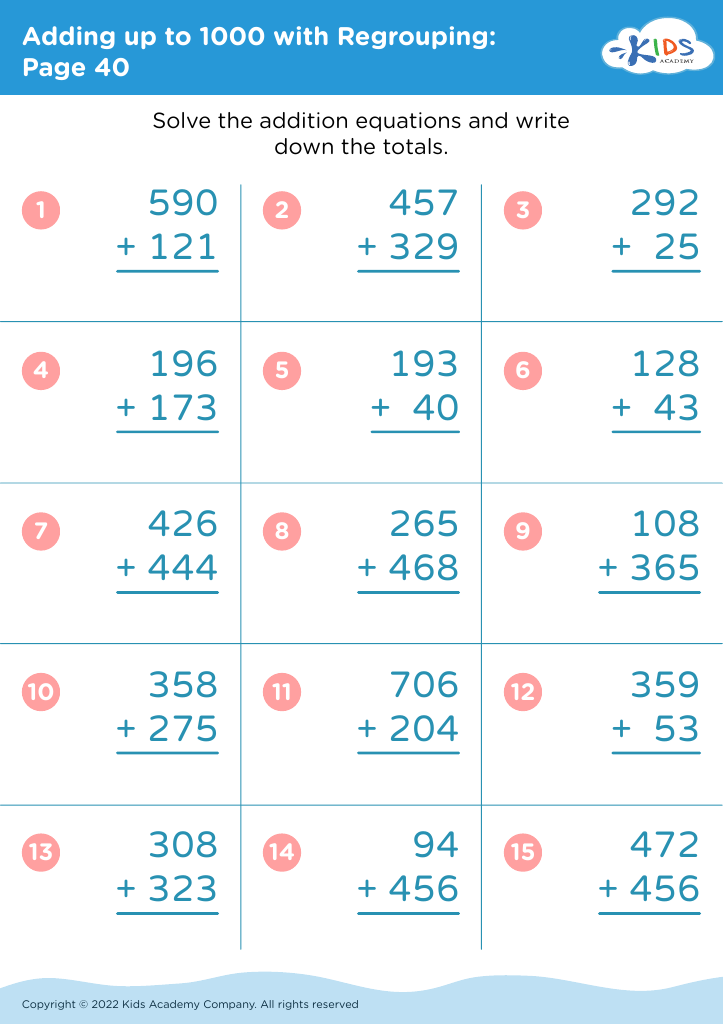
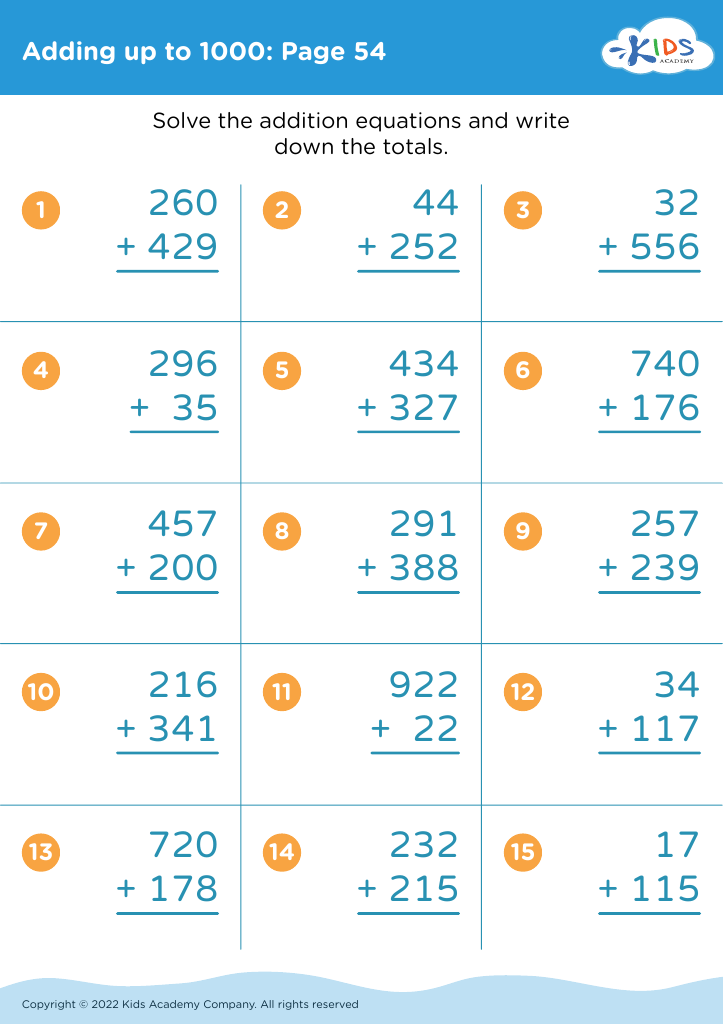
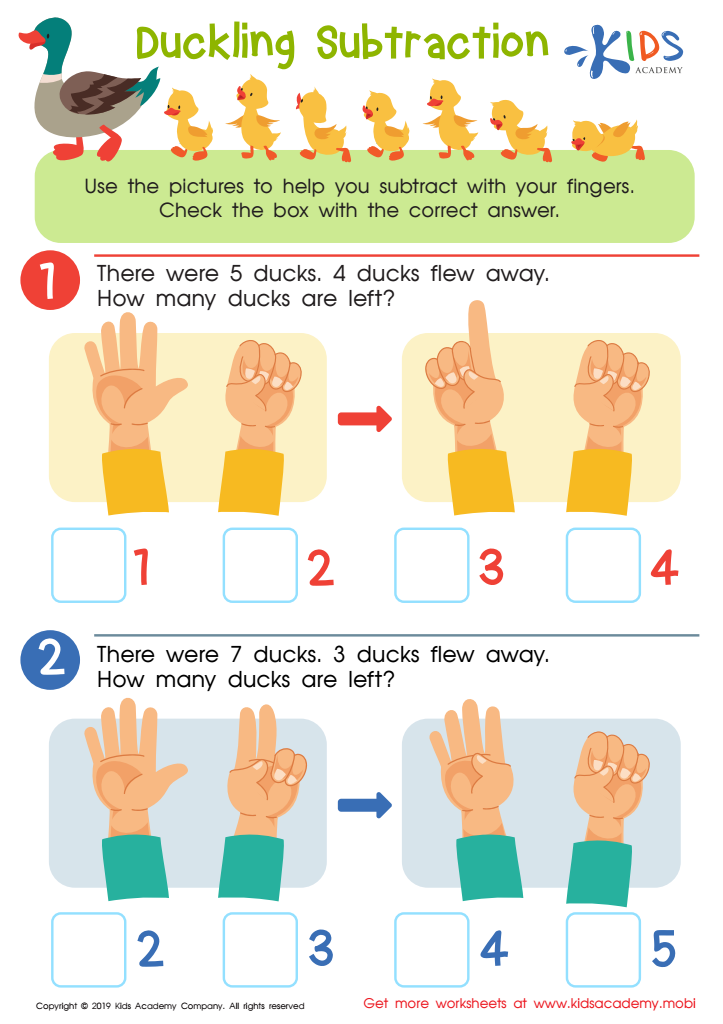
Duckling Subtraction Worksheet
Help your students learn equations and math with this fun worksheet. There are two questions to solve with the help of the pictures. Ask them to subtract with their fingers and check the box with the correct answer. This makes math easier and more enjoyable!
 Assign to My Students
Duckling Subtraction Worksheet
Worksheet
Join Kids Academy for Free
Who is primarily going to use this learning content?








Understanding number relationships is crucial for children aged 7-9, as it lays the foundation for their mathematical skills and overall cognitive development. This stage of learning involves grasping concepts such as addition, subtraction, multiplication, division, and even basic fractions. When children comprehend how numbers interact—such as recognizing patterns, and understanding the value of numbers in relation to each other—they develop problem-solving skills that are essential not just in math, but across all areas of learning.
Parents and teachers should prioritize this understanding because it allows children to become confident, independent mathematicians. By exploring relationships between numbers, children learn to apply various strategies to solve problems rather than relying on rote memorization. This cultivates a deeper understanding of mathematical concepts and helps them tackle more complex problems in later grades.
Furthermore, a strong grasp of number relationships encourages critical thinking and logical reasoning. In an increasingly quantitative world, the ability to think mathematically is invaluable for academic success and daily life. Engaging children with practical examples around them, such as shopping or cooking, enhances their learning experience. Therefore, investing time in this foundational skill is vital for both parents and teachers.








