Understanding number sequences Math Worksheets for Ages 7-9
6 filtered results
-
From - To
Introduce your child to the world of number sequences with our engaging Math Worksheets for ages 7-9. Specifically designed to enhance their ability to identify patterns and predict the next numbers in a sequence, these worksheets support early math skills development. From simple counting sequences to more complex patterns, each activity is crafted to provide a fun and educational experience. By working through these exercises, children not only boost their problem-solving skills but also build a strong foundation for future math concepts. Download our printable worksheets today and watch your child’s math confidence soar!
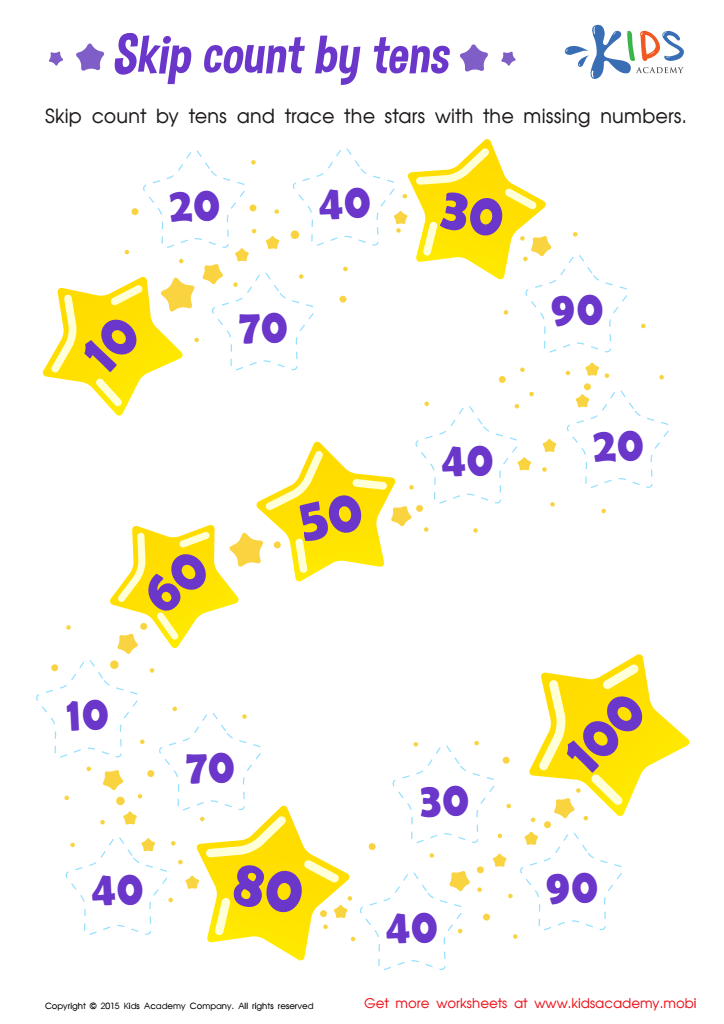
Learn dozens: Skip Count by Tens Printable
 Assign to My Students
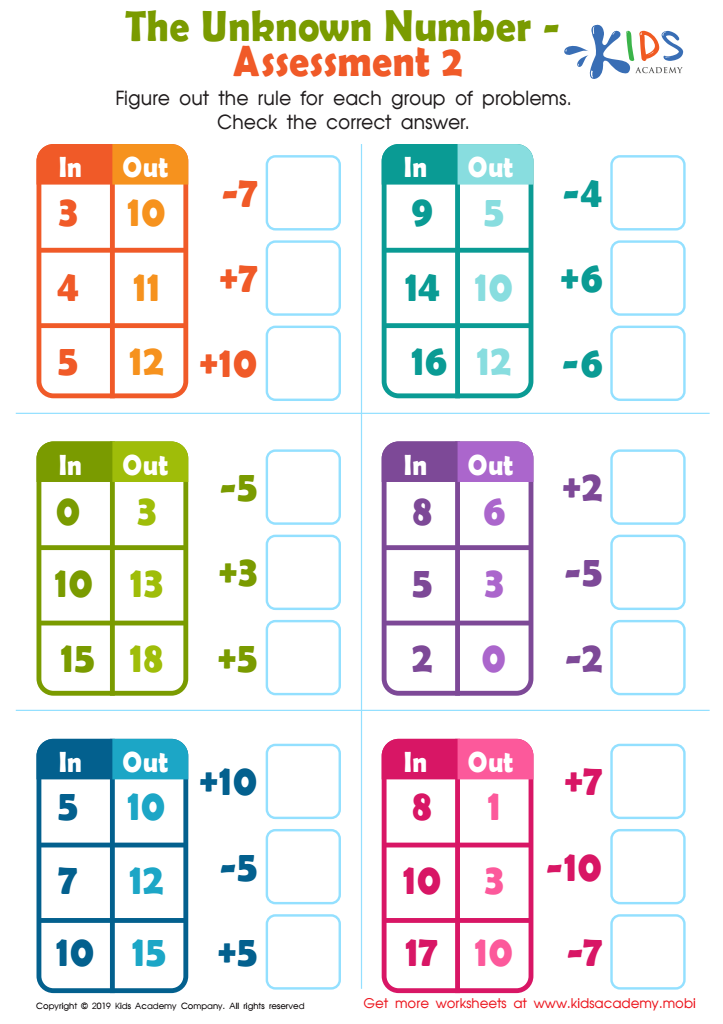
The Unknown Number - Assessment 2 Worksheet
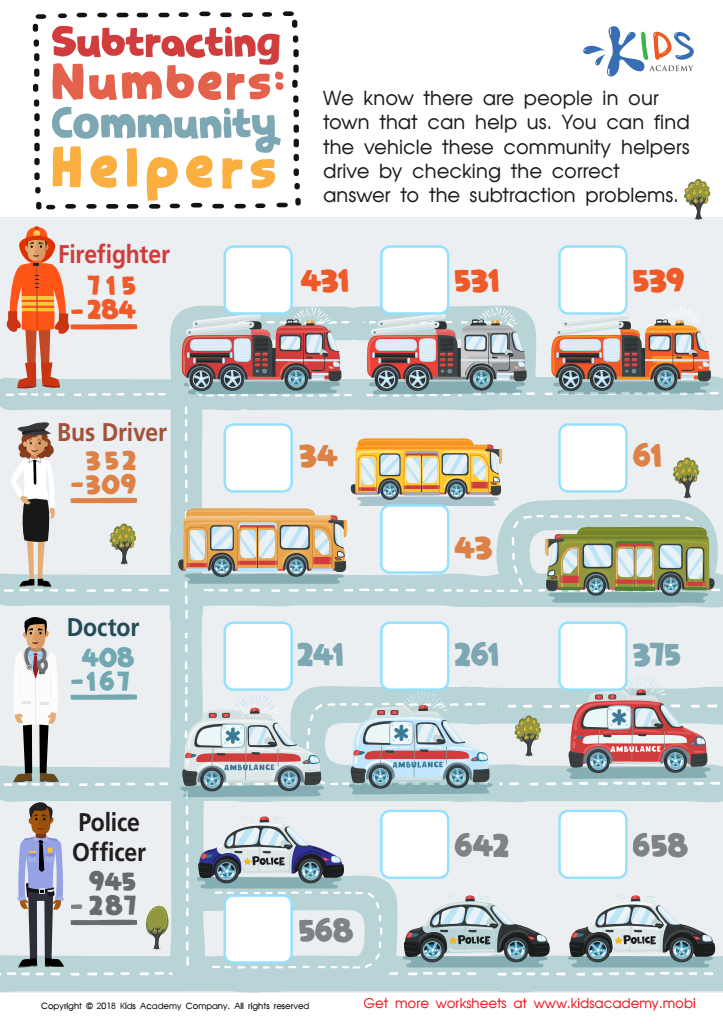
Subtracting Numbers: Community Helpers Worksheet








Understanding number sequences is foundational in early mathematics education for children ages 7-9, and this knowledge benefits both parents and teachers in fostering a child's academic growth. At this developmental stage, number sequences help children grasp fundamental concepts such as counting, addition, subtraction, and recognizing patterns. When children understand how numbers follow a specific order, they develop essential problem-solving skills that adhere to logical and structured thinking.
For teachers, incorporating number sequences into lessons aids in creating a robust mathematical framework that students can rely on as they encounter more complex topics. It also engages students in interactive and playful learning experiences, such as games or story problems, making math fun and accessible.
Parents, on the other hand, support learning at home by reinforcing these concepts through everyday activities, such as counting steps, arranging utensils, or sequencing events in a daily routine. This not only strengthens their child’s mathematical abilities but also builds confidence and demonstrates the real-world relevance of numbers.
Overall, a solid grasp of number sequences at a young age prepares children for success in future academic endeavors, promotes a positive attitude toward mathematics, and equips them with crucial analytical and cognitive skills essential for lifelong learning.








