
Understanding Quantities Math Worksheets for Ages 7-9
6 filtered results
Difficulty Level
Grade
Age
-
From - To
Subject
Activity
Standards
Our "Understanding Quantities Math Worksheets for Ages 7-9" are expertly designed to provide young learners with a fundamental grasp of quantities and numbers. These engaging worksheets help kids practice essential math skills including counting, comparing, and ordering quantities through a variety of fun and educational activities. Perfect for classroom use or at-home practice, these worksheets encourage critical thinking and problem-solving, setting a strong foundation for future math success. With our visually appealing design and clear instructions, your child will enjoy learning crucial quantity concepts as they develop confidence and proficiency in math. Start enhancing your child’s math skills today!
Favorites
With answer key
Interactive
 Assign to My Students
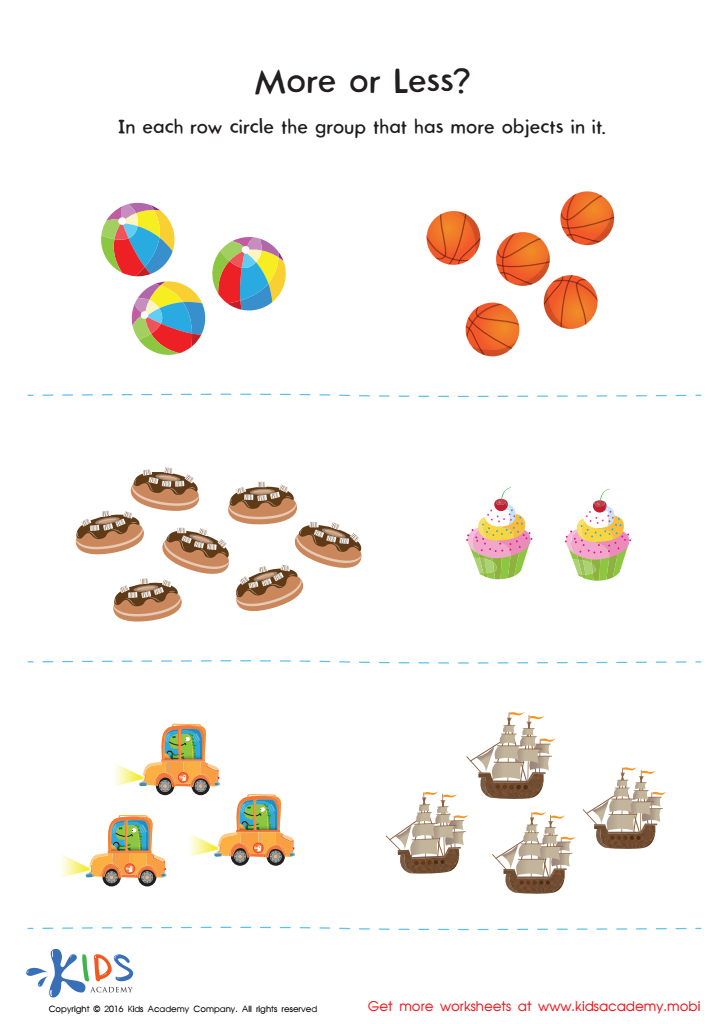
More or Less Size Worksheet
Worksheet
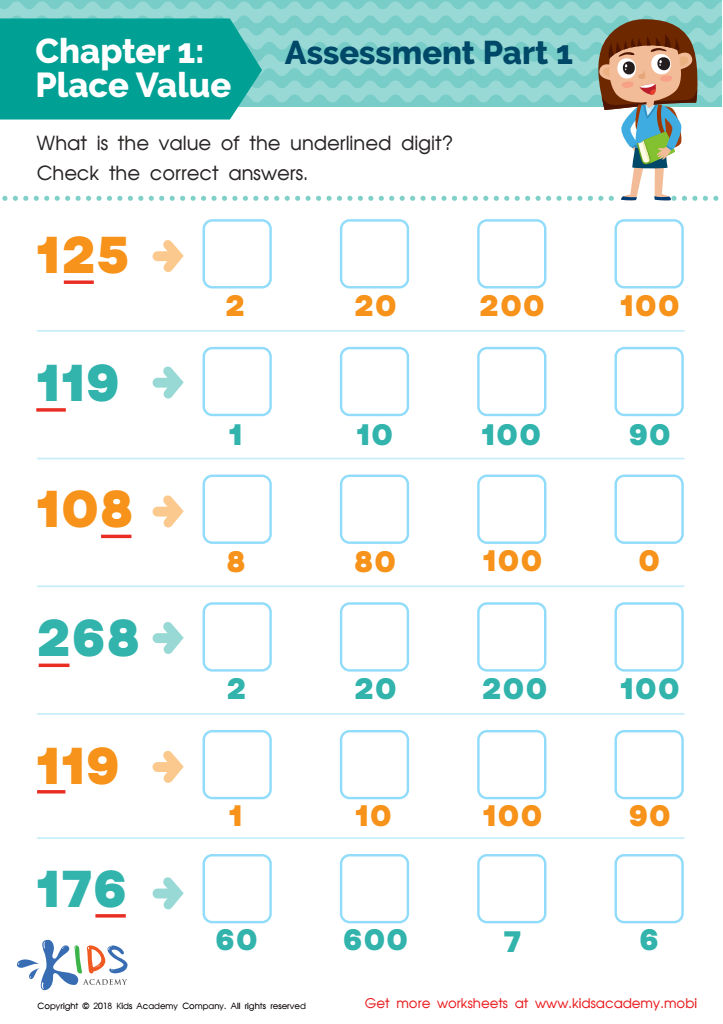
Place Value: Chapter 1 Worksheet
Check your kid's place value understanding with this assessment worksheet. It features 6 questions with one digit underlined for your child to determine the correct value of. Get the download and see if they can correctly choose the answer from the options given. It's a great way to test progress and keep their minds sharp!
Place Value: Chapter 1 Worksheet
Worksheet
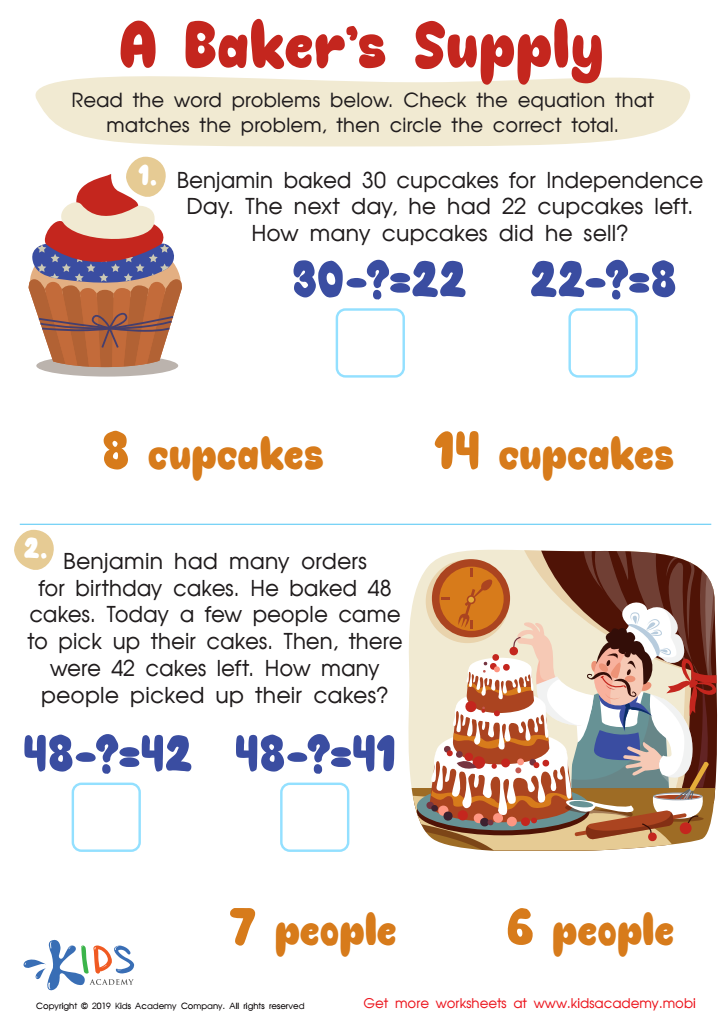
A Baker's Supply Worksheet
A visit to the baker's shop is thrilling! Your kids will love it! From scrumptious goodies to the mouthwatering aroma, it's a magical experience. Ask your kids what they're most eager to see and do. Now, read the word problems in this worksheet to them. Help them choose the correct answer for each problem and circle the correct total.
A Baker's Supply Worksheet
Worksheet
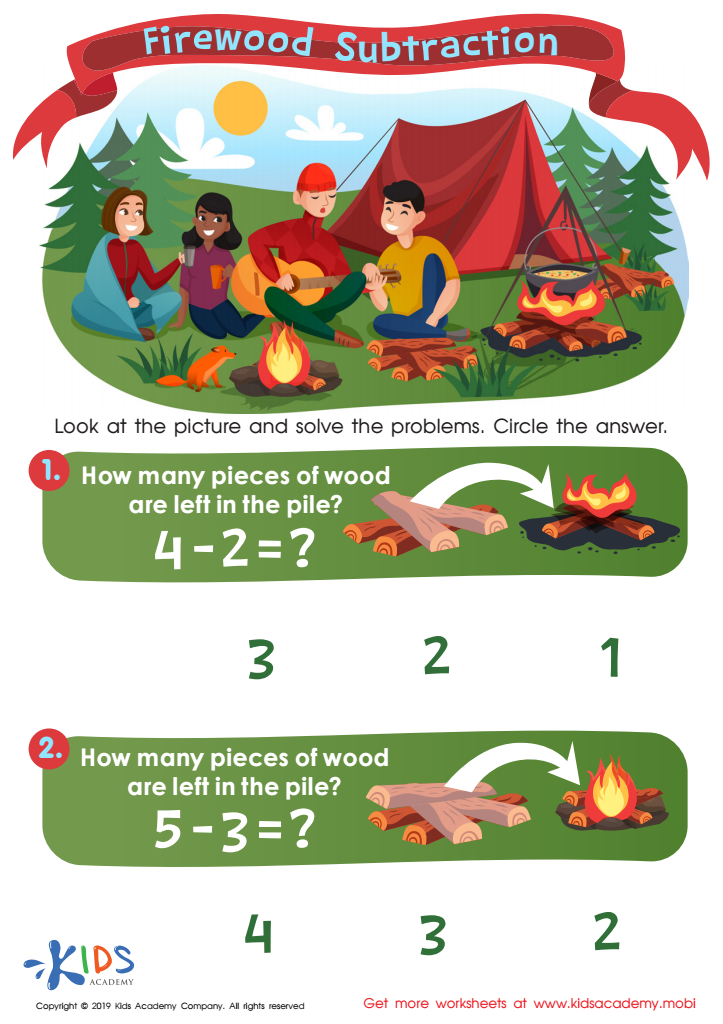
Firewood Subtraction Worksheet
Guide your students to show that math can be fun! If your kindergartners need help with addition and subtraction, the simple problems in this worksheet are ideal. Ask them to look at the two pictures and find the correct answers. Help them check their work to build their confidence in math.
Firewood Subtraction Worksheet
Worksheet
Join Kids Academy for Free
Who is primarily going to use this learning content?








Understanding quantities in math is fundamental for children ages 7-9, and both parents and teachers should prioritize this skill for several pivotal reasons. Firstly, grasping basic quantities lays the groundwork for all other mathematical concepts. At this age, children transition from concrete to abstract thinking, making it crucial for them to accurately interpret and manipulate numbers; this ability forms the core of everyday tasks such as telling time, handling money, and measuring ingredients.
Moreover, a solid understanding of quantities boosts problem-solving skills. When children comprehend how to compare, add, or subtract different amounts, they develop logical reasoning and critical thinking abilities. These skills are essential not just for math but for a wide array of academic subjects and real-life situations.
Additionally, early competence in understanding quantities can foster a positive attitude towards learning math, setting up a foundation for future academic success. Struggle in early math years can lead to math anxiety, whereas comfort with quantities can make complex topics more approachable later on.
Finally, early mathematical competency, including a solid understanding of quantities, is linked to better academic performance overall. Educators and parents who emphasize this early on help unlock each child’s potential, ensuring they are equipped for success both in and beyond the classroom.








