Understanding sequencing Math Worksheets for Ages 7-9
7 filtered results
-
From - To
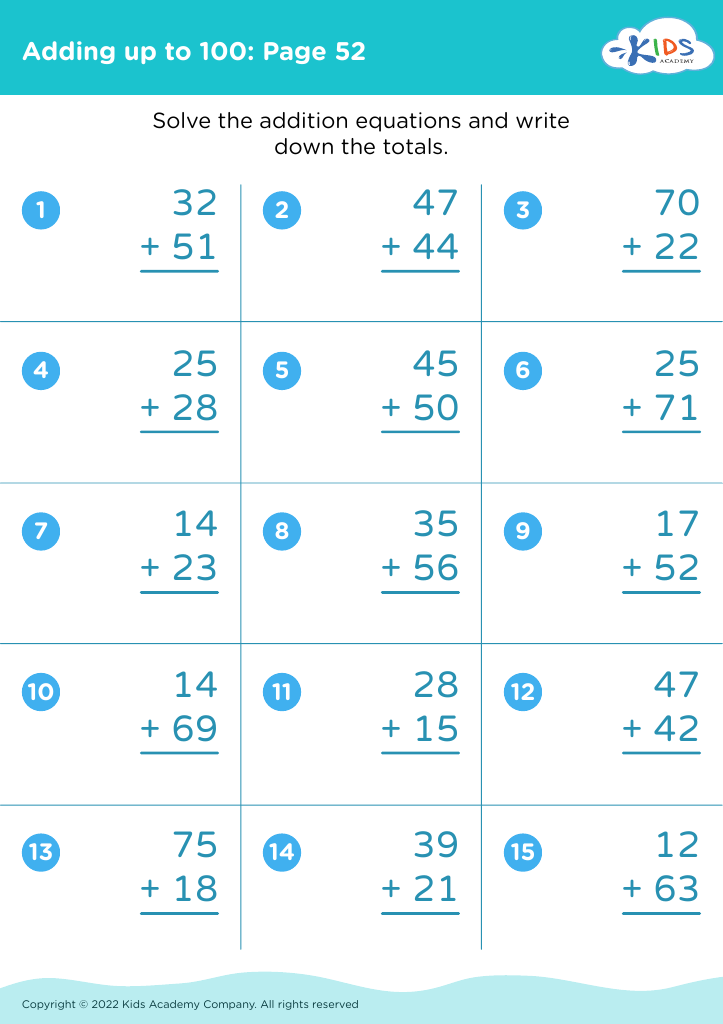
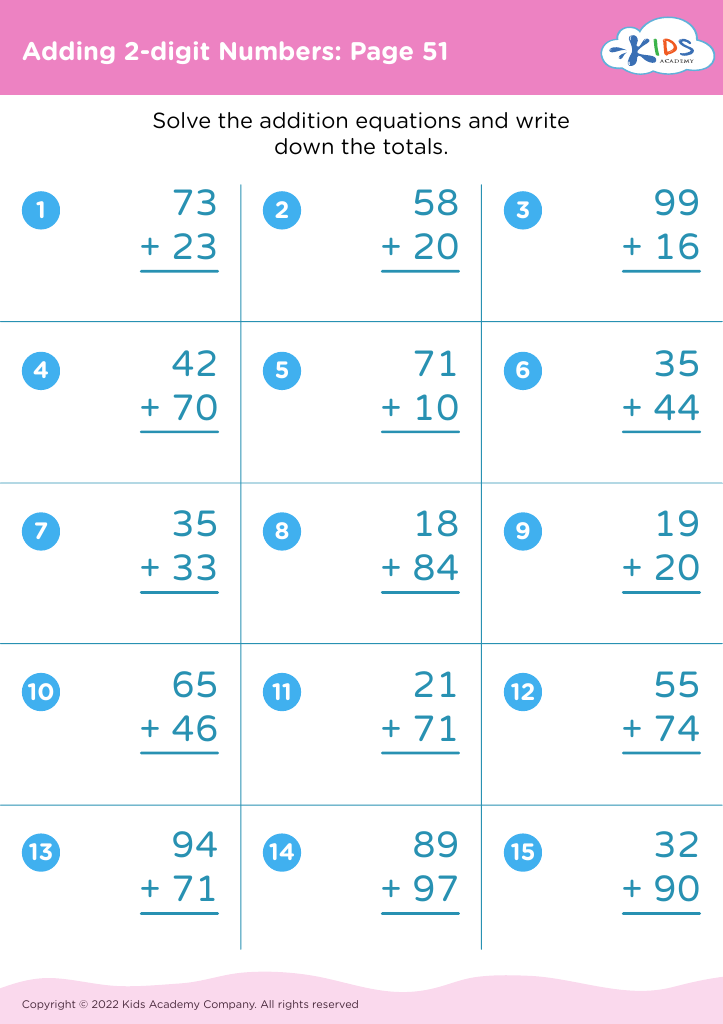
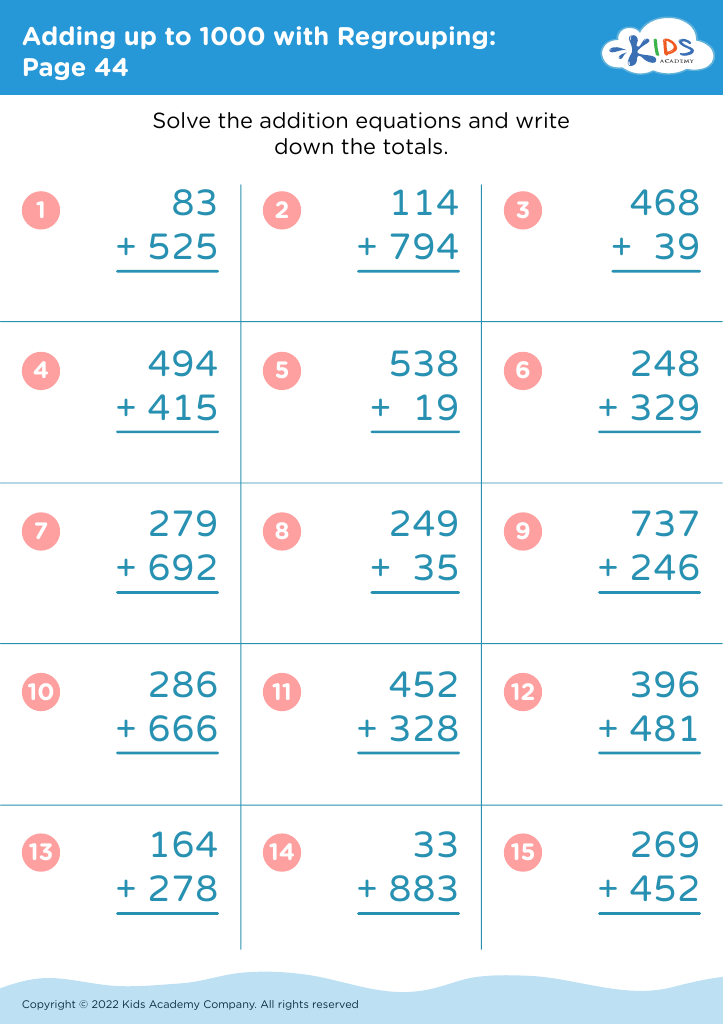
Our "Understanding Sequencing Math Worksheets for Ages 7-9" provide an engaging way for children to master the concept of sequencing in math. Designed to develop logical thinking and number skills, our worksheets guide young learners through identifying, predicting, and arranging sequences. These printable resources simplify math concepts with visual aids and interactive activities, ensuring that kids build a strong foundation. Ideal for both classroom and home, our sequencing worksheets accommodate various learning styles, making math fun and accessible. Transform your child's mathematics experience with Kids Academy—empowering bright futures, one sequence at a time!
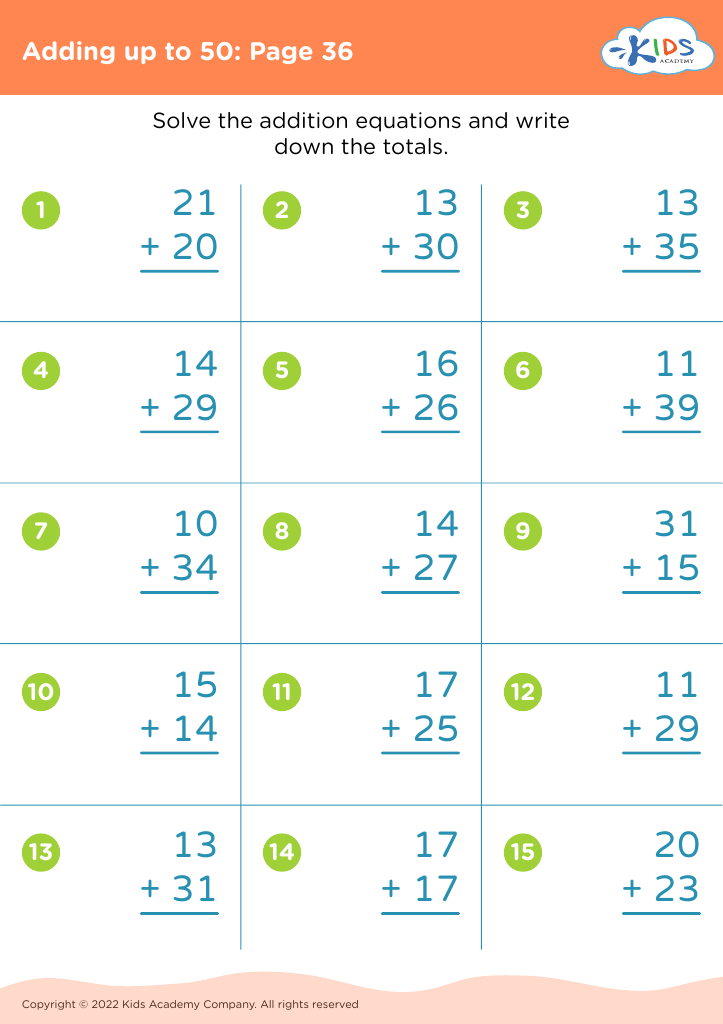
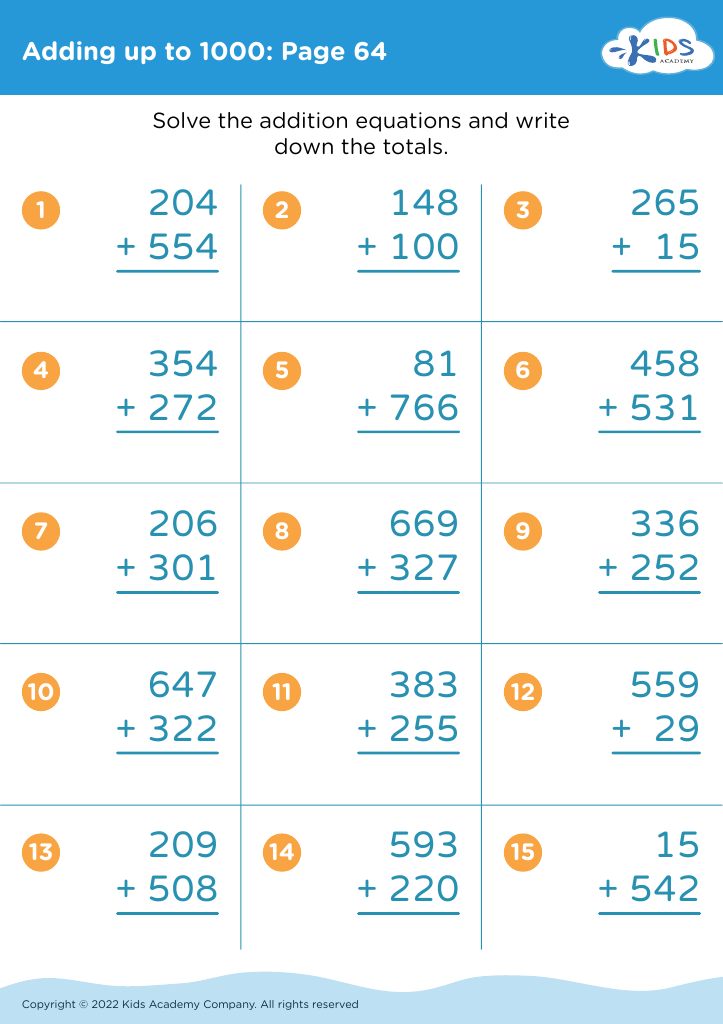
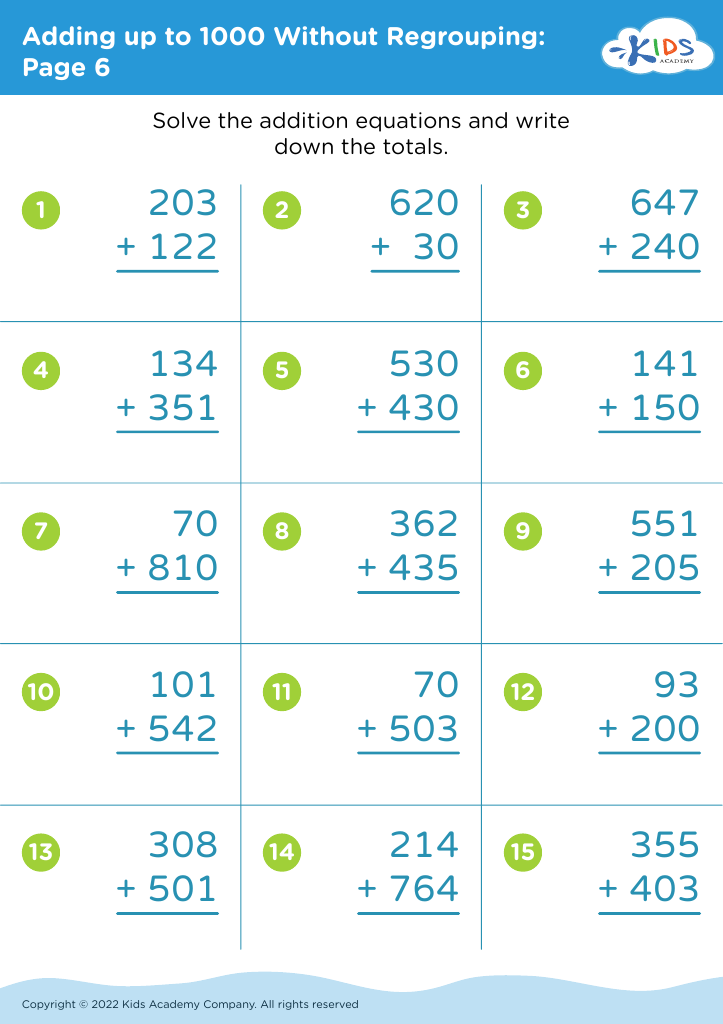
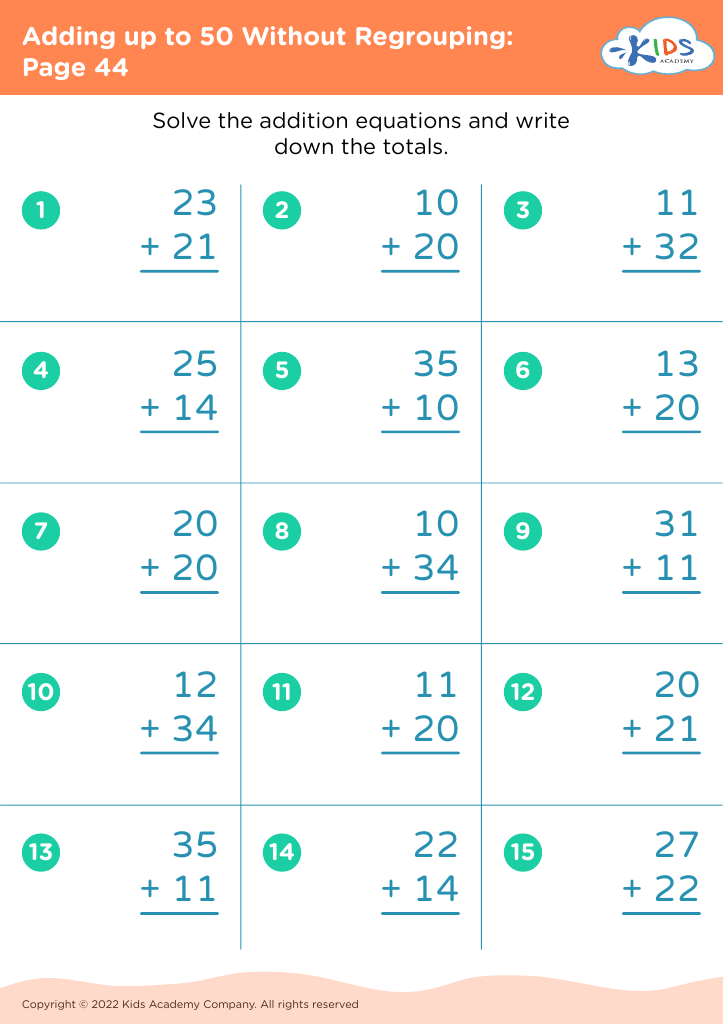







Understanding sequencing in math is fundamental for children ages 7-9, as it lays the groundwork for numerous critical thinking and problem-solving skills used throughout life. Sequencing involves arranging events, numbers, or objects in a specific, logical order and is essential for grasping more complex math concepts later on.
First, sequencing underpins the basic operations of addition, subtraction, multiplication, and division, where the order of numbers impacts the result. Mastery in sequencing helps students comprehend place value, ensuring they perform calculations correctly and develop numerical fluency.
Second, sequencing enhances logical reasoning. It enables kids to make sense of patterns, categorize objects, and predict outcomes—a skill set valuable in everyday tasks, planning activities, and managing time efficiently. Sequencing bolsters skills in subjects beyond math, including reading comprehension (understanding story plots) and science (following experiment steps).
Finally, sequencing promotes executive functioning skills such as memory, attention, and the ability to follow multi-step instructions. These cognitive abilities are crucial for academic success and becoming self-reliant learners.
In sum, caring about sequencing in math is essential for fostering foundational skills that contribute to a child's holistic development as proficient thinkers and problem-solvers, ensuring they thrive academically and in day-to-day life.








