Visual perception development Math Worksheets for Ages 7-9
3 filtered results
-
From - To
Unlock your child’s potential with our Visual Perception Development Math Worksheets for Ages 7-9. These engaging worksheets are designed to enhance critical visual skills including pattern recognition, spatial awareness, and problem-solving abilities. Through fun, interactive exercises, students will build a strong mathematical foundation while improving their cognitive development. Perfect for home or classroom use, our worksheets keep young learners motivated and confident. Ensure your child’s success in math and everyday tasks by fostering their visual perception skills with our thoughtfully crafted resource. Start today and watch them excel!
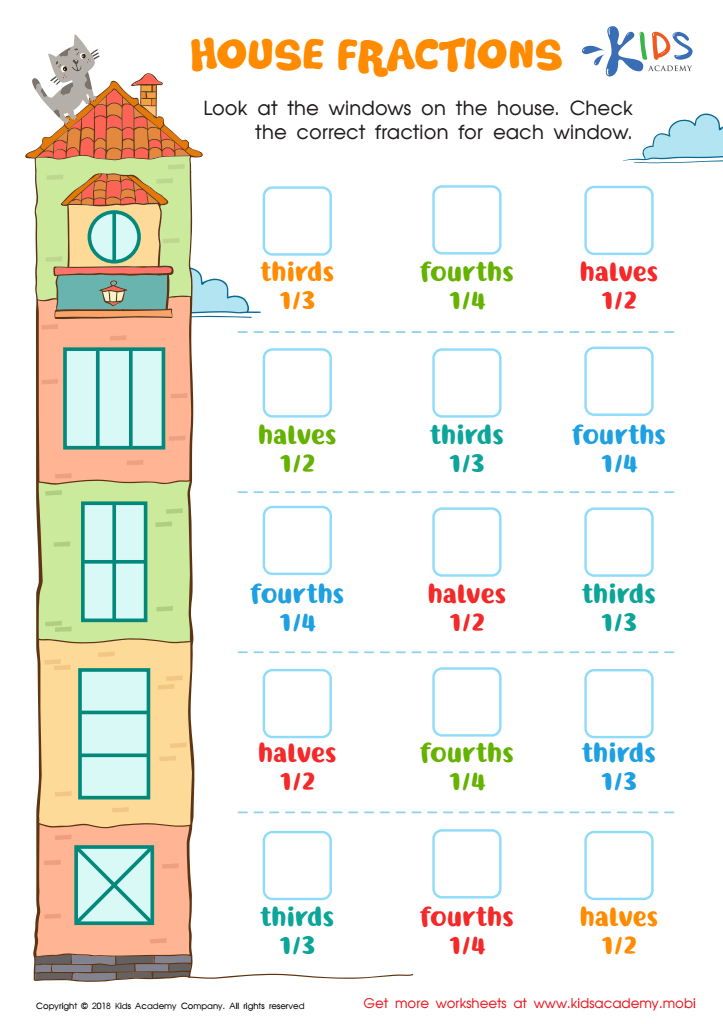
House Fractions Worksheet
 Assign to My Students
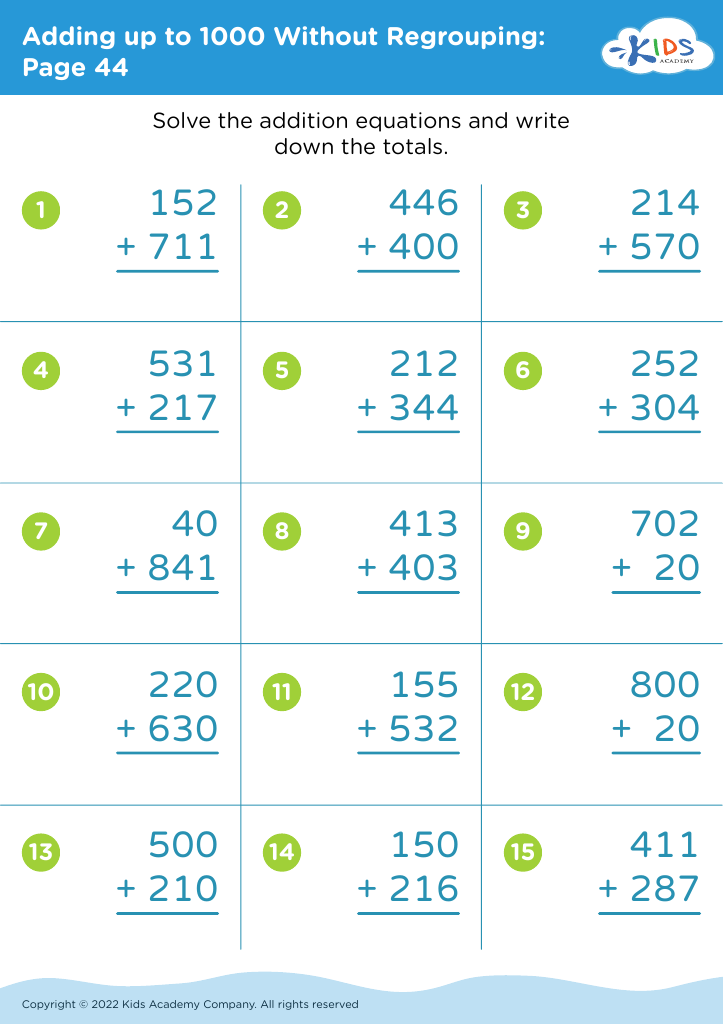
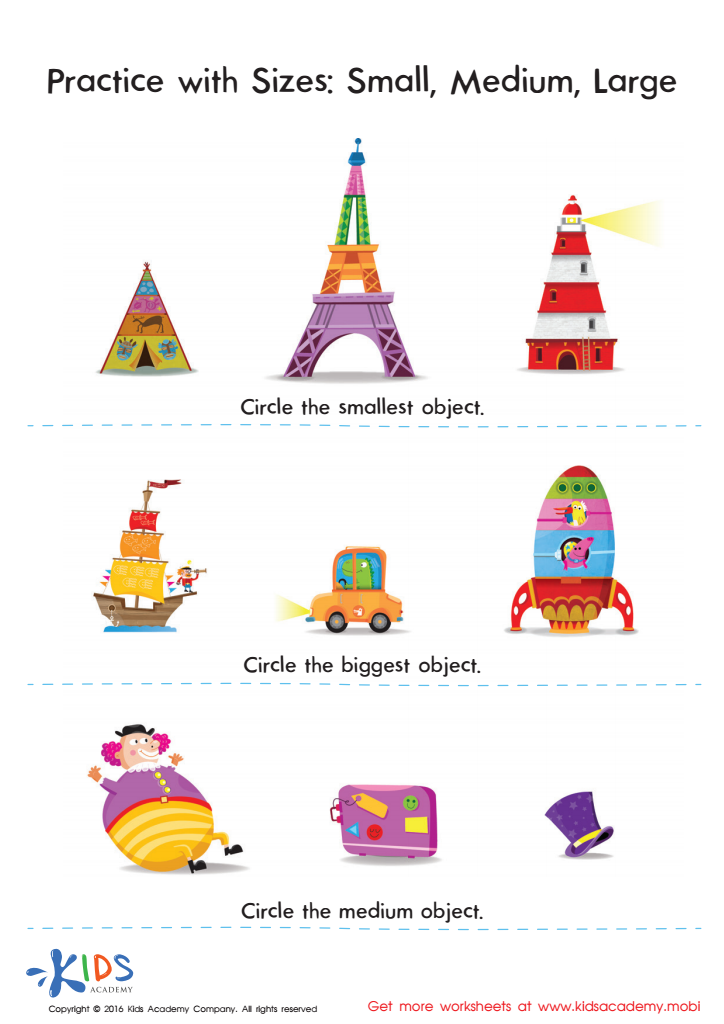








Visual perception development in math for ages 7-9 is crucial and should be actively fostered by parents and teachers. Visual perception refers to the brain's ability to make sense of what the eyes see. This skill is essential for recognizing numbers, understanding spatial relationships, and solving problems—core components of early math education (such as addition, subtraction, and identifying shapes).
First, strong visual perception skills enable children to distinguish numbers and symbols accurately, preventing common mistakes. For instance, children often confuse similar-looking numbers like 6 and 9 or misinterpret mathematical signs like + and ×.
Second, it enhances spatial reasoning, essential for understanding patterns, dimensions, and proportions. Techniques like visualizing objects in different orientations or mentally manipulating shapes help in grasping more complex math concepts later, such as geometry and algebra.
Furthermore, developing visual perception can boost academic confidence. Children who struggle with these skills might find math frustrating and become less engaged. Proactive development can turn potential struggles into strengths, making learning math a more positive experience.
Incorporating visual perception activities like puzzles, drawing, and pattern games can make math more engaging while simultaneously strengthening these invaluable skills. By investing in the development of visual perception, parents and teachers lay a strong foundation for a child's future math success and overall cognitive development.








