Conversion skills Measurement Worksheets for Ages 7-9
5 filtered results
-
From - To
Boost your child's confidence in math with our "Conversion Skills Measurement Worksheets for Ages 7-9"! Designed to align with curriculum standards, these engaging worksheets help young learners grasp key concepts of measurement and unit conversion. Through fun activities and practical exercises, children will master converting between units such as inches, feet, centimeters, and meters. Perfect for classroom use or extra practice at home, our worksheets support your child's progress by making learning enjoyable and effective. Unlock their potential in math with these essential resources from Kids Academy.
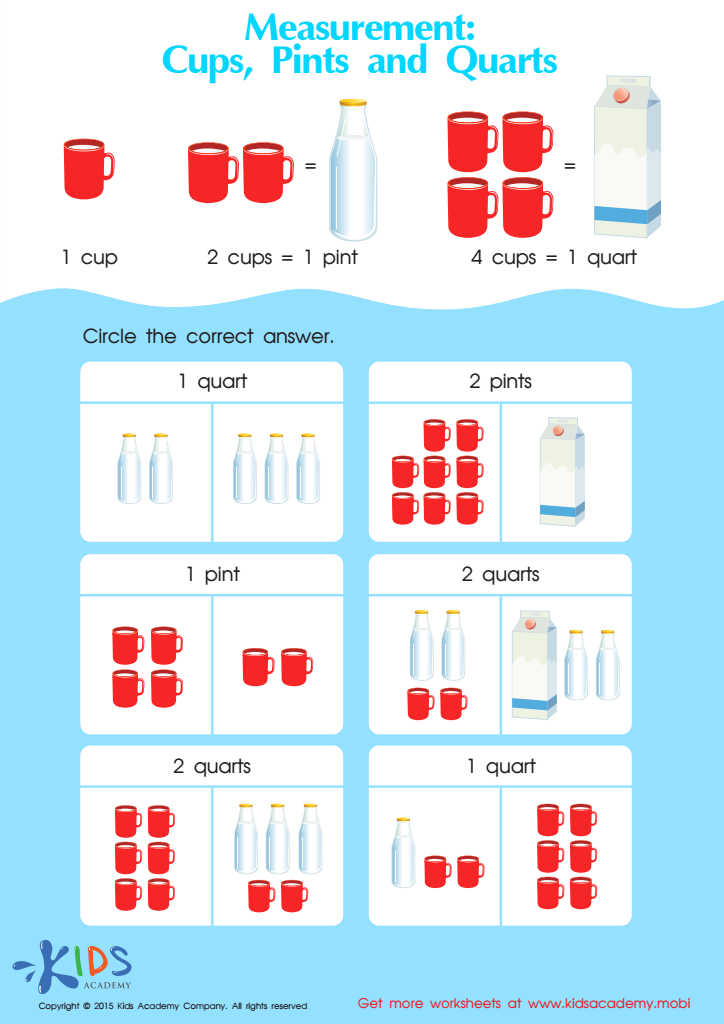
Cups, Pints and Quarts Worksheet
 Assign to My Students
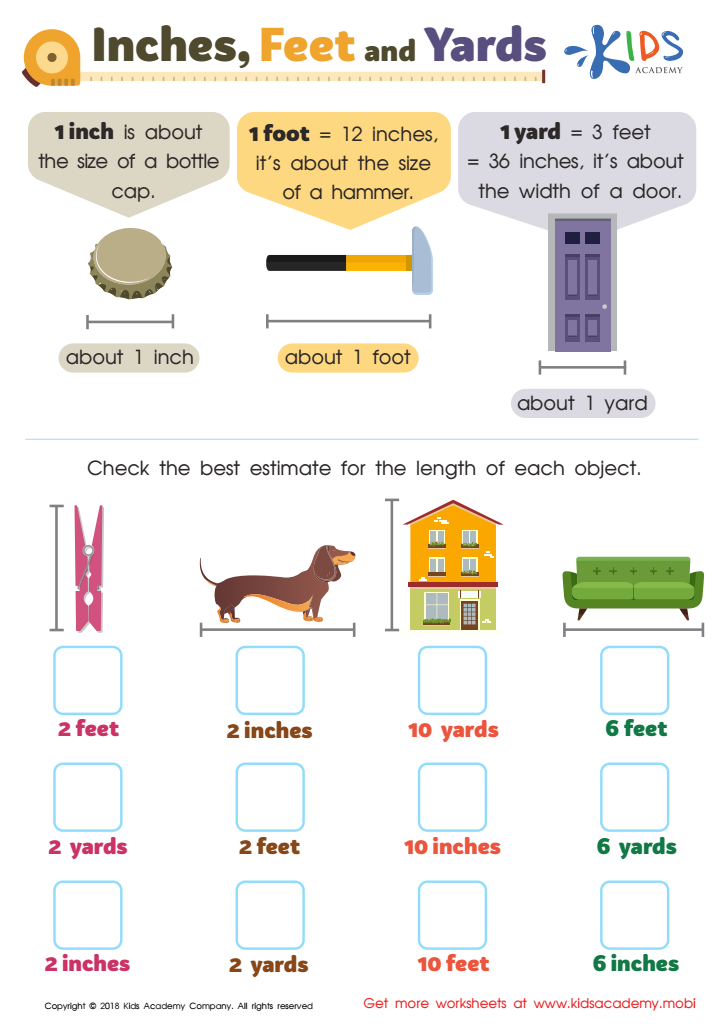
Inches, Feet and Yards Worksheet
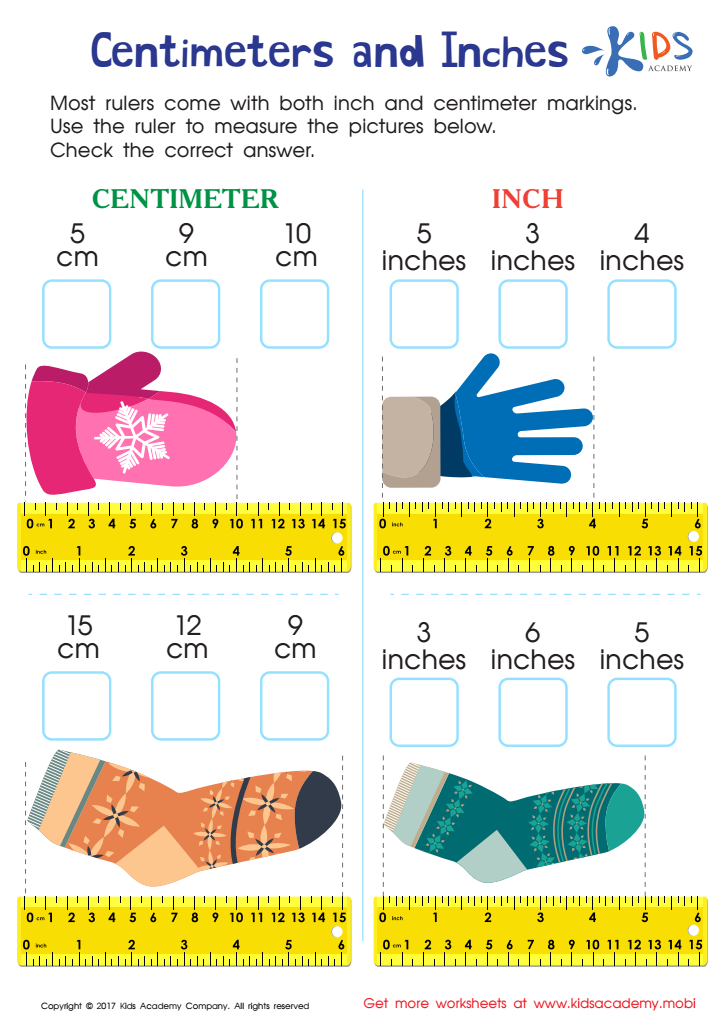
Centimeters and Inches Worksheet
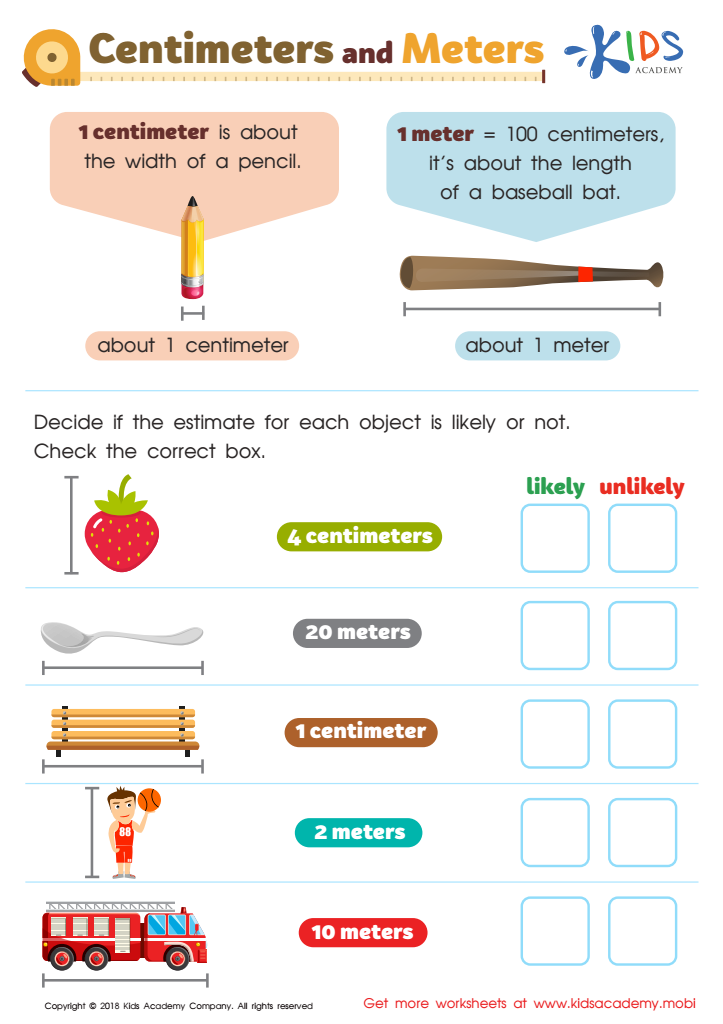
Centimeters and Meters Worksheet
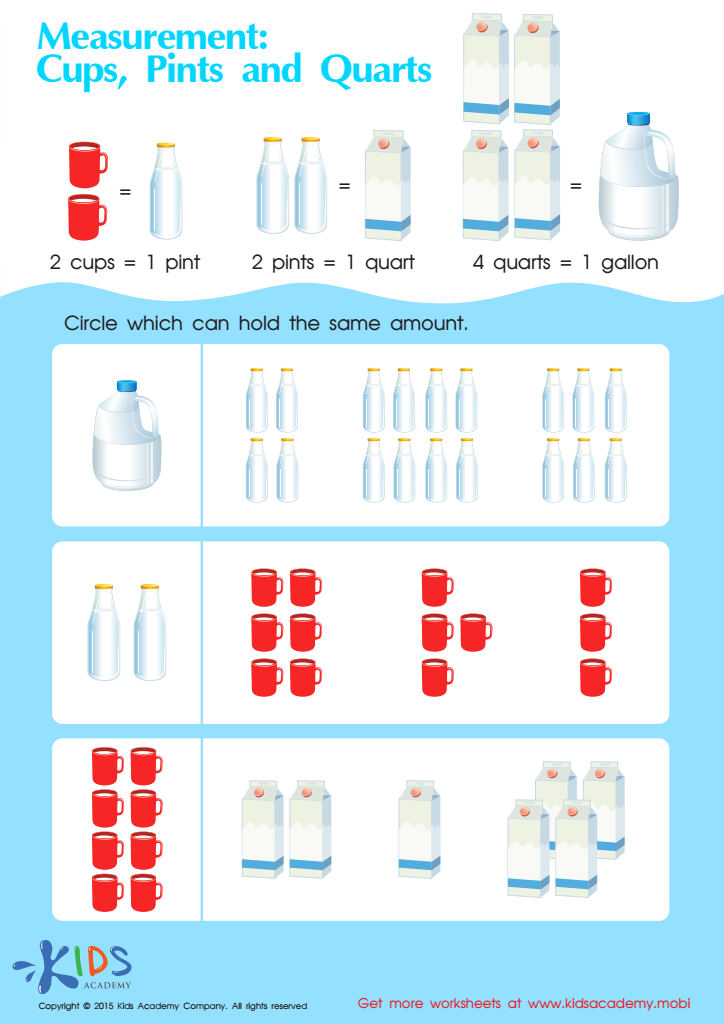
Cups, Pints and Quarts 2 Worksheet








Parents and teachers should prioritize the development of conversion skills measurement for children aged 7-9 because these abilities are fundamental to a child's mathematical comprehension and general cognitive growth. Conversion skills, which include understanding how units can be converted and manipulated (e.g., inches to centimeters, cups to pints), play a critical role in everyday life and more advanced learning areas. Grasping these concepts early can build a strong foundation for problem-solving and analytical thinking.
Firstly, incorporating measurement and conversion activities into the curriculum helps children enhance their numerical and spatial reasoning. It challenges them to think flexibly and approach tasks from different angles, reinforcing their overall arithmetic capabilities. These exercises aid in developing critical thinking skills indispensable across various subjects and real-world situations.
Secondly, engaging in tasks that involve converting measurements helps children better understand quantities and their relationships, which is an essential skill in science, cooking, building, and many other everyday activities. Early familiarity with these concepts promotes confidence and reduces anxiety when students encounter more complex mathematical or scientific material later on.
Lastly, making sure 7-9 year olds master these skills encourages a growth mindset. When children recognize their ability to solve practical problems through math, they often display greater curiosity and willingness to tackle challenging tasks, fostering long-term academic enthusiasm and success.








