Number Recognition Multiplication Worksheets for Ages 7-9
4 filtered results
-
From - To
Boost your child's math skills with our engaging Number Recognition Multiplication Worksheets, designed specifically for ages 7-9! These worksheets help young learners master multiplication through fun, interactive exercises that reinforce number recognition. Each activity challenges students to identify numbers and practice multiplication in an enjoyable way. Our resources are carefully crafted to enhance understanding while building essential math foundations. Perfect for classroom or home use, these worksheets promote critical thinking and confidence in young mathematicians. Help your child excel in math by exploring our colorful and user-friendly worksheets today! Start their multiplication journey on the right track with Kids Academy!
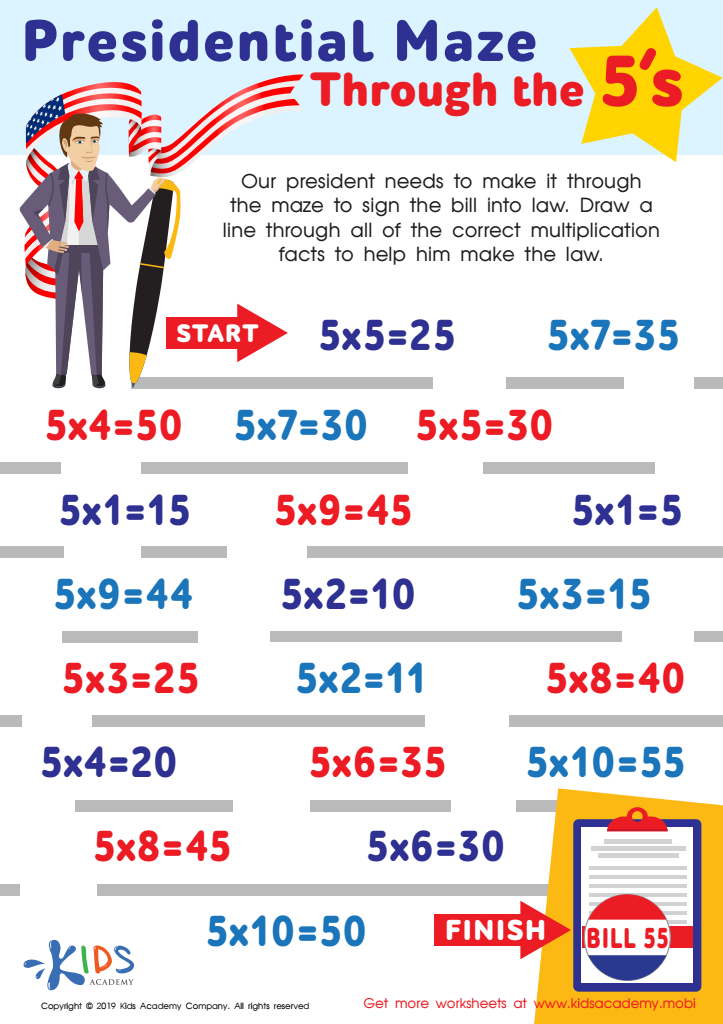
Presidential Maze Through the 5’s Worksheet
 Assign to My Students
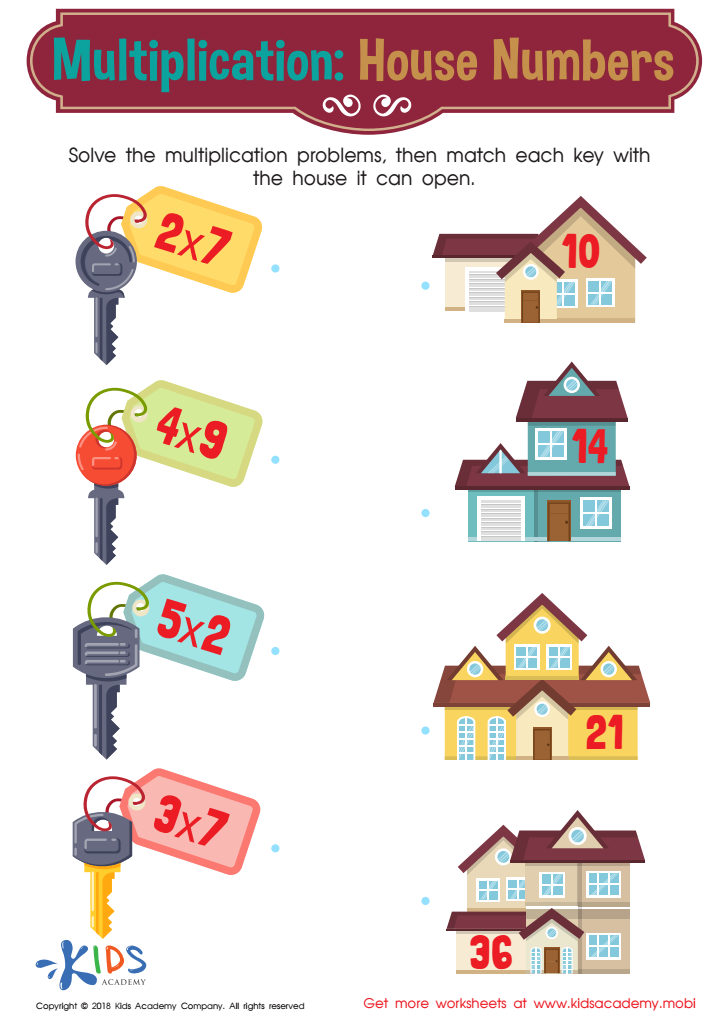
House Numbers Worksheet
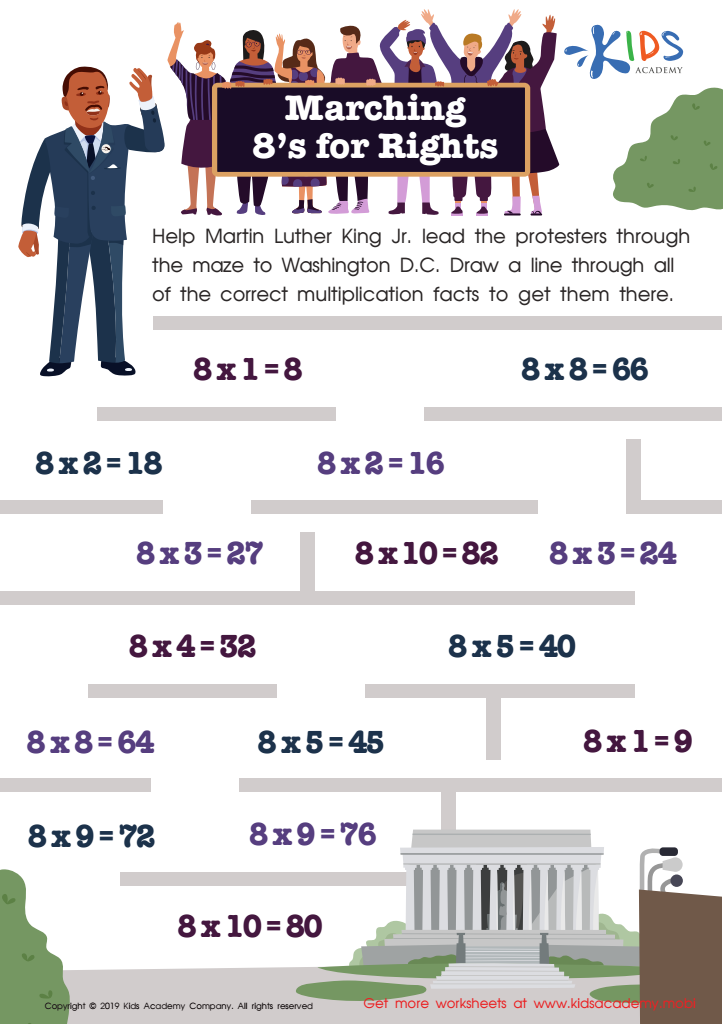
Marching 8’s for Rights Worksheet
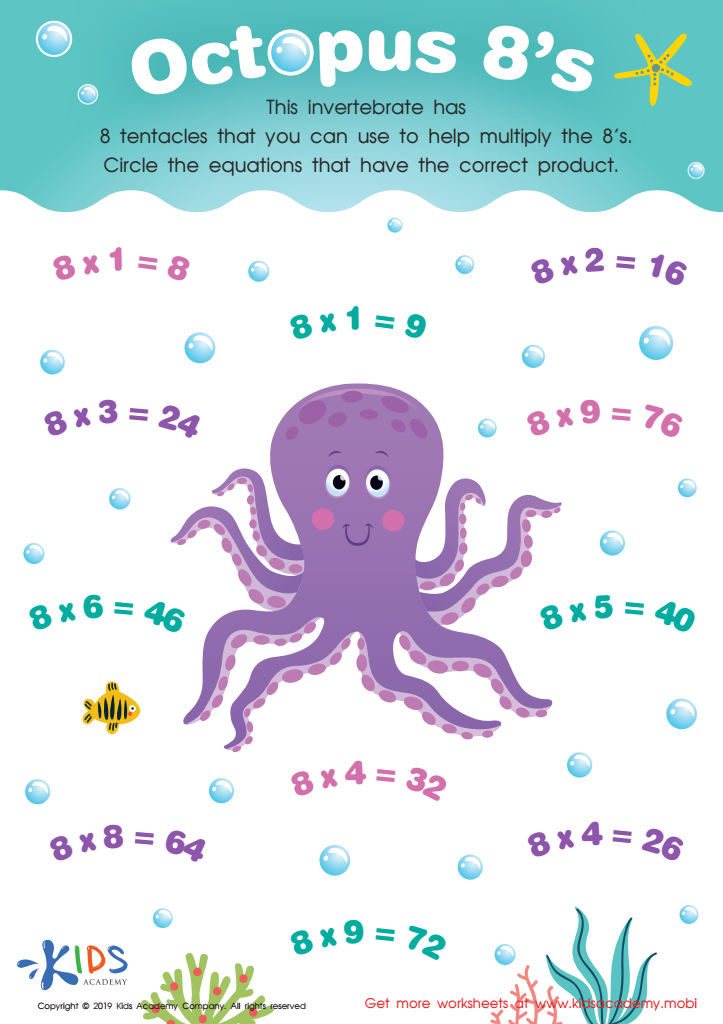
Octopus 8’s Worksheet








Number recognition multiplication is a foundational skill crucial for children aged 7-9, setting the stage for their mathematical development and overall academic success. At this age, children transition from basic arithmetic to more complex mathematical concepts, making it essential for them to confidently recognize and manipulate numbers.
Parents and teachers should prioritize this skill because it fosters critical thinking, problem-solving, and cognitive development. By mastering multiplication, children apply patterns and relationships in numbers, which enhances their mental math abilities and builds a strong number sense.
Moreover, strong multiplication skills support future learning in diverse subjects, including science and economics, where quantitative reasoning is critical. This can elevate a child's confidence, making them more willing to take on challenging mathematical problems.
Additionally, children who struggle with number recognition and multiplication may develop negative attitudes toward math, leading to a lack of motivation and underachievement. Early intervention and supportive learning environments created by parents and teachers can positively influence a child's attitude and skills in math.
Ultimately, emphasizing number recognition multiplication ensures that children are well-equipped for ongoing academic challenges, encouraging a lifelong appreciation for mathematics and its real-world applications.








