Cognitive Development Subtraction Worksheets for Ages 7-9
3 filtered results
-
From - To
Enhance your child’s cognitive development with our exclusive subtraction worksheets designed for ages 7-9. At Kids Academy, we offer engaging activities that challenge young minds and cultivate critical thinking skills. Our printable subtraction worksheets cover a range of difficulty levels, helping children build strong foundational math abilities while improving their problem-solving techniques. Perfect for homeschooling or extra practice, these worksheets provide comprehensive support tailored to students' specific learning needs. Encourage mathematical confidence and cognitive growth in your child today with Kids Academy’s expertly crafted subtraction exercises. Visit our website to start the learning journey!
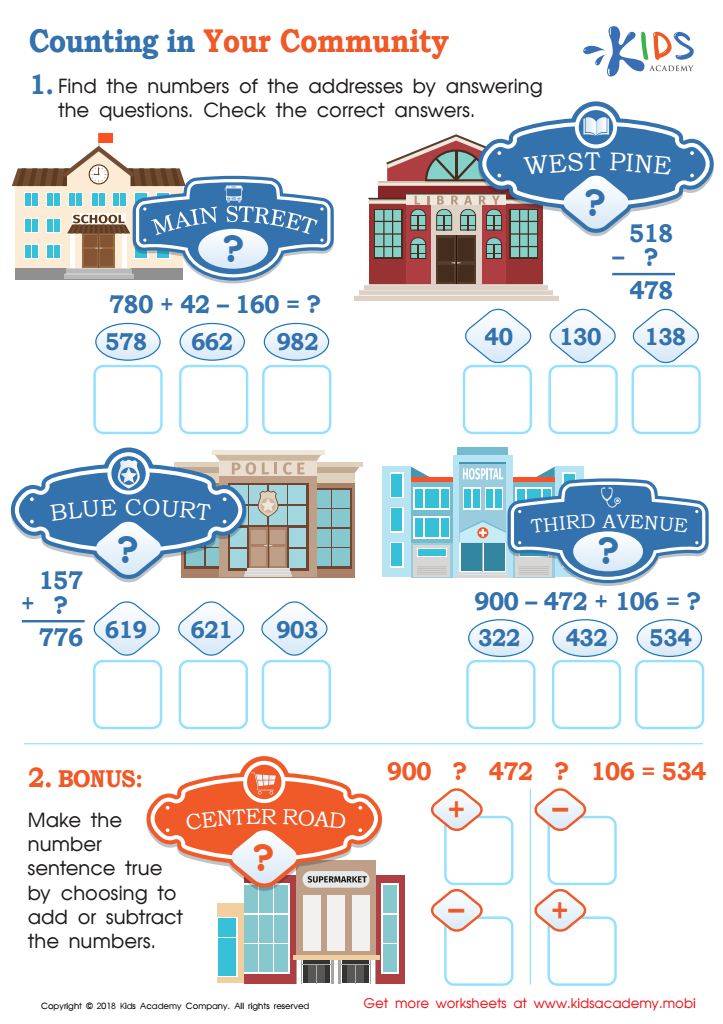
Counting in Your Community Worksheet
 Assign to My Students
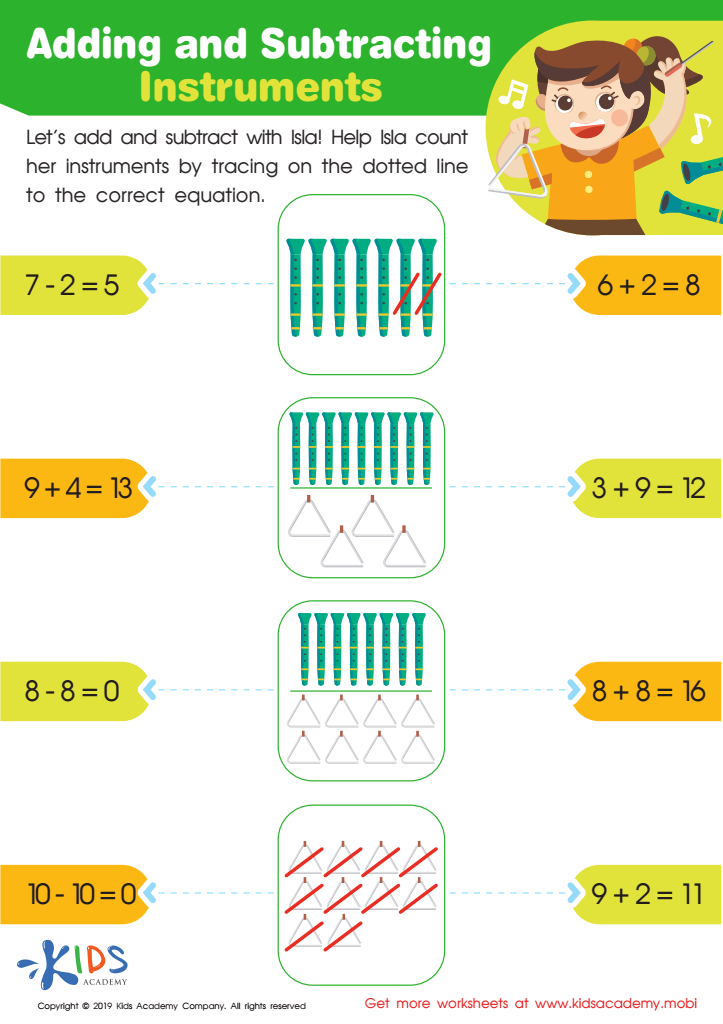
Adding and Subtracting: Instruments Worksheet
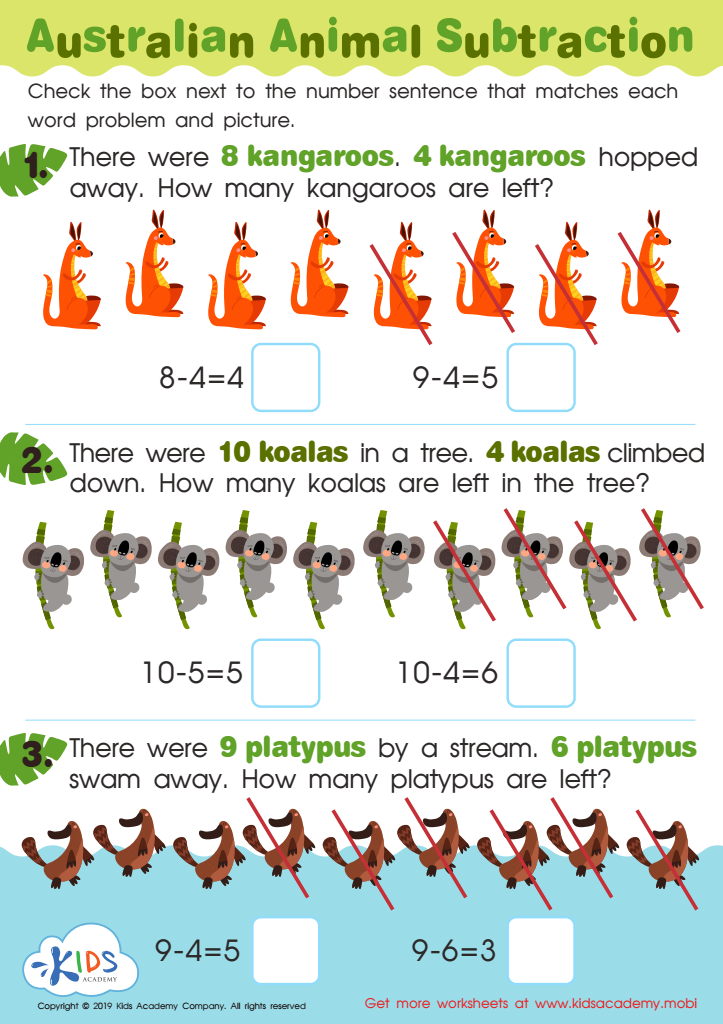
Australian Animal Subtraction Worksheet








Cognitive development during the ages of 7-9 is a crucial period for children, marked by enhanced reasoning, problem-solving, and mathematical skills. Understanding subtraction goes beyond mere numbers; it's central to developing logical thinking and building a solid foundation for future math concepts.
Subtraction skills help children grasp the concept of "taking away" and understand how numbers relate to each other. At this age, mastering subtraction is essential for their ability to solve more complex mathematical problems later on. It's not just an academic skill; it offers practical know-how for day-to-day tasks, such as figuring out change, dividing treats among friends, or understanding time intervals.
For parents and teachers, focusing on subtraction aids cognitive development in several ways. It encourages memory retention as children have to recall subtraction facts and processes. Visual-spatial skills are also improved as kids often use drawings, number lines, or physical objects to represent subtraction problems. Engaging with subtraction can promote perseverance and adaptability, as children learn that there's often more than one way to solve a problem, fostering flexible thinking.
Ultimately, caring about space and flexibility within math leads to more confident, capable learners who are better equipped to tackle diverse challenges, now and in the future. Helping children build this elementary skill better prepare them academically and emotionally, developing life-long learners who are analytically strong and versatile.








