Reading clocks Time Worksheets for Ages 7-9
3 filtered results
-
From - To
Enhance your child's ability to tell time with our "Reading Clocks Time Worksheets for Ages 7-9." Specifically designed for young learners, these worksheets provide a fun and engaging way to master reading both analog and digital clocks. Each worksheet is crafted to build critical time-telling skills, helping students understand hours, minutes, and the passage of time. With colorful illustrations and diverse exercises, children will find learning to tell time both enjoyable and insightful. Empower your kids to become confident time-readers through comprehensive activities tailored to their developmental needs. Download now and watch them thrive!
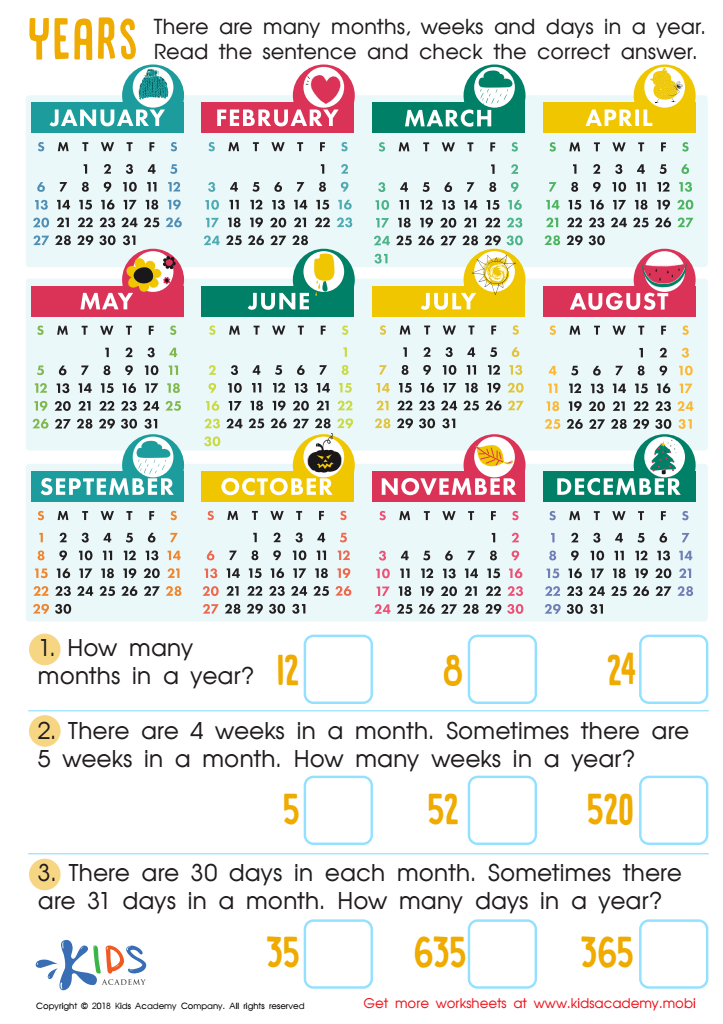
Years Worksheet
 Assign to My Students
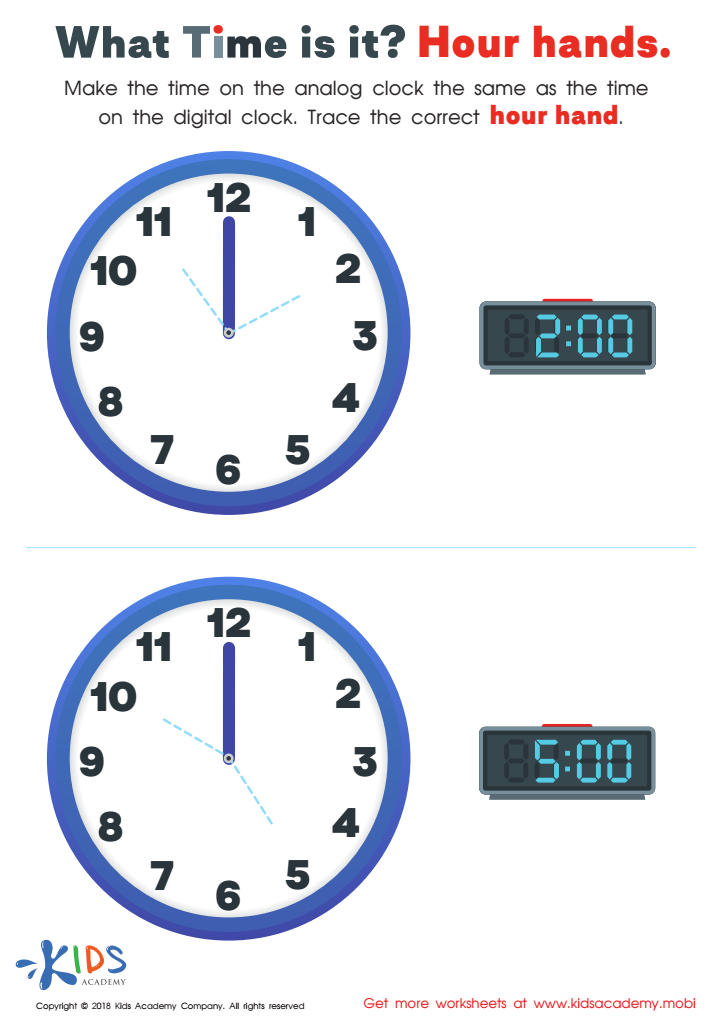
What Time Is it? Hour Hands Worksheet
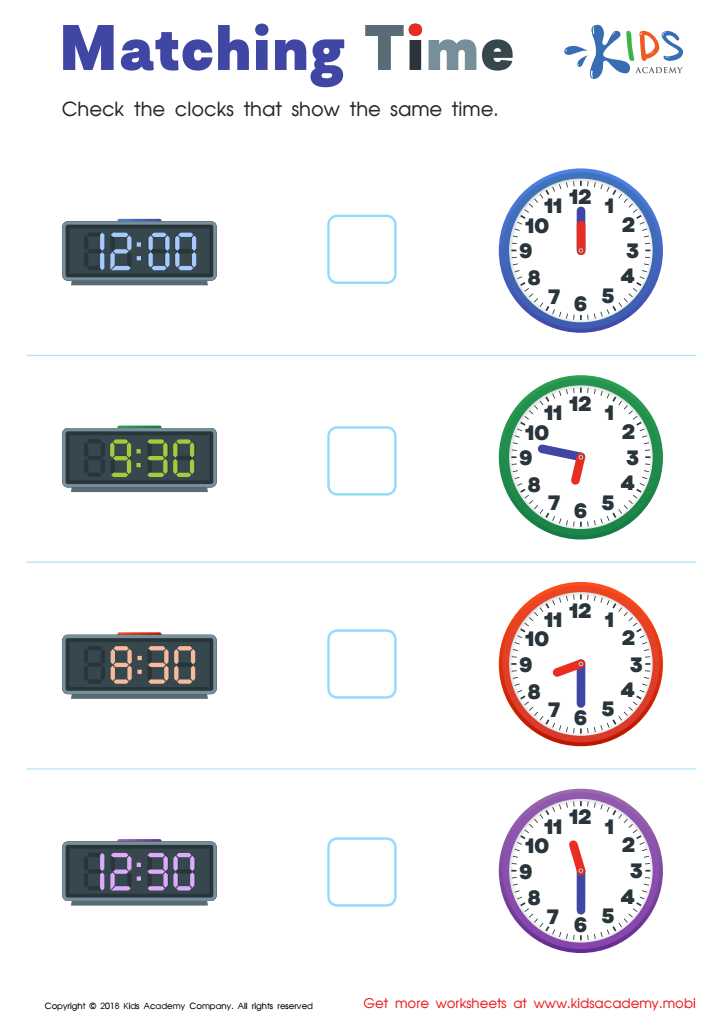
Matching Time Worksheet



%20(1).jpg)

.jpg)


Understanding how to read clocks is a foundational skill that significantly impacts a child's daily life. For children ages 7-9, mastering time-telling on both analog and digital clocks fosters their sense of responsibility and independence. This age is typically when students begin to manage their routines, including knowing when to get ready for school, when activities start or end, and how to pace themselves throughout the day.
Parents and teachers should care about teaching children to read clocks because it enhances their mathematical skills, particularly in understanding the concepts of hours, minutes, and fractions. This forms a crucial part of their arithmetic and geometric thinking. Additionally, proficient time-telling skills are closely associated with the development of executive functions like planning, prioritizing, and time management, which are essential for academic success across various subjects.
Furthermore, understanding elapsed time can help children gauge durations in real-life scenarios, aiding in developing a practical sense of time which is crucial for tasks like reading schedules and participating in structured activities. Inculcating these skills early instills punctuality and develops a lifelong habit of time-consciousness. Thus, investing time in teaching clock-reading at this stage gears children toward a well-organized, disciplined, and structured future.








