Multiplication practice Times Tables Worksheets for Ages 7-9 - Page 2
33 filtered results
-
From - To
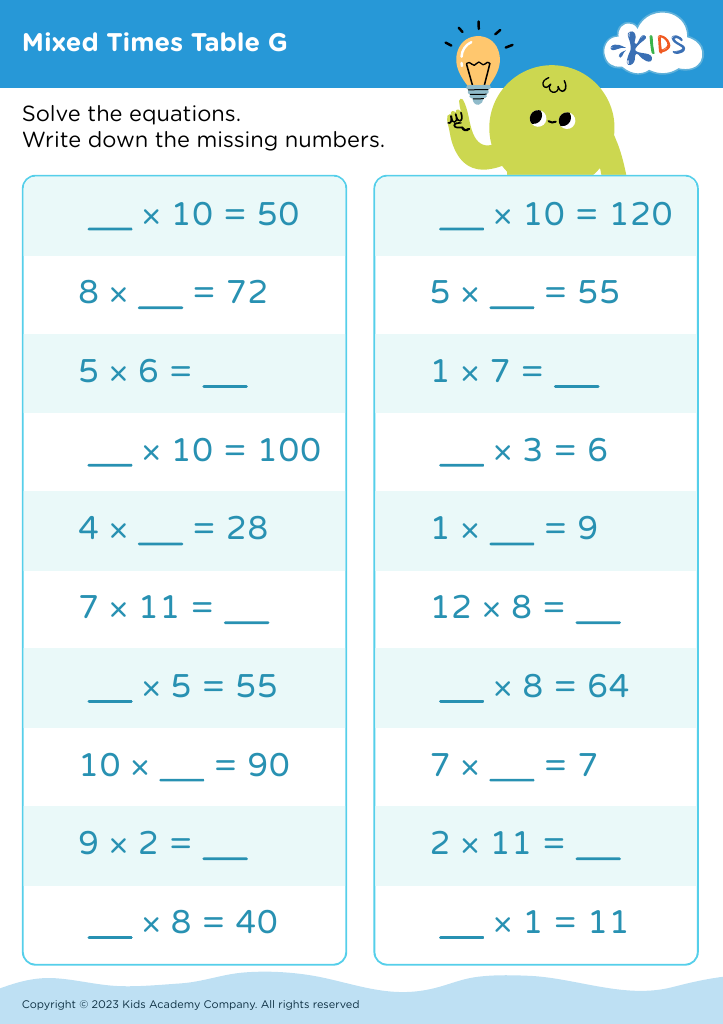
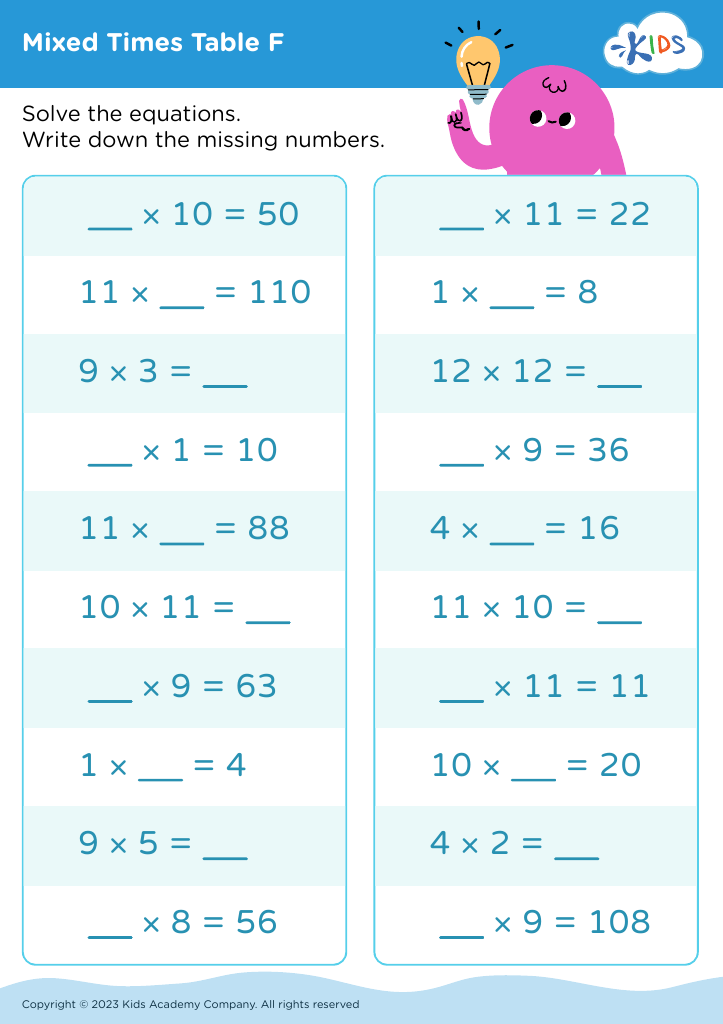
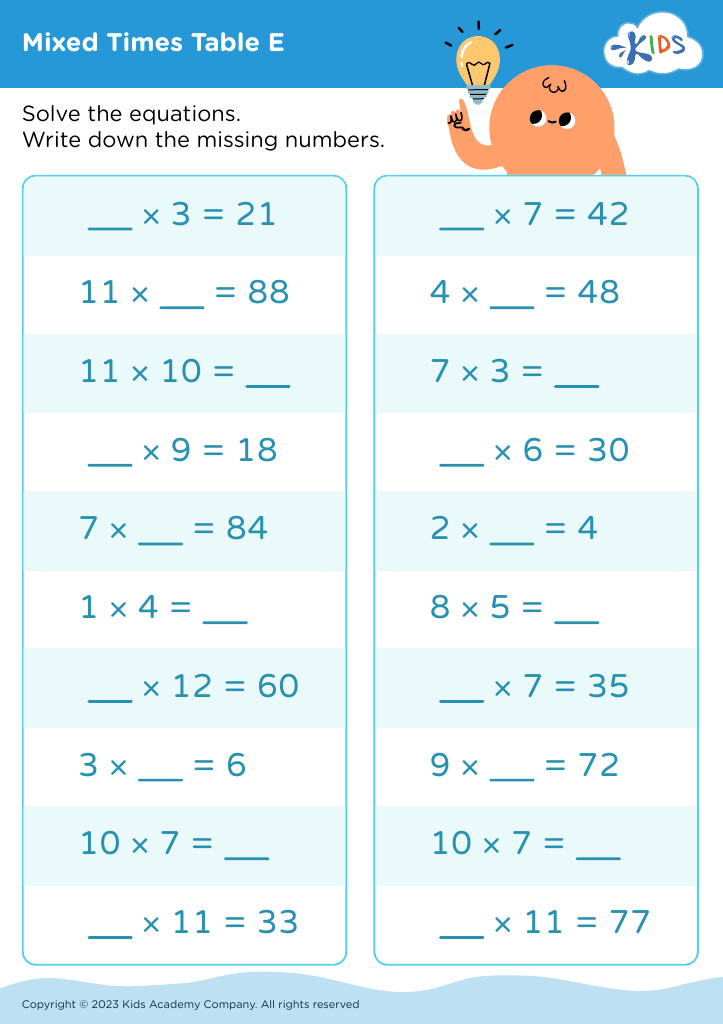
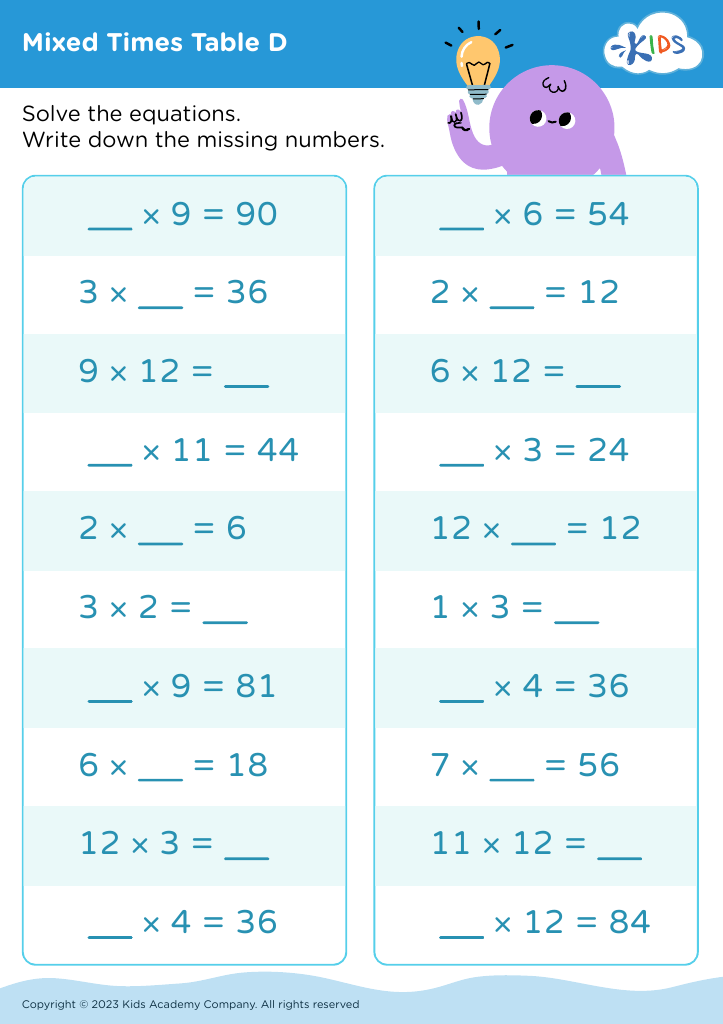
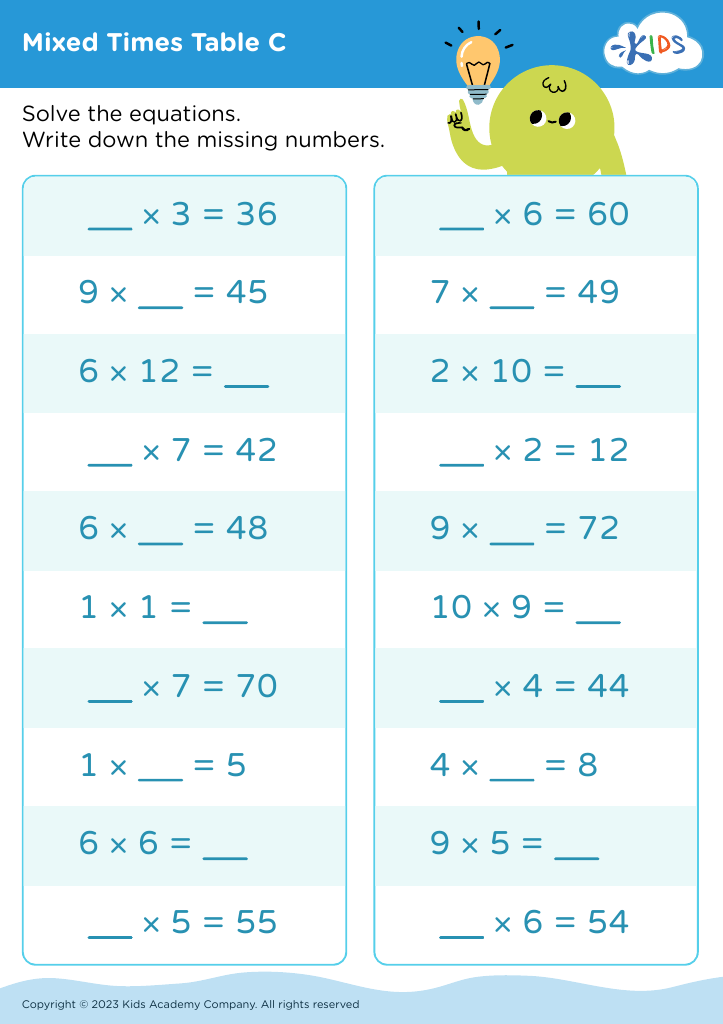
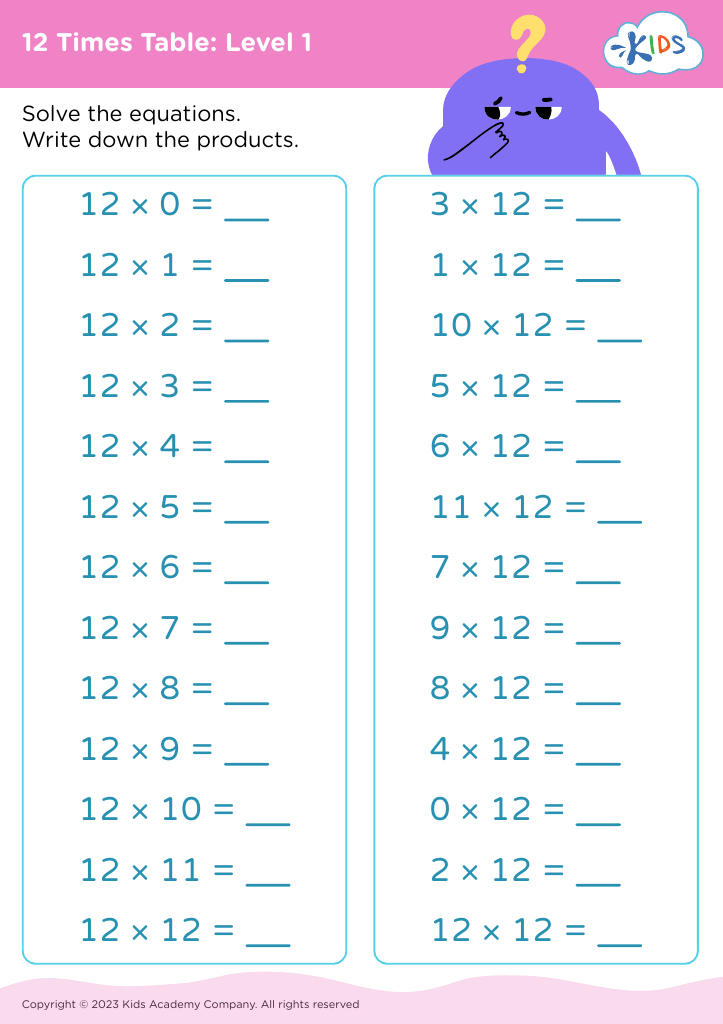
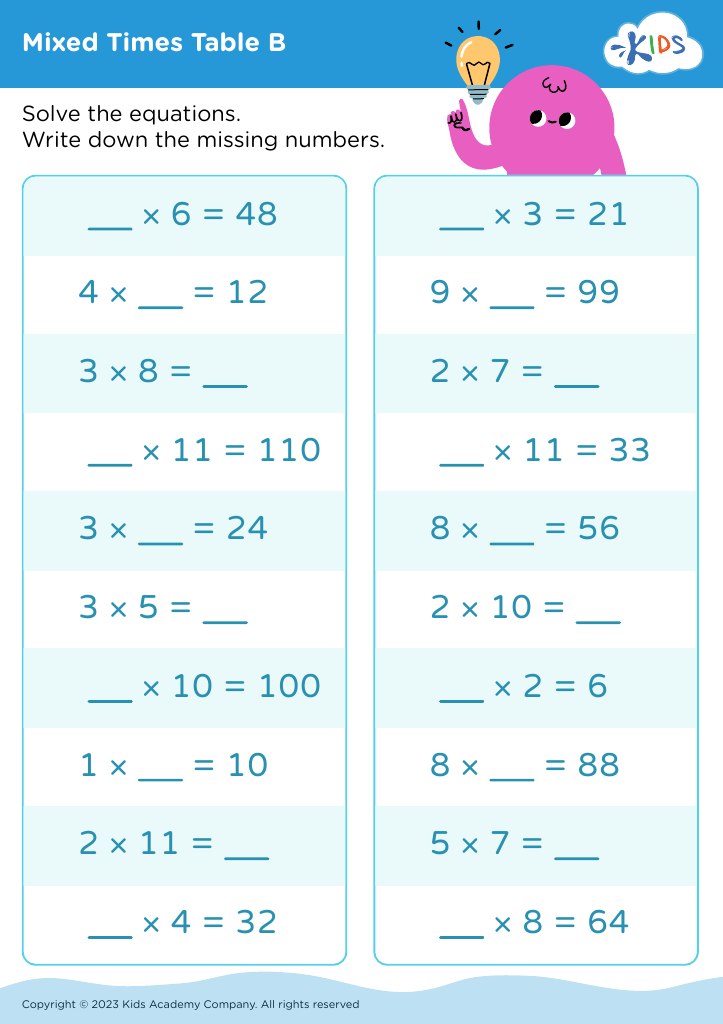
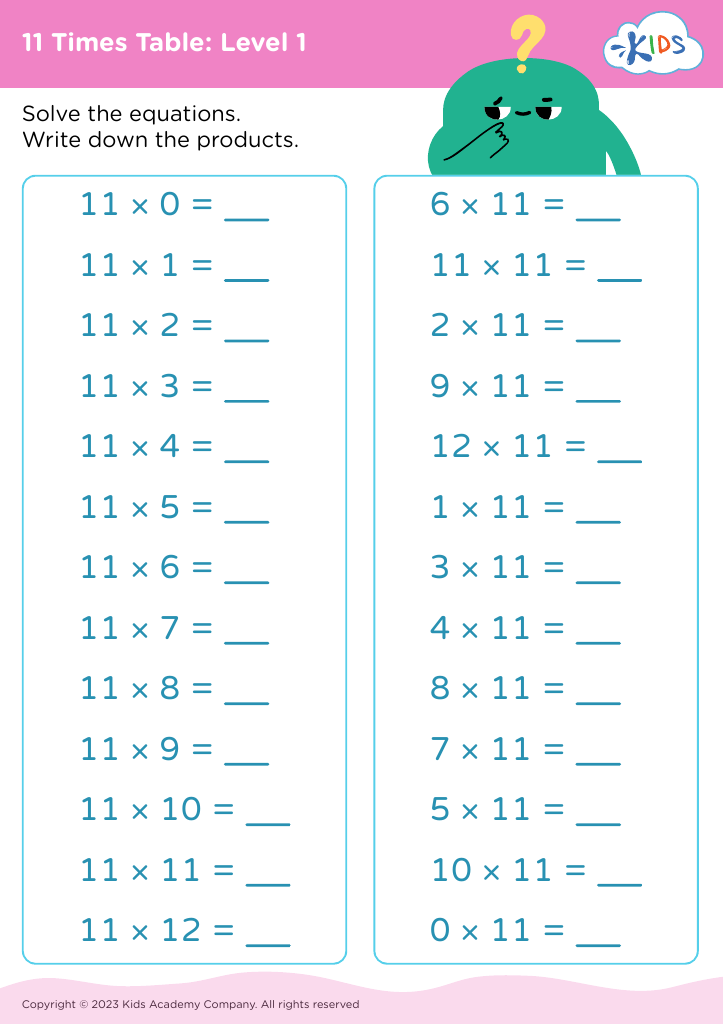
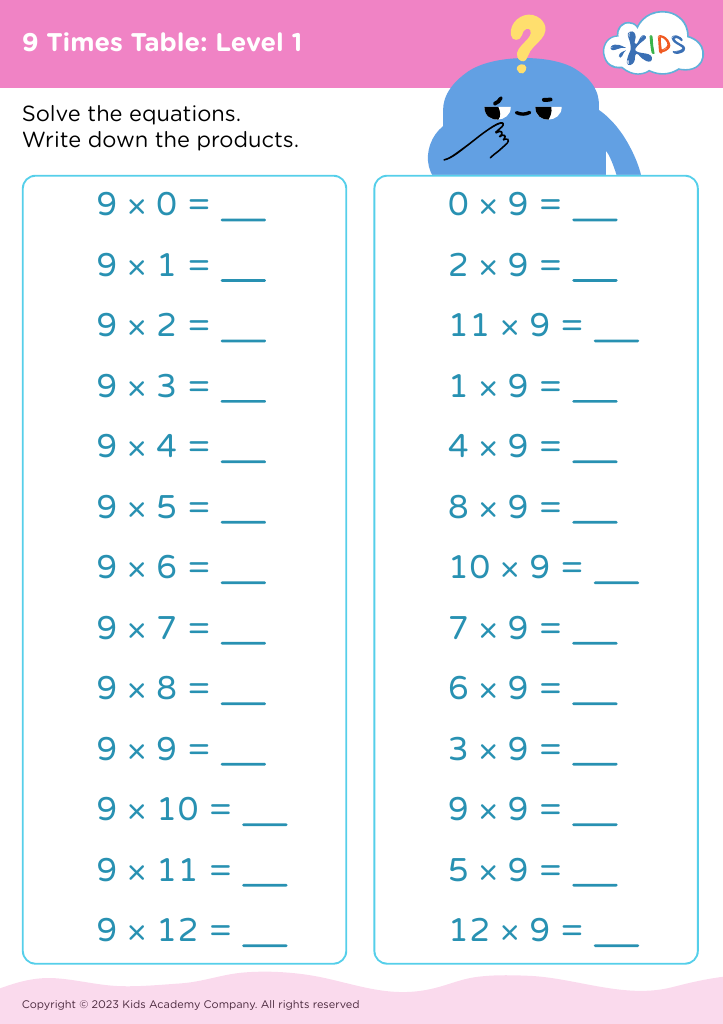





Multiplication practice, particularly mastering times tables, is crucial for children aged 7-9 for several reasons. First and foremost, it forms the foundation for more advanced mathematics. Understanding multiplication enables students to tackle division, fractions, and even early algebra concepts later on. Proficiency in times tables boosts confidence in math, helping children to participate more actively in class and reduce math-related anxiety.
At this age, children are developing critical cognitive skills, and consistent practice strengthens their memory and recall abilities. Furthermore, when students memorize multiplication tables, they improve their computational speed, allowing them to complete math problems swiftly and efficiently. This skill is essential not just for math classes but also for real-life situations, including budgeting, cooking, and shopping.
Encouraging multiplication practice at home or in the classroom cultivates a positive learning environment where children feel supported in mastering challenging concepts. This foundational skill fosters an appreciation for mathematics, forming the basis for ongoing success in academics. Therefore, prioritizing multiplication practice should be a collective effort embraced by parents and teachers to empower children in their educational journey and instill lifelong learning habits.








