Hand-eye Coordination Tracing Numbers Worksheets for Ages 7-9
4 filtered results
-
From - To
Enhance your child's hand-eye coordination with our engaging tracing numbers worksheets designed for ages 7-9! These printable activities not only improve numeric recognition but also develop fine motor skills essential for writing and everyday tasks. Each worksheet encourages kids to focus on accuracy while tracing numbers, helping them build confidence in their abilities. Perfect for home or classroom use, our worksheets create a fun and interactive learning experience. Foster a love for learning math while enhancing coordination skills. Explore our collection today and give your child the tools they need for academic success!
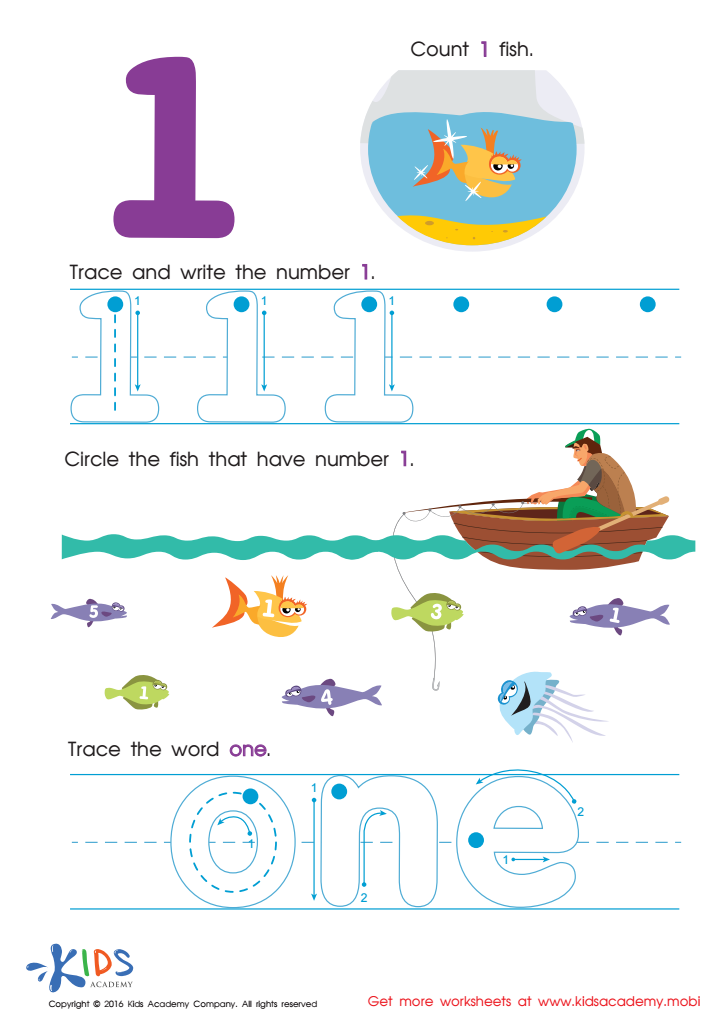
Learning to Write 1 Worksheet
 Assign to My Students
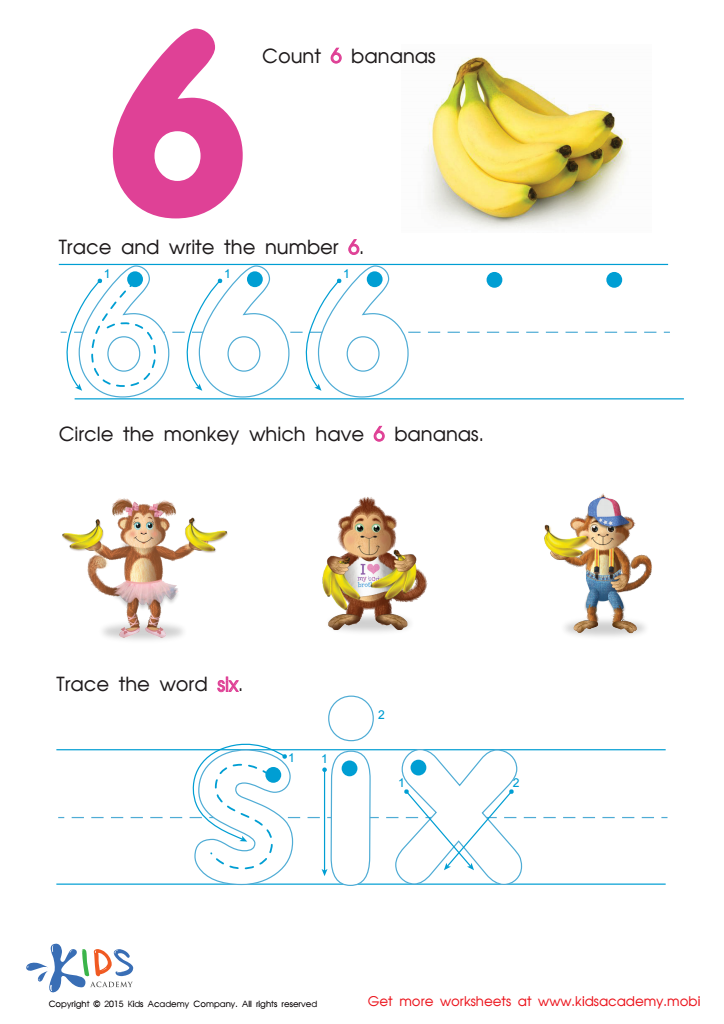
Tracing And Writing Number 6 Worksheet
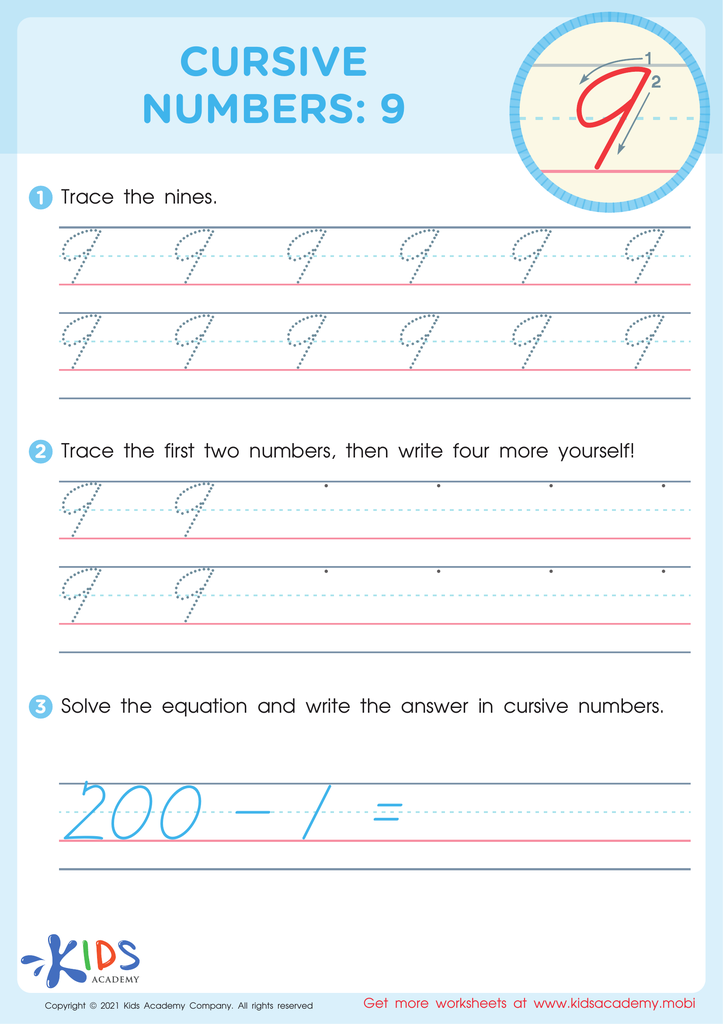
Cursive Numbers: 9 Worksheet
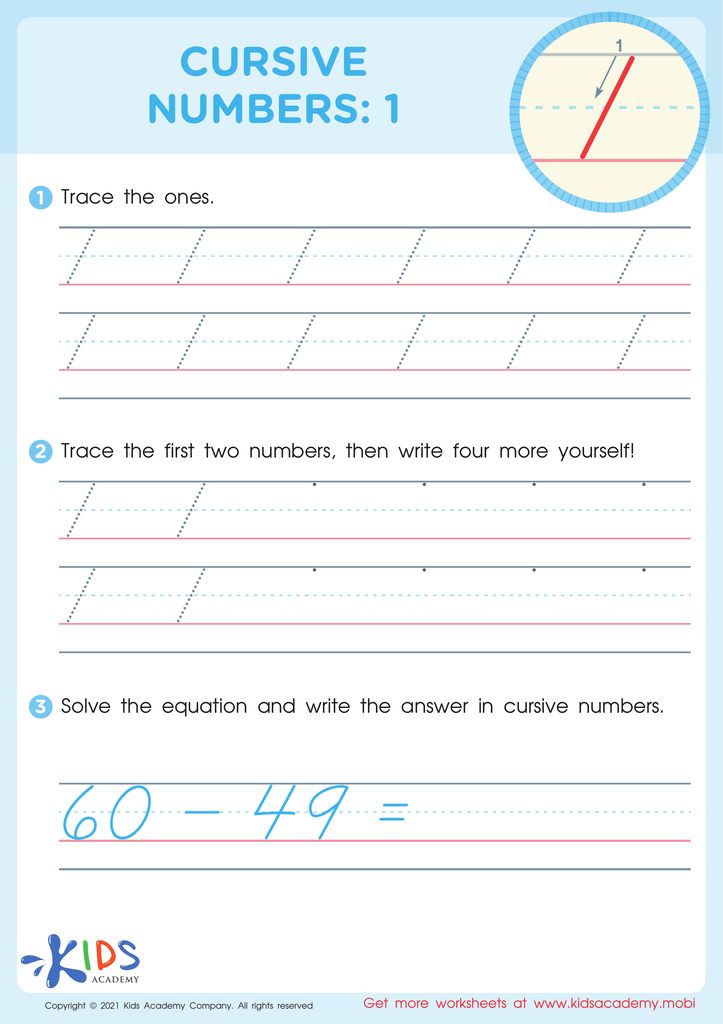
Cursive Numbers: 1 Worksheet








Hand-eye coordination is a crucial skill for children aged 7-9, as it plays a significant role in their overall development. Tracing numbers helps to strengthen this ability by requiring students to synchronize their visual perception with their fine motor skills. As they move their writing utensil along the predetermined paths of numbers, they enhance their control and precision, which is essential for various daily tasks like writing, drawing, and using tools.
Moreover, focusing on tracing numbers can bolster children’s mathematical understanding. This activity aids in reinforcing number recognition, numerical concepts, and the formation of digits, planting the seeds for more advanced arithmetic skills. As they engage with numbers tactilely, they may develop a deeper connection with math, fostering a positive attitude toward the subject.
In addition, hand-eye coordination contributes to performance in sports and physical activities, essential for holistic development. Encouraging these practices can bridge academic skills with physical outcomes, promoting a well-rounded education.
Most importantly, gaining proficiency in hand-eye coordination through tracing can boost self-esteem as children improve their skills. This confidence can transcend into other areas of learning and personal development, making this seemingly simple activity significantly beneficial. Parents and teachers should therefore prioritize such engaging exercises in their routines.