
Improve vocabulary Building Vocabulary Worksheets for Ages 7-9
4 filtered results
Difficulty Level
Grade
Age
-
From - To
Subject
Activity
Standards
Boost your child's language skills with our "Building Vocabulary Worksheets" designed specifically for ages 7-9! These engaging worksheets encourage young learners to explore new words while enhancing their reading comprehension and communication abilities. Each activity is crafted to make learning enjoyable, helping students to expand their vocabulary through exciting exercises that involve definitions, synonyms, antonyms, and context clues. Ideal for both home and classroom use, these resources will empower your child to express themselves more effectively. Perfect for improving vocabulary in a fun, interactive way, our worksheets are a valuable tool for any early grade educational setting. Start building a brighter future today!
Favorites
With answer key
Interactive
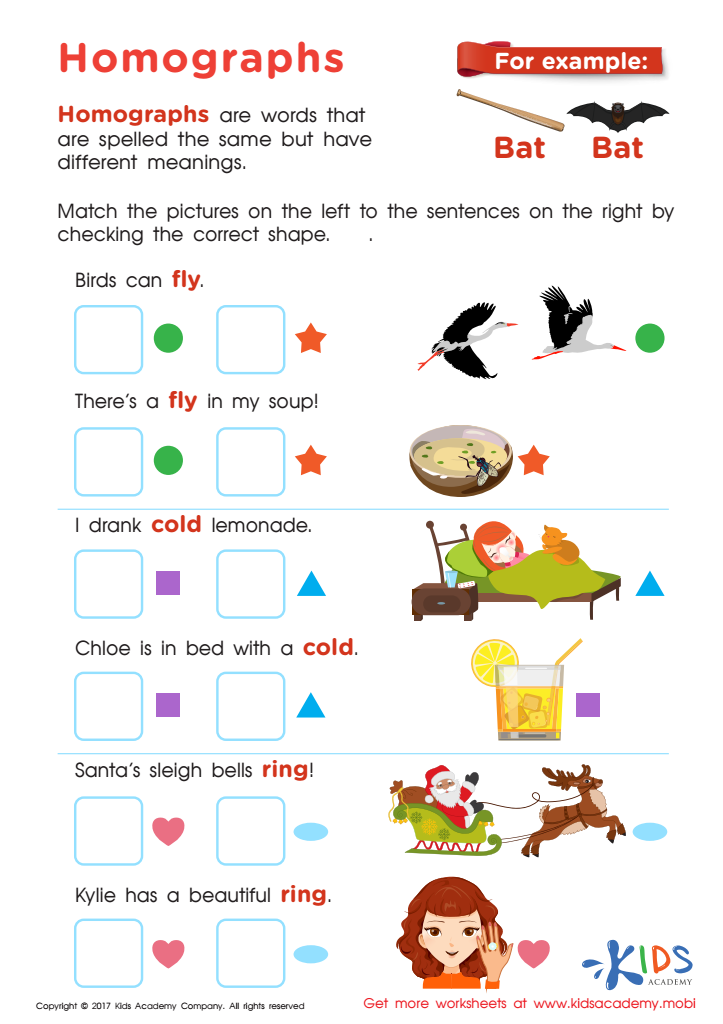
Homographs Free Printable Worksheet
Homographs can be tricky for kids. Help them gain valuable practice with this free printable worksheet. It has a selection of funny words with double meanings, and can be a great learning experience!
 Assign to My Students
Homographs Free Printable Worksheet
Worksheet











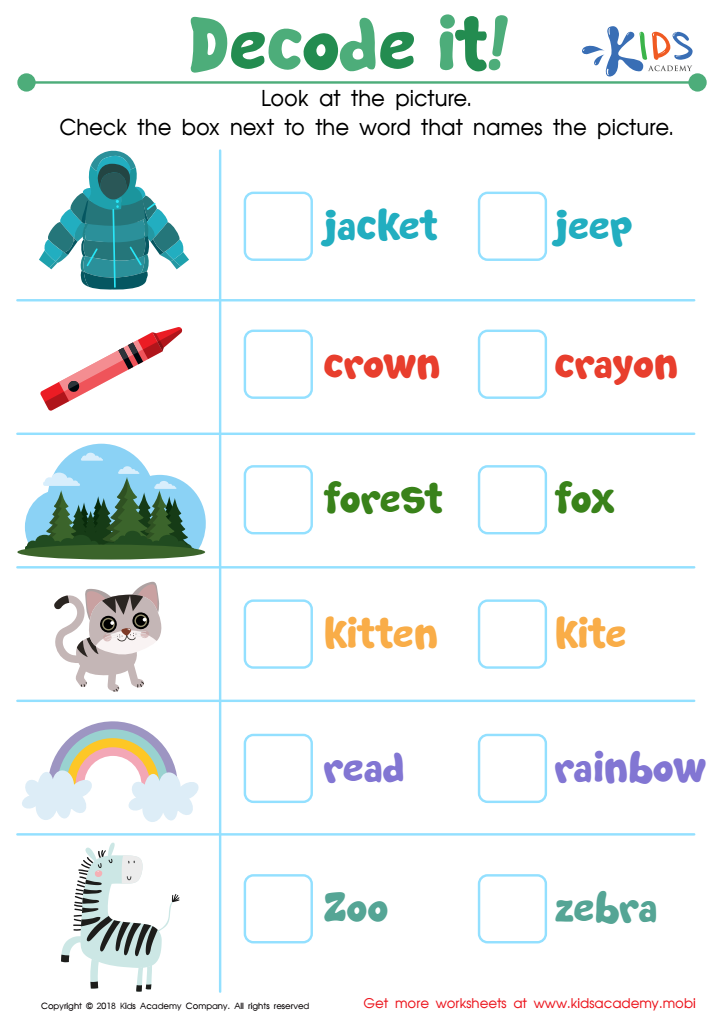
Reading: Decode It Worksheet
Look at the picture and circle the word that names it. This exercise helps kids practice picture cues and decoding words, with the same beginning sound. It builds their fluency and comprehension, giving them the skills to read unfamiliar words.
Reading: Decode It Worksheet
Worksheet
Join Kids Academy for Free
Who is primarily going to use this learning content?








Parents and teachers should prioritize vocabulary building for children aged 7-9 because this stage is crucial for language development and literacy. At this age, children's capacity for understanding complex words expands significantly, and a robust vocabulary directly impacts their reading comprehension, writing skills, and overall academic success. By enriching their vocabulary, we empower children to express their thoughts clearly and engage in deeper discussions, cultivating critical thinking skills.
Moreover, a strong vocabulary enhances children’s ability to enjoy and understand literature, which fosters a love for reading. This passion can lead to independent reading habits that further enhance their learning. Additionally, when children can articulate their ideas effectively, they gain confidence in social interactions, necessary for building relationships and succeeding in group settings.
Engaging in vocabulary building activities—through games, storytelling, and discussions—also strengthens cognitive skills as children learn to categorize, infer meanings, and use context clues. These foundational skills are vital for lifelong learning and articulate communication in both academic and personal contexts. Therefore, investing time and resources in building vocabulary will not only support their educational journey but also prepare them for a successful future in an increasingly complex world.








