
Phonics practice Building Vocabulary Worksheets for Ages 7-9
4 filtered results
Difficulty Level
Grade
Age
-
From - To
Subject
Activity
Standards
Boost your child's reading skills with our Phonics Practice Building Vocabulary Worksheets, designed for ages 7-9. Our expertly crafted worksheets provide engaging and interactive activities that help children expand their vocabulary, improve spelling, and sharpen phonics skills. Perfect for both classroom and home use, these worksheets reinforce essential reading foundations through fun exercises involving word recognition, pronunciation, and usage. Kids will enjoy learning as they practice decoding words and building stronger language skills. Support your child's literacy journey and ensure their reading success with our comprehensive and enjoyable phonics practice resources.
Favorites
With answer key
Interactive
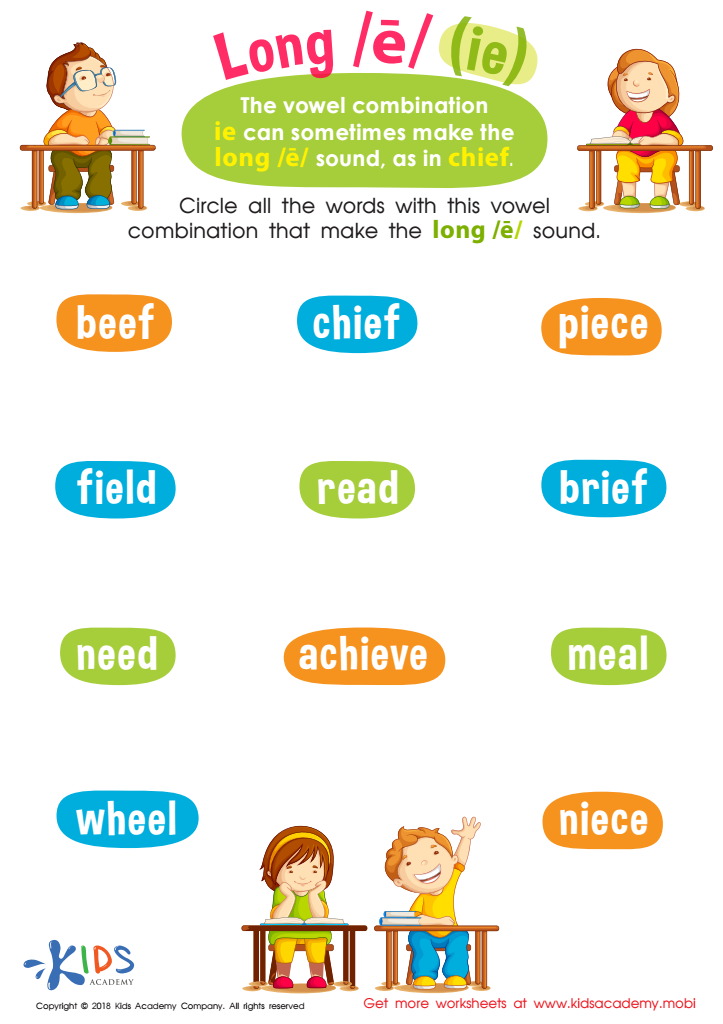
Reading: Long E and IE Worksheet
Ask your child to name some words with the long /e/ sound they hear every day. Then, read aloud all the words in the worksheet with them. Ask them to circle the words containing ie that make this sound.
 Assign to My Students
Reading: Long E and IE Worksheet
Worksheet











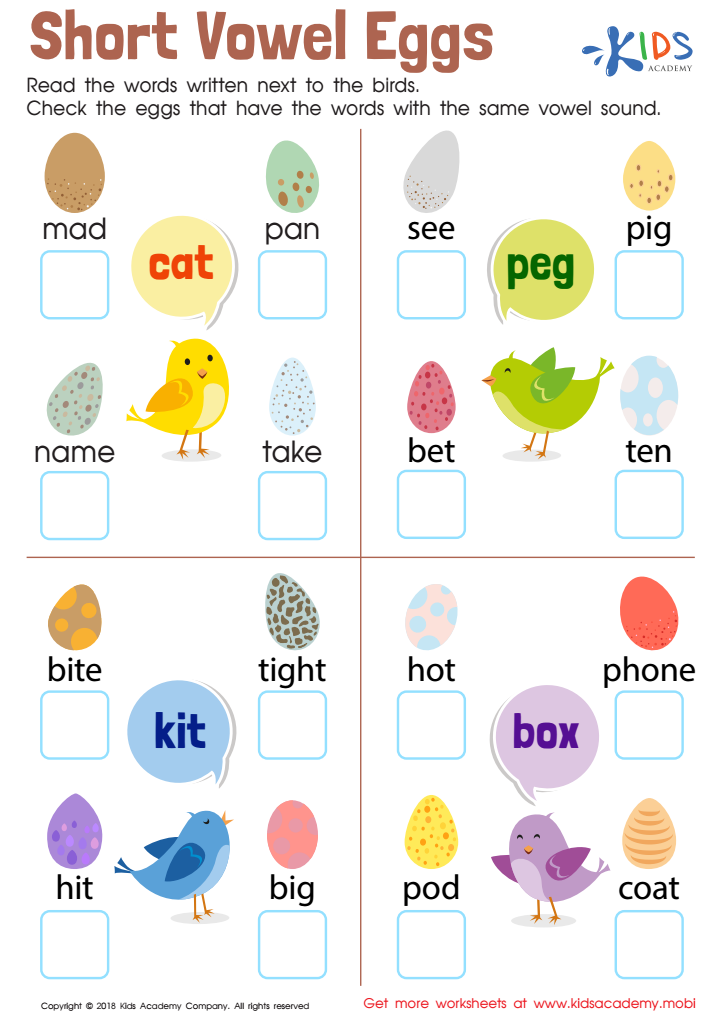
Short Vowel Eggs Worksheet
Your students will love helping these birdies pick the short vowel eggs! Have them read the words in the thought bubbles, then check off the boxes with the same short vowel sounds. The bright colors of this free Worksheet will draw them in and get them practicing their vowels!
Short Vowel Eggs Worksheet
Worksheet
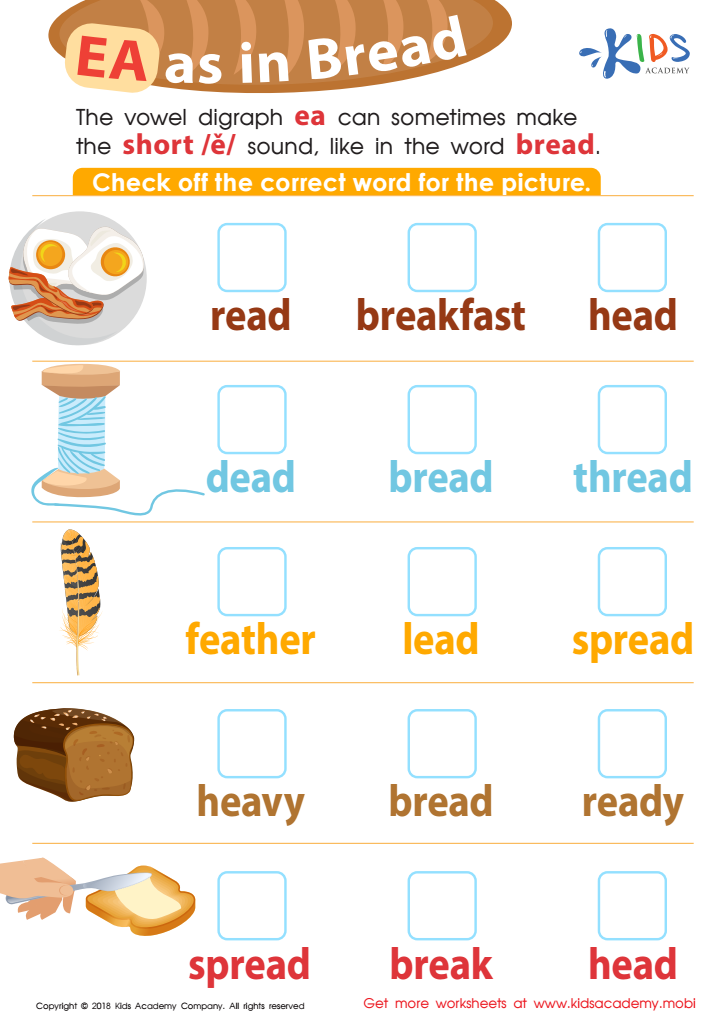
Reading: EA as in Bread Worksheet
The vowel digraph ea can be read in two ways. Examples of the long sound are "read" and "lead"; examples of the short sound are "bread" and "head". Ask your kids to give you more examples and then have them check off the correct word for the pictures on this worksheet. This will help them understand the ea sound.
Reading: EA as in Bread Worksheet
Worksheet
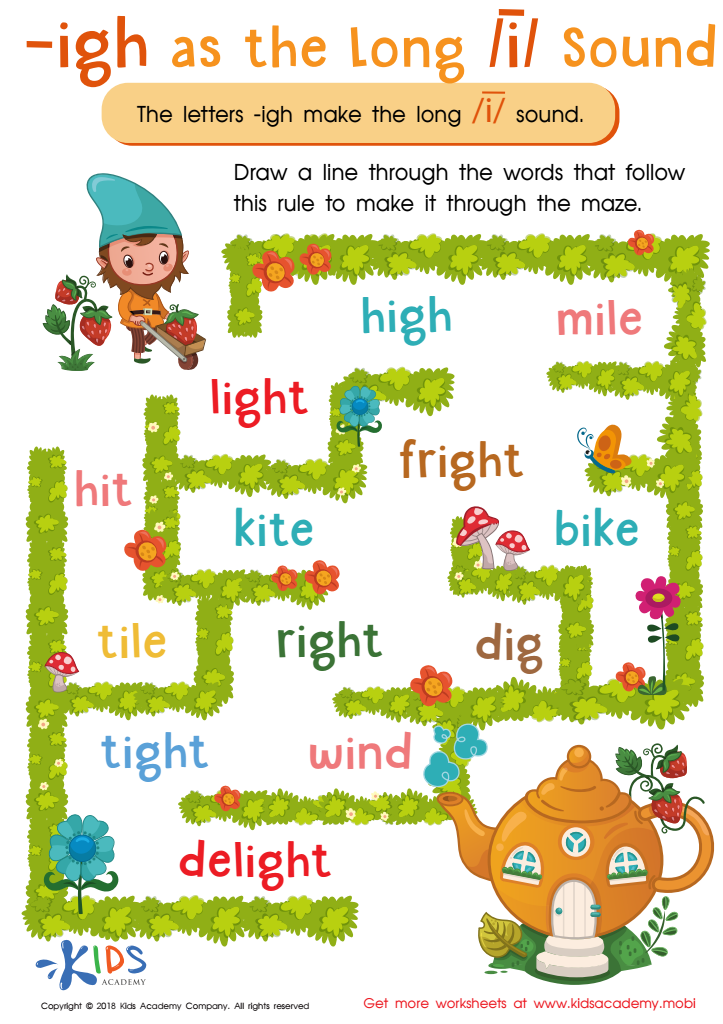
Reading: IGH as Long I Worksheet
Kids can have fun and learn with this maze! They'll look for and read words with the 'long I' sound spelled 'igh'. Most words ending with 'T' have this spelling. Decode words while learning about long vowel sounds and their spellings.
Reading: IGH as Long I Worksheet
Worksheet
Join Kids Academy for Free
Who is primarily going to use this learning content?







.jpg)
Parents and teachers should genuinely care about phonics practice and vocabulary building for children aged 7-9 because these foundational skills are critical for reading fluency, comprehension, and overall academic success. During these formative years, children transition from learning to read to reading to learn. Phonics, which involves understanding the relationship between sounds and letters, equips children with the tools to decode new words independently. This skill is essential for building a robust vocabulary, enhancing children's ability to communicate effectively and understand more complex texts across subjects.
Moreover, a strong vocabulary forms the cornerstone for all areas of learning, including math, science, and social studies. It aids children not only in their academic journey but also in their ability to express themselves more clearly and confidently. Poor reading skills, often resulting from inadequate phonics instruction and limited vocabulary, can lead to difficulties in other academic areas and affect a child's self-esteem and motivation to learn.
Furthermore, research shows that early reading proficiency sets the stage for future educational achievement. Investing time in phonics and vocabulary practice helps mitigate reading difficulties before they become entrenched. Parents' and teachers' active participation ensures that children receive consistent reinforcement and practice, laying the groundwork for lifelong learning and intellectual curiosity.








