
Recognizing Patterns Building Vocabulary Worksheets for Ages 7-9
3 filtered results
Difficulty Level
Grade
Age
-
From - To
Subject
Activity
Standards
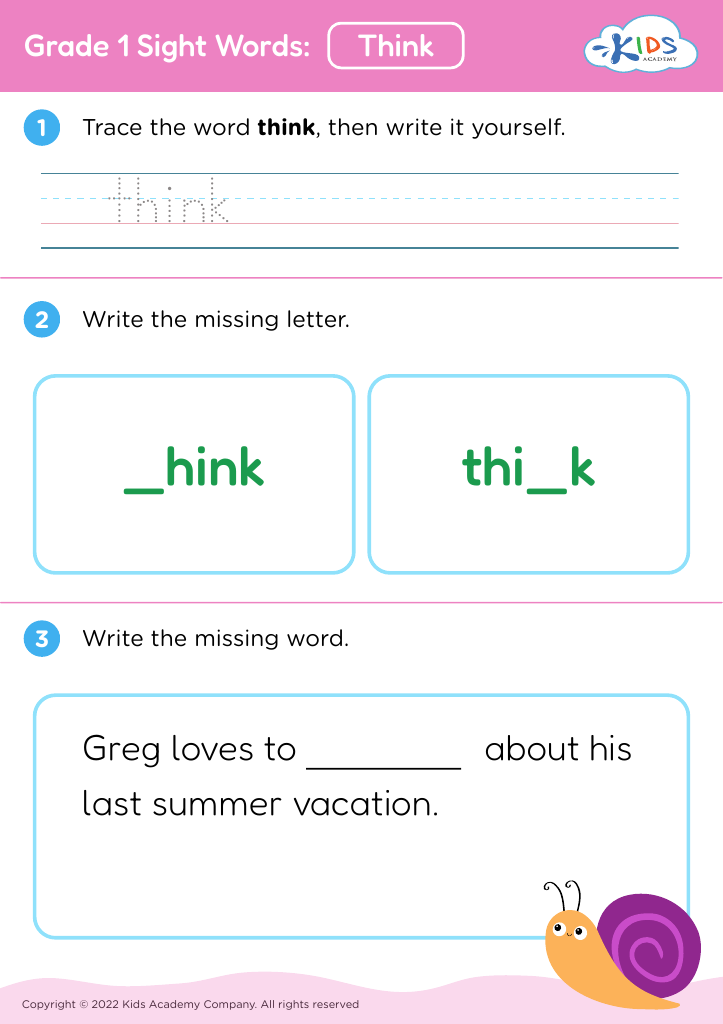
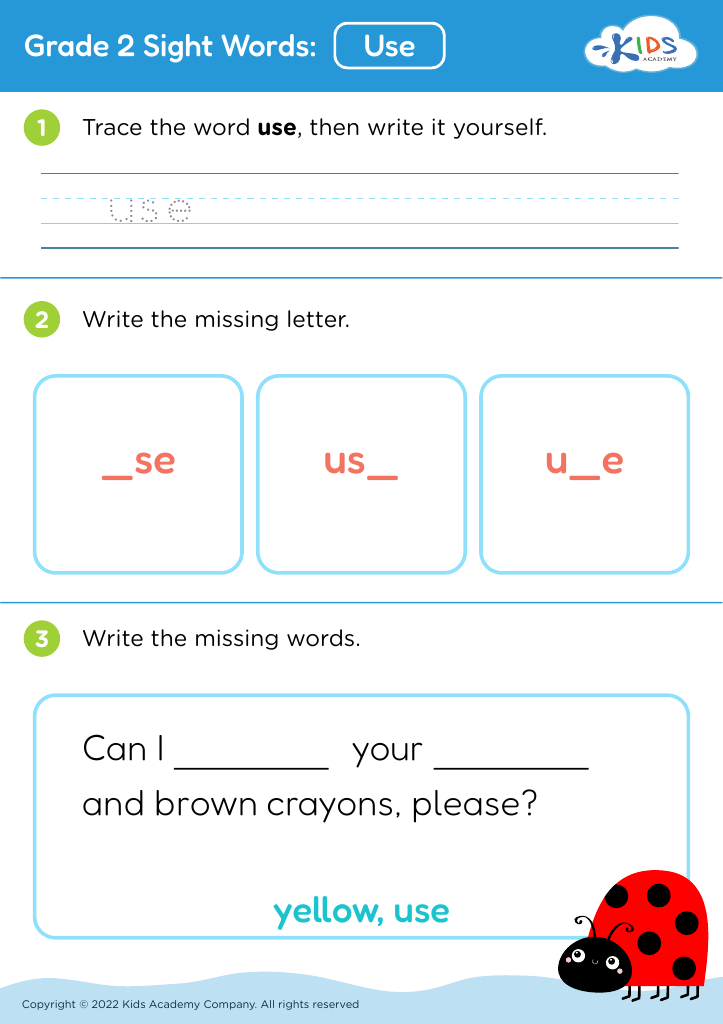
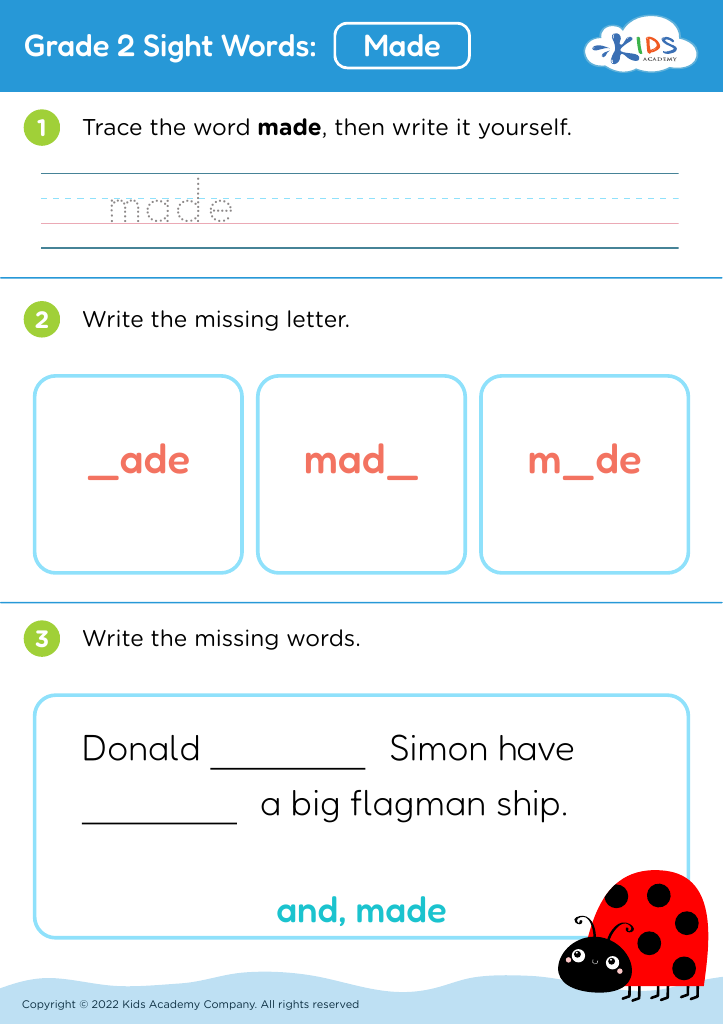
"Recognizing Patterns Building Vocabulary Worksheets for Ages 7-9" offer a fun and educational way to boost your child's vocabulary. Our engaging worksheets help young learners identify patterns in words, enhancing both their spelling and understanding of language structure. Specifically designed for ages 7 to 9, these activities improve reading comprehension and critical thinking skills through vibrant visuals and interactive tasks. By integrating pattern recognition with vocabulary building, kids can easily grasp new words and their meanings, fostering a strong foundation for future learning. Perfect for classroom use or at-home study, these worksheets make learning enjoyable and effective.
Favorites
With answer key
Interactive











Join Kids Academy for Free
Who is primarily going to use this learning content?







Recognizing patterns and building vocabulary are foundational skills that have significant long-term impacts on children's cognitive and linguistic development. For children ages 7-9, these skills play a critical role in various learning domains.
Patterns help children make sense of complex information by enabling them to predict, classify, and solve problems systematically. This skill is particularly valuable in subjects like math and science, where recognizing numerical, geometric, or logical patterns forms the basis for higher-order thinking. For example, understanding number sequences or relationships between elements can simplify learning advanced mathematical concepts.
Building vocabulary is equally vital, as it directly influences reading comprehension, writing capabilities, and overall communication skills. A rich vocabulary allows children to express their thoughts more precisely and understand the nuances in the material they read. This fosters a love for reading, enabling them to acquire more knowledge independently.
Moreover, strong vocabularies and pattern-recognition skills are interconnected and reinforce each other, helping children grasp grammatical structures, spelling rules, and syntax more intuitively. Consequently, investing in these skills ensures a well-rounded education, fostering critical thinking, creativity, and future academic success. Therefore, parents and teachers should prioritize these areas to provide a robust foundation for children's lifelong learning and intellectual growth.








