Word identification Building Vocabulary Worksheets for Ages 7-9
5 filtered results
-
From - To
Unlock the power of words with our engaging Word Identification Building Vocabulary Worksheets tailored for children aged 7-9! These interactive resources enhance reading skills and boost vocabulary through fun activities like word searches, matching exercises, and fill-in-the-blanks challenges. Designed to cultivate early literacy, our worksheets focus on key word identification strategies, ensuring young learners can recognize and comprehend new vocabulary in context. Perfect for home or classroom use, these worksheets encourage independent learning while providing a strong foundation for future reading success. Help your child embark on an exciting literary adventure and watch their confidence soar with every completed worksheet!
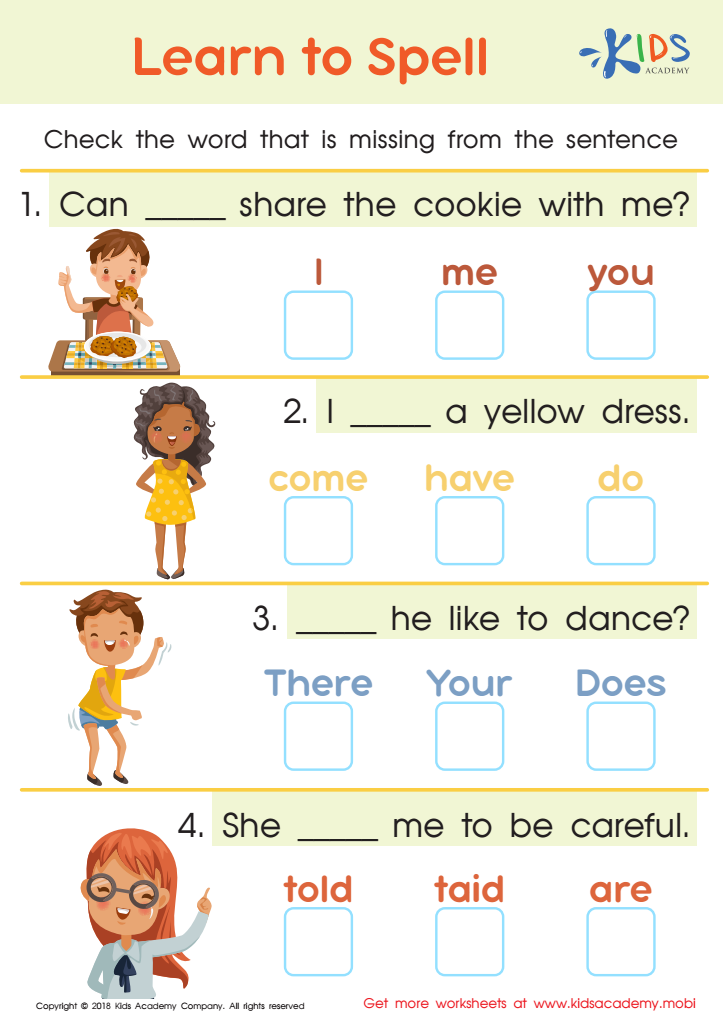
Learn to Spell Worksheet
 Assign to My Students











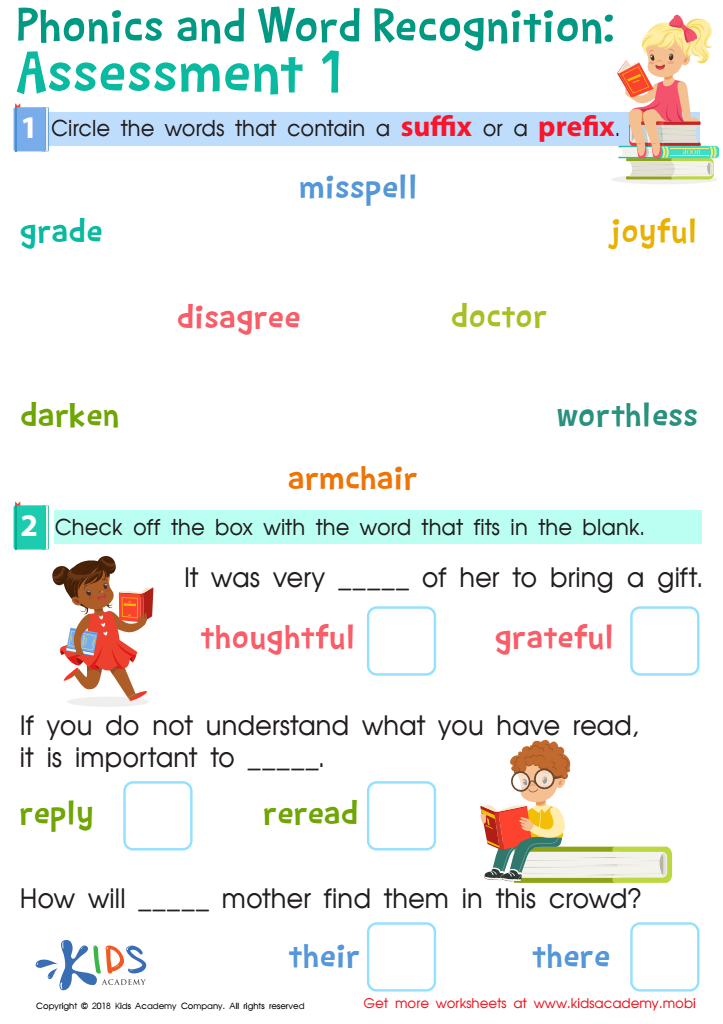
Phonics and Word Recognition: Assessment 1 Worksheet
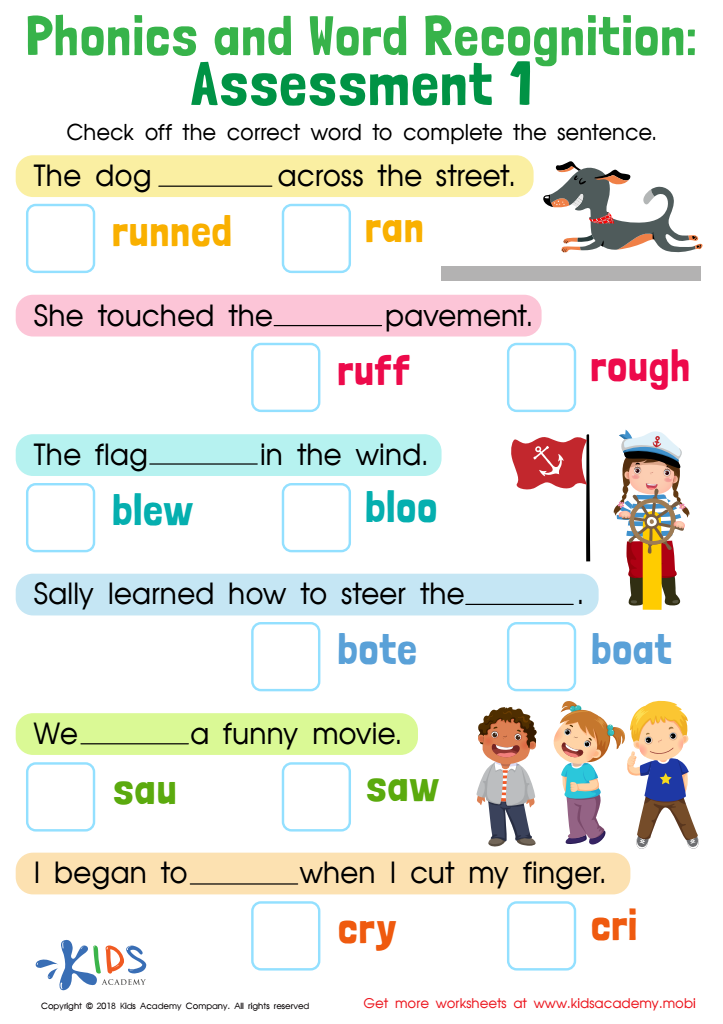
Phonics and Word Recognition: Assessment 1 Worksheet
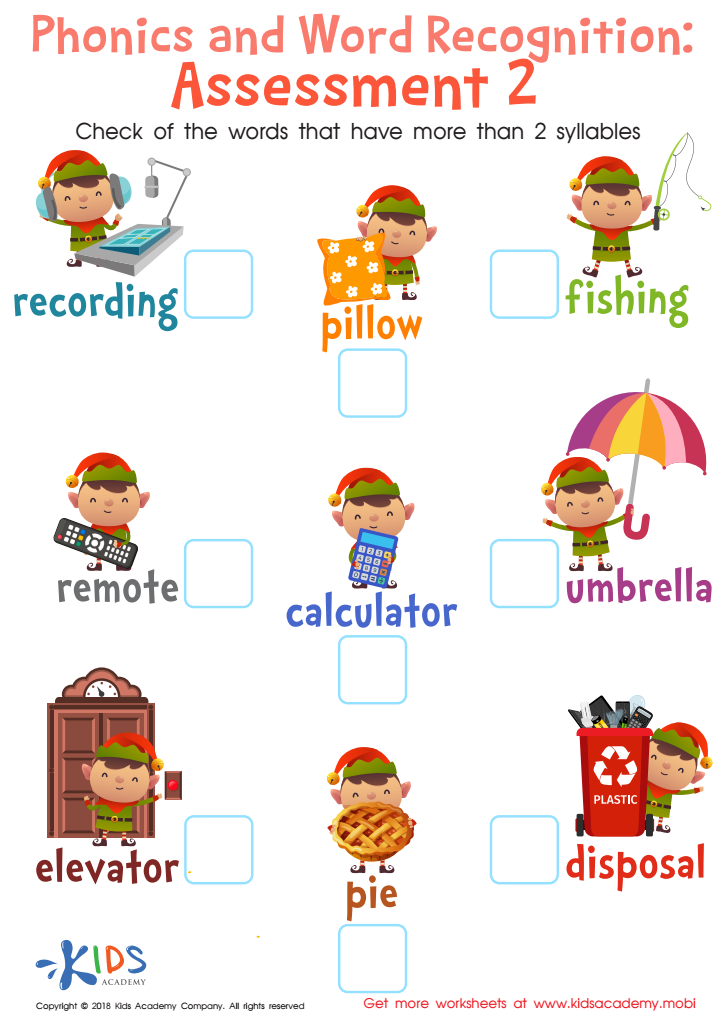
Phonics and Word Recognition: Assessment 2 Worksheet
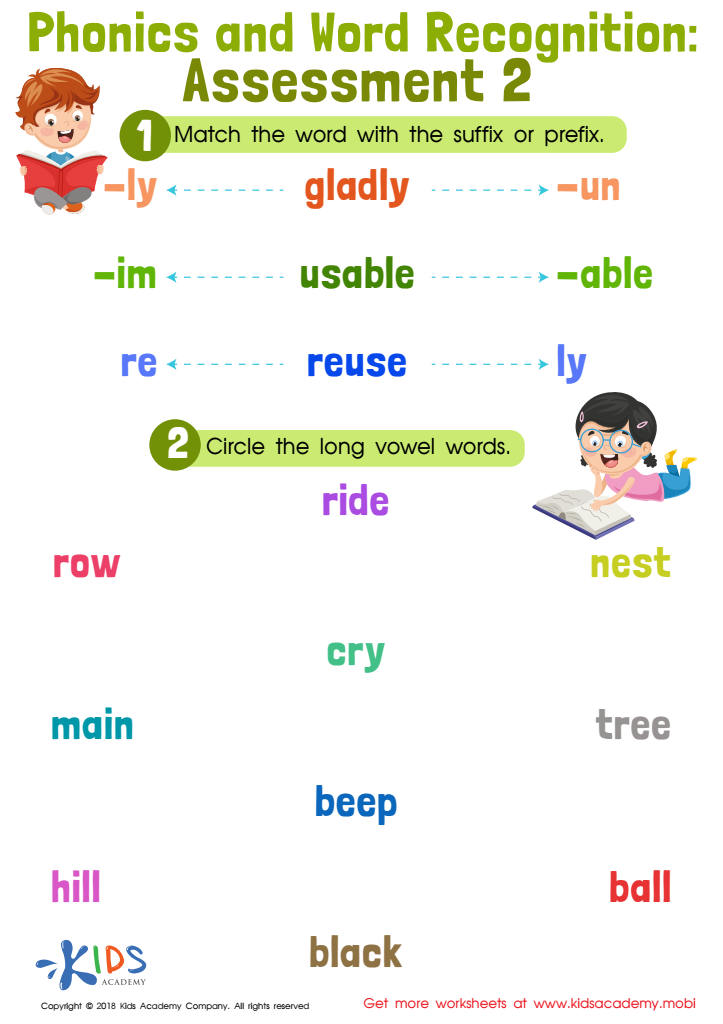
Phonics and Word Recognition: Assessment 2








For children aged 7-9, the ability to identify words and build vocabulary is crucial for academic success and effective communication. Parents and teachers play vital roles in fostering these skills. At this age, children transition from learning to read to reading to learn, making a strong vocabulary essential for understanding diverse subjects.
First, word identification enhances reading fluency and comprehension. When children can quickly recognize words, they can focus on understanding the content rather than decoding it. This competence leads to higher confidence and motivation in their reading journey.
Second, a rich vocabulary empowers students to express themselves more clearly and creatively. Mastery of diverse words allows children to articulate their thoughts and emotions, contributing positively to their social interactions and relationships.
Moreover, expertise in vocabulary and word identification lays a solid foundation for future learning. It aids in subjects like STEM and social studies, where rich language is necessary to grasp complex concepts.
Ultimately, advocating for strategies to improve vocabulary and word identification—through games, reading diverse materials, or discussing new words—can drastically enhance a child's educational experience. Therefore, parents and teachers should actively prioritize and support these essential language skills in young learners.








