Color recognition Reading Worksheets for Ages 7-9 - Page 2
25 filtered results
-
From - To
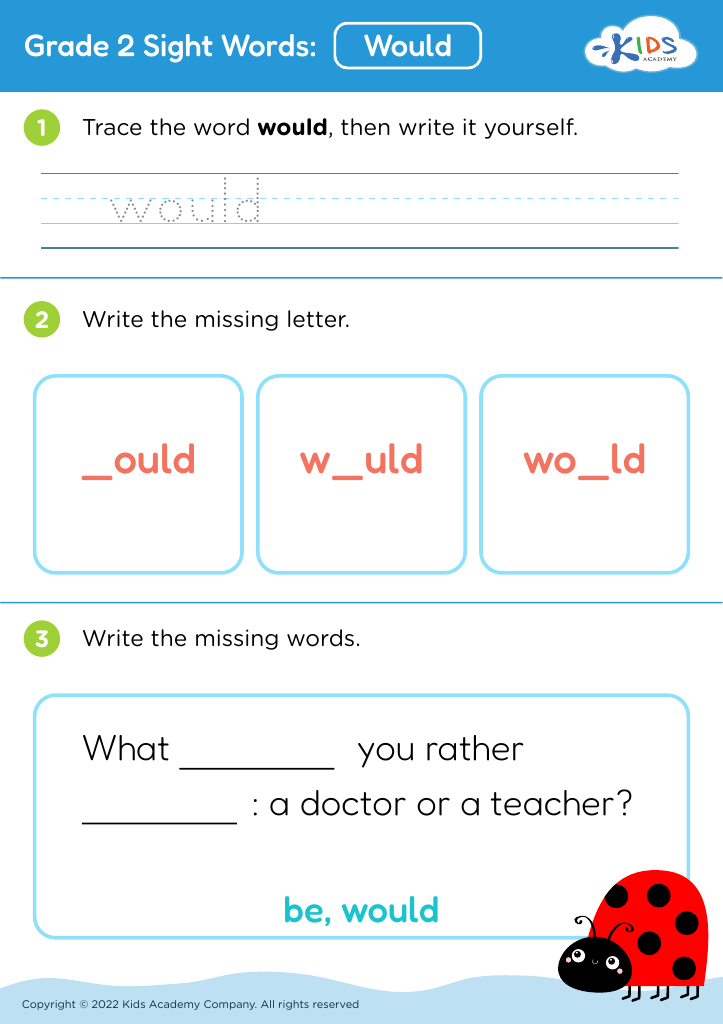








Color recognition is a fundamental skill that plays a crucial role in early childhood development, particularly in reading for children ages 7-9. Understanding colors can enhance a child's ability to engage with text and illustrations in books. When children recognize colors, they can make connections between written words and visual images, which solidifies comprehension and retention of the material. Additionally, colors in reading often denote themes, emotions, and different characters, enriching the storytelling experience and aiding in imagination.
For parents and teachers, focusing on color recognition is vital because it allows children to express themselves creatively and encourages them to associate different colors with various concepts. Engaging in activities that promote color identification can also enhance a child's vocabulary as they learn descriptive words linked with colors, strengthening their overall language skills.
Moreover, proficient color recognition lays a solid foundation for later skills in math, science, and art. It is also integral to fostering children's critical thinking as they begin to categorize and associate colors with different objects or emotions. Thus, by nurturing color recognition, parents and teachers not only support reading achievement but also promote a broader range of cognitive and emotional development in children.








