Identifying shapes Reading Worksheets for Ages 7-9
5 filtered results
-
From - To
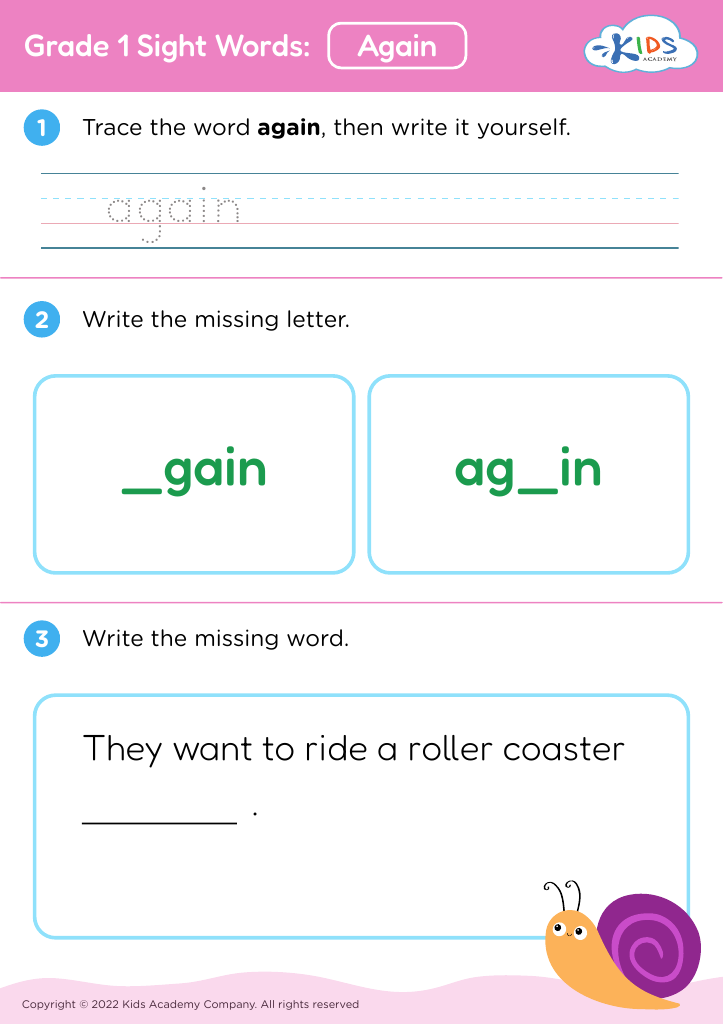
Enhance your child's understanding of geometry with our Identifying Shapes Reading Worksheets tailored for ages 7-9! These engaging worksheets are designed to boost reading comprehension while helping young learners identify and distinguish between various shapes. By integrating fun stories and practical exercises, kids get to explore 2D and 3D shapes in everyday contexts. This dual approach not only reinforces geometric knowledge but also builds essential reading skills. Ideal for both classroom and home use, our worksheets bring a creative twist to learning, making shapeful discoveries both fun and educational. Download today to start your geometry adventure!







.jpg)
Identifying shapes and reading for children aged 7-9 are foundational skills critical for their academic and cognitive development. At this stage, children transition from simple pattern recognition to more complex thought processes and comprehension abilities, making it crucial for parents and teachers to prioritize these skills.
Understanding shapes lays the groundwork for geometry, a key component of math curricula. By identifying shapes, children learn about spatial relationships, symmetry, and geometrical concepts, which bolster problem-solving and logical thinking skills. This understanding aids in subjects like science and engineering later on.
Similarly, reading proficiency during these formative years is vital. Effective reading skills enhance vocabulary, critical thinking, and the ability to understand instructions and complex narratives. Reading expands a child's world, increases empathy, and fosters imagination. Moreover, strong reading abilities correlate with success in all academic subjects.
By focusing on identifying shapes and reading, parents and teachers help children develop essential skills that support their overall learning trajectory. Hands-on activities and engaging stories not only make learning enjoyable but also instill a lifelong love for knowledge and discovery. Thus, promoting these skills ensures children build a solid educational foundation, empowering them for future academic and personal success.








