Moral lesson understanding Reading Worksheets for Ages 7-9
5 filtered results
-
From - To
Discover our engaging Moral Lesson Understanding Reading Worksheets designed for children ages 7-9. These innovative resources help young learners delve into captivating stories, identify key messages, and understand valuable life lessons. Our worksheets foster critical thinking, encourage empathy, and enhance comprehension skills through fun, age-appropriate activities. Perfect for classroom use or home study, each worksheet offers a blend of challenging questions, interactive tasks, and colorful illustrations. Give your child the tools to become thoughtful, discerning readers while nurturing their moral growth. Visit Kids Academy now to empower your youngster on their journey towards better reading and understanding!
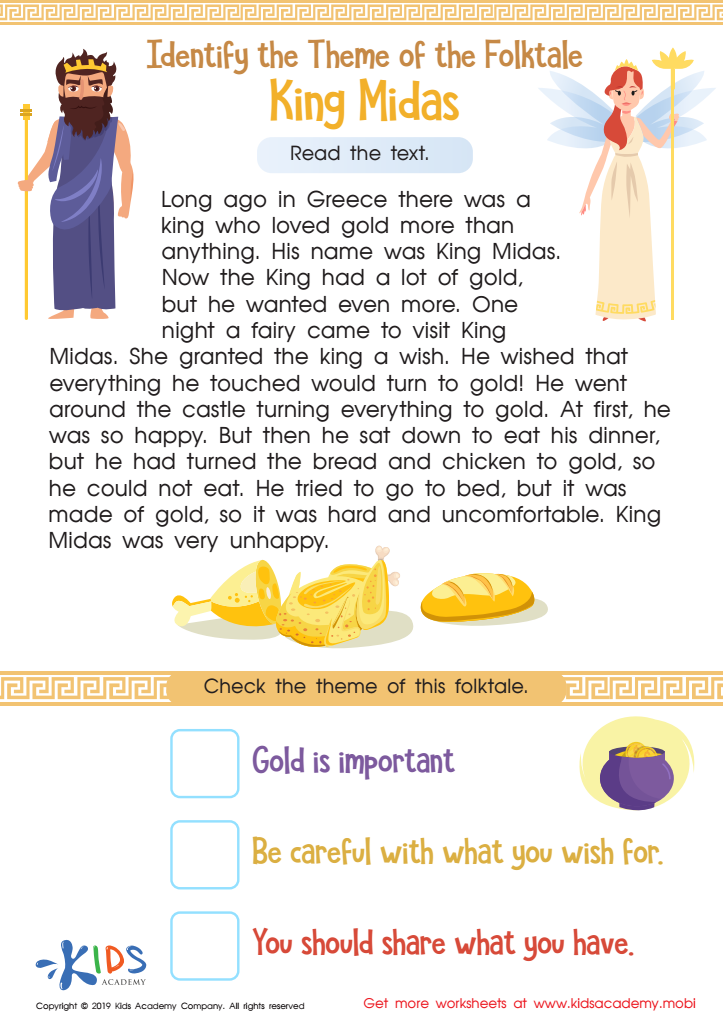
King Midas Worksheet
 Assign to My Students
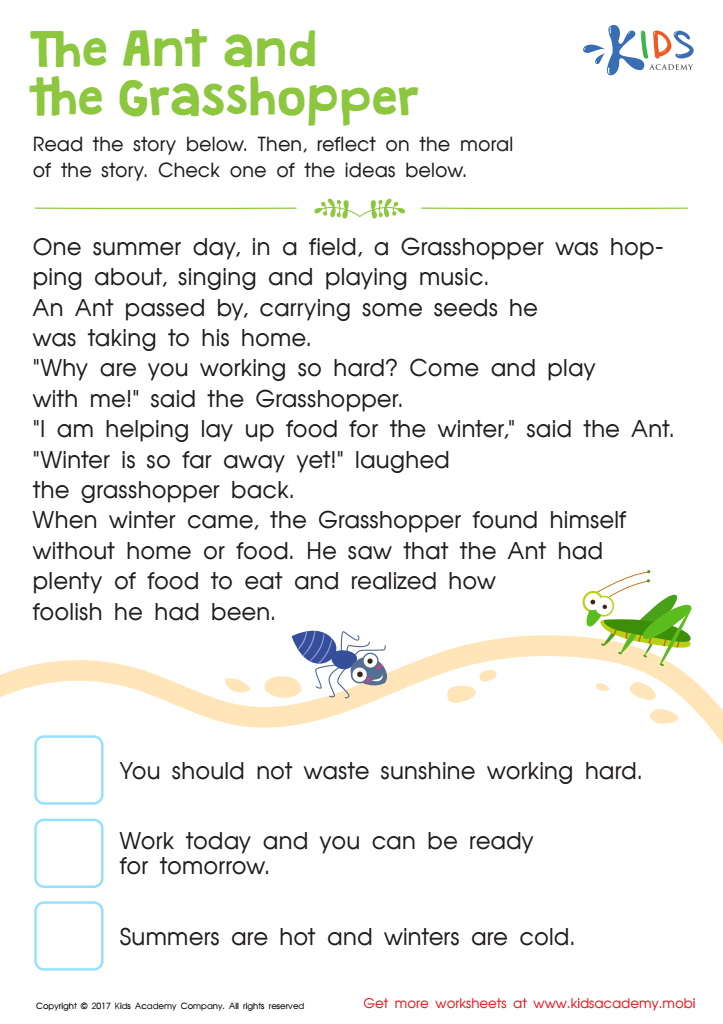
The Ant and The Grasshopper Printable
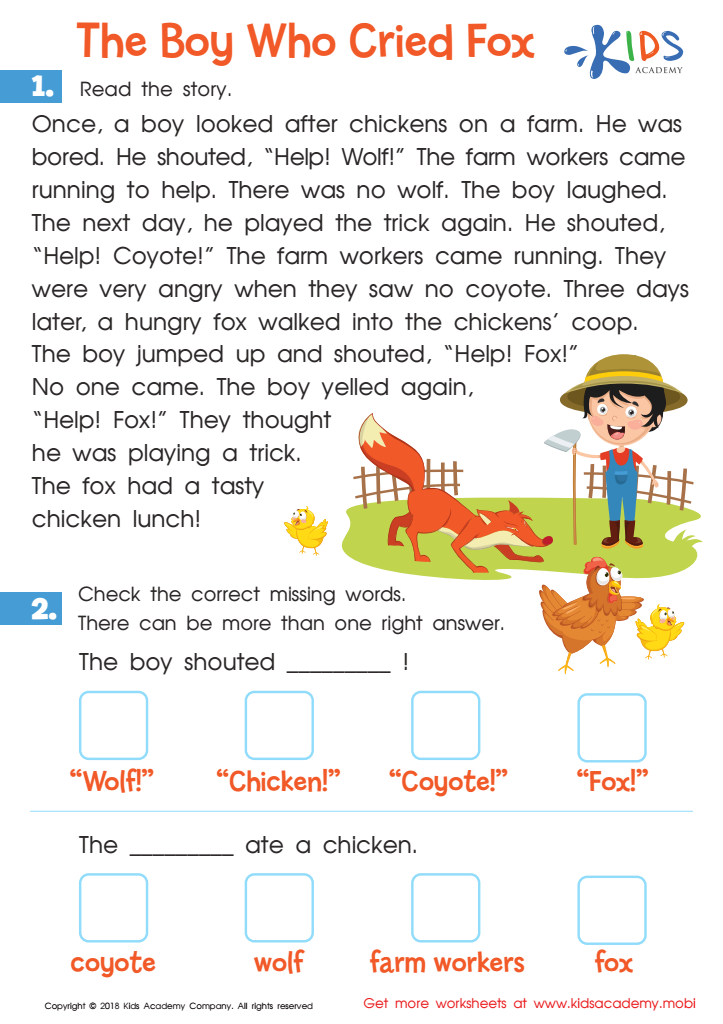
The Boy Who Cried Fox Worksheet
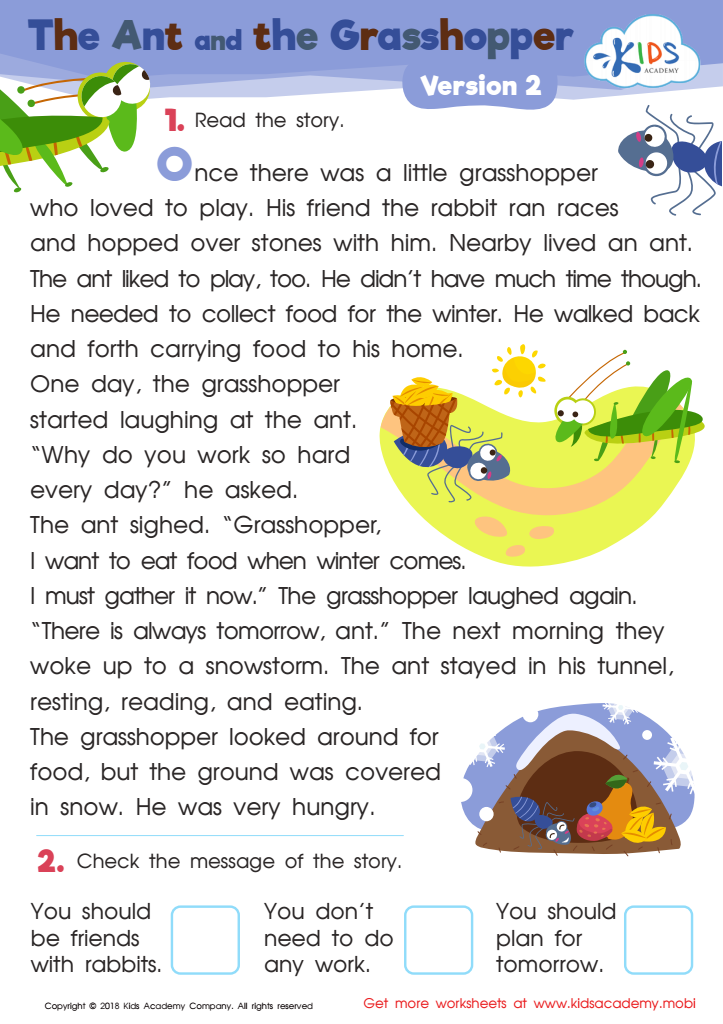
The Ant and The Grasshopper Version 2 Worksheet
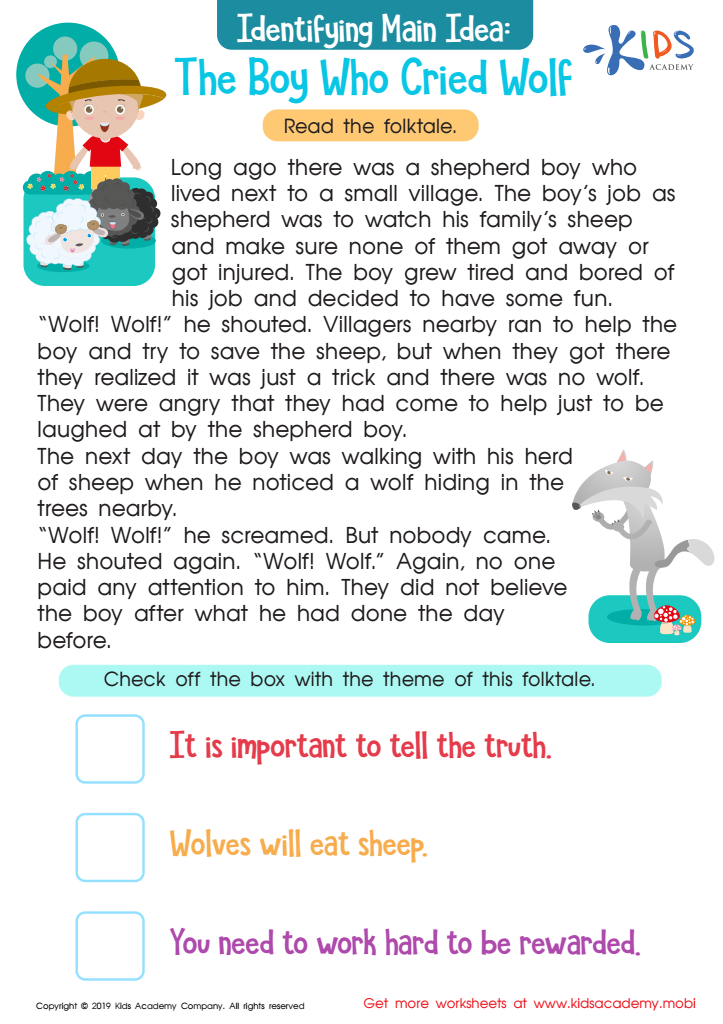
The Boy Who Cried Wolf Part 2 Worksheet






Moral lesson understanding in reading for children ages 7-9 is essential for their holistic development. During these formative years, children are not only honing their reading skills but also shaping their sense of right and wrong, empathy, and how they relate to others. Introducing stories with clear moral lessons helps them navigate complex social dynamics and understand the consequences of actions in a safe and controlled environment.
When children grasp moral lessons through reading, they learn to identify virtues such as kindness, honesty, and responsibility, which are crucial for their character development. Discussions around these stories can further reinforce these values and provide practical examples that children can emulate. For parents and teachers, these narratives become valuable tools to instill ethical principles subtly yet effectively.
Moreover, understanding morals in stories can enhance critical thinking. Children begin to analyze characters' motivations and the repercussions of their actions, fostering a deeper understanding of human behavior. This cognitive skill will benefit them not just academically, but in everyday decision-making processes.
In essence, prioritizing moral lesson understanding in reading at a young age nurtures a well-rounded individual. It ensures children are not just literate but also emotionally intelligent, socially responsible, and empathetic, laying a strong foundation for the future.








