
Understanding patterns Reading Worksheets for Ages 7-9
4 filtered results
Difficulty Level
Grade
Age
-
From - To
Subject
Activity
Standards
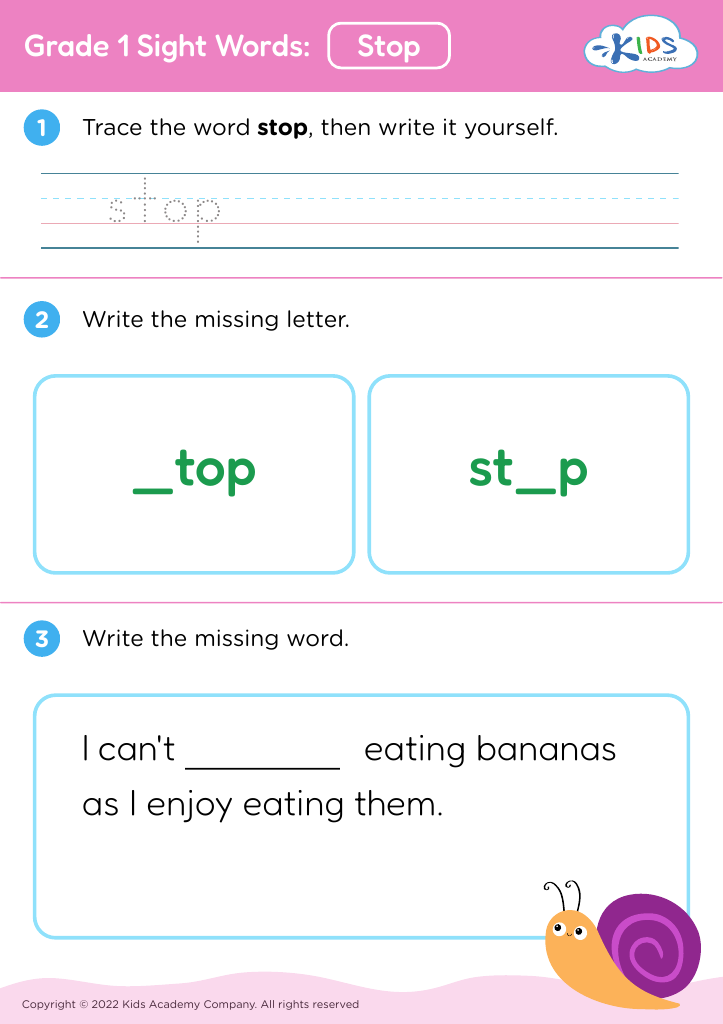
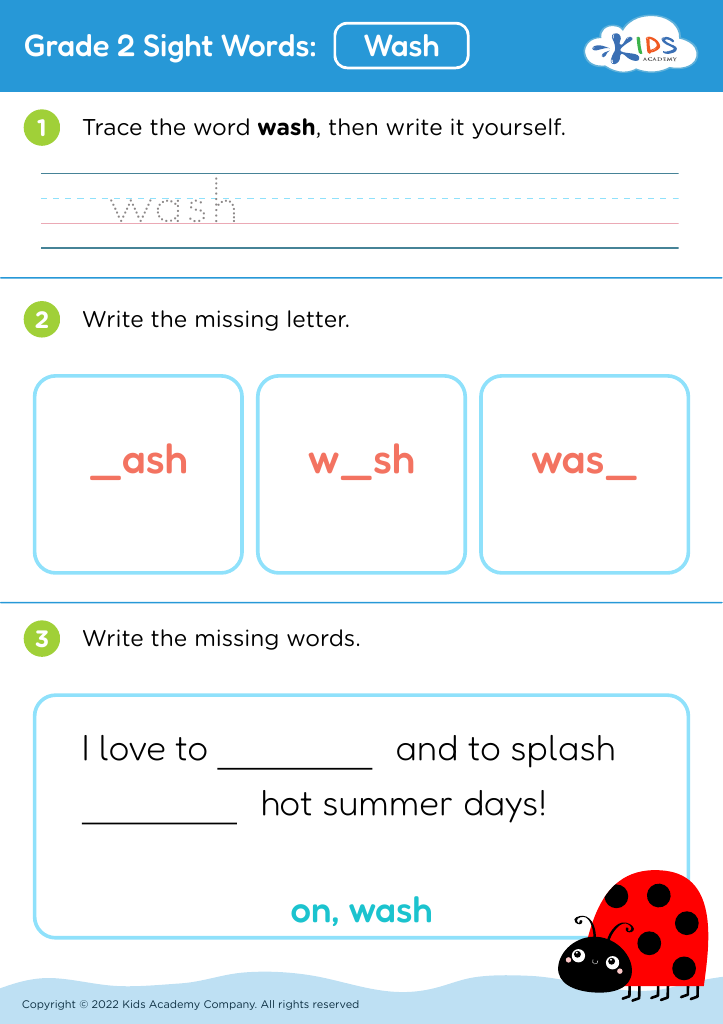
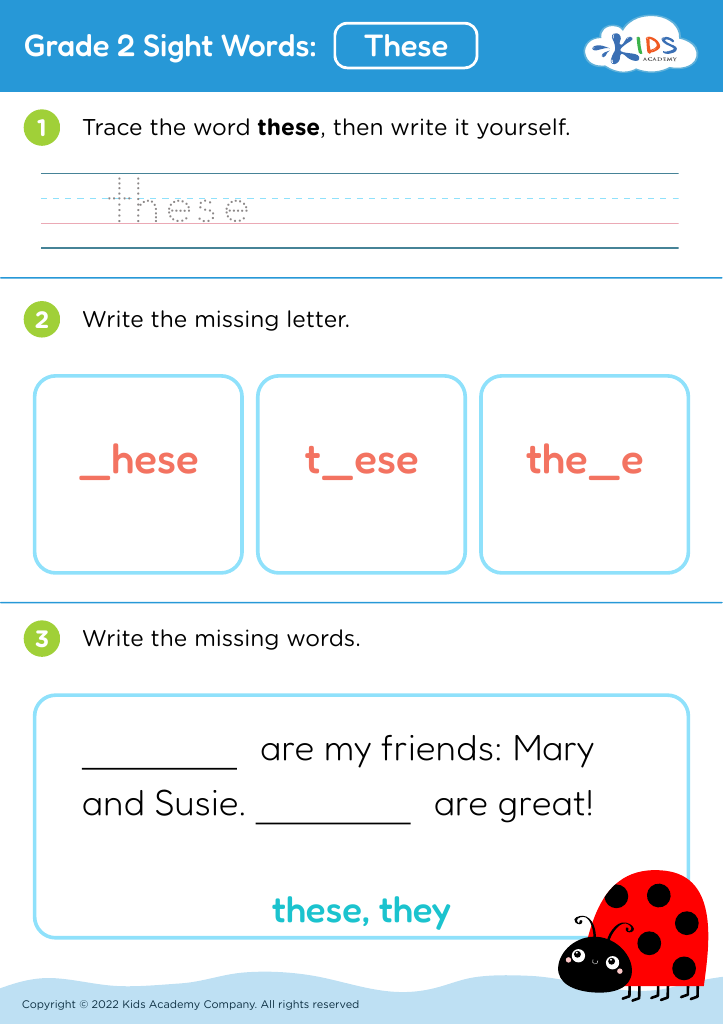
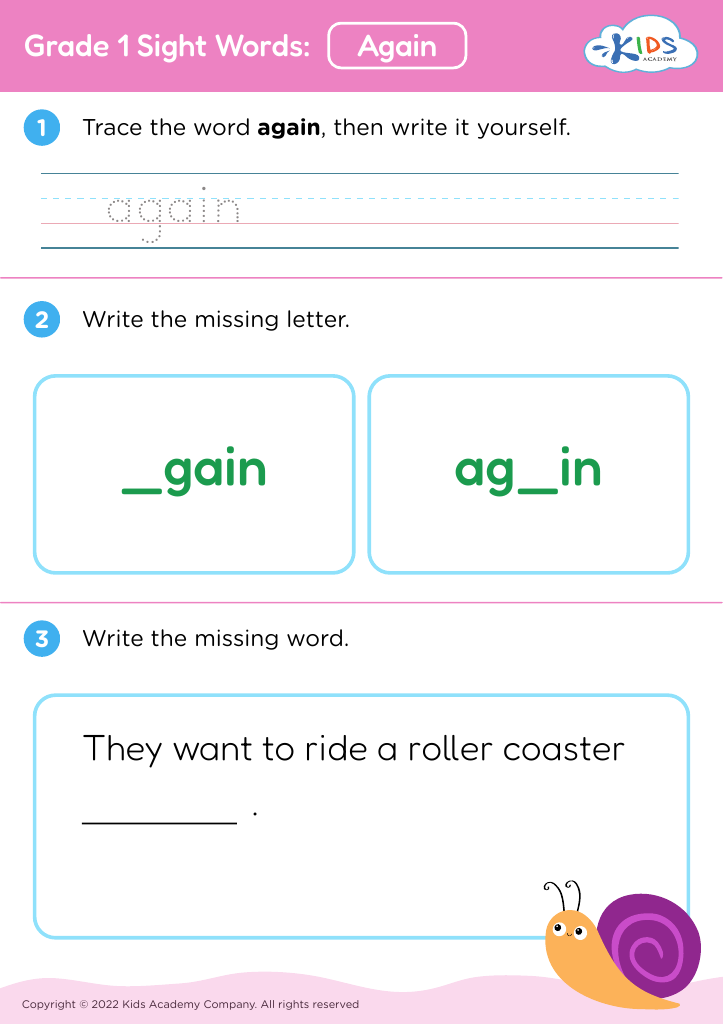
Explore our "Understanding Patterns Reading Worksheets" designed specifically for children ages 7-9. These engaging worksheets help young learners recognize, analyze, and apply patterns in text, fostering critical thinking and enhancing reading comprehension. With a variety of fun and interactive activities, students will gain confidence in identifying sequence, repetition, and relational patterns within stories and passages. Our resources not only strengthen reading skills but also promote cognitive development. Perfect for classroom use or homework, these worksheets make learning enjoyable and effective. Unlock your child’s potential and make reading a joyous adventure with our understanding patterns resources!
Favorites
With answer key
Interactive
Join Kids Academy for Free
Who is primarily going to use this learning content?








Understanding patterns in reading is crucial for children ages 7-9, as it enhances their cognitive development and lays a solid foundation for literacy. At this developmental stage, children are transitioning from learning to read to reading to learn. Recognizing patterns—such as phonetic sounds, sentence structures, and recurring themes—helps children make connections between words and concepts, improving their comprehension skills.
Parents and teachers should care about this because strong reading skills are fundamental to a child’s academic success across all subjects. Children who grasp reading patterns are better equipped to predict and infer meanings, which allows for deeper understanding and engagement with texts. This capability not only aids in academic contexts but also fosters a lifelong love of reading, promoting critical thinking and creativity.
Moreover, understanding patterns aids in developing problem-solving skills as children learn to apply strategies to new texts. This ability to recognize and utilize patterns fosters confidence, empowering children to tackle more challenging material. Consequently, supporting this aspect of literacy can help ensure that children become competent and enthusiastic readers, ultimately leading to greater success in school and beyond. In nurturing these skills, parents and teachers play a vital role in shaping children's educational journeys.








