Understanding adjectives Reading Comprehension Worksheets for Ages 7-9
3 filtered results
-
From - To
Unlock your child's reading potential with our "Understanding Adjectives Reading Comprehension Worksheets" designed for ages 7-9. These expertly crafted worksheets help young learners identify and use adjectives, enhancing their vocabulary and descriptive abilities. Each worksheet integrates engaging stories and activities focused on adjective recognition and usage within context. Perfect for classroom and at-home learning, these tools not only bolster reading comprehension but also make learning fun and interactive. Watch your child’s confidence soar as they master the art of description, making their writing and reading more vivid and dynamic. Explore these invaluable resources today!
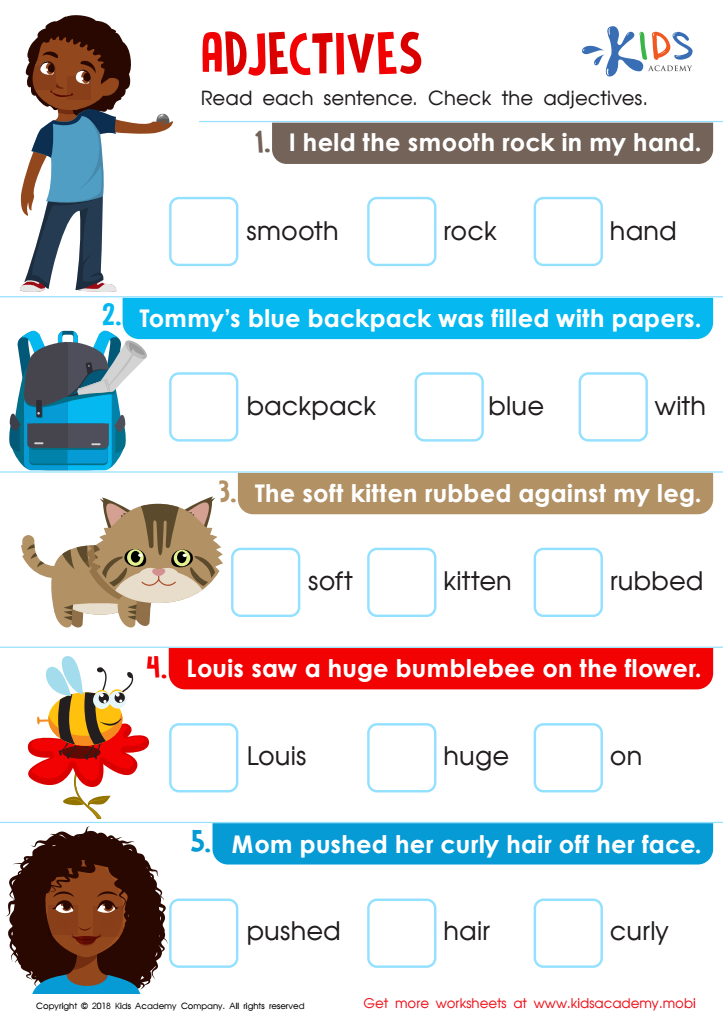
Adjectives Worksheet
 Assign to My Students
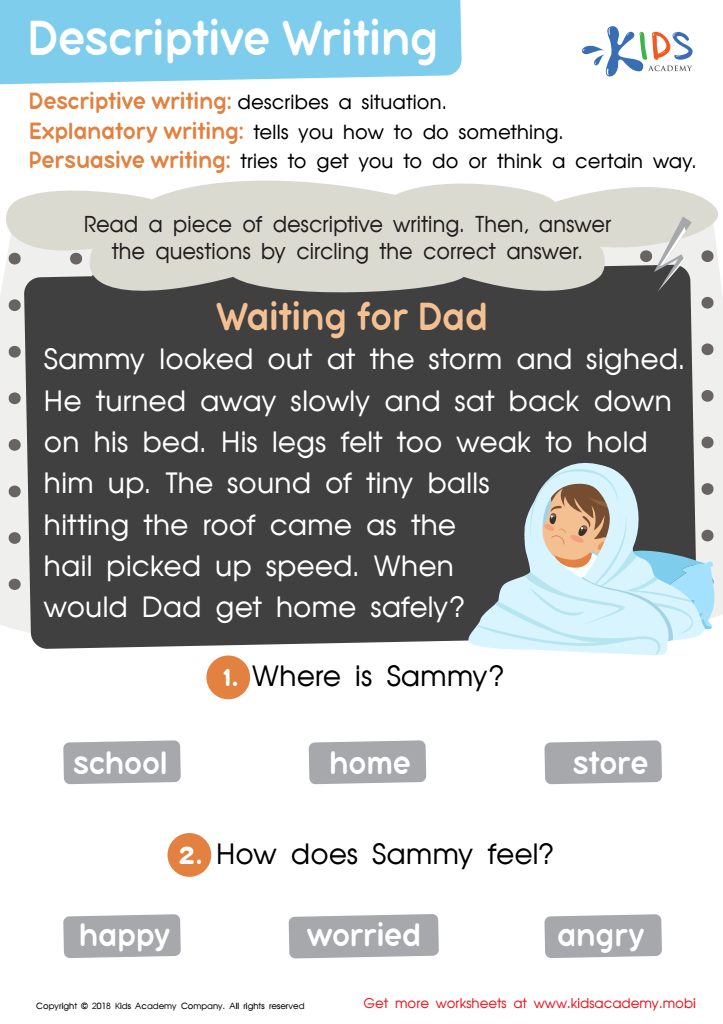
Descriptive Writing Worksheet: Part 2
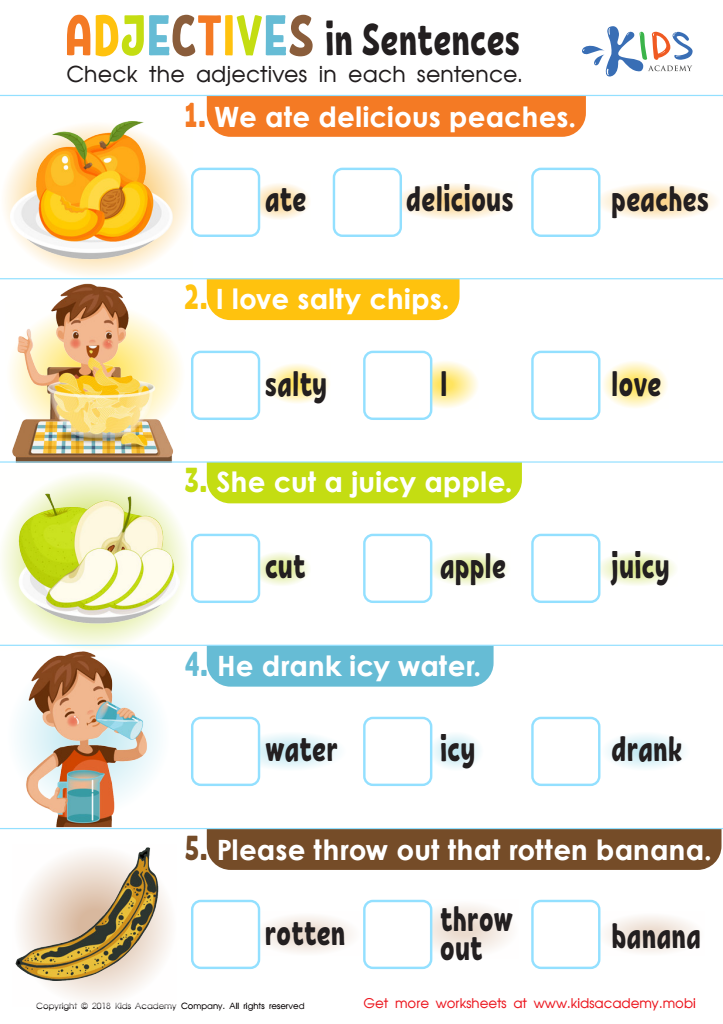
Adjectives in Sentences Worksheet








Understanding adjectives and developing reading comprehension skills are crucial milestones for children aged 7-9, making them vital areas of focus for parents and teachers. At this age, children transition from learning to read to reading to learn. Adjectives enrich their vocabulary and language, enabling them to describe scenes, characters, and emotions more vividly, enhancing both expressive and receptive communications.
When children grasp the concept of adjectives, they can comprehend stories at a deeper level. For instance, understanding the difference between a “gigantic” and a “small” tree in a story paints a more vivid mental image and sets the mood, fostering better engagement and retention. This ability to visualize, relate, and infer meaning directly influences their reading comprehension abilities.
Additionally, engaging with adjectives cultivates critical thinking. Children learn to compare, classify, and articulate differences, fostering analytical skills beneficial in all subjects. For parents and teachers, investing time in helping children understand adjectives can lead to improved academic performance and a more versatile vocabulary, setting a strong foundation for future learning.
Furthermore, a solid handle on adjectives can boost a child's confidence in expressing their thoughts clearly and creatively, fostering a lifelong love of reading and writing. Spielbound and interactive, the study of adjectives can transform learning into an enjoyable, profound educational journey.








