Understanding perspectives Reading Comprehension Worksheets for Ages 7-9
3 filtered results
-
From - To
Enhance your child's reading skills with our "Understanding Perspectives" comprehension worksheets designed specifically for ages 7-9. These engaging activities help young readers explore different viewpoints in stories, fostering critical thinking and empathy. With a variety of exercises that encourage active involvement, students will learn to identify characters' feelings, motives, and perspectives, while improving their overall comprehension. Each worksheet is crafted to align with educational standards, making learning both fun and effective. Dive into exciting narratives that not only develop reading proficiency but also teach valuable life skills. Perfect for classroom use or at-home learning, these worksheets are a fantastic resource for young learners!
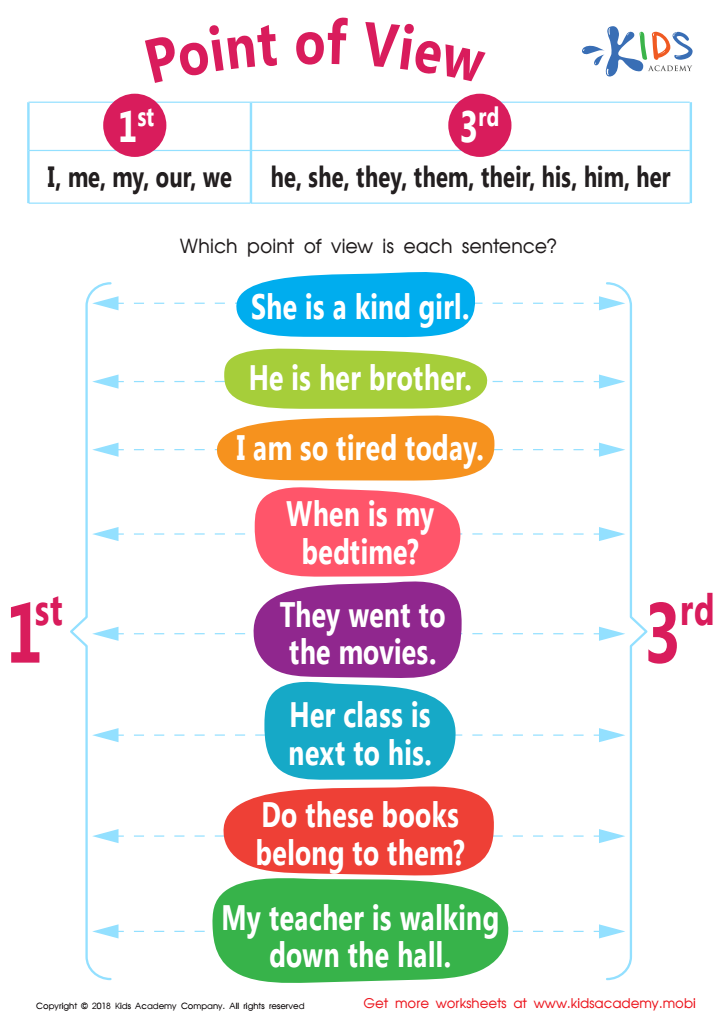
Point of View Worksheet
 Assign to My Students
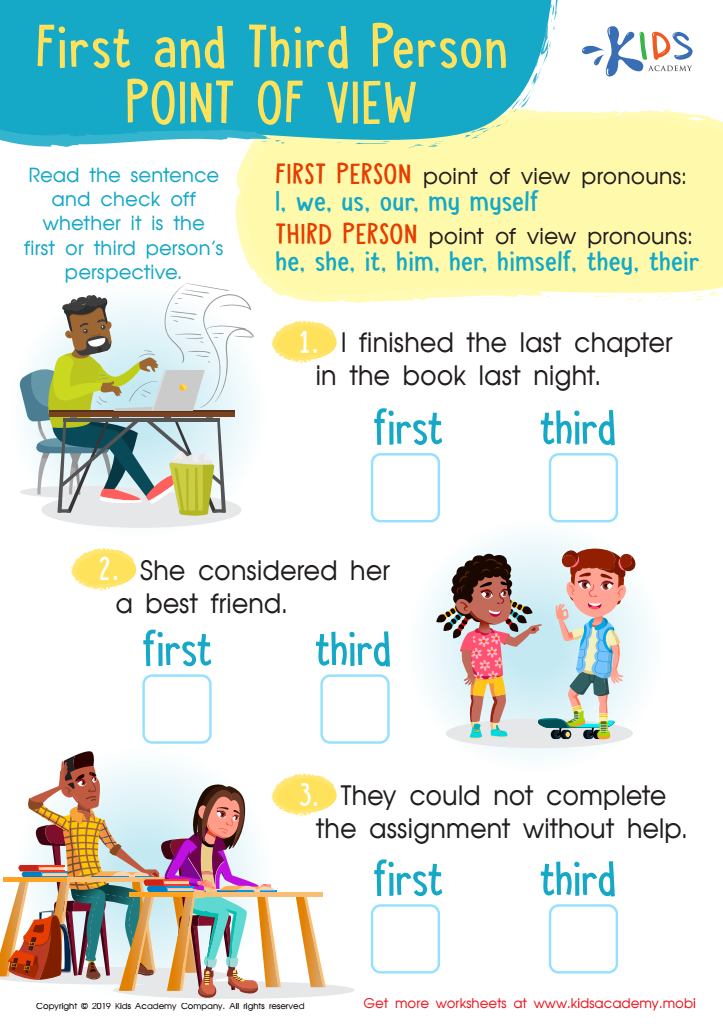
First and Third Person Point of View Worksheet
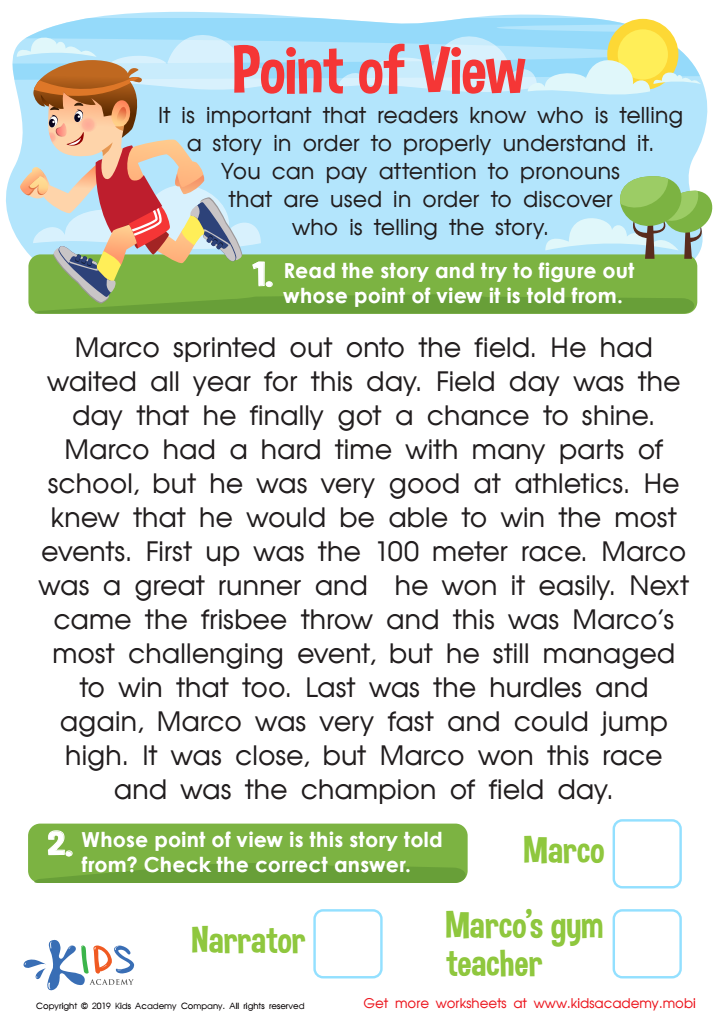
Point of View Worksheet








Understanding perspectives in reading comprehension is crucial for children aged 7-9. At this developmental stage, early readers begin to grasp that different characters have unique feelings, thoughts, and viewpoints that shape their narratives. This cognitive leap fosters empathy, a vital skill for social interaction and emotional intelligence. When children learn to identify and appreciate diverse perspectives, they are better equipped to interpret texts critically, recognize biases, and draw connections between their own experiences and those of others.
Moreover, engaging with different viewpoints enhances vocabulary and language skills, as children encounter varied expressions and narrative styles. This multifaceted approach not only enriches their reading experiences but also improves analytical thinking, encouraging them to ask questions and seek deeper meanings. For parents and teachers, prioritizing perspective-taking in reading activities can stimulate insightful discussions, foster a love for literature, and build foundational skills for more complex texts in the future.
Encouraging children to articulate their interpretations and consider alternative viewpoints helps cultivate a lifelong love of learning, making it imperative for educators and caregivers to focus on this facet of reading comprehension in their instruction and support.








