
Analytical thinking Reading Fiction Worksheets for Ages 7-9
4 filtered results
Difficulty Level
Grade
Age
-
From - To
Subject
Activity
Standards
Nurture your child's analytical thinking skills with our engaging Reading Fiction Worksheets designed for ages 7-9. These worksheets stimulate critical thinking by encouraging young readers to delve deeper into stories, analyze characters, and understand plots. These thoughtfully crafted exercises blend fun with educational content, making it enjoyable for children to develop essential reading skills. From interpreting the narrative to making predictions and drawing conclusions, our worksheets offer a rich exploration of fiction, enhancing comprehension and cognitive abilities. Perfect for both home and classroom settings, these resources set a solid foundation for a lifelong love of reading and analytical thinking.
Favorites
With answer key
Interactive
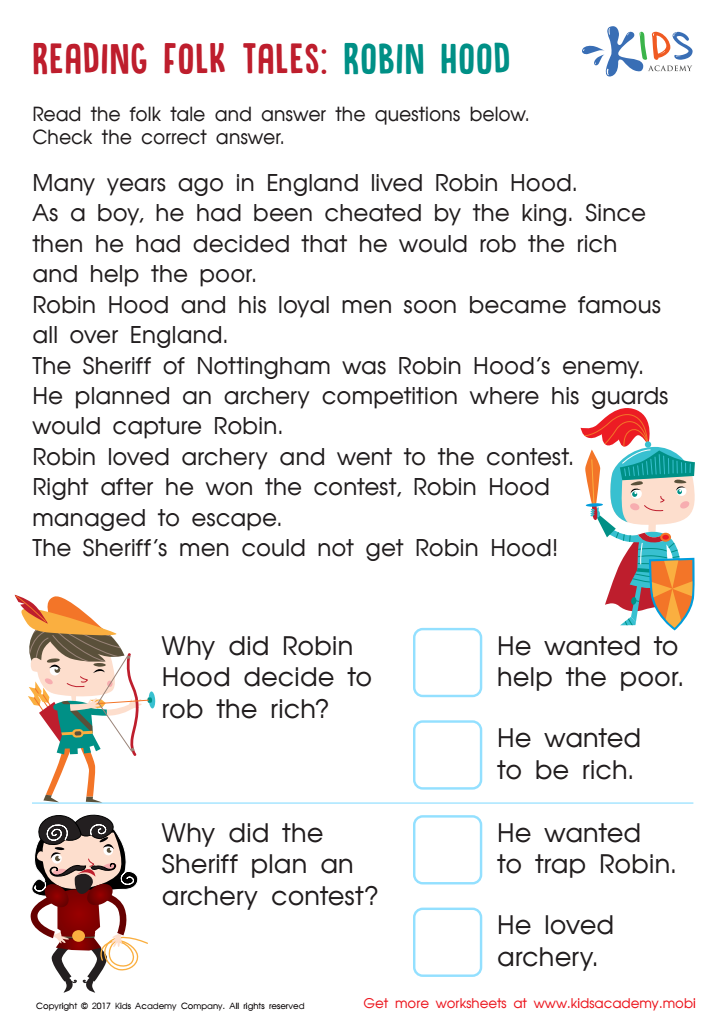
Robin Hood Folktale Worksheet
Have your child practice reading comprehension and inferencing with this Robin Hood folktale worksheet! Get them to read between the lines to find character motivation and answer important questions about the passage. It's a fun way to test their reading skills!
 Assign to My Students
Robin Hood Folktale Worksheet
Worksheet
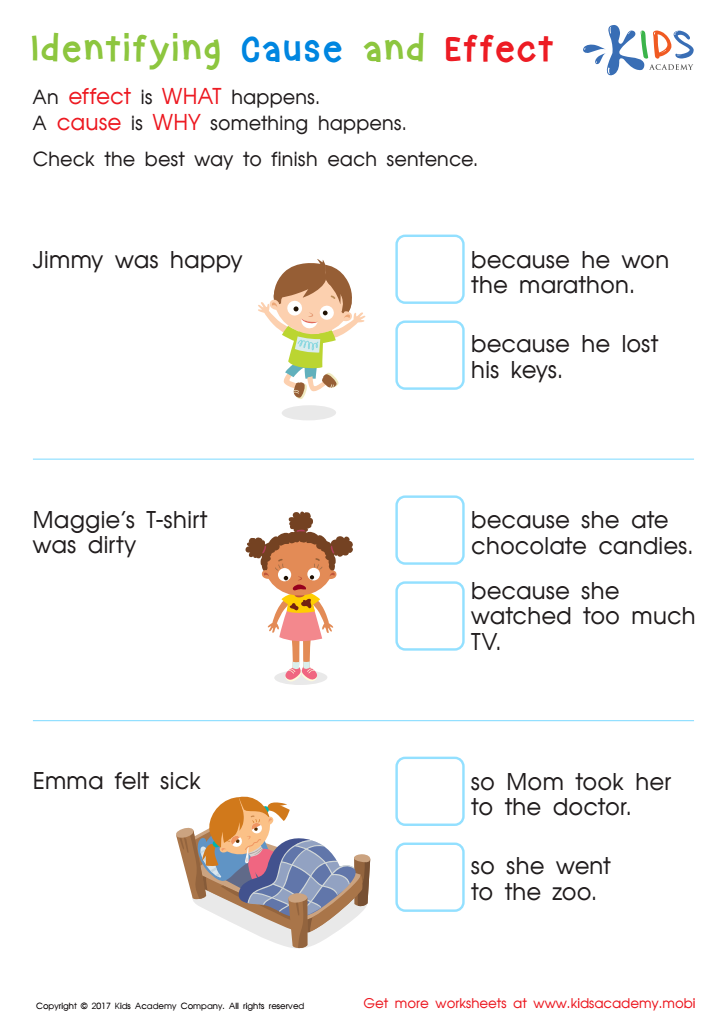
Indentifying Cause and Effect Worksheet
2nd grade cause & effect worksheets give your child practice making connections between events and their results. Fun activities help develop reading and critical thinking skills.
Indentifying Cause and Effect Worksheet
Worksheet
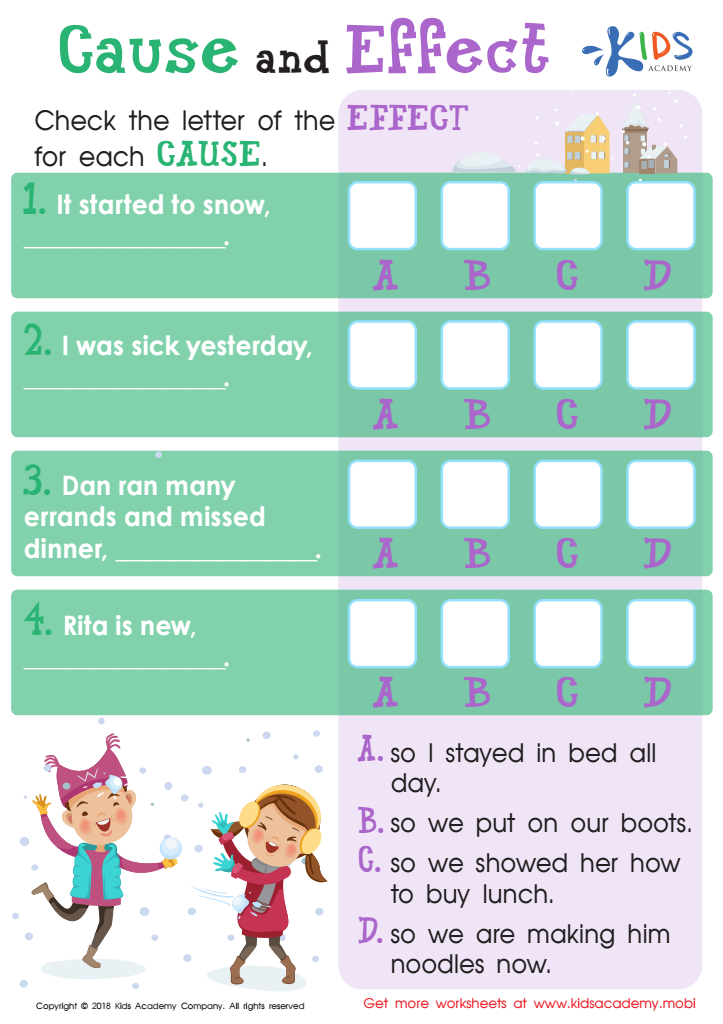
Cause and Effect Worksheet
Help your kids understand the cause-effect relationship of sentences by having them complete this worksheet. There are four incomplete sentences at the top and four options at the bottom. Have them select the appropriate letter for the effect of each cause. This will be the first step to their future of composing grammatically correct and meaningful sentences.
Cause and Effect Worksheet
Worksheet
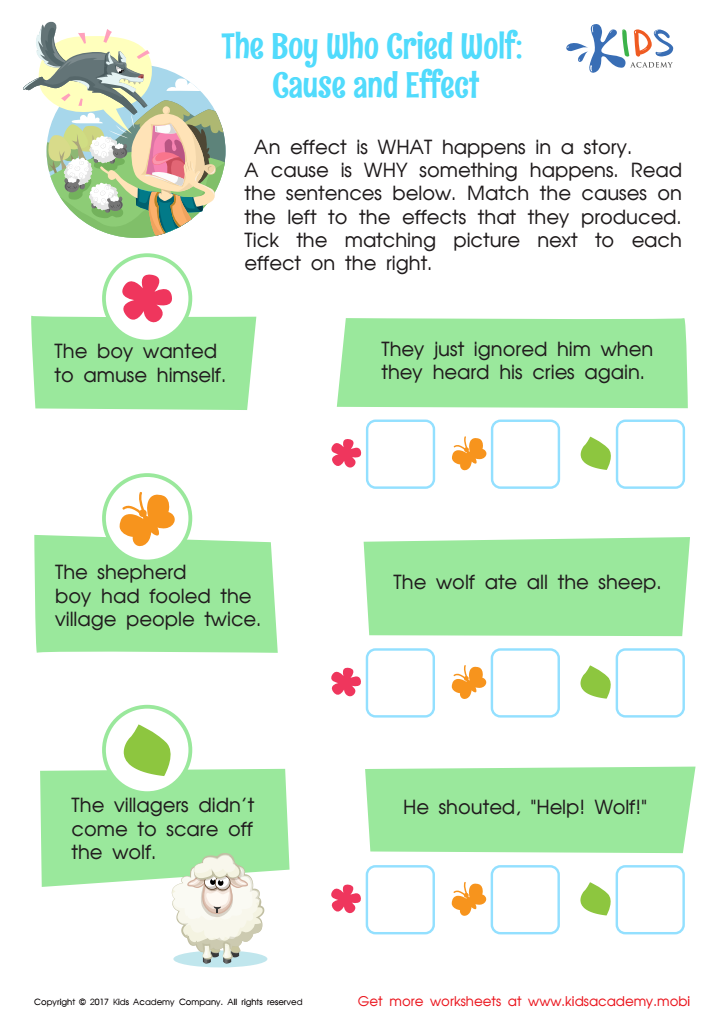
The Boy Who Cried Wolf: Cause and Effect Worksheet
With classic stories and fables, learning reading comprehension is easy - and fun!
The Boy Who Cried Wolf: Cause and Effect Worksheet
Worksheet
Join Kids Academy for Free
Who is primarily going to use this learning content?




.jpg)

.jpg)
Analytical thinking skills are pivotal for young learners, fostering not just intellectual development but also emotional and social growth. When children aged 7-9 engage in analytical thinking through reading fiction, they gain more than just the ability to interpret narratives; they enhance critical skills essential for lifelong learning.
Fiction introduces children to diverse characters, settings, and plotlines, stimulating imagination and cognitive complexity. As children analyze story elements, they practice identifying patterns, making predictions, and understanding cause and effect. This helps refine their reasoning abilities, fostering creativity and problem-solving skills applicable across subjects.
Moreover, analytical reading nurtures empathy, a key social-emotional skill. As young readers delve into characters' thoughts and emotions, they learn to see different perspectives, enhancing their emotional intelligence and interpersonal skills.
For parents and teachers, prioritizing analytical thinking through fiction reading is also a way to build a solid foundation for academic success. Proficient readers tend to perform better across all subjects as strong comprehension skills underpin most areas of learning. Encouraging analytical reading in early education not only creates thoughtful, perceptive individuals but also ignites a lifelong passion for reading, crucial for personal and educational development.
Therefore, investing time in cultivating these skills in children aged 7-9 is essential for developing well-rounded, critically-thinking members of society.








