Attention to Detail Reading Fiction Worksheets for Ages 7-9
3 filtered results
-
From - To
Nurture your child's reading comprehension skills with our "Attention to Detail Reading Fiction Worksheets for Ages 7-9." These specially designed printables aim to develop a keen eye for detail through engaging and age-appropriate fiction stories. Each worksheet focuses on enhancing critical thinking by requiring young readers to identify key plot elements, character traits, and subtle nuances in the text. Perfect for both classroom and home use, these worksheets help children build a strong foundation in attentive reading, fostering a lifelong love of literature. Empower your child with the tools to become a meticulous reader today!

The Dog and His Bone Worksheet
 Assign to My Students
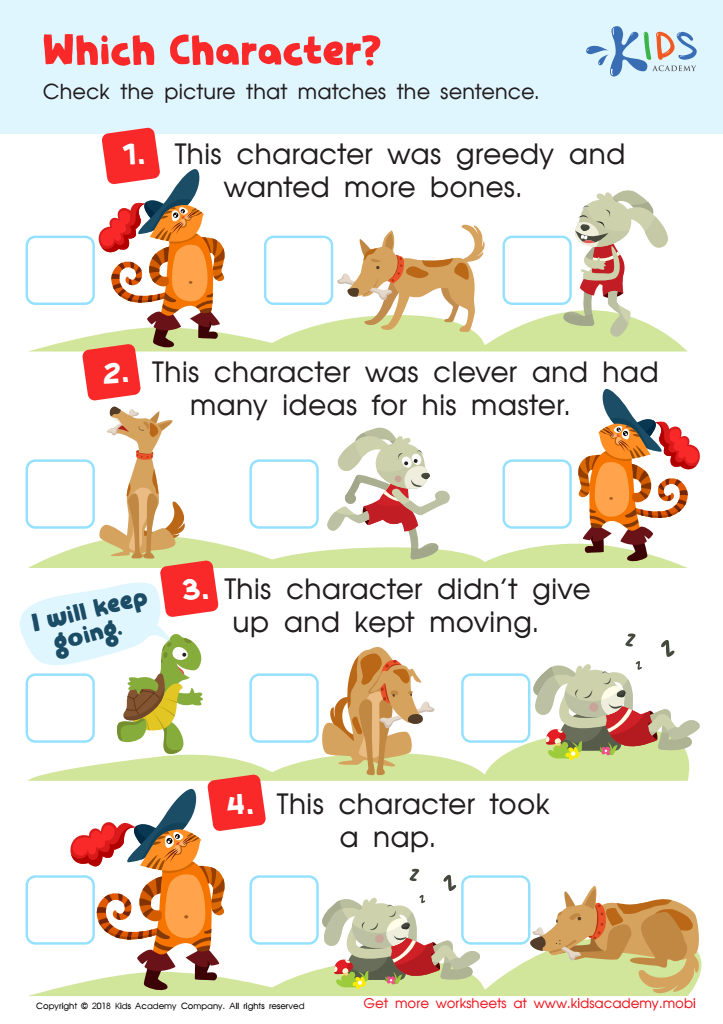
Which Character Worksheet
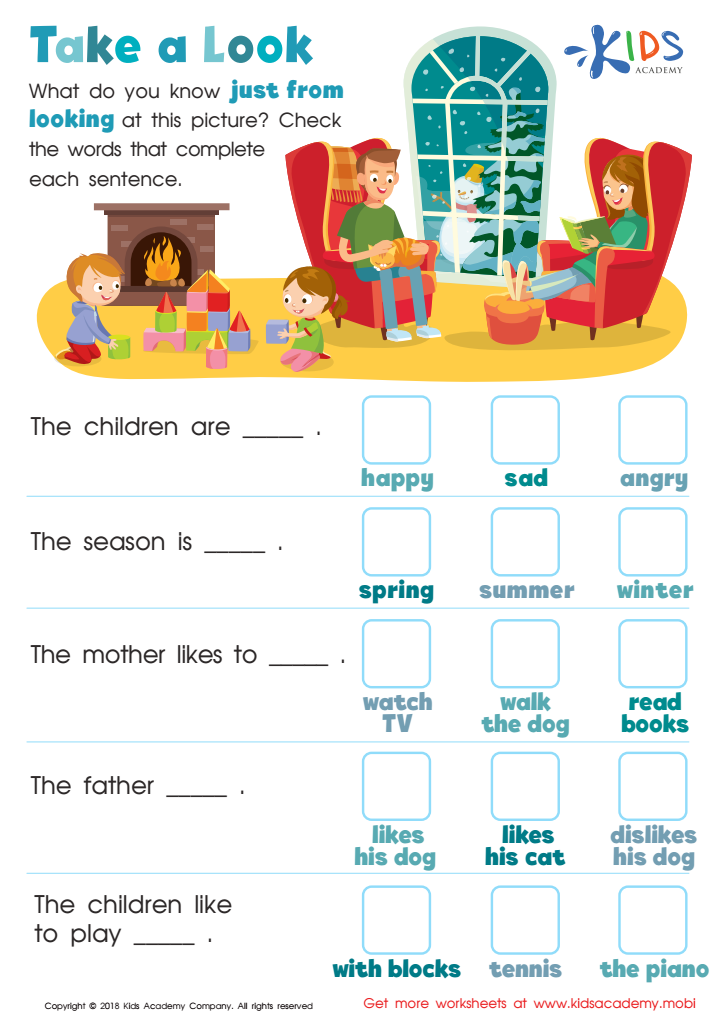
Take a Look - Part 1 Worksheet








Attention to detail in reading fiction is crucial for children aged 7-9 as it lays a strong foundation for their cognitive development and comprehension skills. At this tender age, children are starting to develop more sophisticated reading abilities, and grasping intricate details in stories is vital. This skill helps enhance their memory, enabling them to recall and connect different parts of the narrative, ultimately fostering better understanding and enjoyment of the text.
Moreover, attention to detail nurtures critical thinking. Children learn to recognize and interpret subtle cues in the storyline, character development, and settings, which deepens their engagement and analytical skills. This can also translate to a better grasp of nuances and complexities in real-life situations, improving their problem-solving abilities.
For teachers and parents, emphasizing detail-oriented reading helps identify any reading comprehension difficulties early on. This ensures timely interventions, preventing future struggles with more advanced texts. Additionally, as children notice and appreciate finer details, it enhances their imagination and creativity. They learn to visualize scenes vividly and develop their narrative skills, which are crucial for both academic success and personal expression.
In summary, fostering attention to detail in reading fiction is essential for cultivating enhanced cognitive skills, critical thinking, creativity, and early detection of potential learning challenges in children aged 7-9.








