Critical Thinking Reading Fiction Worksheets for Ages 7-9 - Page 2
26 filtered results
-
From - To
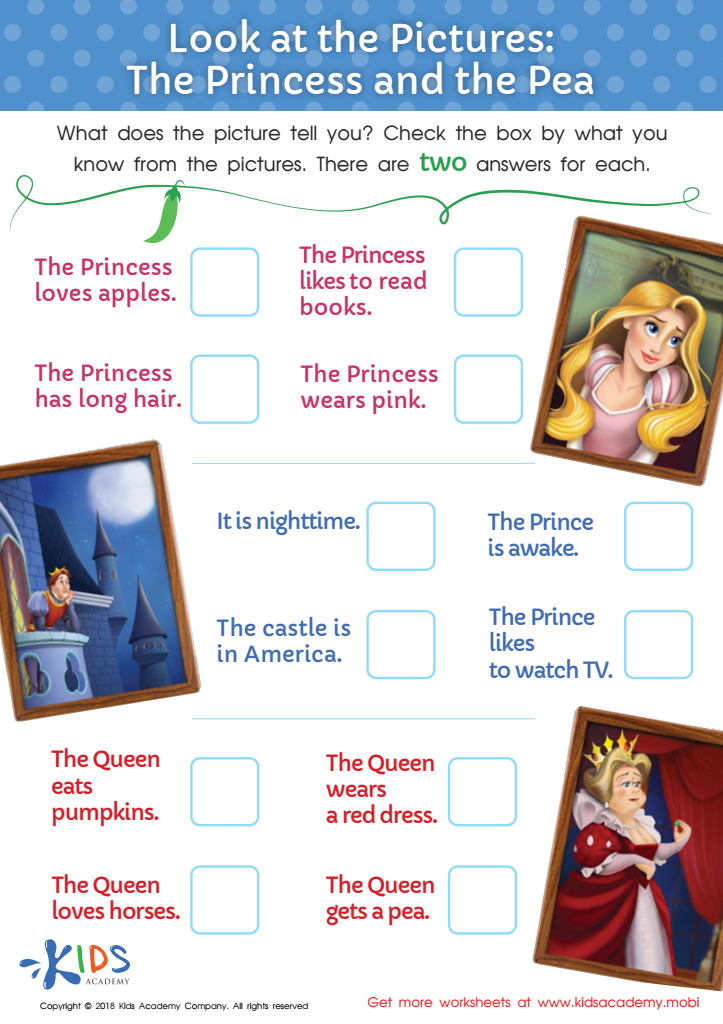
Look at the Pictures: The Princess and the Pea Worksheet
 Assign to My Students
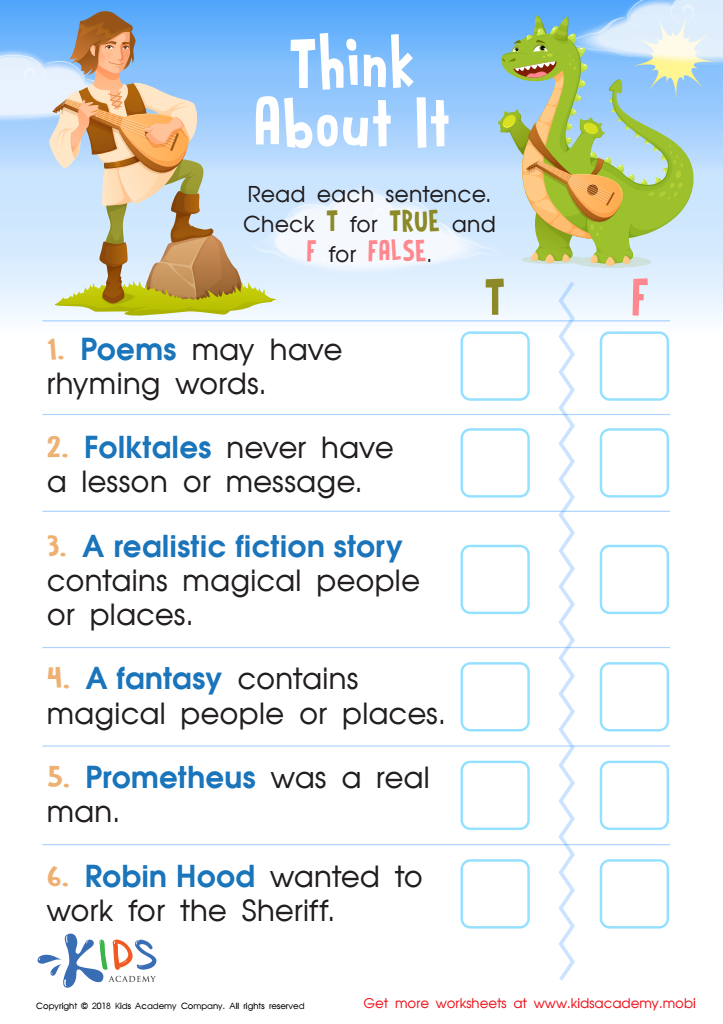
Think About It: Assessment Worksheet








Critical thinking through reading fiction is vital for children aged 7-9 as it fosters essential cognitive skills that will benefit them throughout their lives. At this developmental stage, children are naturally curious, and exposing them to complex narratives allows them to analyze situations, evaluate characters' motives, and consider different perspectives. Engaging with fictional texts helps children develop empathy, as they learn to understand and appreciate diverse experiences, cultures, and emotions presented in stories.
Moreover, reading fiction stimulates imagination and creativity, equipping students with innovative thinking tools that enhance problem-solving abilities. By discussing plot twists, character decisions, and moral dilemmas, parents and teachers can encourage children to express their opinions, articulate reasoning, and back their thoughts with evidence from the text. This process deepens comprehension and cultivates a lifelong love for reading.
Additionally, as students learn to engage critically with fictional narratives, they gain confidence in their analytical skills, preparing them for higher academic challenges in the future. In summary, promoting critical thinking through reading fiction in early grades invites children to explore, question, and understand the world around them, laying the foundation for informed, engaged citizens.








