
Problem-Solving Skills Reading Fiction Worksheets for Ages 7-9
5 filtered results
Difficulty Level
Grade
Age
-
From - To
Subject
Activity
Standards
Enhance your child's critical thinking with our engaging "Problem-Solving Skills Reading Fiction Worksheets" tailored for ages 7-9. These worksheets focus on developing young minds by incorporating intriguing stories that foster problem-solving and comprehension abilities. Each worksheet presents exciting scenarios that challenge children to think creatively and draw logical conclusions. Perfect for classroom or home use, these printables support essential reading and cognitive skills while making learning fun and interactive. Give your child the tools to navigate complex ideas and boost their confidence with Kids Academy's expertly designed resources. Access these valuable worksheets to inspire your young reader today!
Favorites
With answer key
Interactive
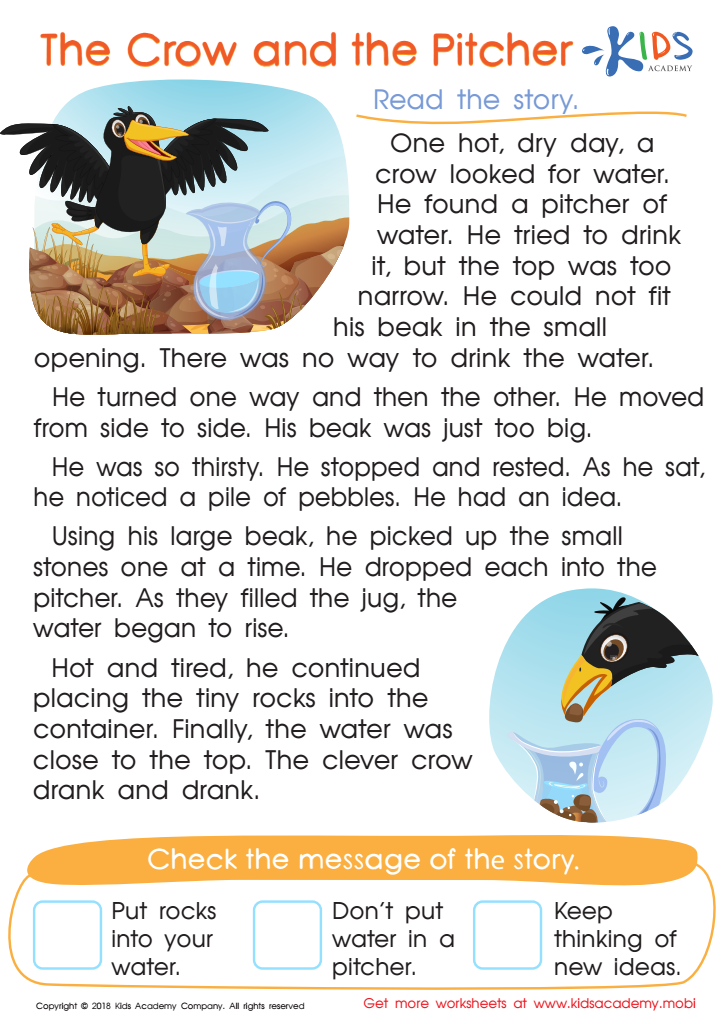
The Crow and the Pitcher Worksheet
Introduce your child to reading comprehension with this fascinating worksheet from Kids Academy! Featuring Aesop's fable of a thirsty crow, your child will enjoy reading and determining the central theme of the passage. This worksheet is a great way to give your child a purpose for reading while helping to build their comprehension skills.
 Assign to My Students
The Crow and the Pitcher Worksheet
Worksheet
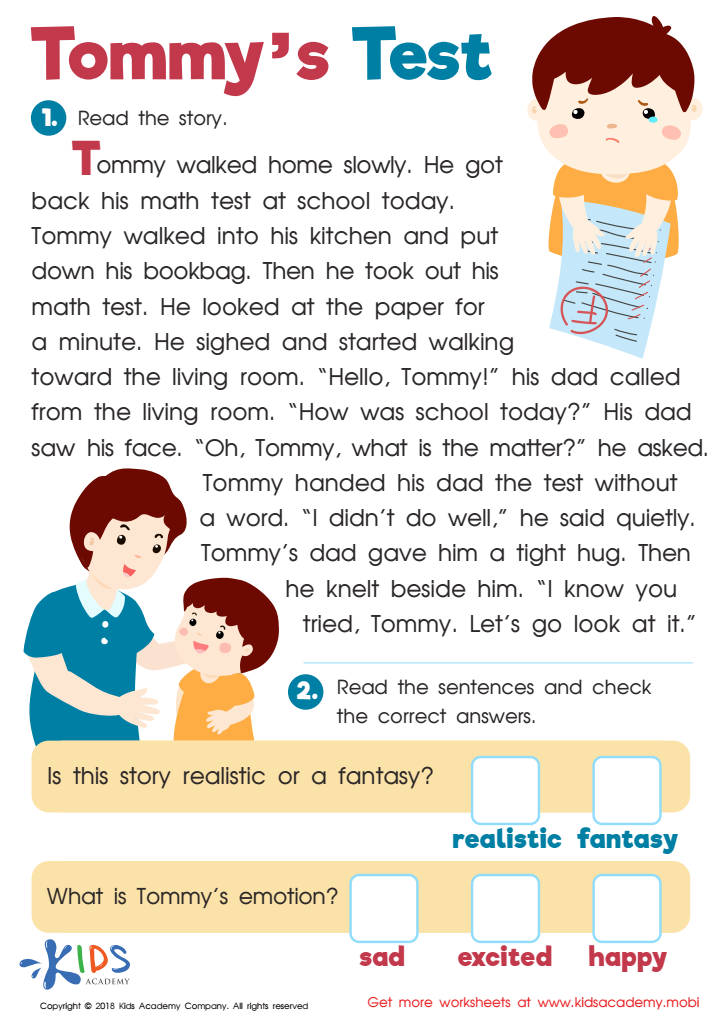
Tommys Test Worksheet
Reading short stories to your students builds a bond, teaches new words and lessons. Read the story aloud and then have them listen for details. Ask them the questions at the bottom and help them check the answers.
Tommys Test Worksheet
Worksheet
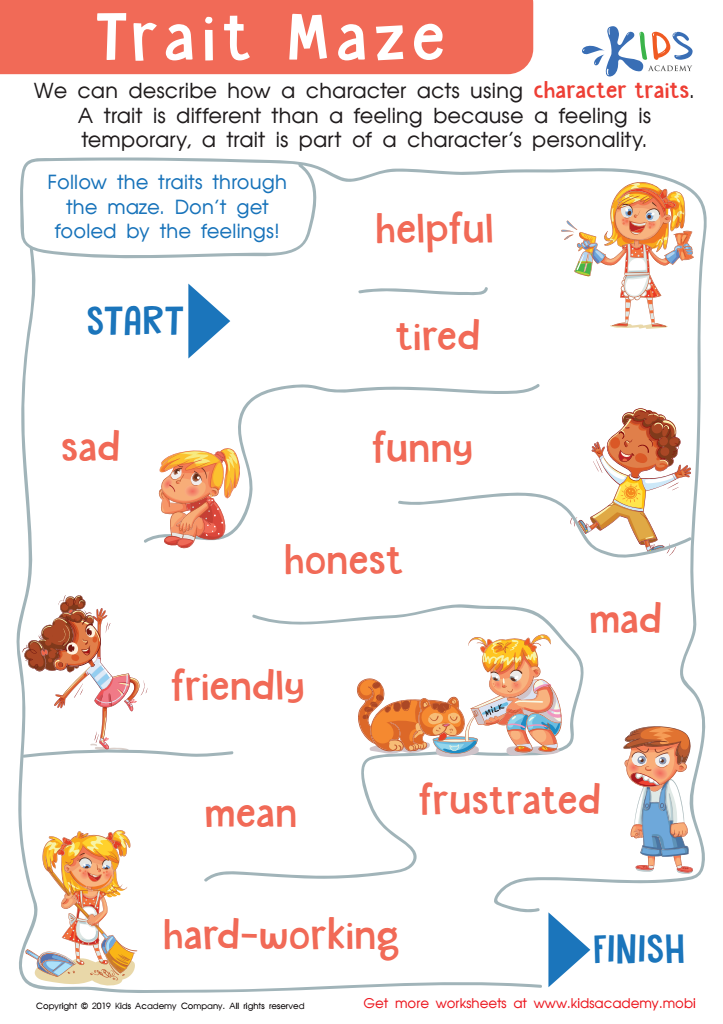
Trait Maze Worksheet
A trait is a character's personality and should not be confused with a feeling, which is temporary. In this worksheet, kids learn about traits by following them through a maze and ignoring the feelings on the path.
Trait Maze Worksheet
Worksheet
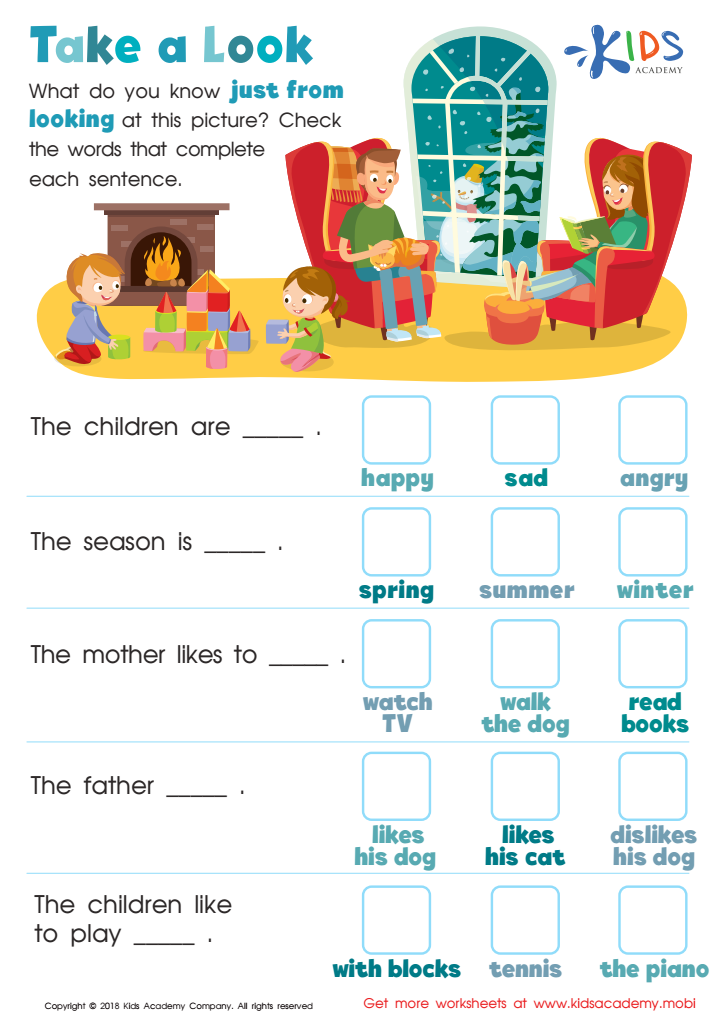
Take a Look - Part 1 Worksheet
Young learners gain understanding when using picture clues when reading. Looking at illustrations can help students learn the meaning of key vocabulary when reading fiction or informational text. Ask your students to look at the worksheet and observe what they can learn from the picture. It's a great comprehension strategy for early readers.
Take a Look - Part 1 Worksheet
Worksheet
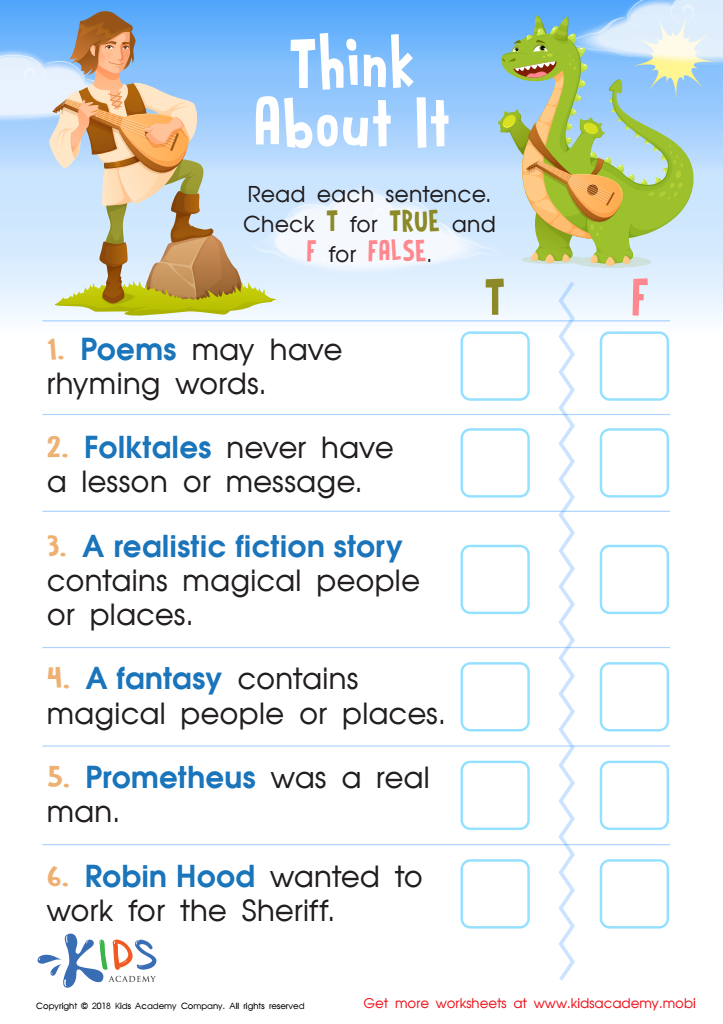
Think About It: Assessment Worksheet
Reading is a fun and important way to learn. Help your students become better readers with this simple yet colorful worksheet. Read each sentence aloud, then have them read it by themselves. Ask them to check T for True and F for False. It's a great way to practice their reading skills!
Think About It: Assessment Worksheet
Worksheet
Join Kids Academy for Free
Who is primarily going to use this learning content?



.jpg)




Parents and teachers play a crucial role in nurturing problem-solving skills through reading fiction for children aged 7-9. At this developmental stage, children are becoming more adept at understanding and interpreting complex narratives, making fiction an ideal tool for enhancing critical thinking and problem-solving abilities.
Fictional stories often present characters in challenging situations, requiring innovative solutions. As children read, they naturally learn to predict outcomes, analyze scenarios, and empathize with characters' dilemmas. This process develops their ability to think creatively and approach problems from multiple perspectives. These cognitive skills are fundamental not only for academic success but also for everyday decision-making and social interactions.
Moreover, reading fiction enhances language development, comprehension, and vocabulary. These are essential components for effective communication, a key aspect of problem-solving. When children discuss the stories they read, they practice articulating their thoughts and reasoning, further solidifying their cognitive skills.
Therefore, by encouraging children aged 7-9 to read fiction, parents and teachers invest in their ability to tackle problems efficiently and creatively. This approach doesn’t just prepare them for academic challenges but also equips them with essential life skills, fostering resilience, empathy, and thoughtful decision-making. In essence, problem-solving through fiction is a vital building block in a child's overall holistic development.








