Understanding perspectives Reading Fiction Worksheets for Ages 7-9
3 filtered results
-
From - To
Discover our "Understanding Perspectives Reading Fiction Worksheets" designed for children aged 7-9! These engaging worksheets help young readers enhance their comprehension skills by exploring characters' viewpoints and motivations within various stories. By completing fun activities that challenge their critical thinking, students will learn to empathize with different perspectives, fostering a deeper enjoyment and understanding of fiction. Plus, these resources support early literacy development, making reading a more interactive experience. Perfect for home or classroom use, our worksheets invite creativity and discussion, helping children build essential skills that will benefit them throughout their educational journey. Start nurturing your child’s love for reading today!
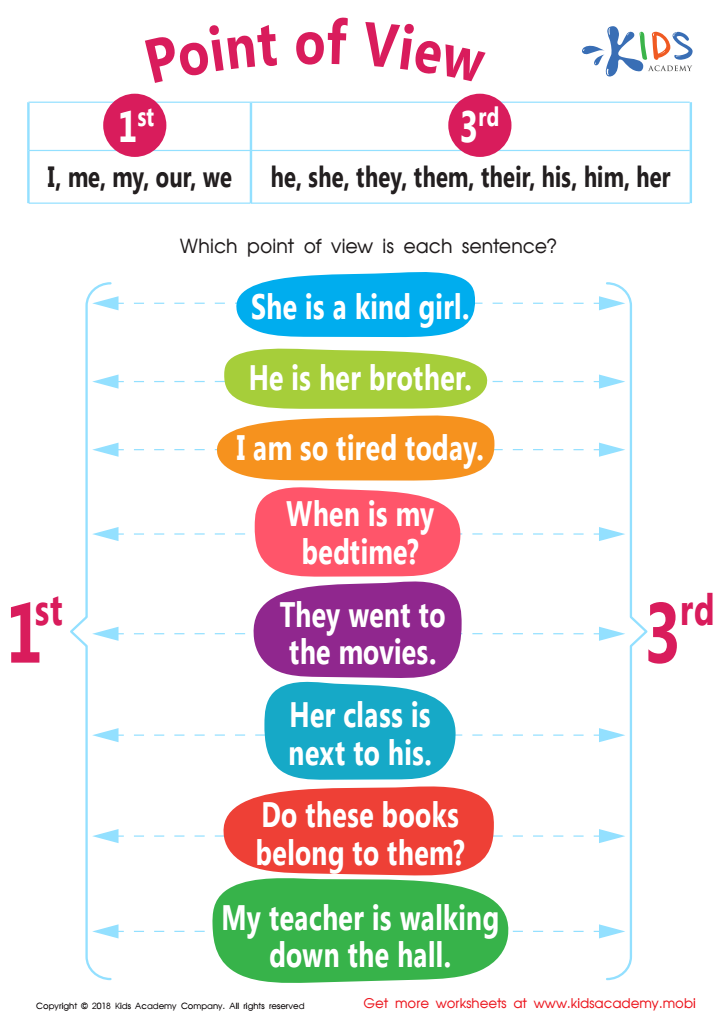
Point of View Worksheet
 Assign to My Students
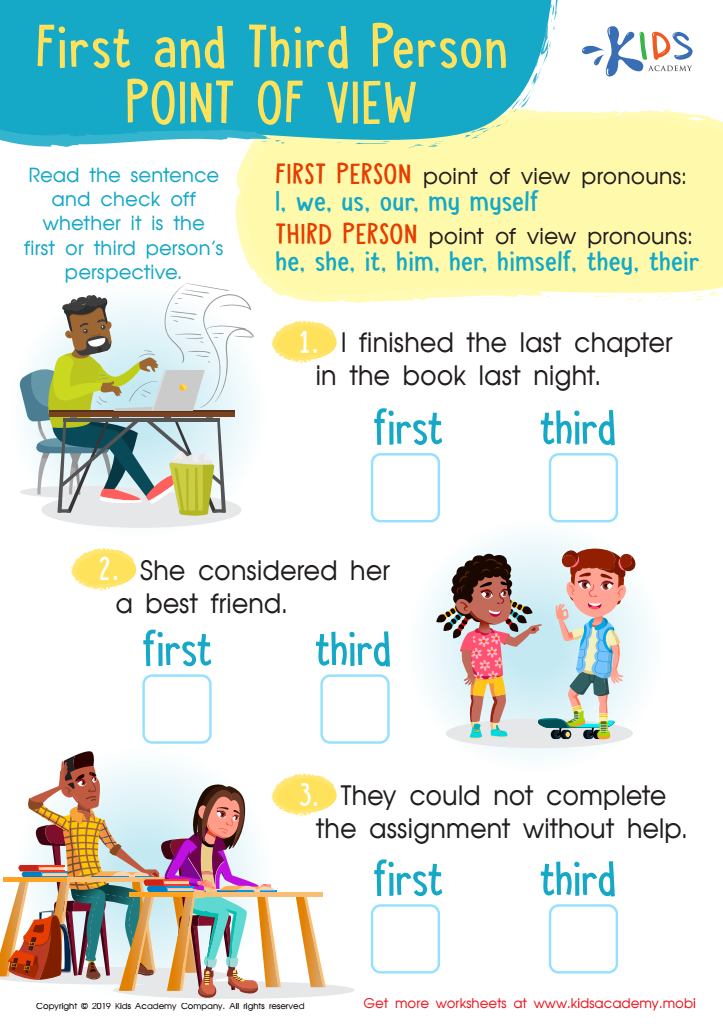
First and Third Person Point of View Worksheet
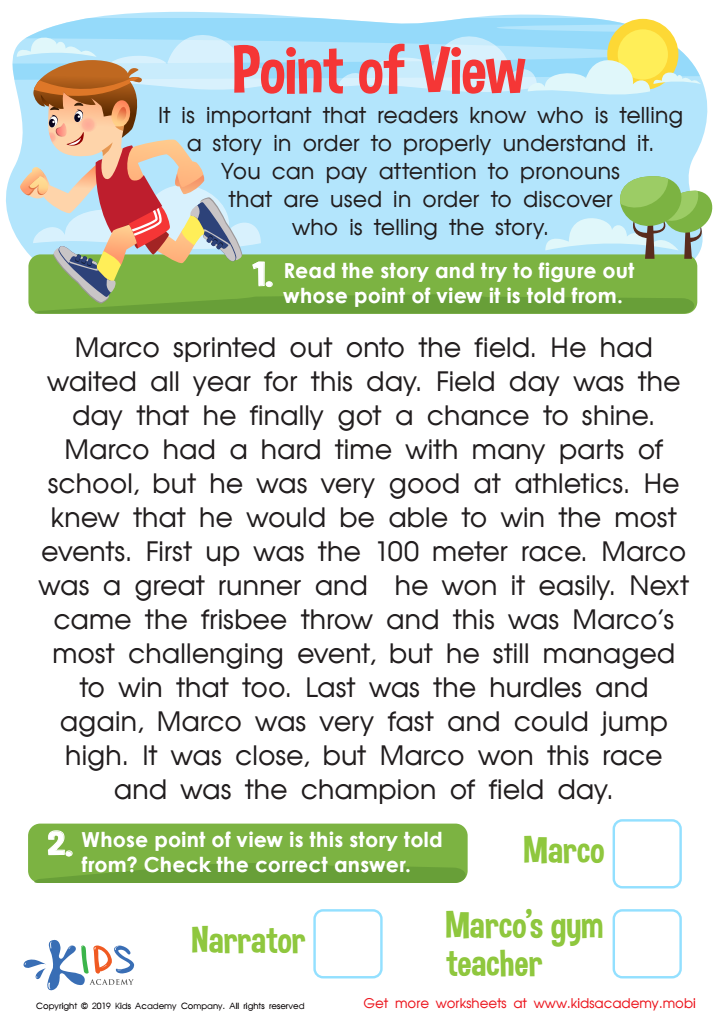
Point of View Worksheet








Understanding different perspectives through reading fiction is crucial for children ages 7-9, as it significantly enriches their emotional and social development. At this age, children are beginning to form their identities and understand the world around them. By engaging with diverse characters and narratives, they learn to empathize with others, recognizing that different experiences shape individual viewpoints. This empathy fosters compassion, helping children to better relate to peers and resolve conflicts, both in school and at home.
Additionally, fiction often presents moral dilemmas and challenges that encourage critical thinking. When children encounter characters facing difficult choices, they develop the ability to analyze situations from multiple angles, enhancing their problem-solving skills. This skill transcends reading; it helps them approach real-world scenarios with a more informed perspective.
Moreover, reading fiction cultivates a love for literature, opens up discussions about morality and ethics, and expands children's vocabulary and comprehension skills. By valuing the understanding of perspectives in reading fiction, parents and teachers empower children to grow into thoughtful, open-minded individuals capable of navigating an increasingly complex world. This foundational skill will serve them not just academically, but throughout their lives.








