Cursive writing practice Cursive Letters Worksheets for Ages 7-9
11 filtered results
-
From - To
Introducing our Cursive Writing Practice Worksheets for Ages 7-9, designed to foster handwriting skills while making learning fun! These engaging worksheets provide young learners with the opportunity to practice cursive letters through a variety of exercises. Each worksheet includes structured letter formation guides, tracing activities, and creative writing prompts, all aimed at enhancing penmanship and fluency. Developed with the needs of early grade students in mind, our resources encourage writing confidence and proficiency. Perfect for home or classroom use, these worksheets make mastering cursive writing enjoyable and effective. Help your child develop a valuable skill today!
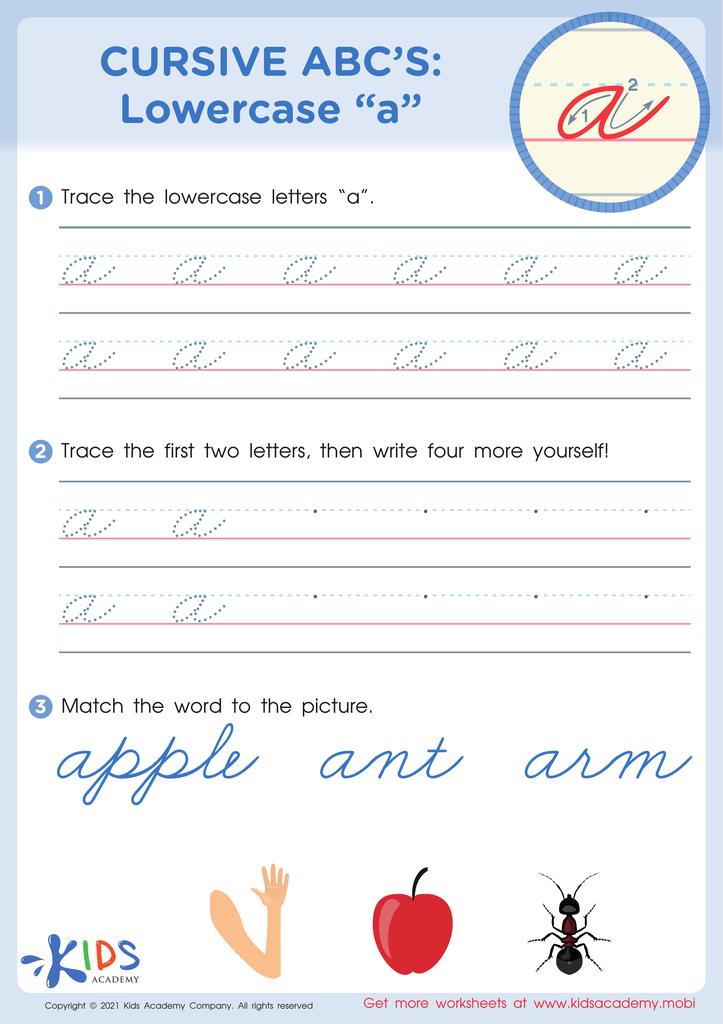
Cursive ABCs: Lowercase a
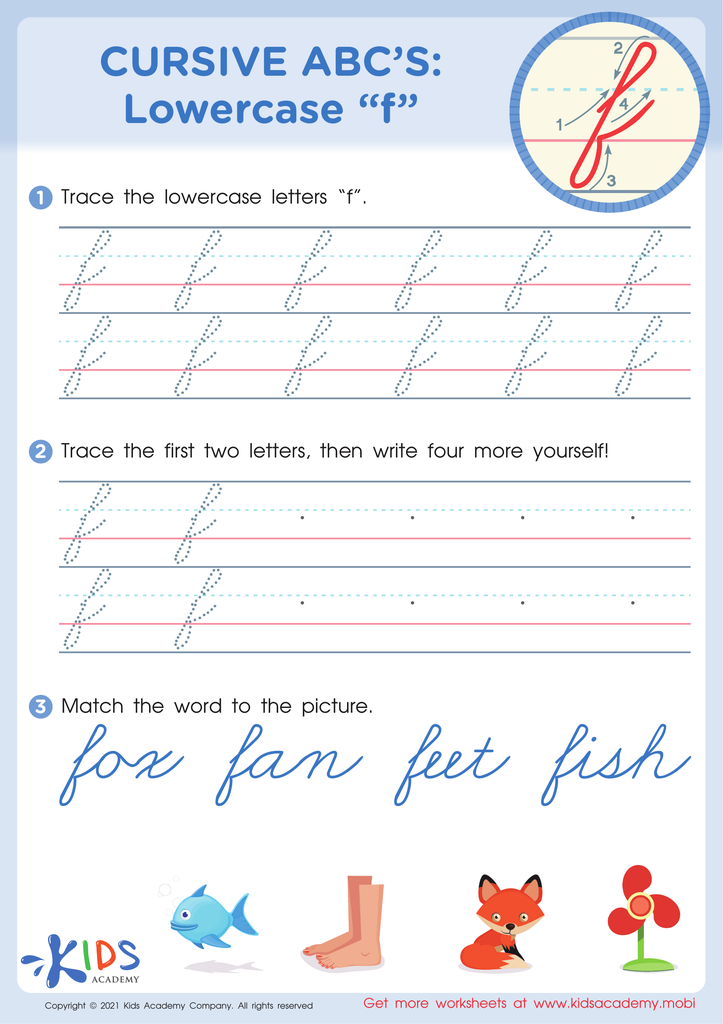
Cursive ABCs: Lowercase f
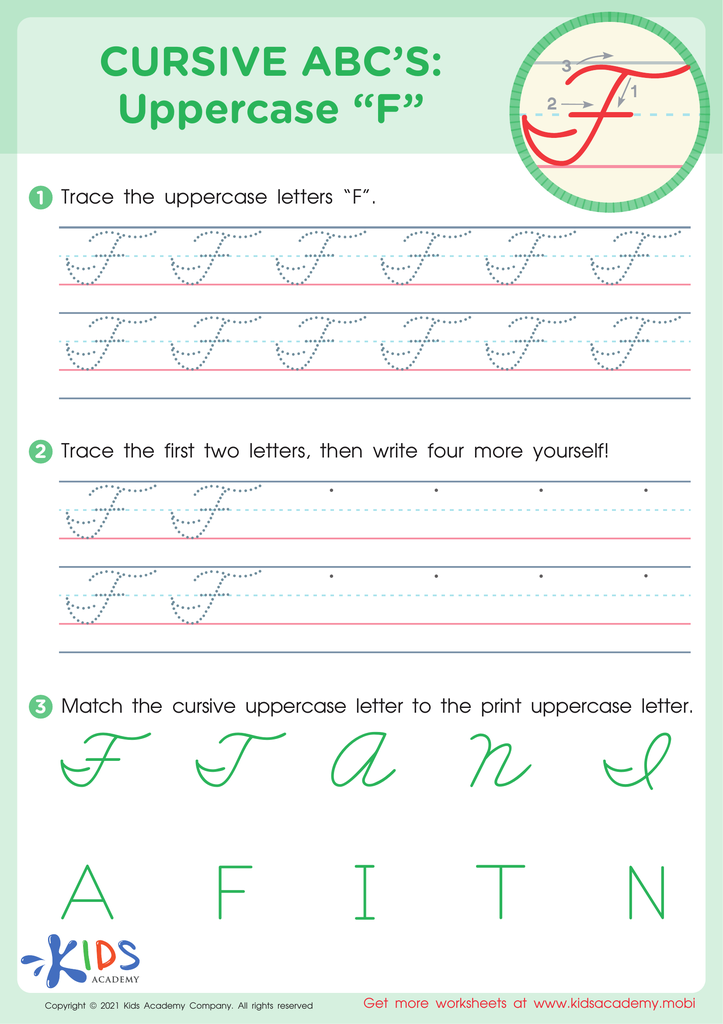
Cursive ABCs: Uppercase F
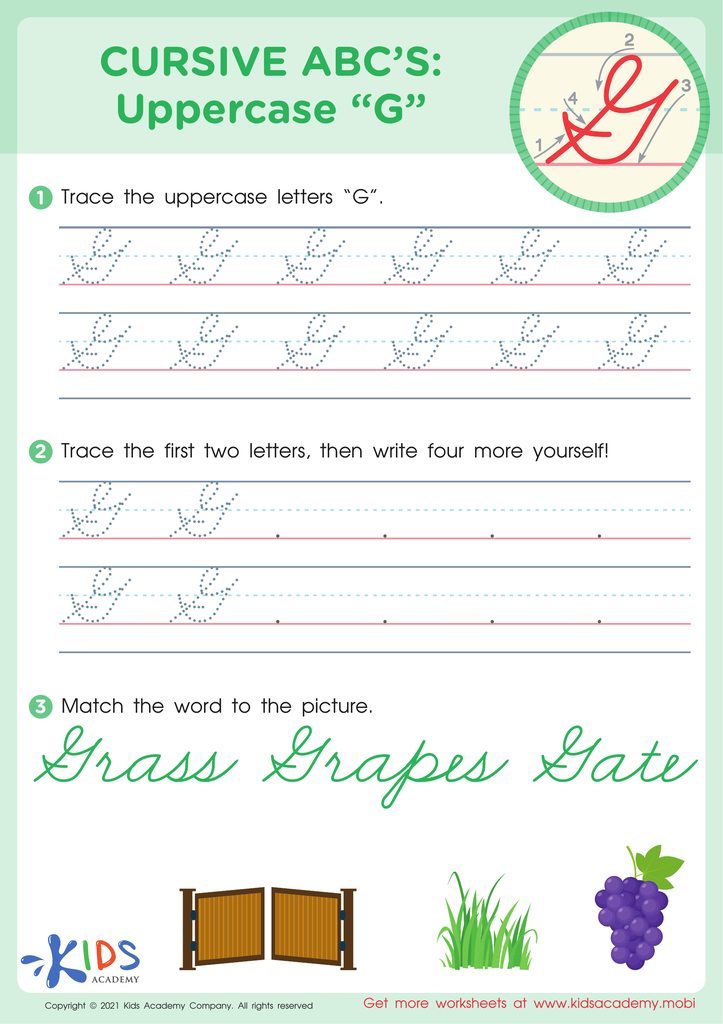
Cursive ABCs: Uppercase G
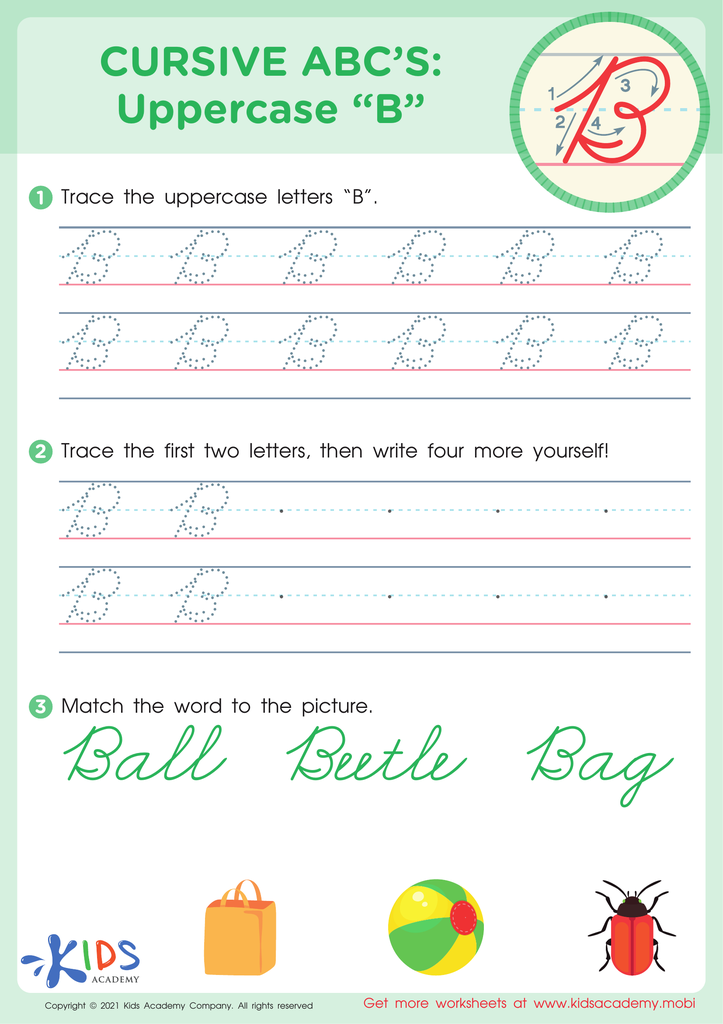
Cursive ABCs: Uppercase B
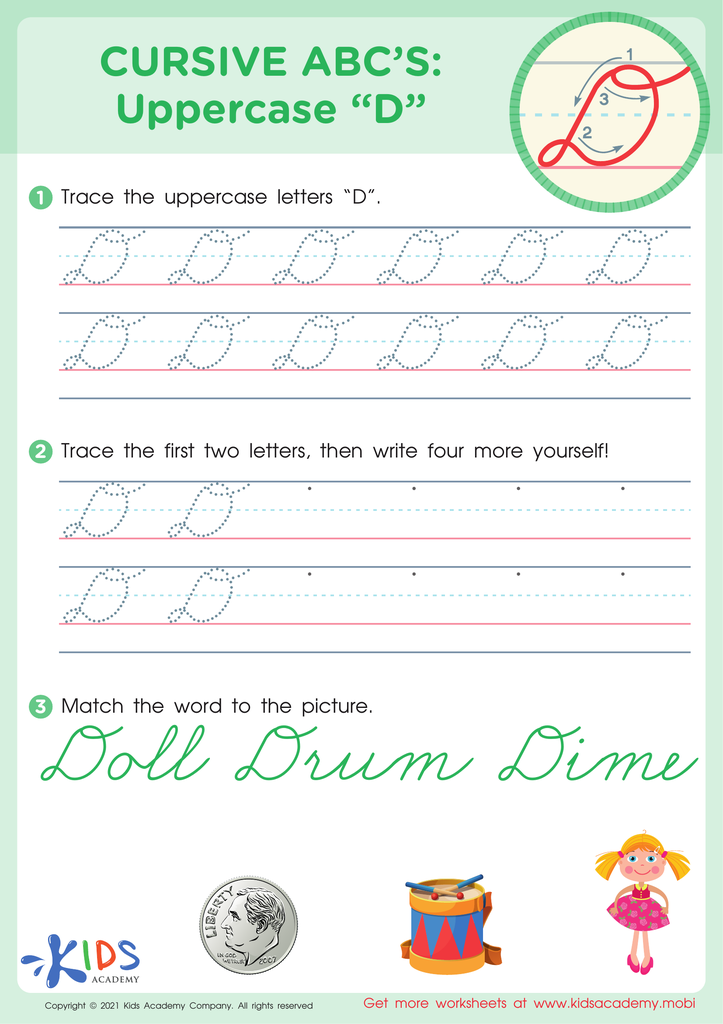
Cursive ABCs: Uppercase D
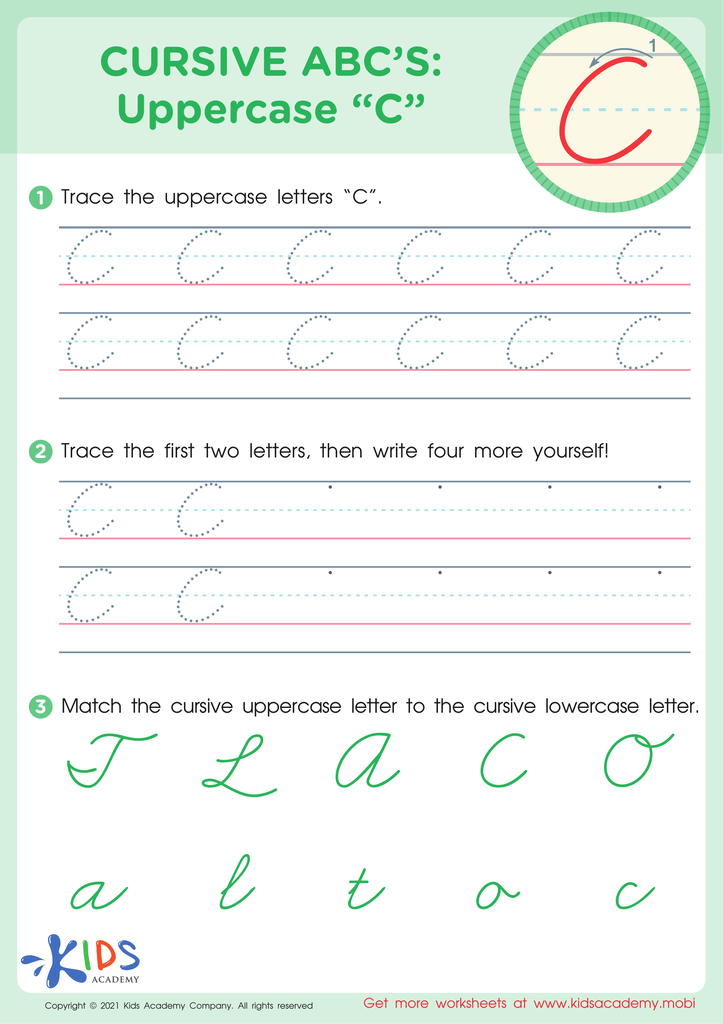
Cursive ABCs: Uppercase C
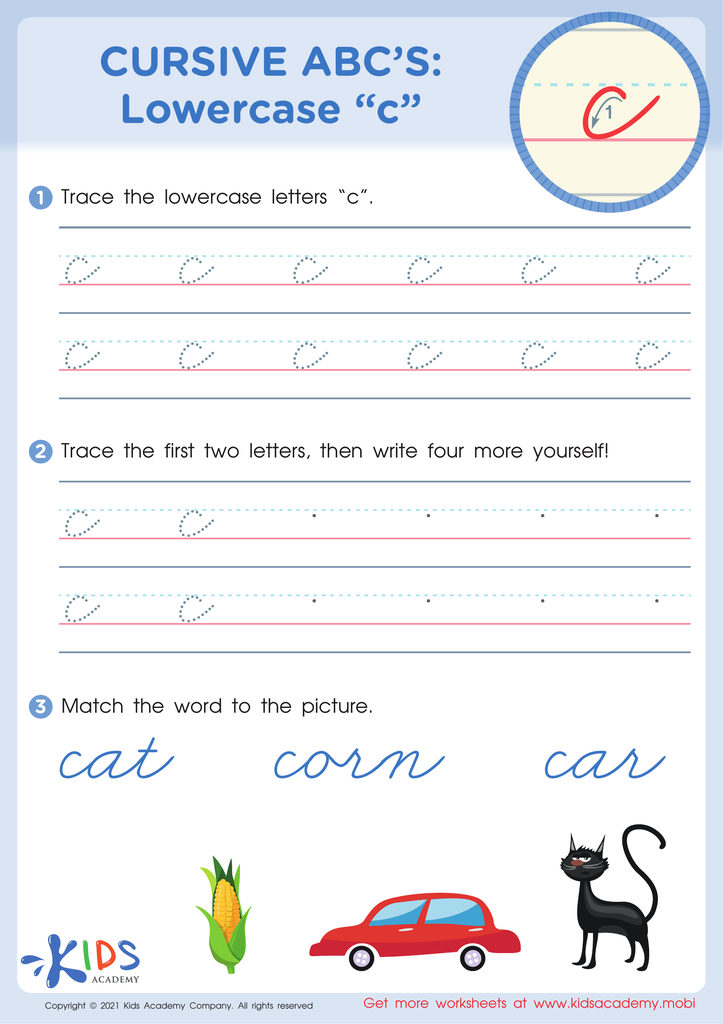
Cursive ABCs: Lowercase c
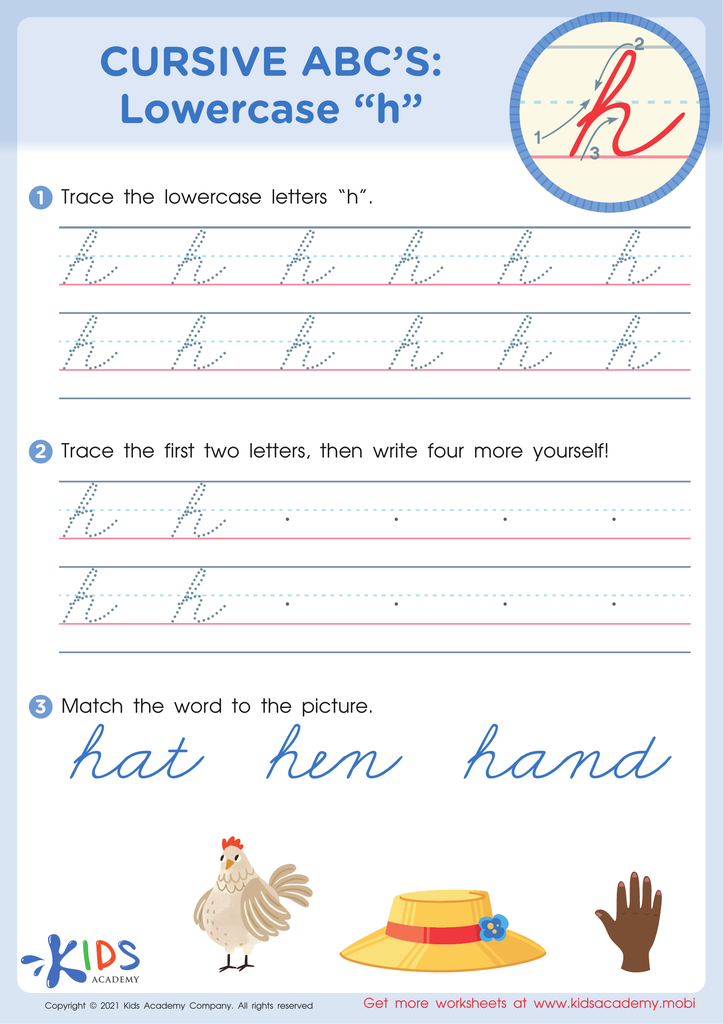
Cursive ABCs: Lowercase h
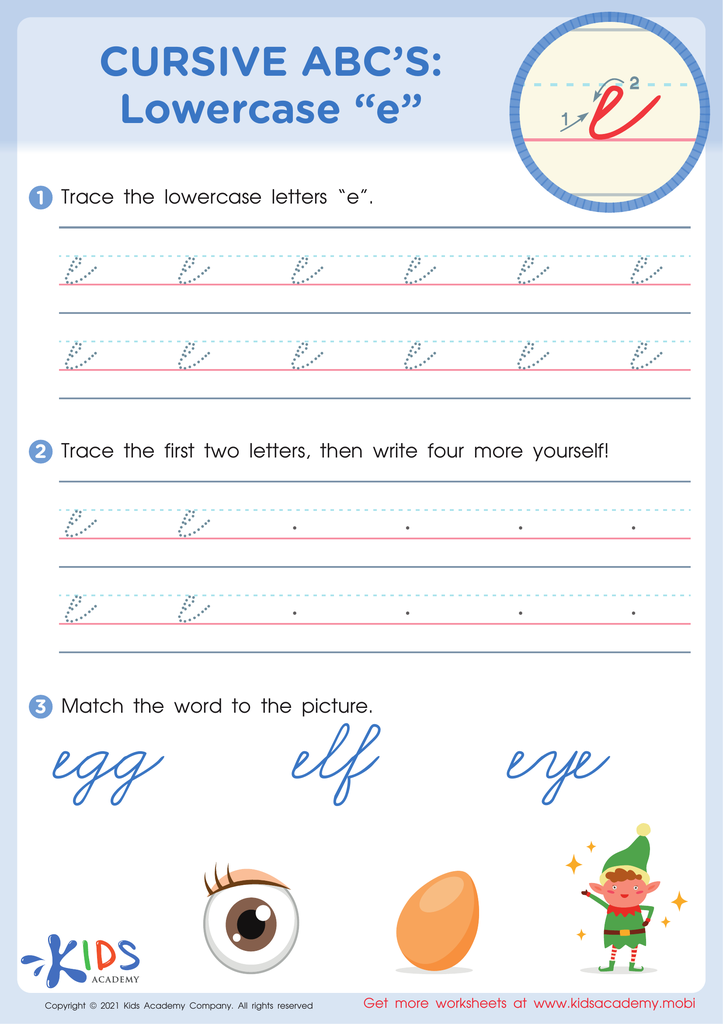
Cursive ABCs: Lowercase e
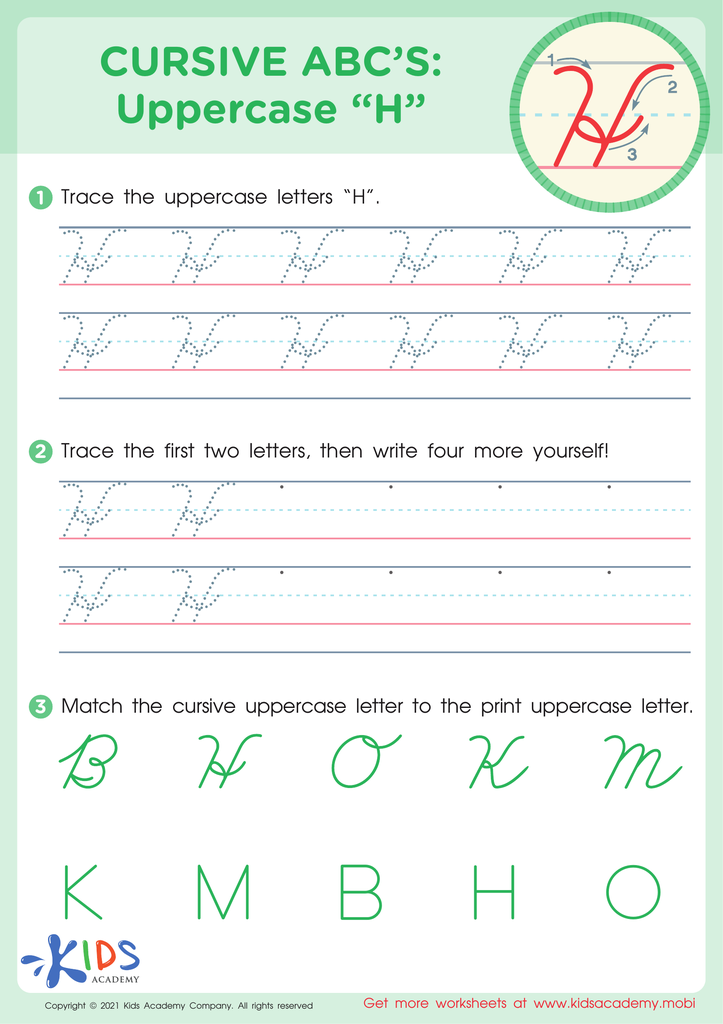
Cursive ABCs: Uppercase H







Cursive writing practice for children aged 7-9 is essential for several developmental reasons. First, it enhances fine motor skills, as the fluid motion of cursive requires more precision and coordination than print writing. This improvement in dexterity is crucial for tasks beyond writing, such as drawing and crafting.
Secondly, cursive writing fosters cognitive development. The continuous flow of letters aids in understanding letter formation and improves spelling skills, as children must recall the shapes of letters and how they connect. This memorization boosts overall literacy, facilitating faster and more competent reading and writing.
Moreover, cursive can contribute to better organizational skills. Writing in a connected script encourages children to think about how their words flow together, reinforcing ideas and thoughts holistically. Many kids find cursive writing artistically appealing, sparking creativity and personal expression.
Additionally, cursive equips students with a vital life skill. In a world that still values handwritten communication—such as signing documents or writing personal notes—being able to write in cursive is a necessary and respected ability.
Ultimately, prioritizing cursive practice aids holistic child development—through motor skills, cognitive growth, and creative expression—ensuring they are better prepared for academic and real-life challenges.







