Alphabet Recognition Cursive Writing Worksheets for Ages 7-9
7 filtered results
-
From - To
Enhance your child's writing skills with our engaging Alphabet Recognition Cursive Writing Worksheets, designed specifically for children aged 7-9. These thoughtfully crafted worksheets combine fun and education, helping young learners master cursive letters while recognizing the alphabet. Each worksheet offers a variety of activities, including tracing, writing practice, and creative letter games, ensuring a comprehensive learning experience. By integrating motion and visual elements, our resources aim to boost motor skills and hand-eye coordination. Perfect for home or classroom use, these worksheets provide a solid foundation for cursive writing and foster a love for writing from an early age. Start your child’s cursive journey today!
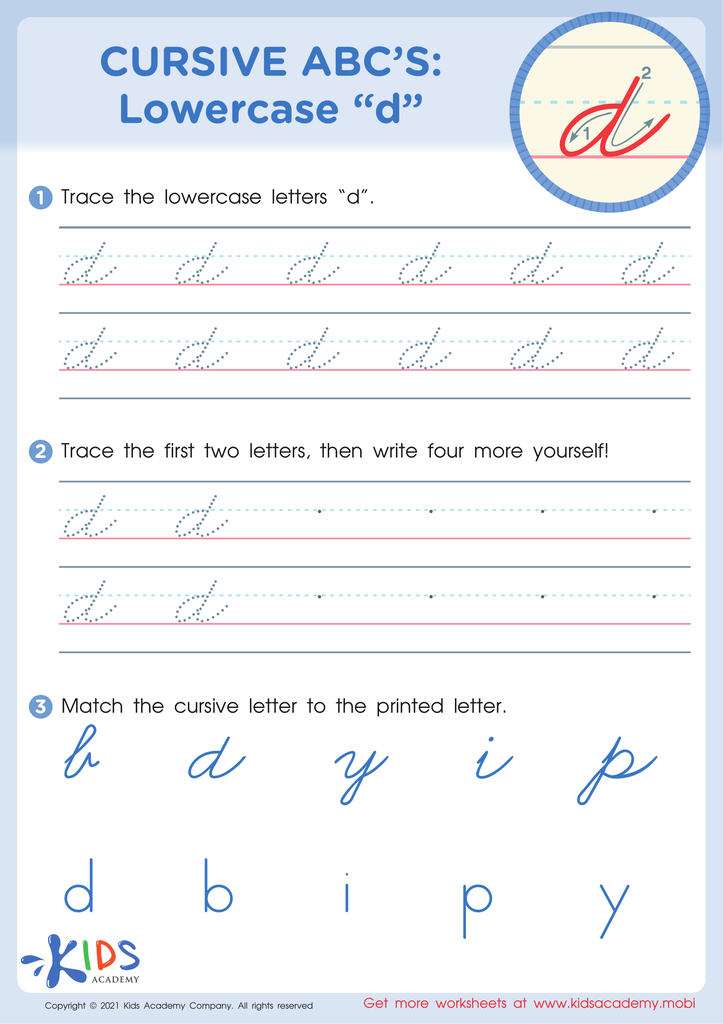
Cursive ABCs: Lowercase d
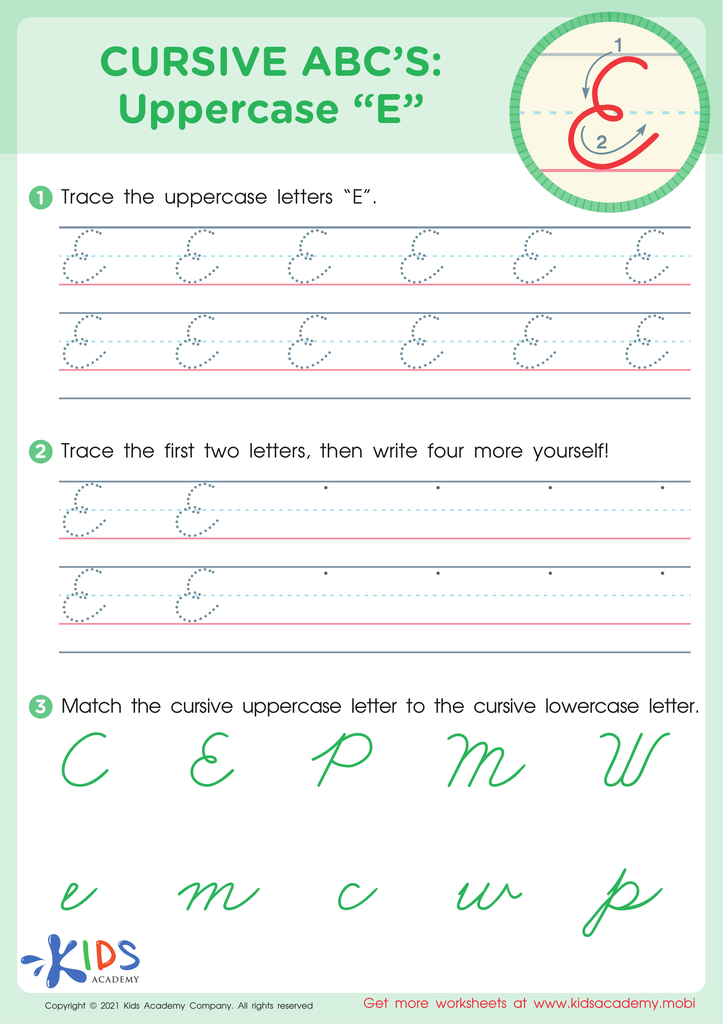
Cursive ABCs: Uppercase E
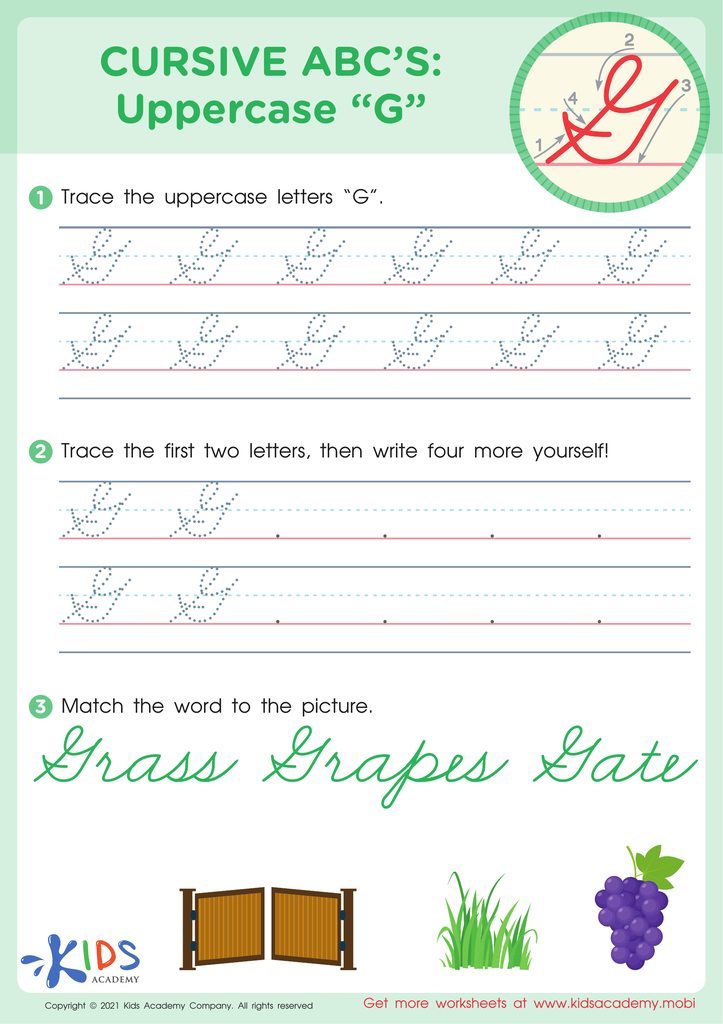
Cursive ABCs: Uppercase G
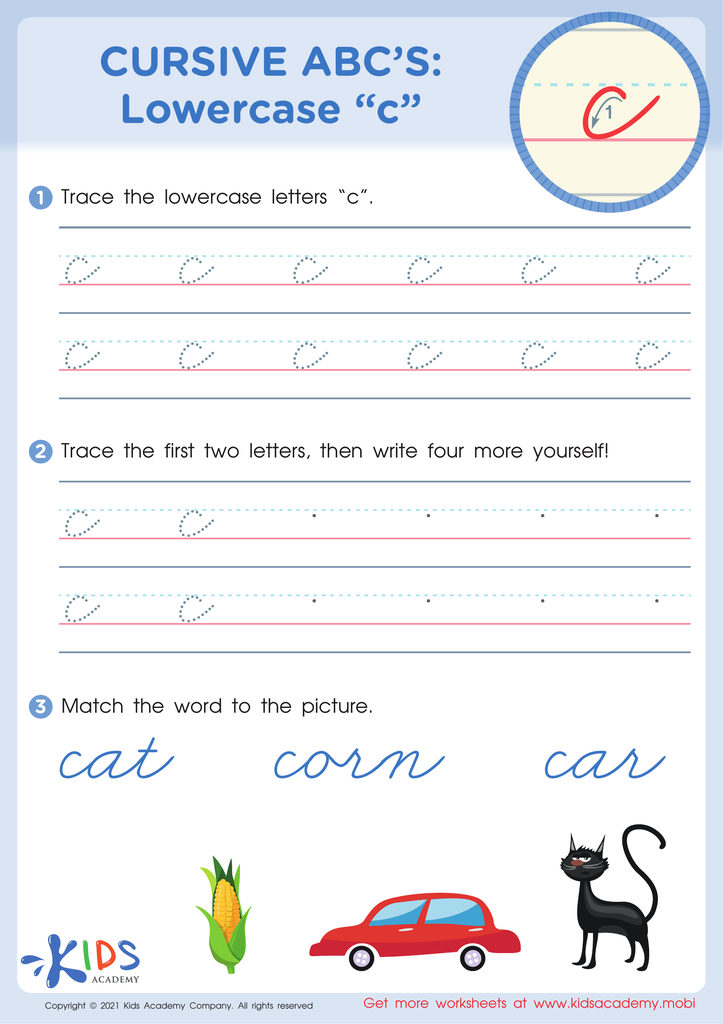
Cursive ABCs: Lowercase c
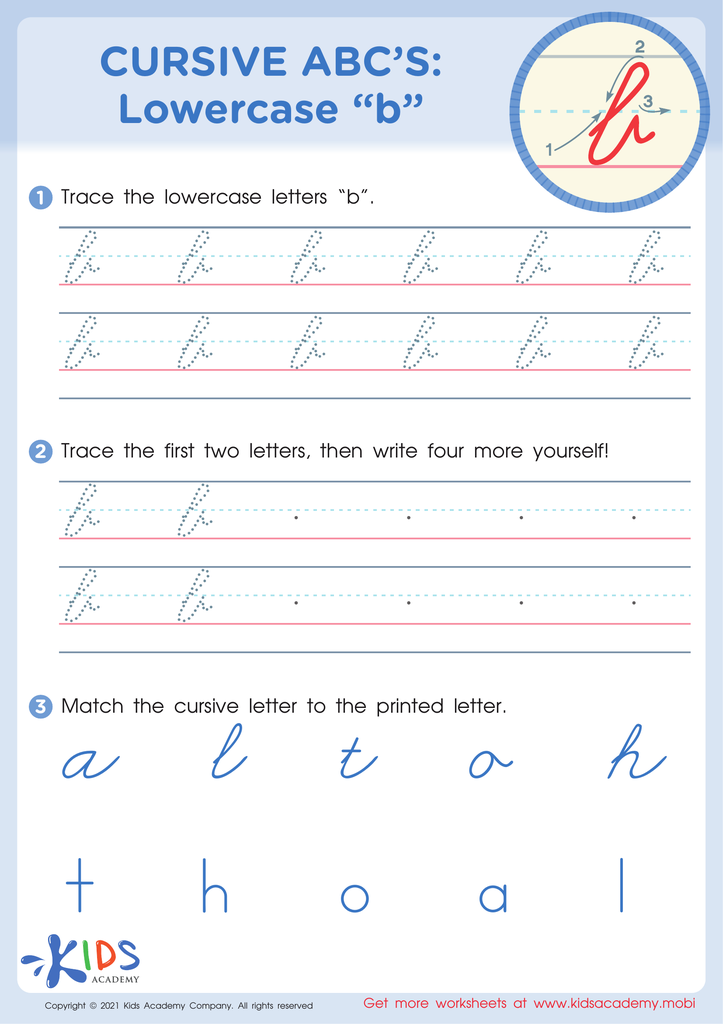
Cursive ABCs: Lowercase b
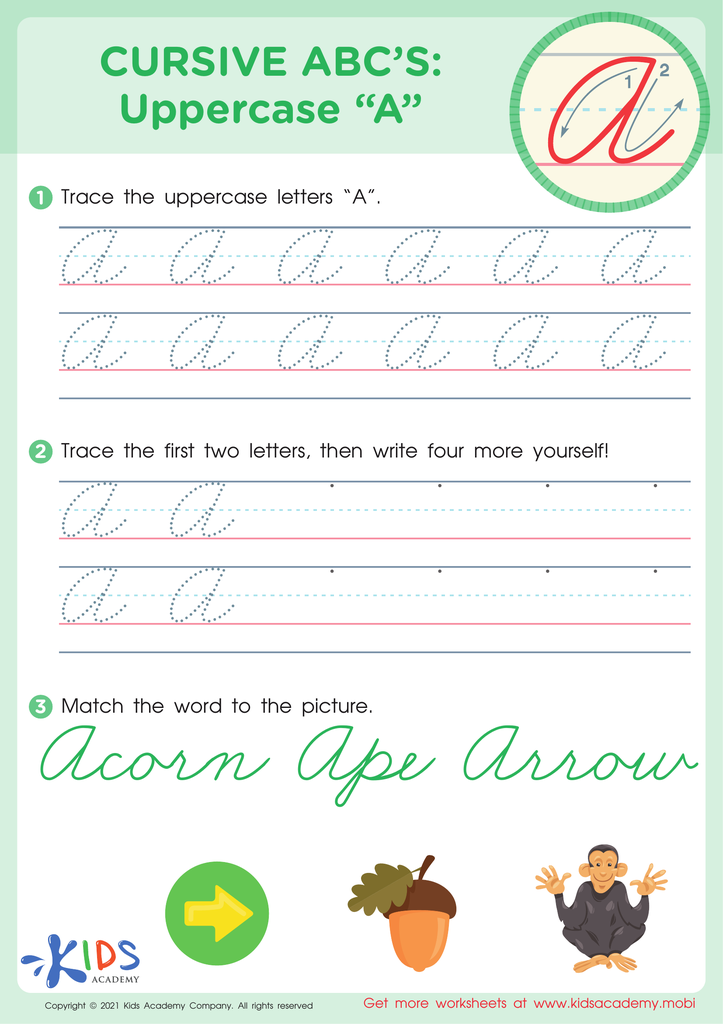
Cursive ABCs: Uppercase A
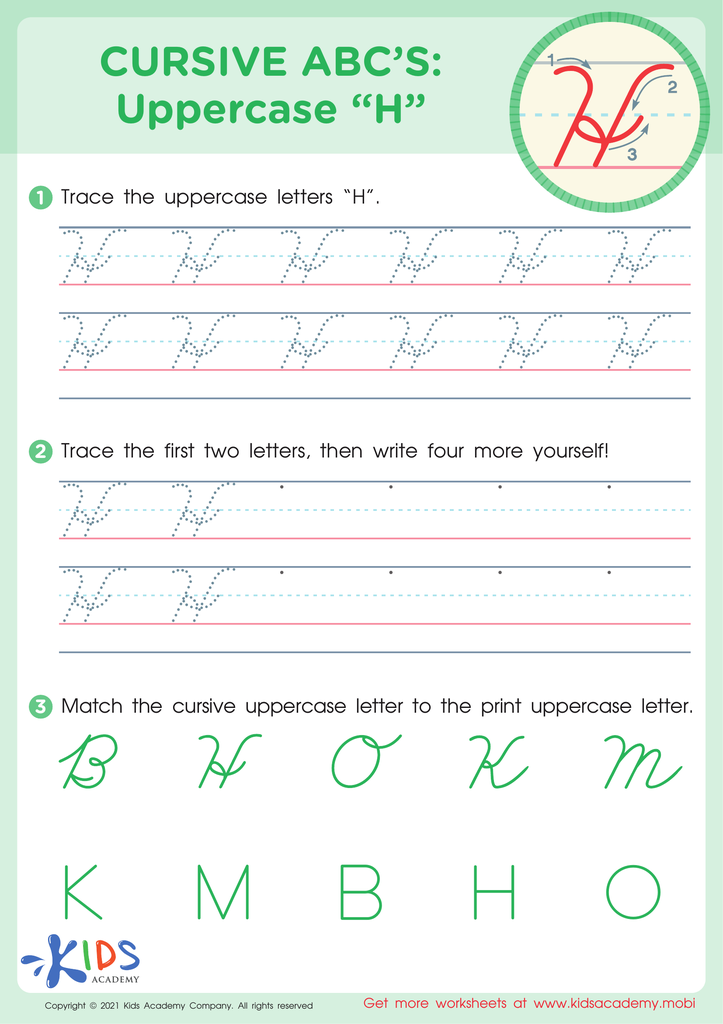
Cursive ABCs: Uppercase H







Alphabet recognition and cursive writing are crucial skills for children aged 7-9 as they form the foundation for effective communication and literacy. At this developmental stage, children solidify their understanding of letters and their sounds, which is vital for reading proficiency. Recognizing both printed and cursive letters ensures that students are well-rounded in their language skills, enabling them to engage with a variety of texts.
Cursive writing, specifically, offers several cognitive benefits. It enhances fine motor skills, promoting hand-eye coordination and finger dexterity, which are essential for numerous daily tasks. Cursive writing also facilitates quicker writing, allowing children to express their thoughts more fluidly and creatively, thereby fostering self-expression.
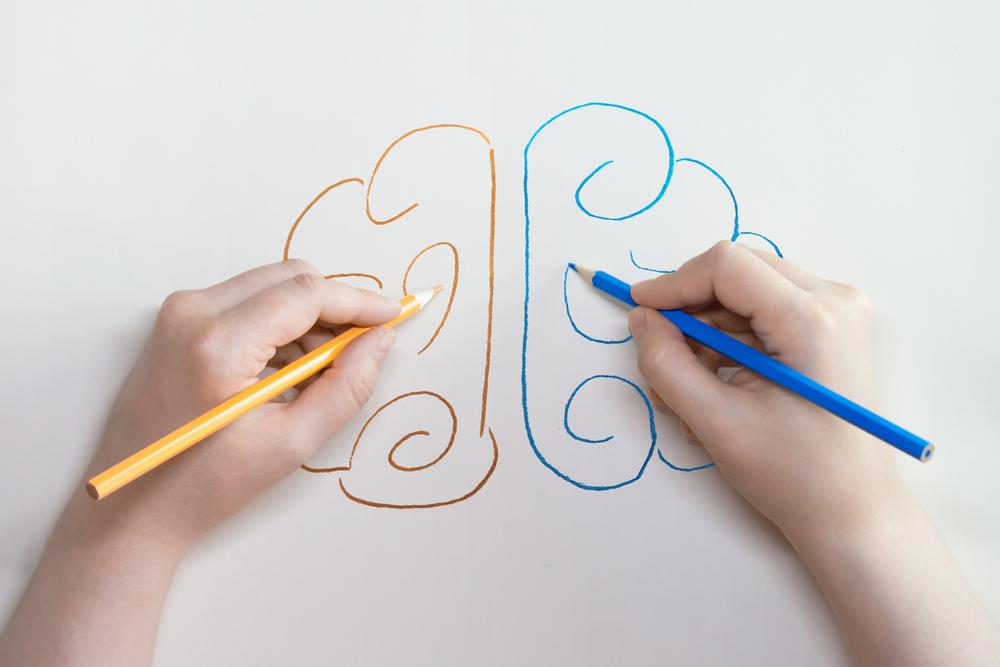
From a developmental standpoint, using cursive can strengthen brain connections linked to language processing and memory, setting the stage for more advanced literacy and critical thinking skills. It also challenges children to focus on letter formation, spacing, and flow, which are essential for clear communication.
Ultimately, prioritizing alphabet recognition and cursive writing helps build confident, articulate learners who can effectively navigate their academic and social worlds. Engaging with these skills lays the groundwork for future success in education and communication, making it a priority for parents and teachers alike.








