
Phonics recognition Grammar Worksheets for Ages 7-9
5 filtered results
Difficulty Level
Grade
Age
-
From - To
Subject
Activity
Standards
Explore our engaging "Phonics Recognition Grammar Worksheets" designed specifically for children ages 7-9! These thoughtfully crafted resources enhance phonics awareness while reinforcing essential grammar skills. Our worksheets incorporate fun activities and interactive exercises to keep young learners motivated and excited about learning. Perfect for reinforcing classroom lessons or supporting home education, our phonics recognition activities help students familiarize themselves with sounds, letters, and word patterns, all while improving their grammatical understanding. Elevate your child's literacy journey with our dynamic worksheets that combine learning with play. Download today and watch your child flourish as they master phonics and grammar with confidence!
Favorites
With answer key
Interactive
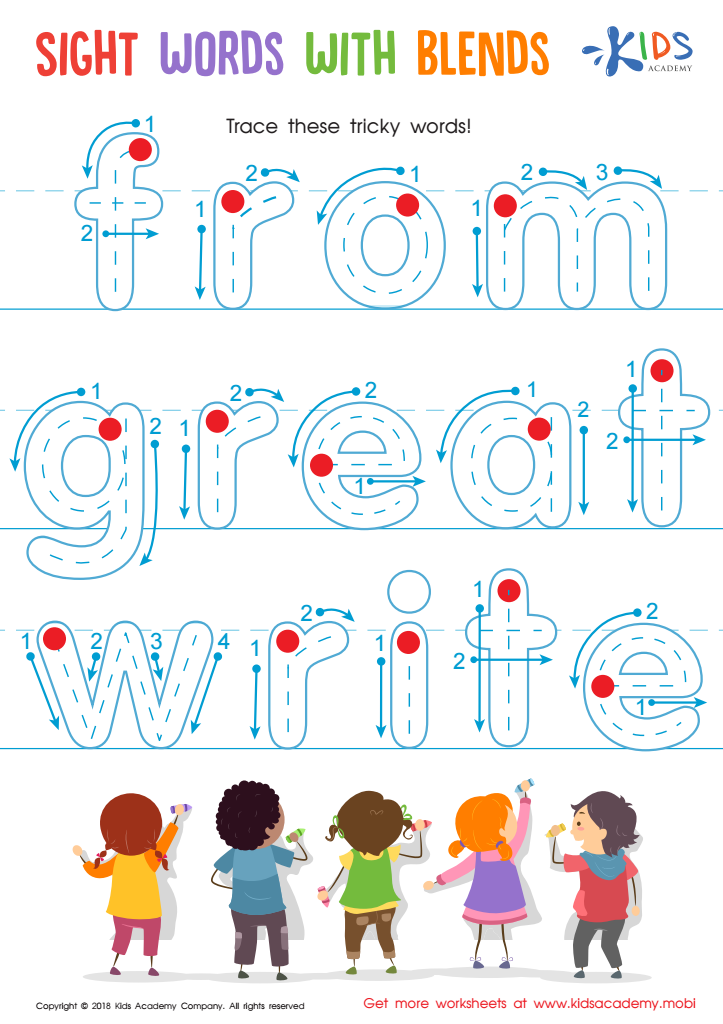
Sight Words with Blends Worksheet
This free PDF lets your children trace and write sight words with tricky blends. The guide numbers help them start from the top, building fine motor skills and enhancing sight word vocab. It's a great way to give your kids a solid foundation for reading!
 Assign to My Students
Sight Words with Blends Worksheet
Worksheet
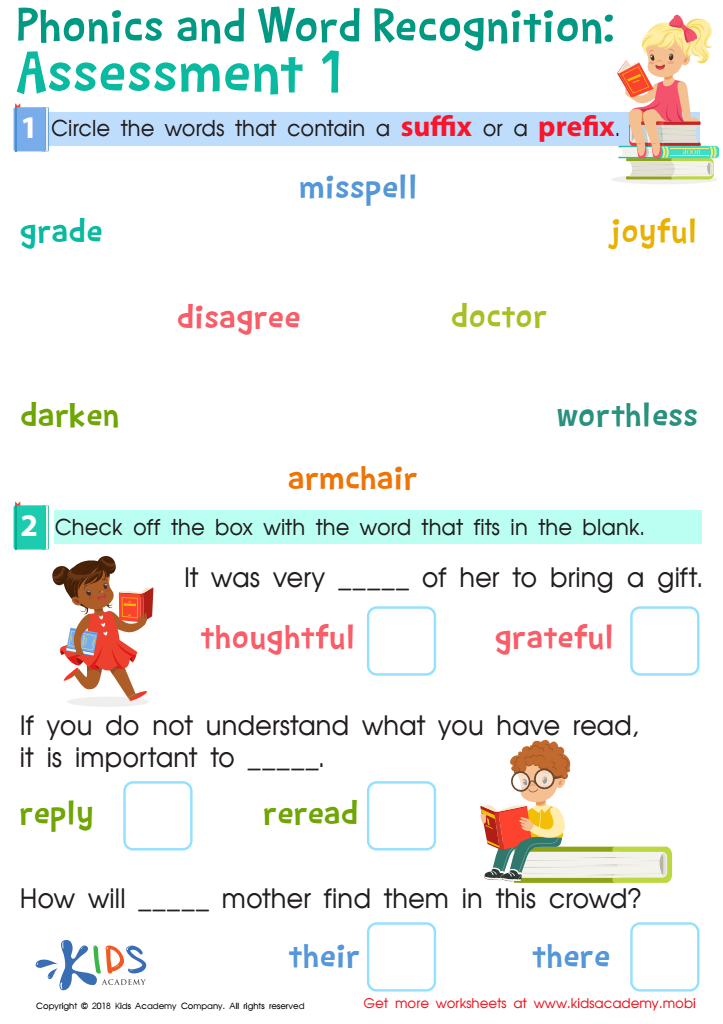
Phonics and Word Recognition: Assessment 1 Worksheet
Explain prefixes (words added to start of another word to give it a new meaning) and suffixes (added to end of word to change its meaning) to your kids with examples like 'unhappy' (prefix) and 'forgetful' (suffix). Now, help your child complete this worksheet, including circling words and checking boxes.
Phonics and Word Recognition: Assessment 1 Worksheet
Worksheet
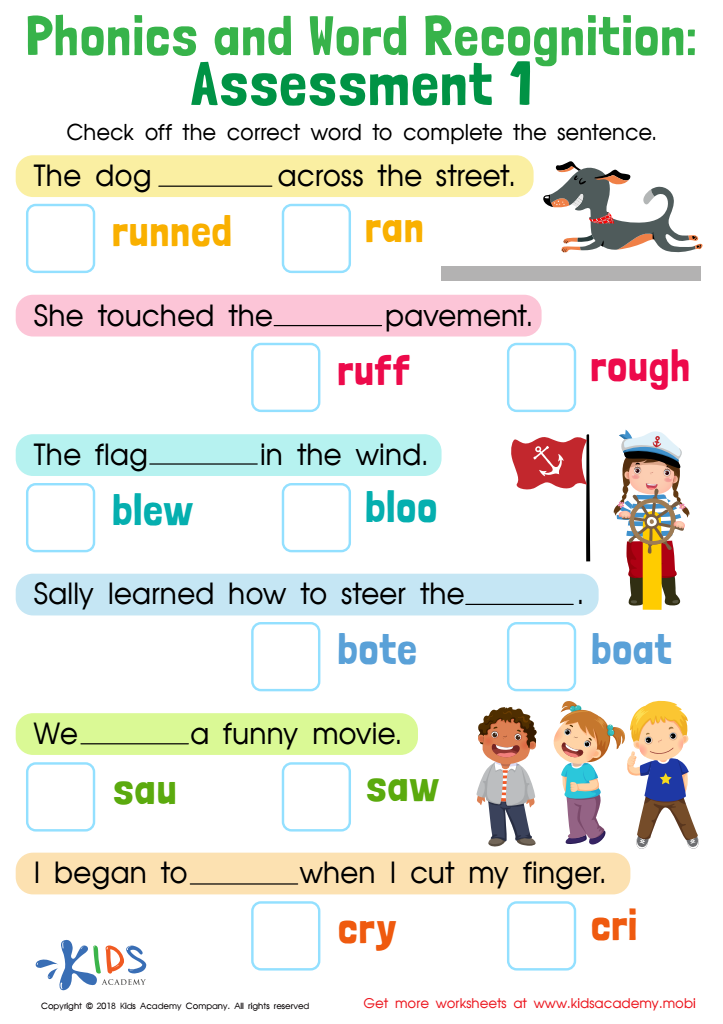
Phonics and Word Recognition: Assessment 1 Worksheet
This worksheet tests phonetics and word recognition. Students should be familiar with past tense verbs. Read incomplete sentences, then read multiple options and help students select the correct one.
Phonics and Word Recognition: Assessment 1 Worksheet
Worksheet
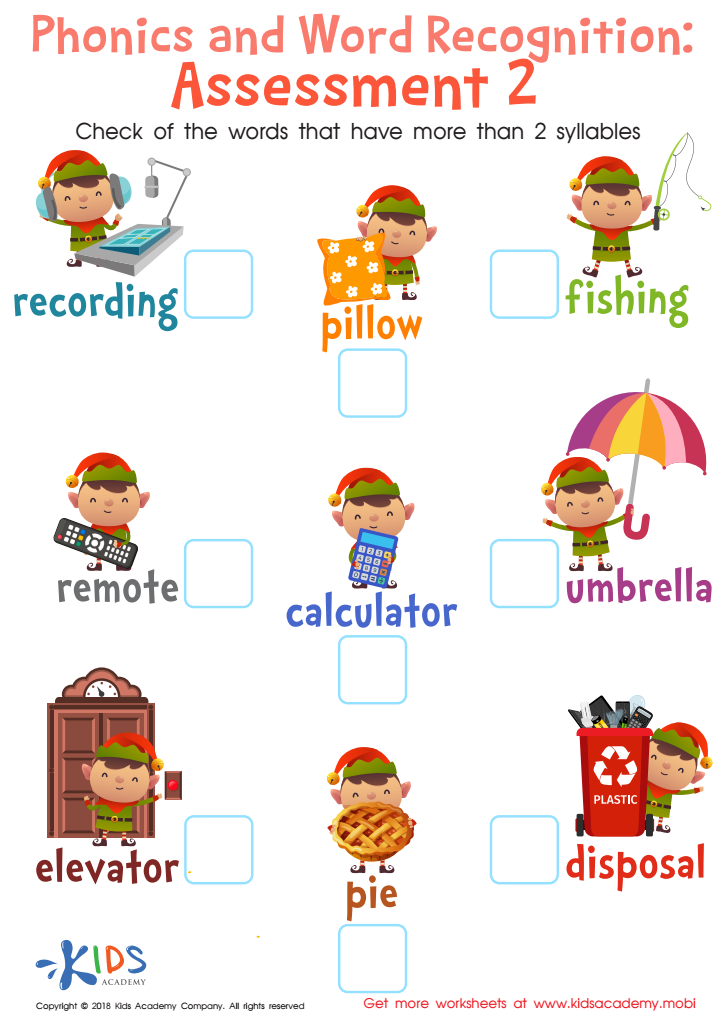
Phonics and Word Recognition: Assessment 2 Worksheet
Help your kids learn proper pronunciation by counting syllables. Most words they'll encounter have 1-3 syllables, making them simple to say. Have them repeat the words in your worksheet after you. Focus on longer words with more than two syllables.
Phonics and Word Recognition: Assessment 2 Worksheet
Worksheet
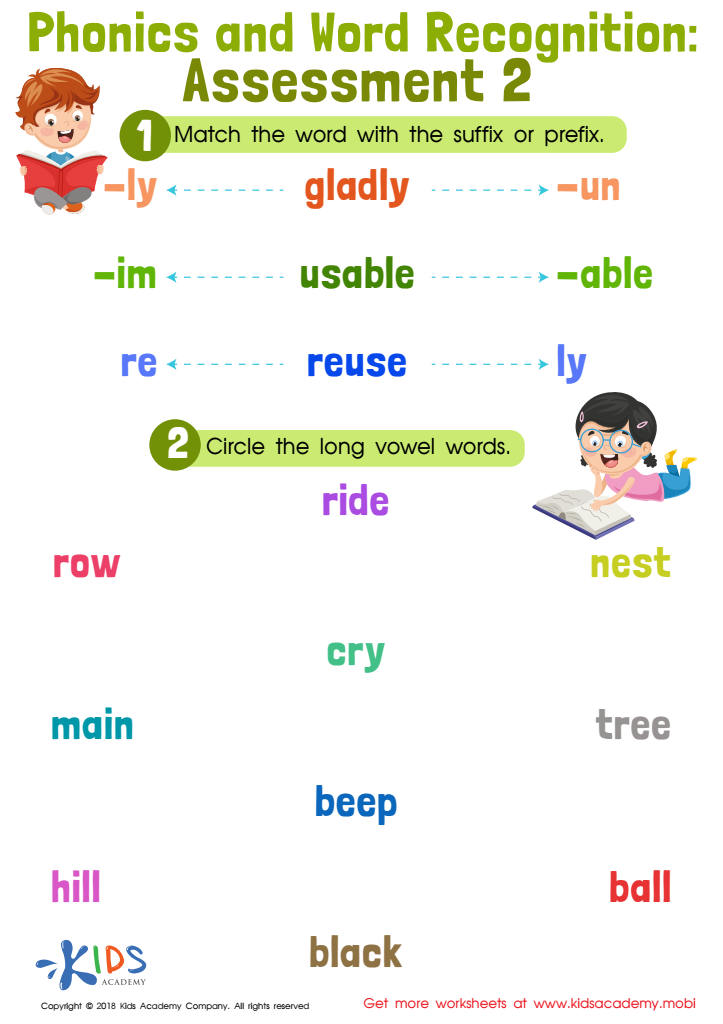
Phonics and Word Recognition: Assessment 2
Give kids common examples of suffixes and prefixes, such as "un-," "unhappy," "ness," "happyness." Ask them to match each word in the word recognition exercise to the correct suffix or prefix. Test phonetic understanding by having them circle the long vowel sounds.
Phonics and Word Recognition: Assessment 2
Worksheet
Join Kids Academy for Free
Who is primarily going to use this learning content?



.jpg)




Phonics recognition and grammar are crucial components of literacy development for children aged 7-9. At this stage, children transition from learning to read to reading to learn, making phonics—which focuses on the relationship between letters and sounds—essential for fluent reading. Proficient phonics skills assist children in decoding unfamiliar words, thereby enhancing their comprehension and expanding their vocabulary. When children feel confident in their reading abilities, they are more likely to engage with texts, facilitating a lifelong love of reading.
Equally important is grammar, which helps children articulate their thoughts clearly and coherently. By understanding the structures and rules of language, they can construct well-formed sentences, leading to improved writing skills. A strong grasp of grammar fosters effective communication, allowing children to express ideas more precisely in both verbal and written forms.
Parents and teachers play a key role in encouraging phonics and grammar learning. By prioritizing these skills, they can support children's overall academic success and boost their self-esteem. Furthermore, strong literacy skills are linked to better performance across all subjects, setting a solid foundation for future learning. Therefore, investing in phonics and grammar education is essential for children’s academic and personal development.








