Verb identification Grammar Worksheets for Ages 7-9
5 filtered results
-
From - To
Enhance your child's grammar skills with our "Verb Identification Grammar Worksheets for Ages 7-9." These engaging, printable worksheets are designed to help young learners grasp the concept of verbs, essential for developing strong writing and communication abilities. Each worksheet provides fun activities and captivating exercises to make learning enjoyable. By identifying and using verbs correctly, children expand their vocabulary, fostering linguistic growth. Our expertly crafted resources cater to different learning styles, ensuring every child succeeds. Encourage confident and proficient writing with our top-quality Verb Identification Grammar Worksheets, available now at Kids Academy.
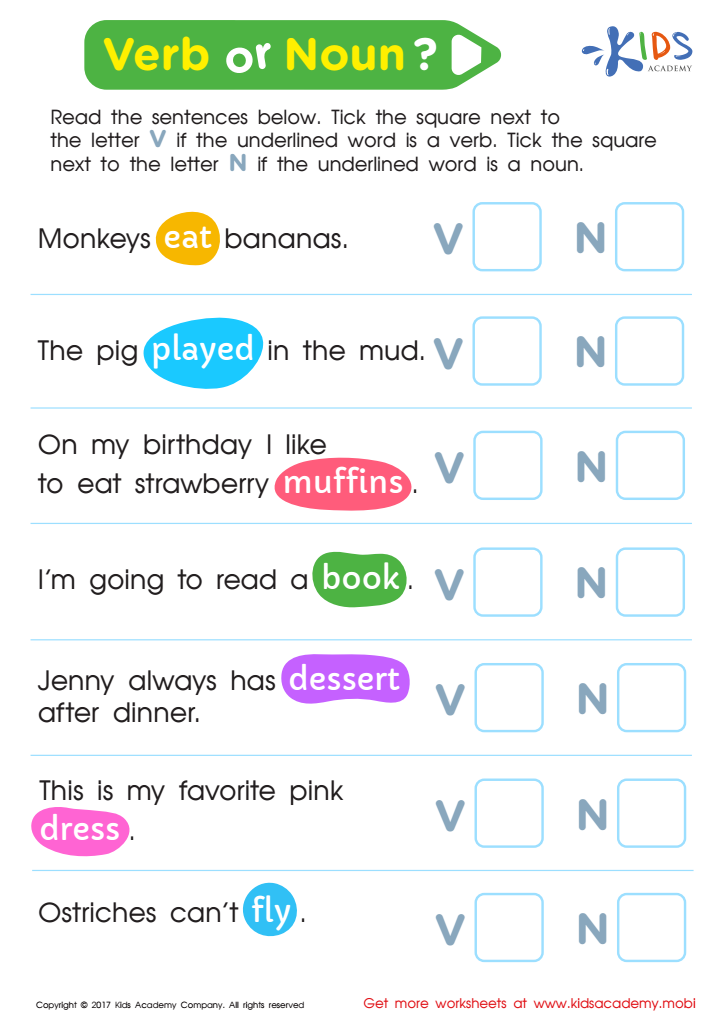
Verb or Noun Worksheet
 Assign to My Students
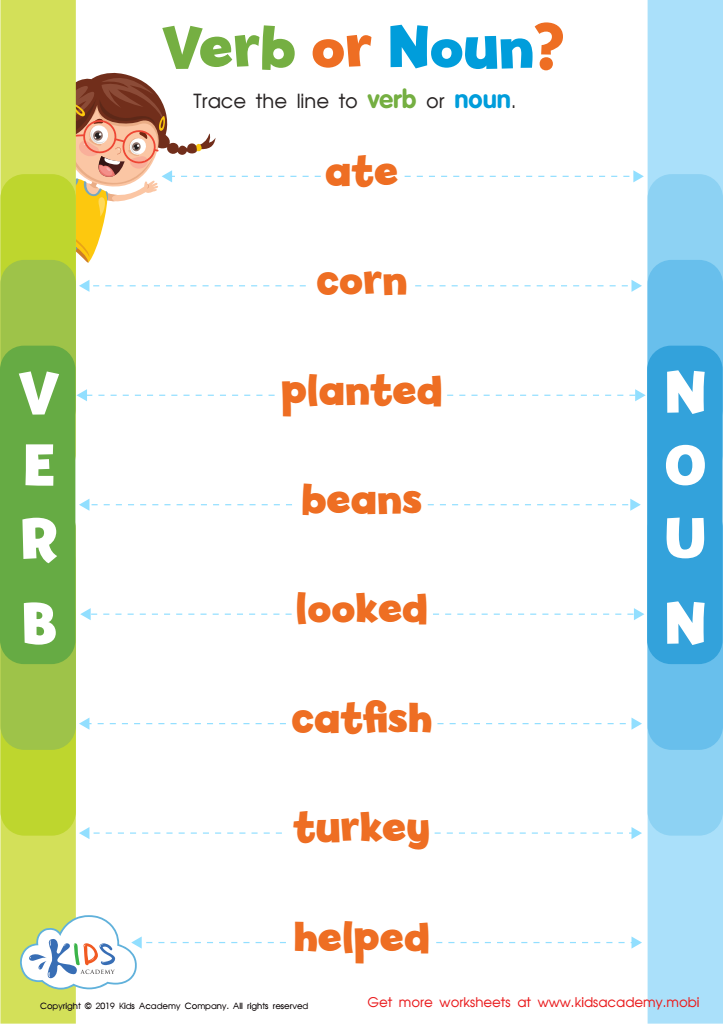
Verb or Noun Worksheet
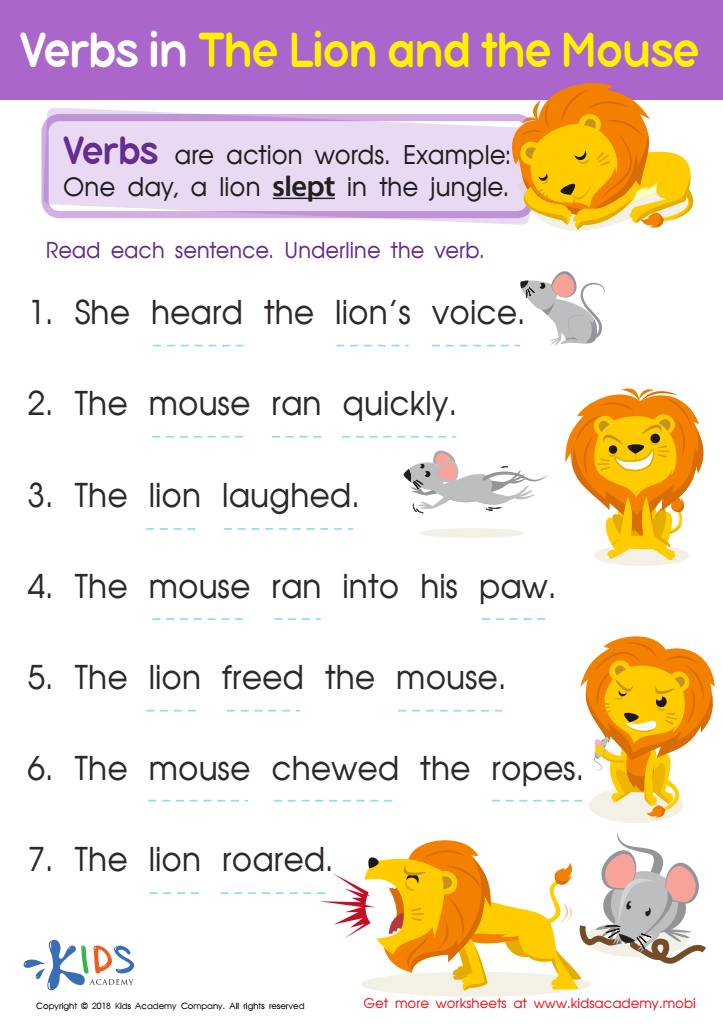
Verbs in The Lion and the Mouse Worksheet
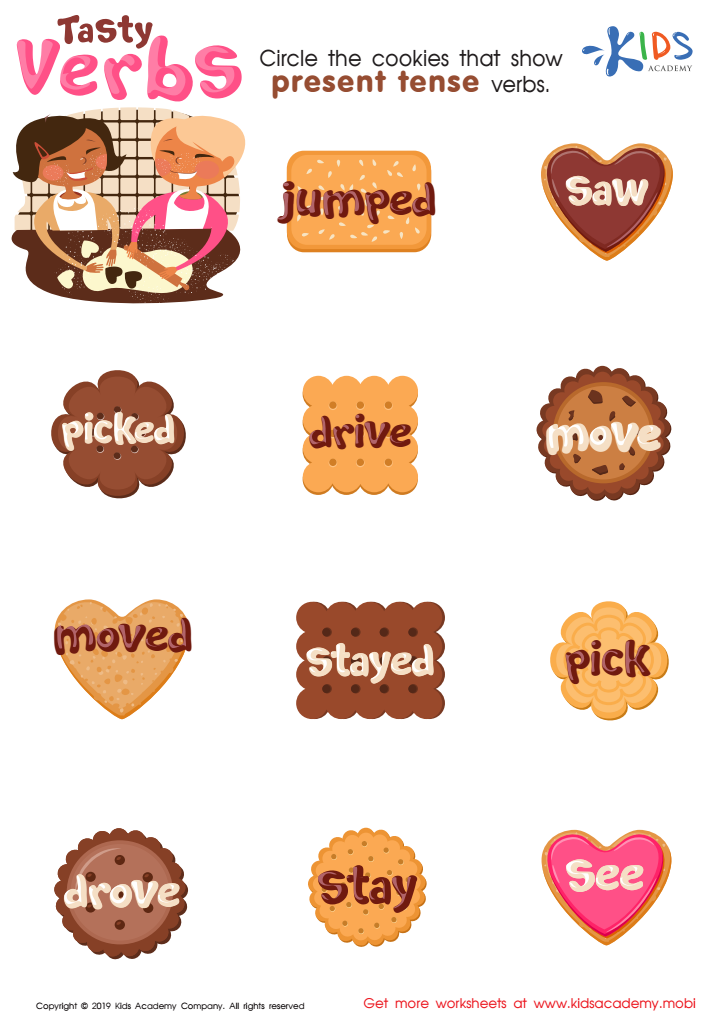
Tasty Verbs Worksheet
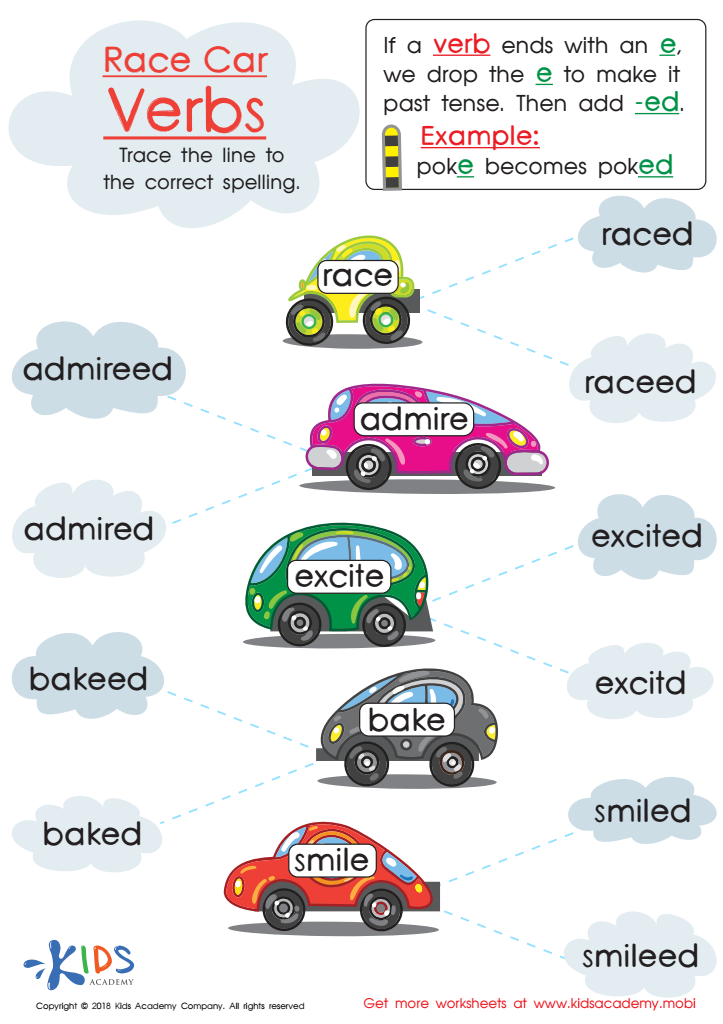
Race Car Verbs Worksheet








Understanding verb identification is crucial for children aged 7-9 as it forms the foundation of their reading and writing skills. At this stage, kids transition from learning to read to reading to learn, which requires a robust grasp of grammar to comprehend more complex texts.
Identifying verbs helps children recognize the action in a sentence, making it easier to understand the meaning. This comprehension boosts their ability to follow instructions, understand stories, and engage in meaningful conversations. A strong grasp of verbs and their usage enhances their reading fluency, allowing for smoother, more enjoyable reading experiences.
In writing, knowing how to identify and use verbs correctly enables children to construct meaningful and coherent sentences. This skill is necessary for writing assignments, storytelling, and expressing ideas clearly. Poor verb usage can lead to confusing or incomplete sentences, which can hinder academic progress and communication skills.
Furthermore, mastering verb identification builds confidence. When children can understand and use language effectively, they are more likely to participate in classroom discussions and activities, fostering a positive attitude towards learning.
In summary, focusing on verb identification for ages 7-9 supports overall linguistic development, aids academic progress, and boosts confidence, making it a critical element of early education.








