
Fine motor skills development Alphabet Worksheets for 7-Year-Olds
3 filtered results
Difficulty Level
Grade
Age
-
From - To
Subject
Activity
Standards
Our Fine Motor Skills Development Alphabet Worksheets for 7-Year-Olds are designed to enhance young learners' dexterity while reinforcing their understanding of letters. These engaging activities combine fun and learning, allowing children to practice tracing, cutting, and writing letters with precision. Our worksheets aim to build confidence and improve coordination, essential for future writing skills. Parents and educators will appreciate the variety of exercises tailored to maintain engagement while promoting essential fine motor skills. Perfect for home or classroom use, these worksheets provide a playful yet educational resource to help 7-year-olds master the alphabet with ease and enjoyment. Start your child’s learning journey today!
Favorites
With answer key
Interactive
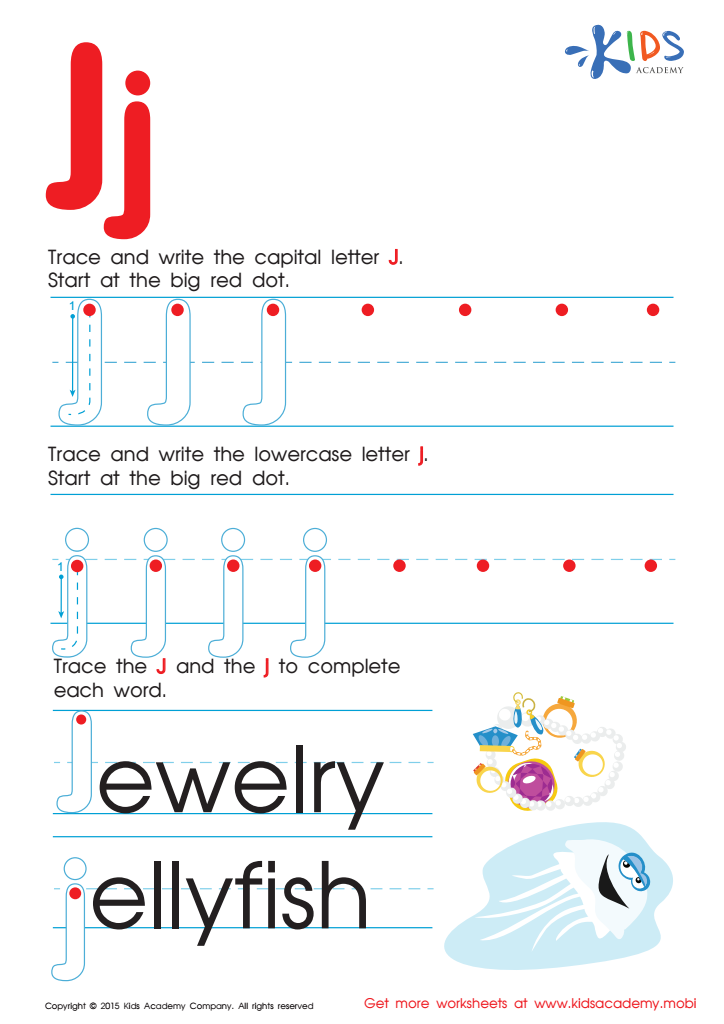
Letter J Tracing Page
Trace and write the letter "J" with our ABC worksheet - start at the big red dot! Have fun completing words like jewelry, jellyfish and more. Check out our kindergarten activities for more alphabet practice.
Letter J Tracing Page
Worksheet
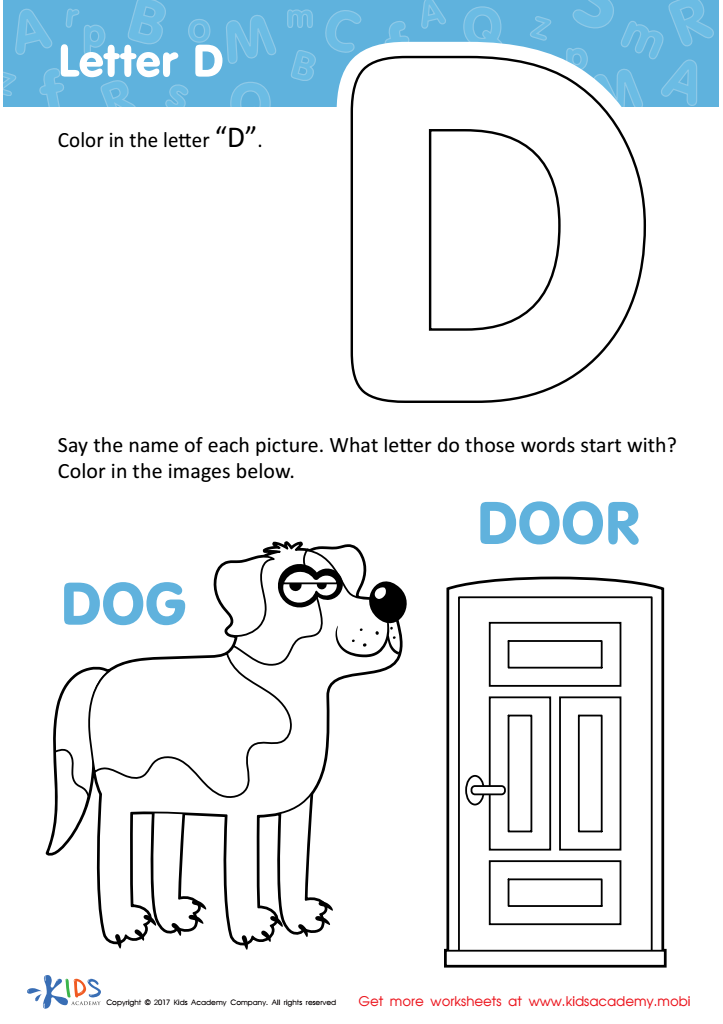
Letter D Coloring Sheet
Coloring with this letter "D" page is a great way to encourage your child's creativity while they learn the letter "D" and its sound. It's a fun activity to stimulate their imagination!
Download (PDF)
 Assign to My Students
Assign to My Students
Letter D Coloring Sheet
Worksheet
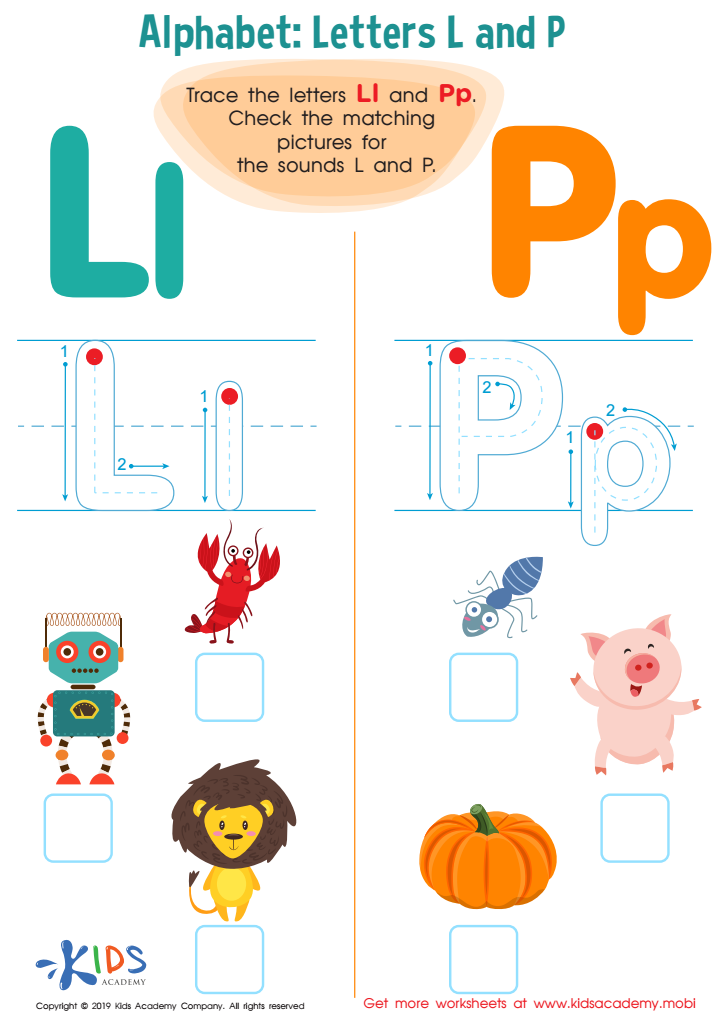
Letter L and P Tracing Worksheet
This traceable worksheet can motivate your students to learn and practice core skills. They'll trace the letters 'L' and 'P' and identify the pictures next to them. With this exercise, they'll unlock their learning abilities and excel in the subject!
Letter L and P Tracing Worksheet
Worksheet
Join Kids Academy for Free
Who is primarily going to use this learning content?








Fine motor skills are essential for young children, particularly around the age of seven, as they significantly influence academic success and everyday functioning. These skills involve the ability to perform small, precise movements using the hands and fingers, such as writing, drawing, and manipulating objects. For seven-year-olds, fine motor development is critical in enhancing their ability to write legibly and efficiently. Mastery of fine motor skills translates to improved performance in school tasks, like completing homework, organizing materials, or doing arts and crafts.
Parents and teachers should care about this development because it directly impacts a child's self-confidence and independence. A child who struggles with fine motor tasks may feel frustrated or embarrassed, which can lead to a negative attitude towards learning. Encouraging fine motor skill development through engaging activities not only fosters creativity and problem-solving but also helps children develop patience and perseverance.
Moreover, strong fine motor skills lay the groundwork for later skills, including digital literacy, which is increasingly important in our technology-driven world. By prioritizing fine motor development, adults can help promote a child's overall cognitive and emotional growth, fostering a lifelong love of learning and exploration.







