
Vocabulary Building Alphabet Worksheets for 7-Year-Olds
10 filtered results
Difficulty Level
Grade
Age
-
From - To
Subject
Activity
Standards
Enhance your 7-year-old's language skills with our engaging Vocabulary Building Alphabet Worksheets. Perfectly designed for young learners, these printable worksheets blend fun activities with educational content to strengthen vocabulary, boost reading proficiency, and foster a love for words. Each worksheet encourages children to explore and memorize new vocabulary through a variety of interactive exercises and captivating illustrations. Our resources cater to different learning styles, ensuring every child can enjoy and benefit from these enriching learning experiences. Join Kids Academy to inspire your child’s vocabulary growth and support their journey to becoming proficient readers and enthusiastic learners.
Favorites
With answer key
Interactive
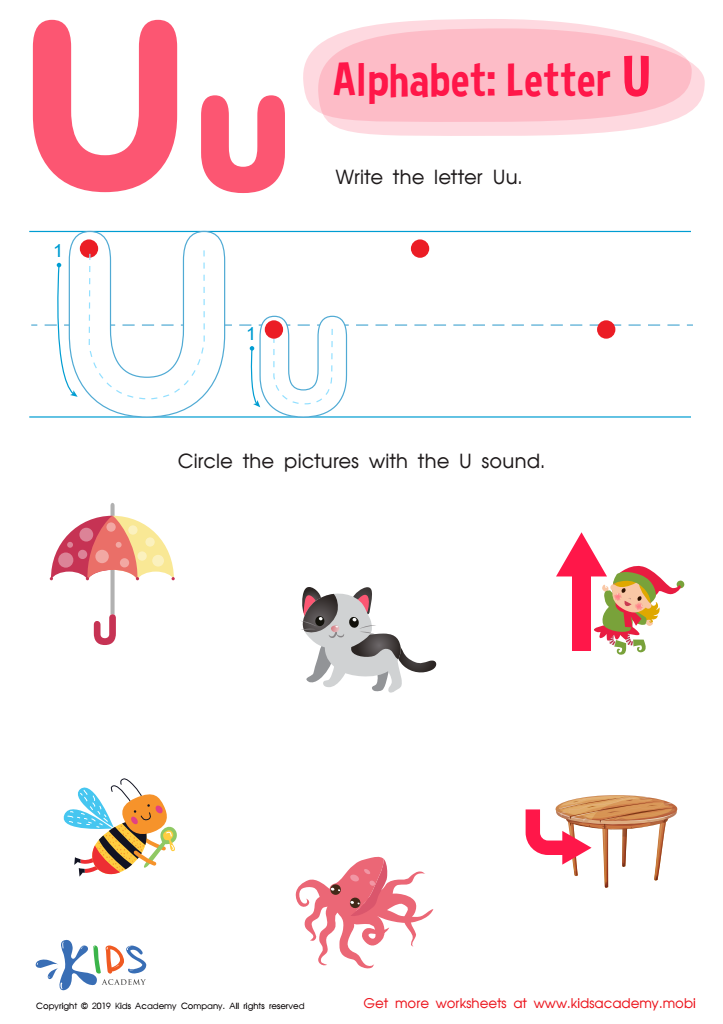
Letter U Tracing Worksheet
Your students can have fun and learn about the alphabet with this letter «U» worksheet. Pre-schoolers will trace the letter «U», circle words with the letter sound, and learn phonics while boosting their confidence. Doing these tasks will help them understand the letter more.
Letter U Tracing Worksheet
Worksheet
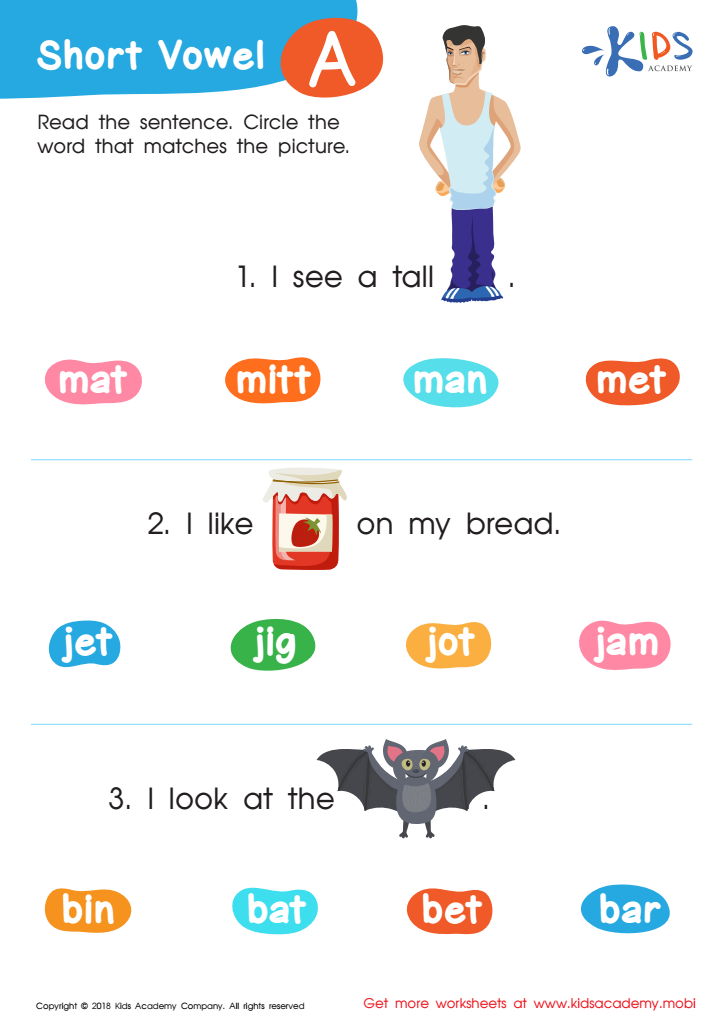
Short Vowel /a/ Worksheet
This free PDF helps new readers use sight words and pictures to read basic sentences. Then, they use accompanying word choices to find the correct word with the short a vowel sound. A key early reading skill, discriminating between short vowel sounds can be tricky in monosyllabic words, so use this PDF to help your reader reinforce it.
Short Vowel /a/ Worksheet
Worksheet
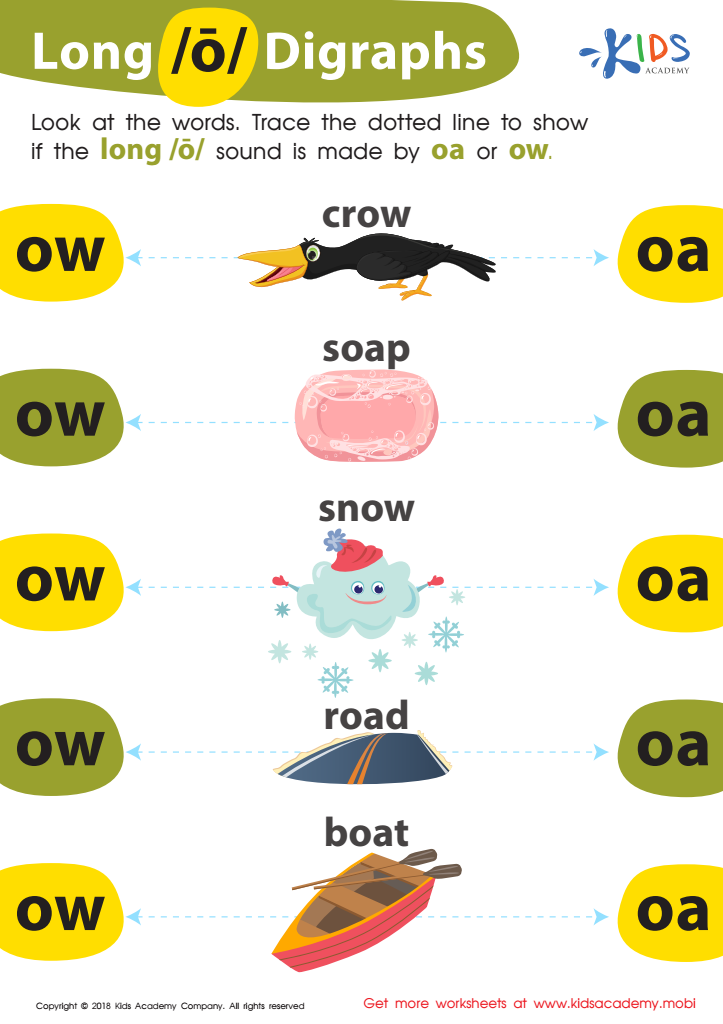
Reading: Long O Digraphs Worksheet
Reading and decoding words can be complex for learners when they start studying digraphs, two letters that make one sound. This worksheet focuses on the long O sound, /oa/ and /ow/. With the understanding of digraphs, students can decode more words and build their reading confidence.
Reading: Long O Digraphs Worksheet
Worksheet
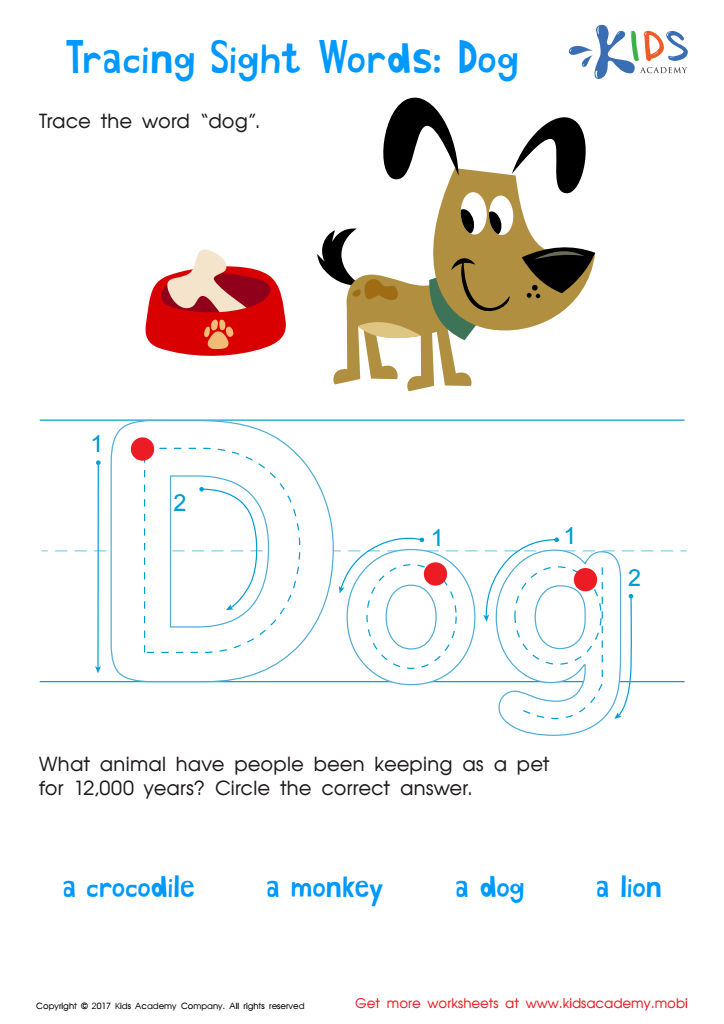
Dog Worksheet Sight Words Worksheet
Get your kids excited to read with our dog-themed sight words worksheet!
Excite your child to read with our sight words worksheet: dog edition! Featuring a lovable dog character to put a smile on any kid's face, this worksheet helps kids practice reading and writing the word "dog". Build a library of words they can read quickly and promote increasing literacy skills with early fluency! Get them ready for reading with our dog-themed sight words worksheet!
Dog Worksheet Sight Words Worksheet
Worksheet
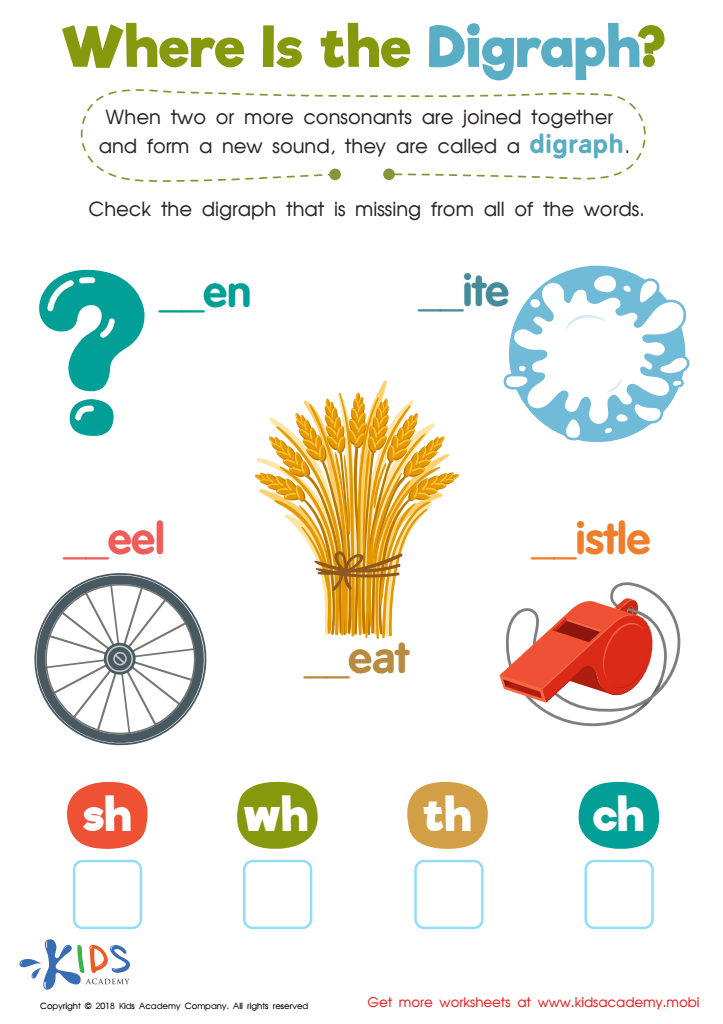
Where Is the Digraph? Worksheet
Teach your child about digraphs - two or more consonants that form one sound, like /wh/, /sh/, and /ch/. Show them words with these sounds and use this worksheet to help. Ask them which digraph is missing from the words and point out the pictures. 80 words.
Where Is the Digraph? Worksheet
Worksheet
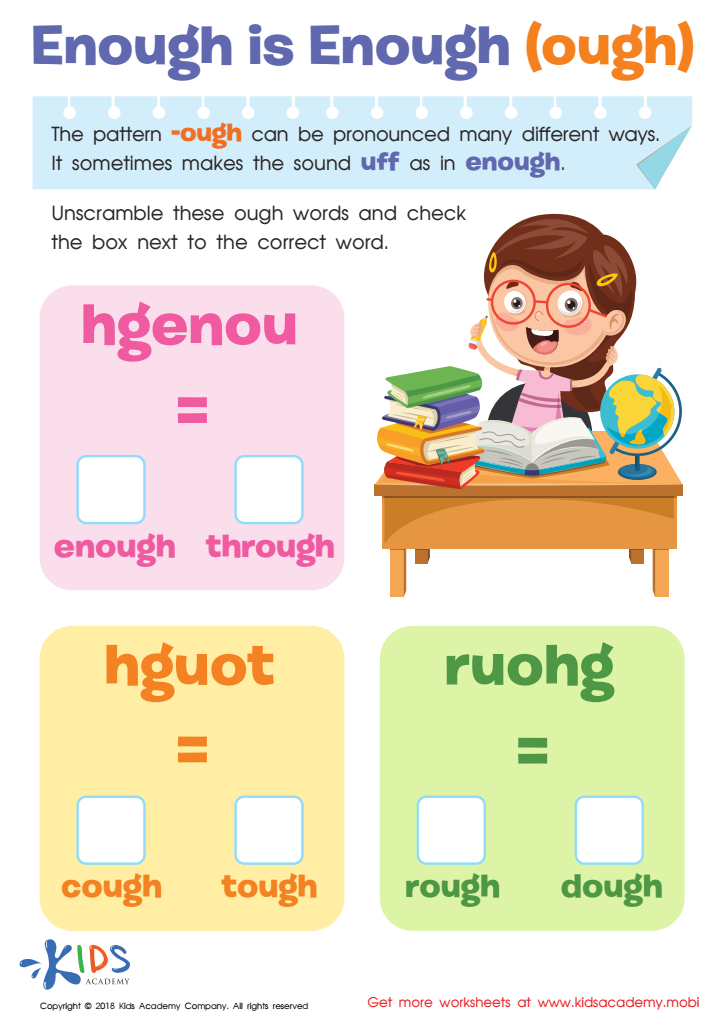
Enough Is Enough (ough) Worksheet
As your students learn more about reading and pronouncing words, they can explore how some word patterns can be said differently. The 'ough' pattern, for instance, can be pronounced several ways. 'Enough' has the 'uff' sound. Provide your students with examples of words pronounced similarly and help them unscramble 'ough' words on this worksheet, ticking the box for the correct word.
Enough Is Enough (ough) Worksheet
Worksheet
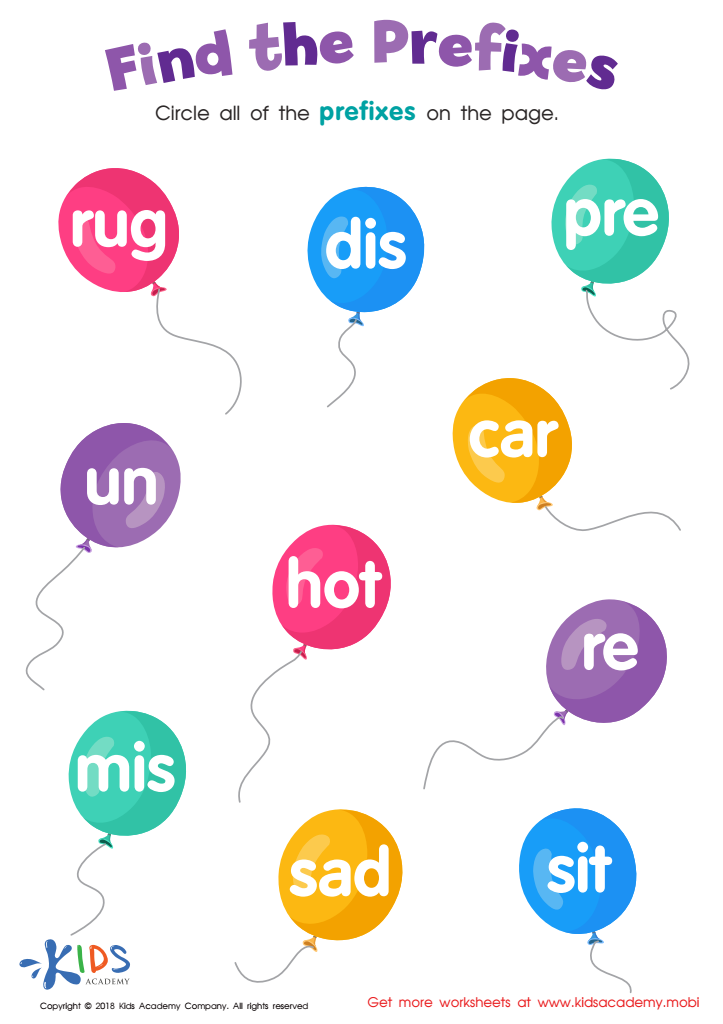
Reading: Find the Prefixes Worksheet
Students are asked to circle all prefixes on this worksheet and brainstorm a list of words that have them. It's a great tool for teaching vocabulary and helps students understand new and unfamiliar words by recognizing how prefixes change meaning.
Reading: Find the Prefixes Worksheet
Worksheet
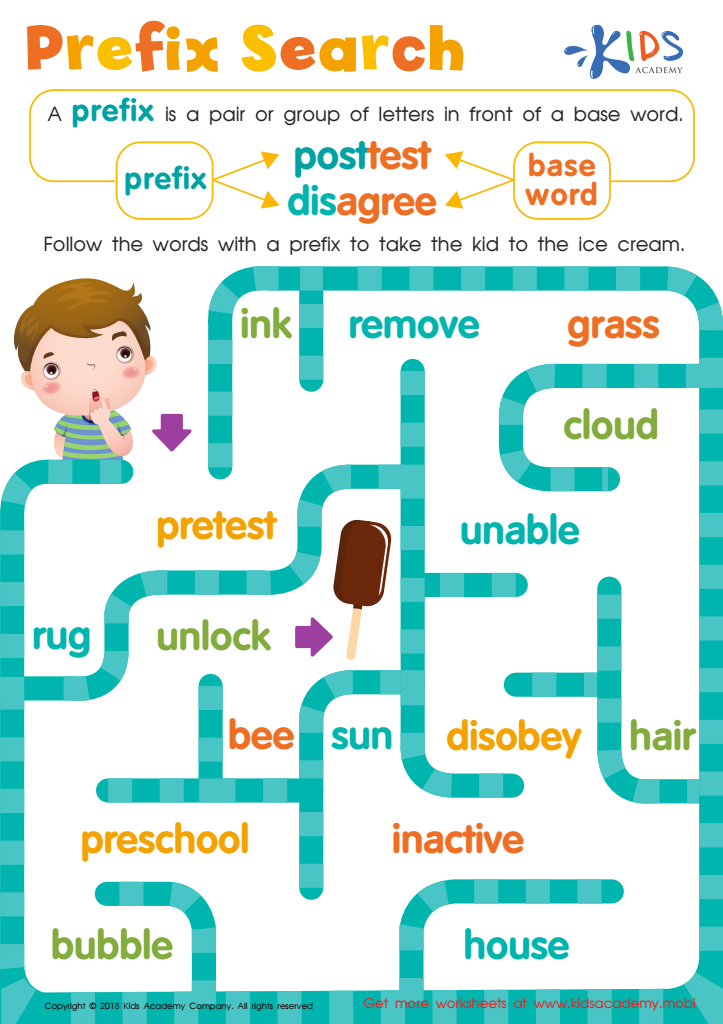
Reading: Prefix Search Worksheet
Maze your way through prefixes! This worksheet helps students practice reading new words with a prefix and figuring out the base word. An understanding of prefixes gives students the skills to comprehend new words. A fun and useful activity for the reading classroom!
Reading: Prefix Search Worksheet
Worksheet
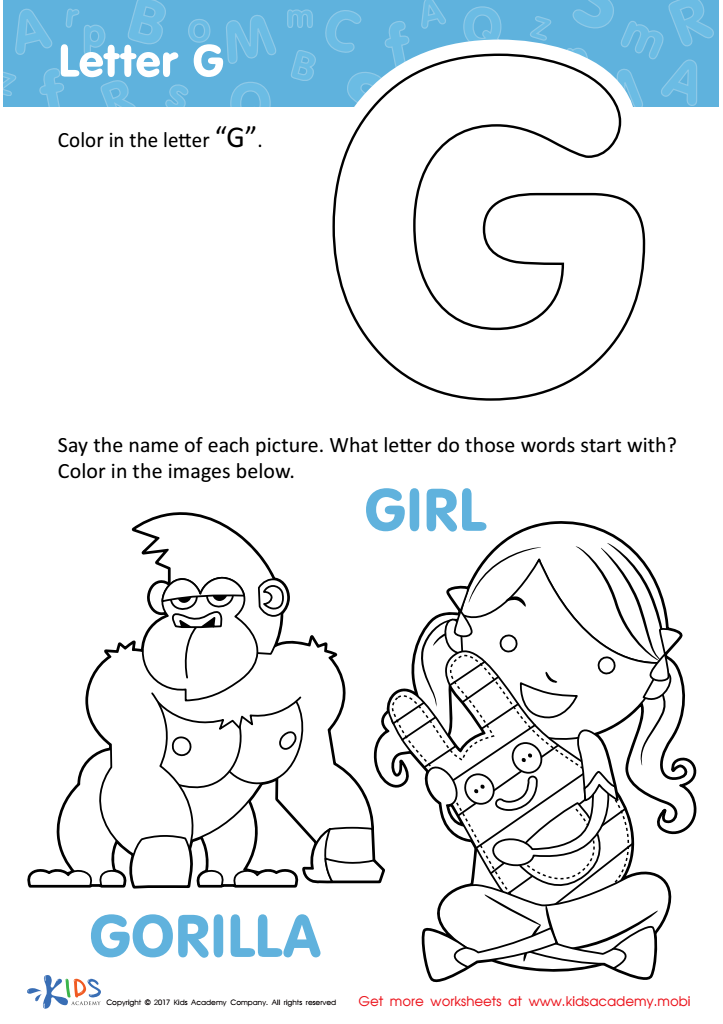
Letter G Coloring Sheet
This "G" coloring page encourages creativity and teaches kids the letter "G" sound. With its fun visuals and familiar words, it's sure to excite your child. Plus, you can talk about the letter’s sound with the pictures given.
Download (PDF)
 Assign to My Students
Assign to My Students
Letter G Coloring Sheet
Worksheet
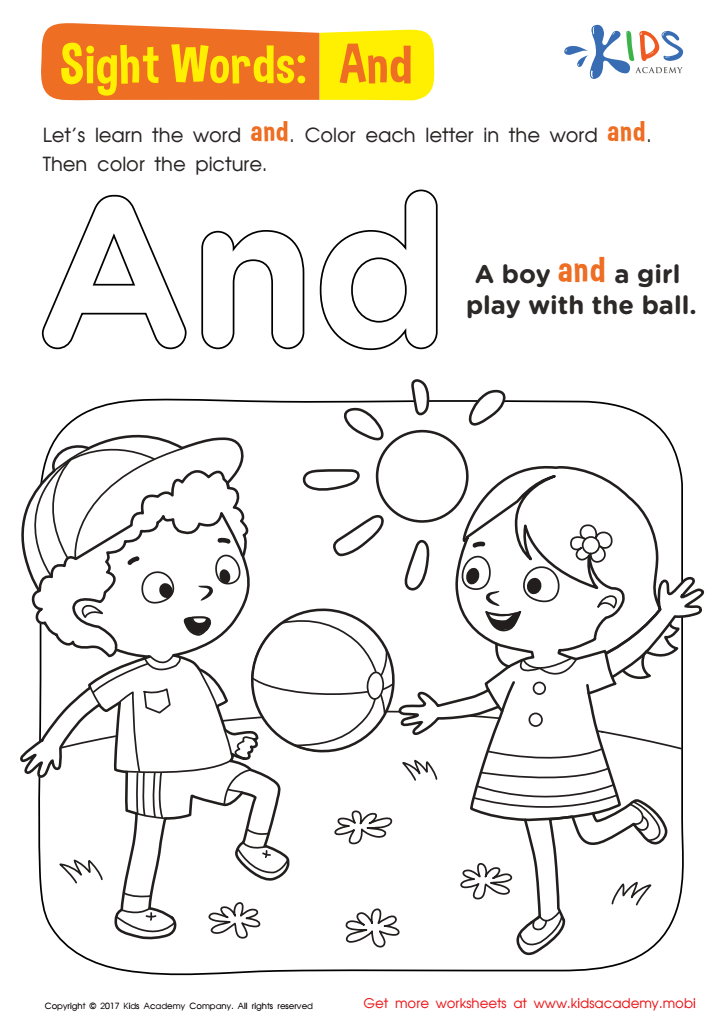
And Worksheet Sight Words Worksheet
Help your child get a jumpstart on reading with sight words! Print out this fun worksheet and get your child to read the sentence. Point out the word "and", then color the word and enjoy the rest of the scene! It's a great way to introduce sight words and get their early reading skills going!
Download (PDF)
Assign to My Students
Assign to My Students
And Worksheet Sight Words Worksheet
Worksheet
Join Kids Academy for Free
Who is primarily going to use this learning content?








Building a robust vocabulary is essential during the early years of a child's education because it forms the foundation for future learning and communication skills. For 7-year-olds, a Vocabulary Building Alphabet exercise can have a profound impact on their linguistic development. Firstly, a strong vocabulary enhances reading comprehension, enabling children to better understand and engage with texts. This also improves their academic performance across subjects, as a larger vocabulary is critical for grasping new concepts and instructions.
Secondly, it boosts their writing and speaking abilities by allowing them to express ideas more clearly and accurately. This is crucial not just in academic settings but also for effective social interaction and relationship-building.
Additionally, engaging in vocabulary building can stimulate cognitive development, promoting critical thinking and problem-solving skills. Alphabet-based exercises can make learning new words fun and memorable, often incorporating visual and phonetic elements that make it easier for children to retain and recall terms.
For parents and teachers, supporting this aspect of education demonstrates a commitment to the child's overall intellectual growth and helps equip them with essential tools for lifelong learning. In essence, building a strong vocabulary at a young age lays the groundwork for a successful academic and personal life.







