Phonics Skills Short Vowels Worksheets for 7-Year-Olds
5 filtered results
-
From - To
Enhance your child's reading abilities with our Phonics Skills Short Vowels Worksheets tailored for 7-year-olds. These engaging and educational worksheets make learning fun while focusing on essential short vowel sounds. Each activity is designed to build foundational phonics skills through interactive exercises and colorful illustrations. These worksheets help young learners recognize, pronounce, and spell short vowel words, aiding their overall reading proficiency. Perfect for both classroom and home use, our expertly crafted materials ensure that your child develops critical early literacy skills with confidence. Jumpstart your child's phonics journey today with our comprehensive short vowels worksheets!
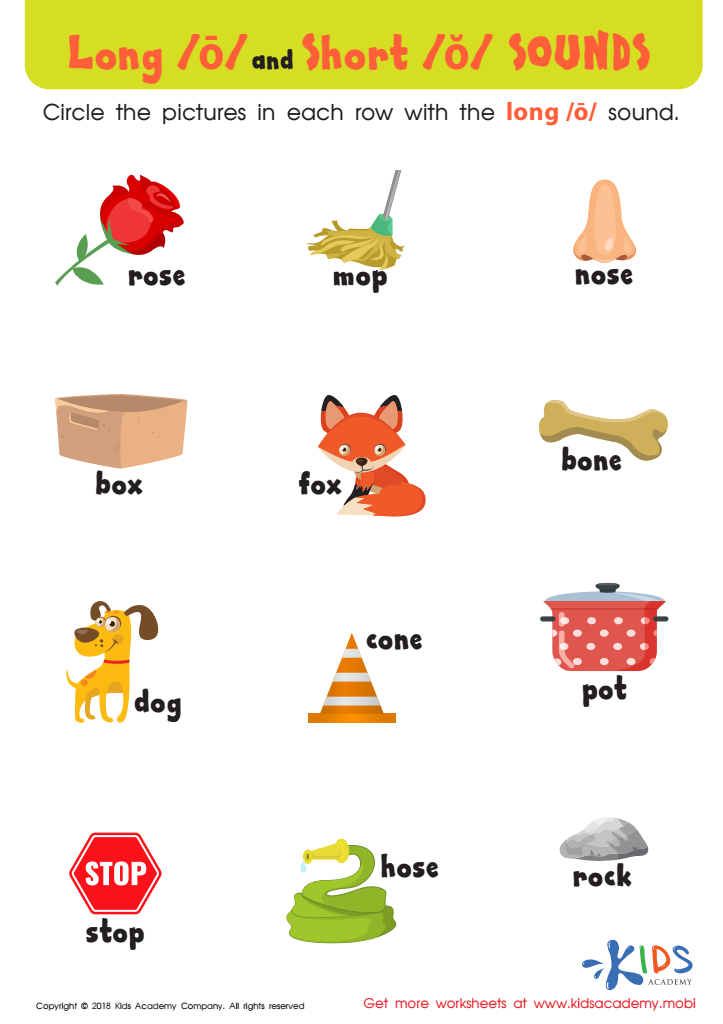
Reading: Long O and Short O Sounds Worksheet
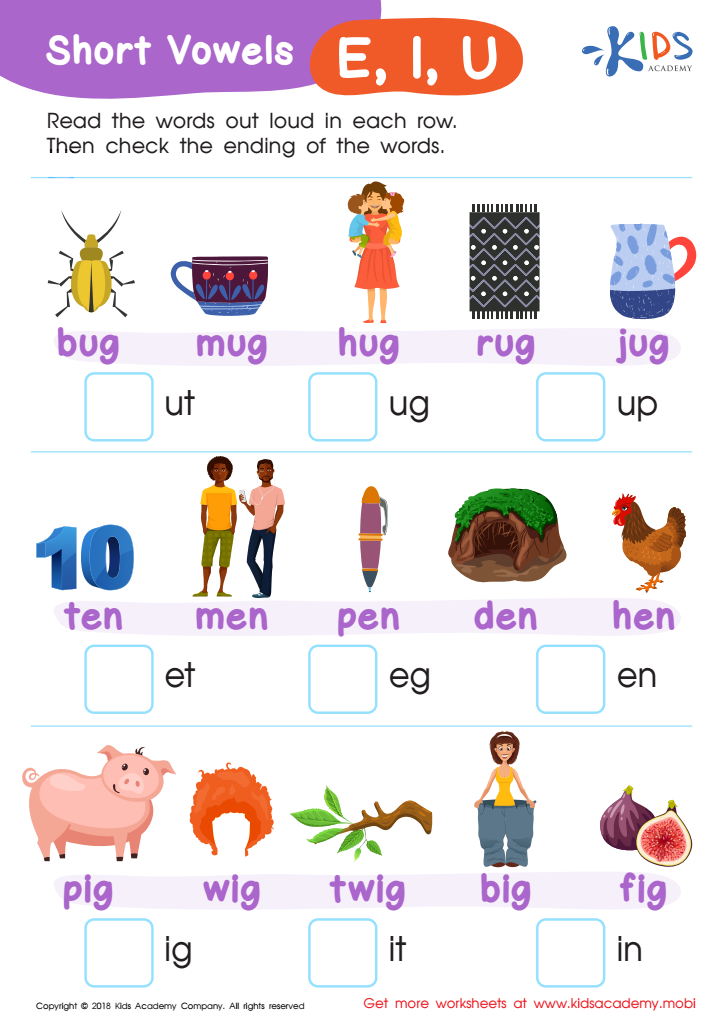
Short Vowels /e/, /i/, and /u/ Worksheet
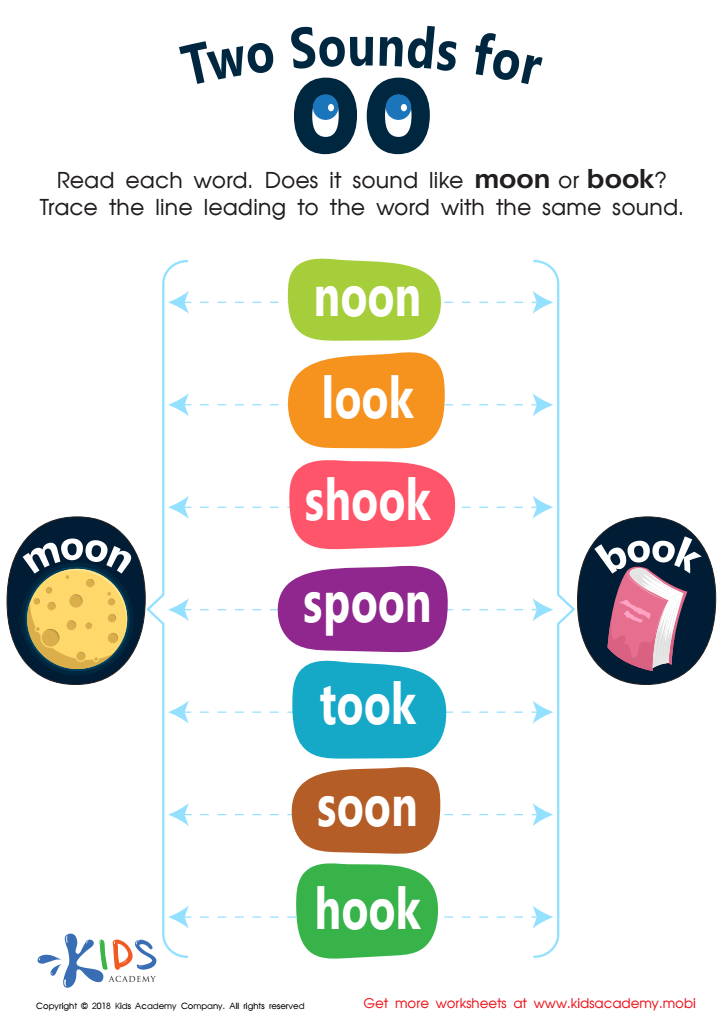
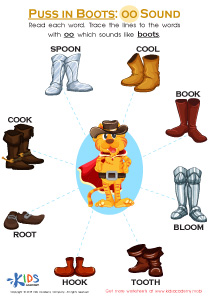
Two Sounds for OO Worksheet
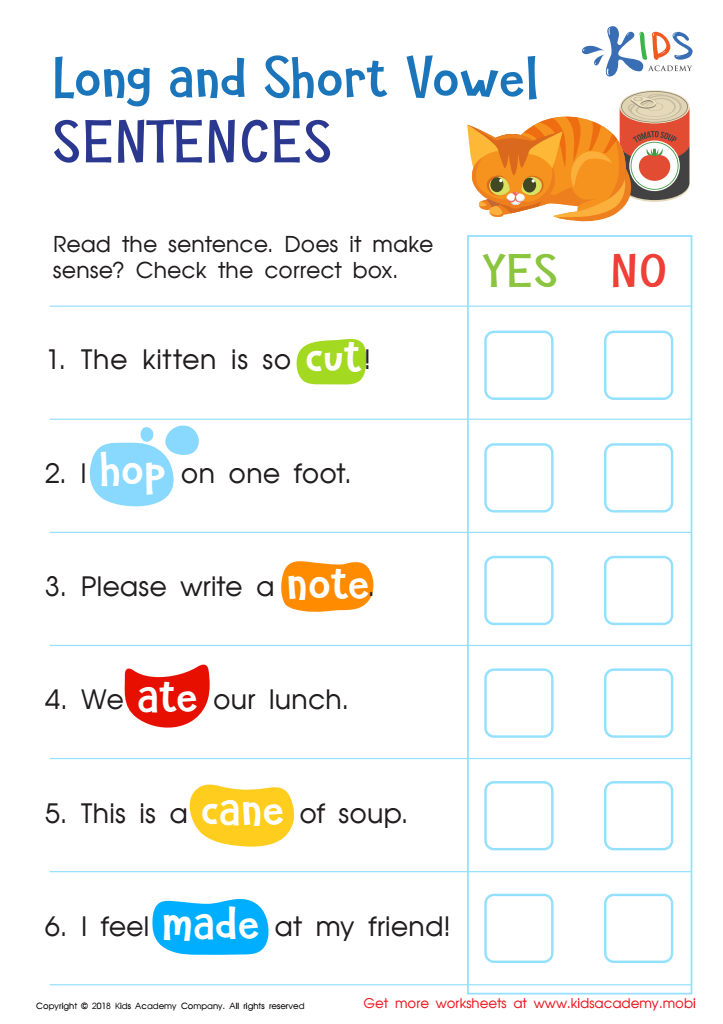
Long and Short Vowel Sentences: Assessment Worksheet
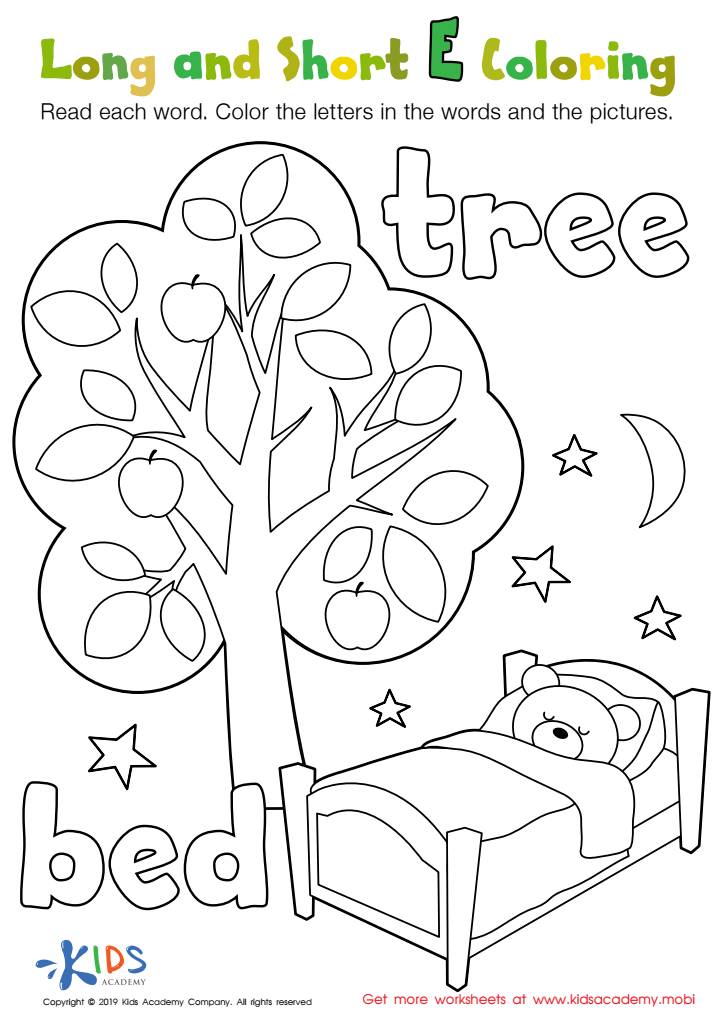
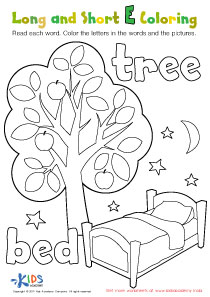
Long and Short E Worksheet
 Assign to My Students



Phonics skills, particularly the mastery of short vowels, are crucial for 7-year-olds as they lay the foundation for effective reading and writing. Short vowels—the sounds a, e, i, o, u often make in words like "cat," "bed," "sit," "top," and "cup"—are fundamental building blocks in the English language. When children grasp these basic sounds, they can decode a wide variety of simple words, increasing their reading fluency and confidence.
Fluency in reading is not just about speed but also comprehension, where understanding short vowels plays a key role. As children learn to connect letters with their corresponding sounds, they enhance their ability to spell, read, and understand unfamiliar words. This boosts their vocabulary and encourages a love of reading, which is vital for their academic growth.
Moreover, early phonics instruction, particularly with something as elemental as short vowels, helps early detection of reading difficulties. Parents and teachers who pay close attention to a child's grasp of these skills can offer targeted interventions early, bridging any gaps before they widen. Effective phonics instruction supports the development of independent, confident readers poised for future academic success. Therefore, both parents and teachers should prioritize phonics skills to ensure a robust starting point for lifelong literacy.