
Word Recognition Vowels Worksheets for 7-Year-Olds
6 filtered results
Difficulty Level
Grade
Age
-
From - To
Subject
Activity
Standards
Unlock the magic of reading with our Word Recognition Vowels Worksheets tailored for 7-year-olds! These engaging, printable exercises focus on enhancing young readers’ ability to identify vowels within words, a crucial step in their literacy journey. Our worksheets are designed to make learning vowels interactive and fun, helping children boost their word recognition skills. Ideal for classroom or at-home learning, these worksheets support different learning styles with vibrant visuals, creative activities, and clear instructions. Encourage your child’s love for reading and watch their confidence soar as they master the vowels with ease. Start today and enhance their foundational reading skills!
Favorites
With answer key
Interactive
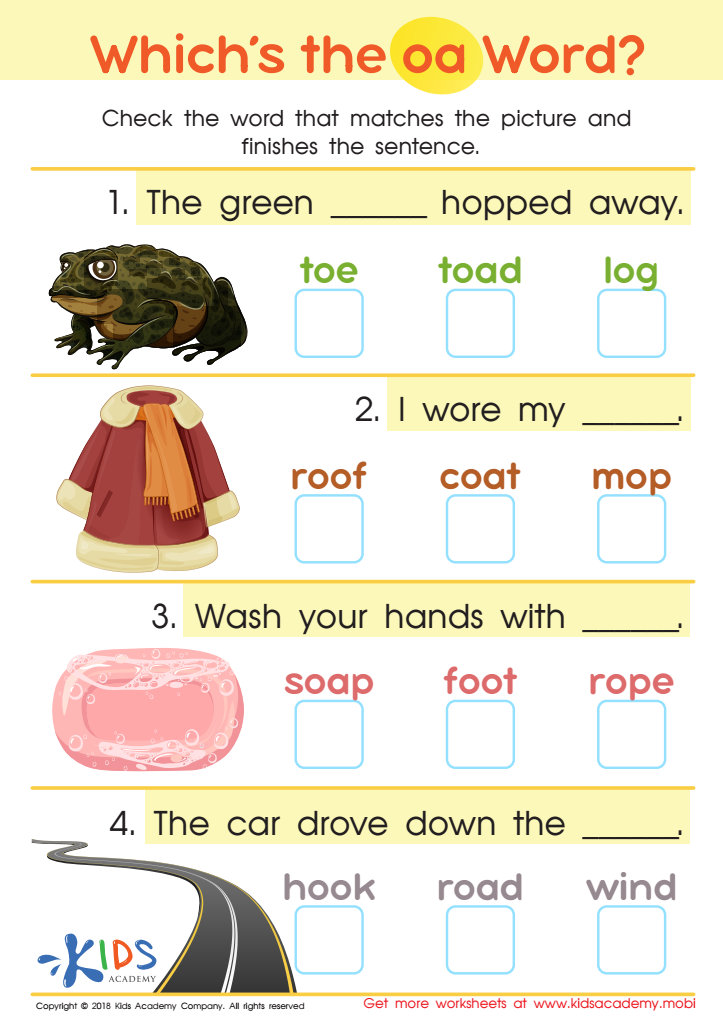
Which's the OA Word? Worksheet
Encourage your kids to complete this fun worksheet. Ask them to identify the animals and objects in the pictures. Read the incomplete sentences aloud, and then find the correct word to finish the sentence. Check their work.
 Assign to My Students
Which's the OA Word? Worksheet
Worksheet
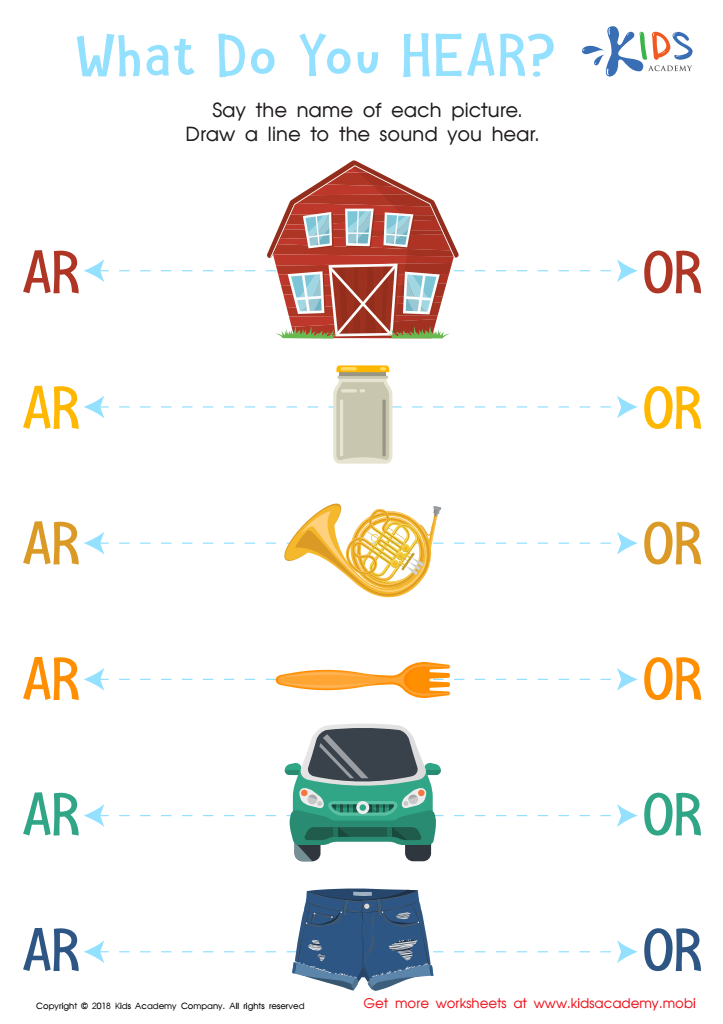
What do you hear Worksheet
Kids can practice distinguishing between r-controlled vowel teams /ar/ and /or/ with this worksheet. The pictures help identify the words and the sounds heard. Tracing a line to the correct sound supports fine motor skills development.
What do you hear Worksheet
Worksheet
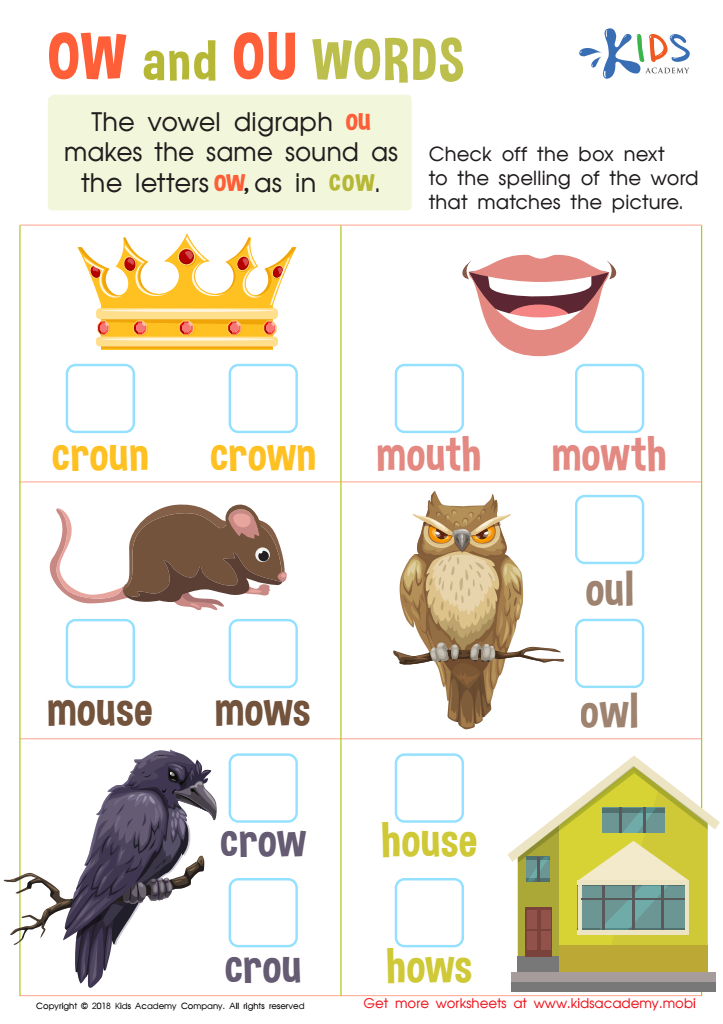
Reading: OW and OU Words Worksheet
Help your kids learn phonetics! Explain the different sounds and long/short variations. Emphasize that some vowel sounds are the same, e.g. ou = ow in cow. For practice, have them read aloud the words in the worksheet and check the box next to the spelling that matches the picture.
Reading: OW and OU Words Worksheet
Worksheet
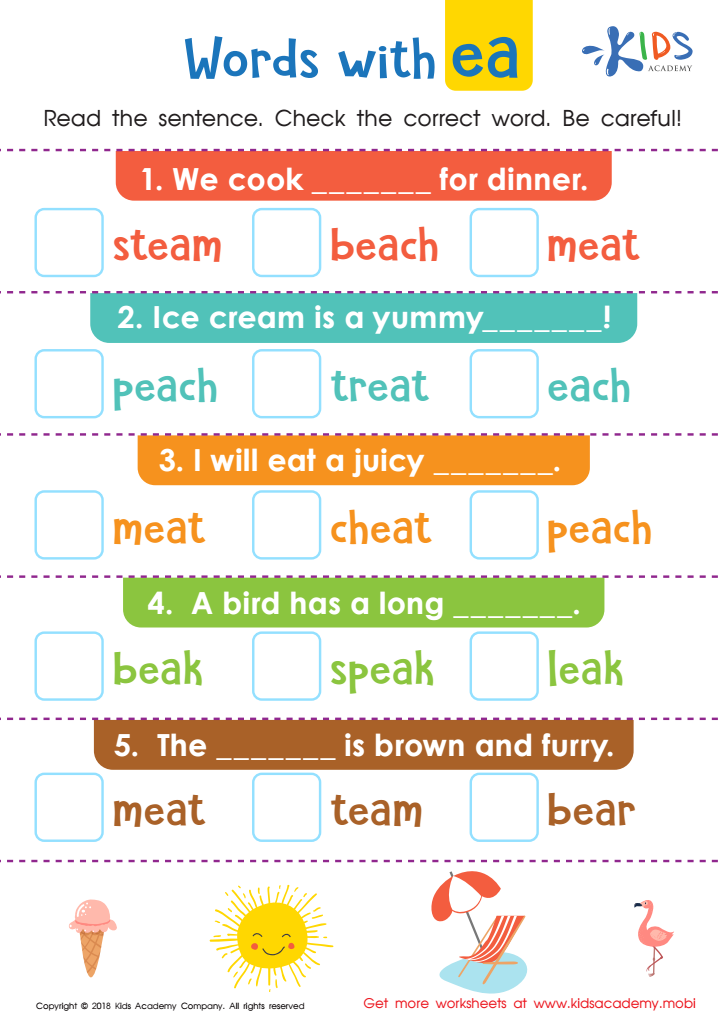
Words with ea Worksheet
Beginning readers may struggle with -ea vowel digraphs, which can have multiple sounds and be tricky to decode. This cheerful worksheet helps kids practice reading sentences with missing -ea words, using context clues to fill in the blanks. They'll also be exposed to various -ea sound examples, and build their sight word knowledge.
Words with ea Worksheet
Worksheet
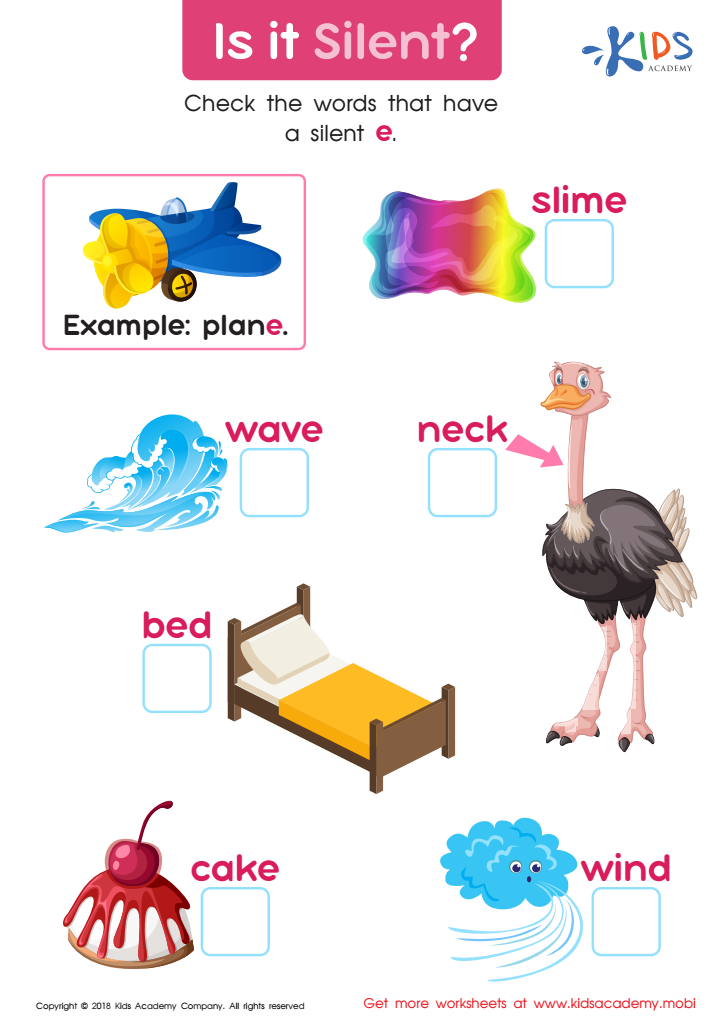
Is It Silent? Worksheet
Phonetics can be tricky, like the sound of /e/ in 'egg' vs. the silent /e/ at the end of 'slime'. Ask your students to give more examples. Read out the words in this worksheet with your kids and ask them to identify the silent /e/ ones.
Is It Silent? Worksheet
Worksheet
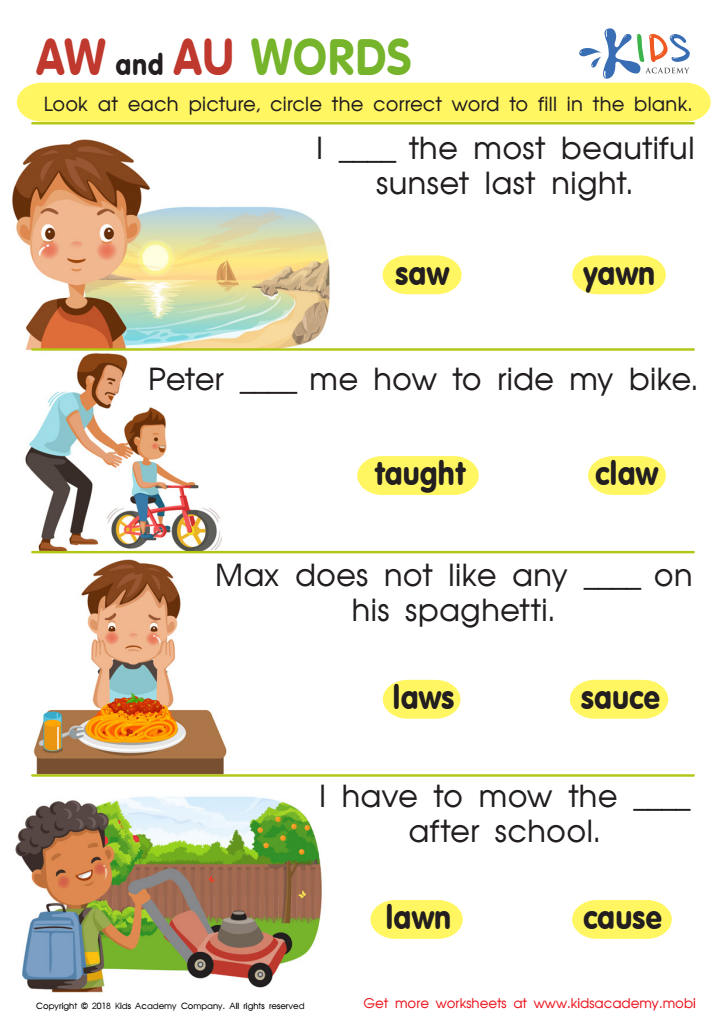
Reading: AW and AU Words Worksheet
This worksheet helps kids recognize that /au/ and /aw/ can make the same sound. Students read sentences and pick the correct word with one of the digraphs. Understanding digraphs improves decoding and reading fluency. Perfect for reading and phonics classes.
Reading: AW and AU Words Worksheet
Worksheet
Join Kids Academy for Free
Who is primarily going to use this learning content?





Word recognition is a foundational skill in reading development, and understanding vowels plays a crucial role in this process, especially for 7-year-olds who are typically first or second graders. At this age, children transition from "learning to read" to "reading to learn," so mastering vowel sounds is essential.
Vowels are the heart of syllables and help in forming words. Accurate vowel recognition enhances a child's ability to decode new words, leading to better fluency and comprehension. When children can recognize and manipulate vowel sounds, they can better understand word structures and spelling patterns. This foundation helps them read more complex texts and improves their overall literacy skills.
Parents and teachers should care about this because strong word recognition and vowel knowledge contribute to reading confidence. Children who struggle with these skills might find reading frustrating, which can negatively impact their motivation and academic performance. Conversely, early proficiency in vowel recognition can accelerate vocabulary acquisition and foster a love for reading.
Investing in activities that reinforce vowel sounds, such as phonics games, reading aloud, and interactive storytelling, can make a significant difference. By prioritizing this aspect of reading development, parents and teachers can support more effective learning outcomes and set children on a successful educational trajectory.







