Chess strategy learning Chess Worksheets for 7-Year-Olds
10 filtered results
Difficulty Level
Grade
Age
-
From - To
Subject
Activity
Standards
Unlock the genius in your 7-year-old with our Chess Strategy Learning Worksheets. Designed especially for young learners, these engaging and educational worksheets from Kids Academy introduce your child to the essential strategies and tactics of chess. Our detailed and child-friendly printables make mastering chess fun and easy, aiding in the development of critical thinking, memory, and problem-solving skills. Perfect for beginners, our thoughtfully crafted activities cultivate a deep understanding of game strategies, making each lesson enjoyable and productive. Empower your young chess enthusiast today by blending play with learning through our expertly designed worksheets.
Favorites
With answer key
Interactive
King and Queen Mate Strategy: Part 1 Worksheet
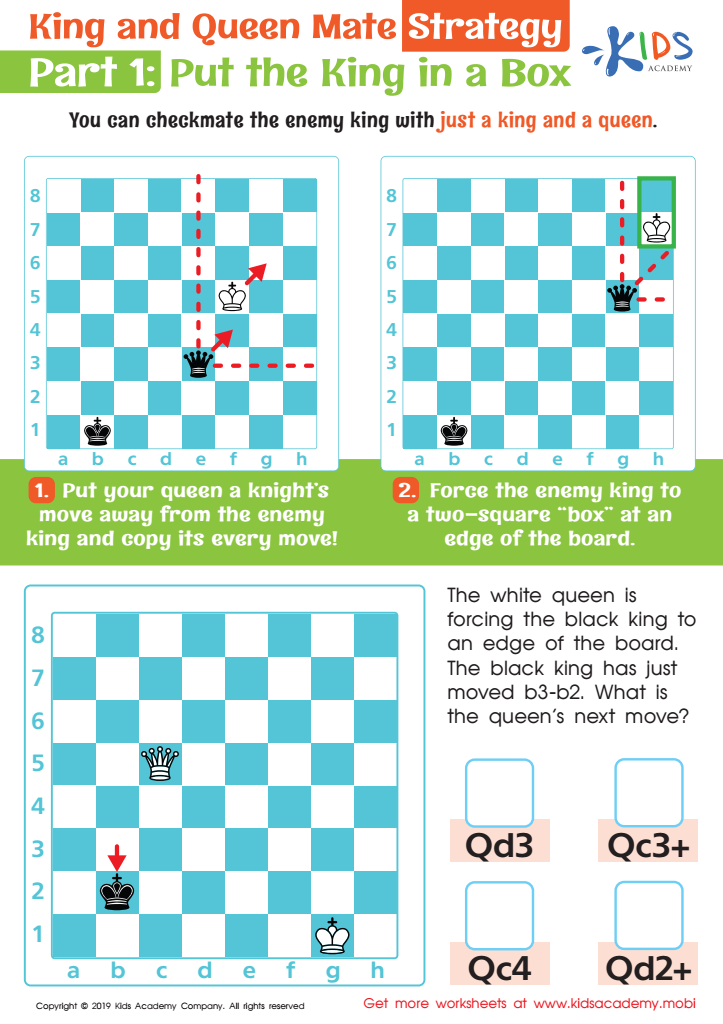
This worksheet will help your young chess player strategize. They’ll learn how to checkmate the opponent’s king using just a king and a queen. Descriptive sample boards will show them the strategy and then a practice board will test their knowledge. Allowing them to plan the queen’s next move to checkmate the opposing king.
 Assign to My Students
King and Queen Mate Strategy: Part 1 Worksheet
Worksheet
En Passant: Tricky Pawn Capture Worksheet
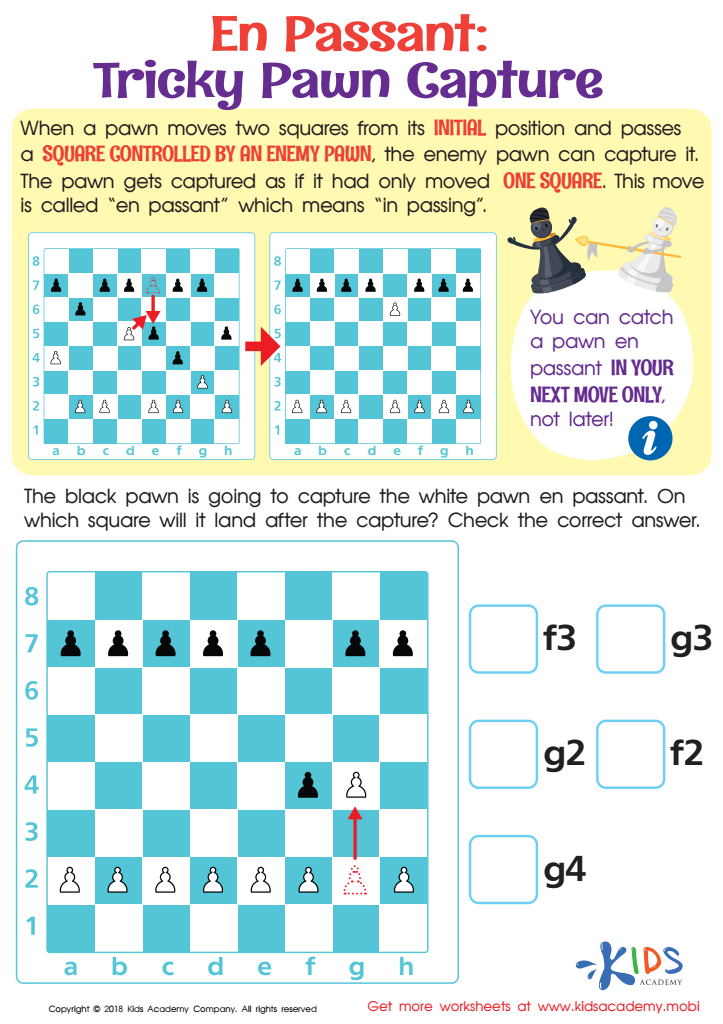
When a pawn moves two squares from its initial position and enters a square controlled by an enemy, the enemy can capture it as if it had moved one square. This move is called "en passant" (in passing). Ask your child which square the black pawn will land on after capturing the white pawn en passant using the provided chessboard.
En Passant: Tricky Pawn Capture Worksheet
Worksheet
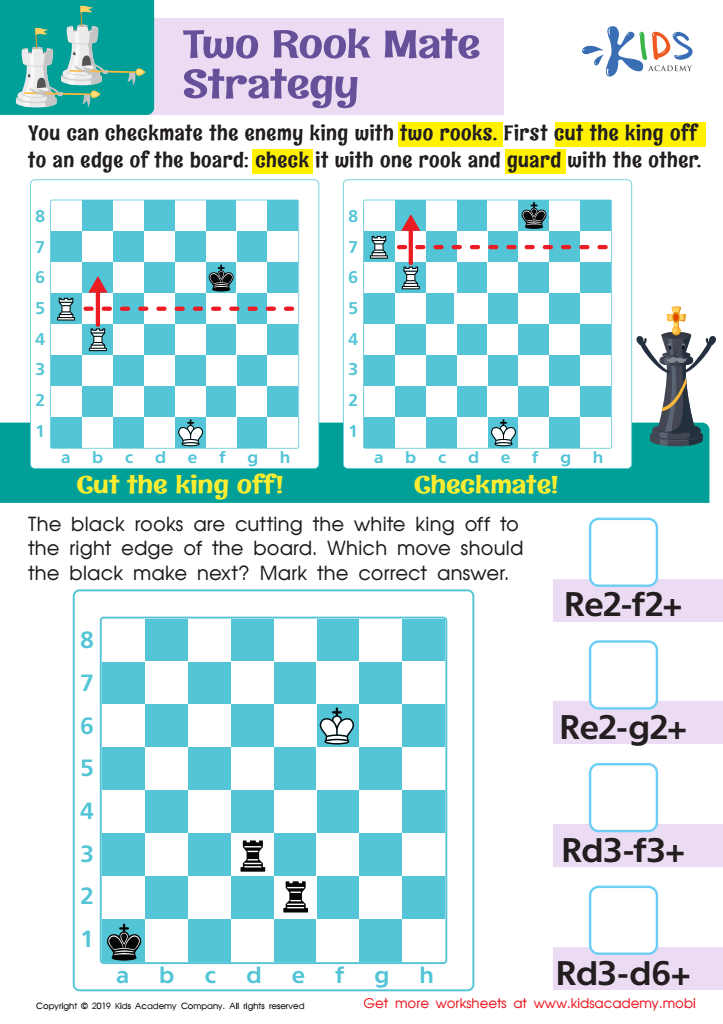
Two Rook Mate Strategy Worksheet
Kids who can play stress gain better reasoning, logic and critical thinking skills. This worksheet can teach kids the Two Rook Mate strategy to checkmate their opposite king. They'll discover how to close in the enemy king and protect with another rook, all the while enjoying a screen-free activity!
Two Rook Mate Strategy Worksheet
Worksheet
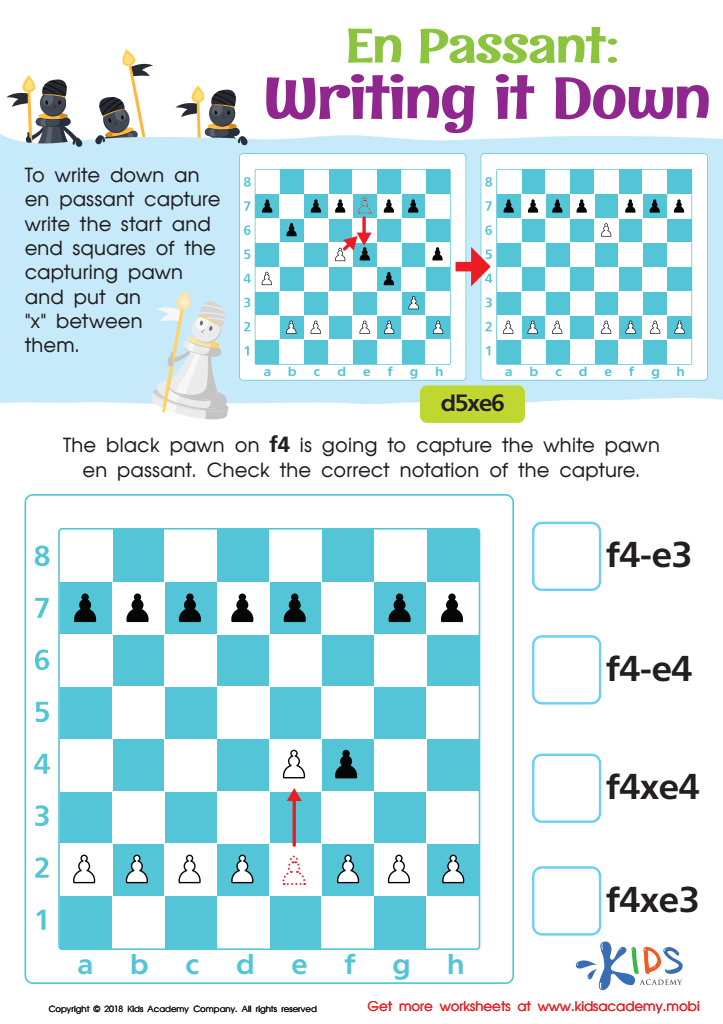
En Passant: Writing it Down Worksheet
Properly documenting moves in chess is often overlooked. En passant captures require your child to note the starting and ending squares (e.g. d5xe6) with an "X" in between them. Ask your children to review the worksheet and ensure they've notated the captures correctly. (80 words)
En Passant: Writing it Down Worksheet
Worksheet
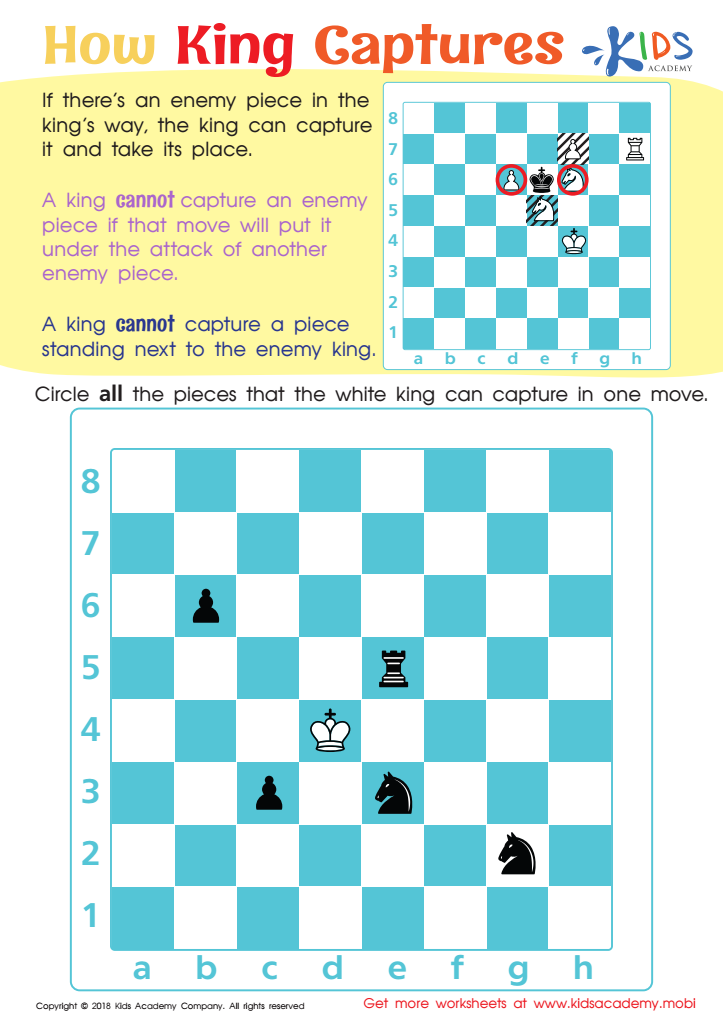
How King Captures Worksheet
The king can capture an enemy piece by taking its place. But it cannot move if the action will put it at risk of attack, or if it's next to the enemy king. On this worksheet, circle the places the white king can capture in one move. (80 words)
How King Captures Worksheet
Worksheet
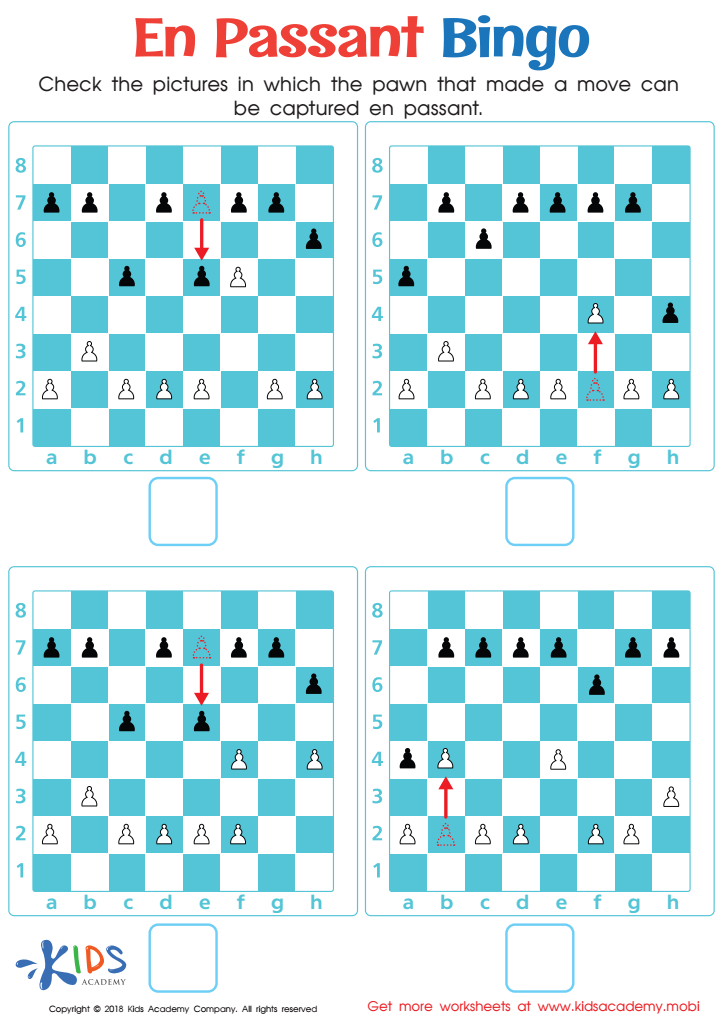
En Passant Bingo Worksheet
To teach kids to perfect the en passant move in chess, use this worksheet. It has pictures which depict when a pawn is in danger of being captured. By looking through the pictures, kids can easily understand and perfect the move.
En Passant Bingo Worksheet
Worksheet
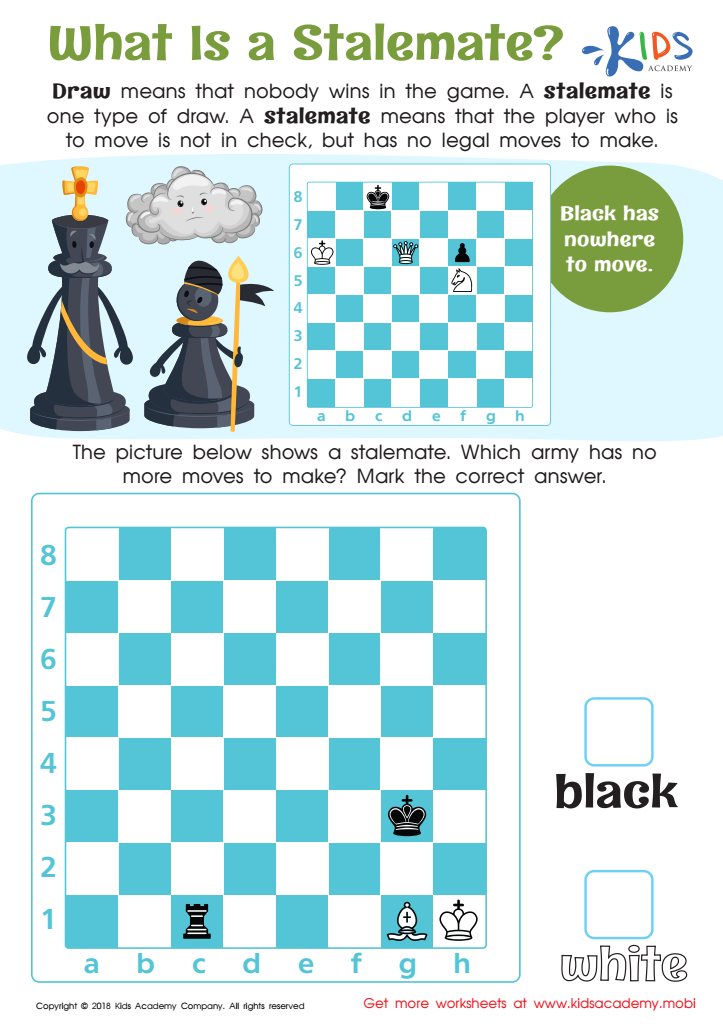
What Is a Stalemate? Worksheet
Chess is an ideal way to develop logic, strategizing, problem-solving and more! Even kids can learn it. With this worksheet, children can learn about draws and stalemates. Sample boards will help them decide which team, black or white, is at a stalemate.
What Is a Stalemate? Worksheet
Worksheet
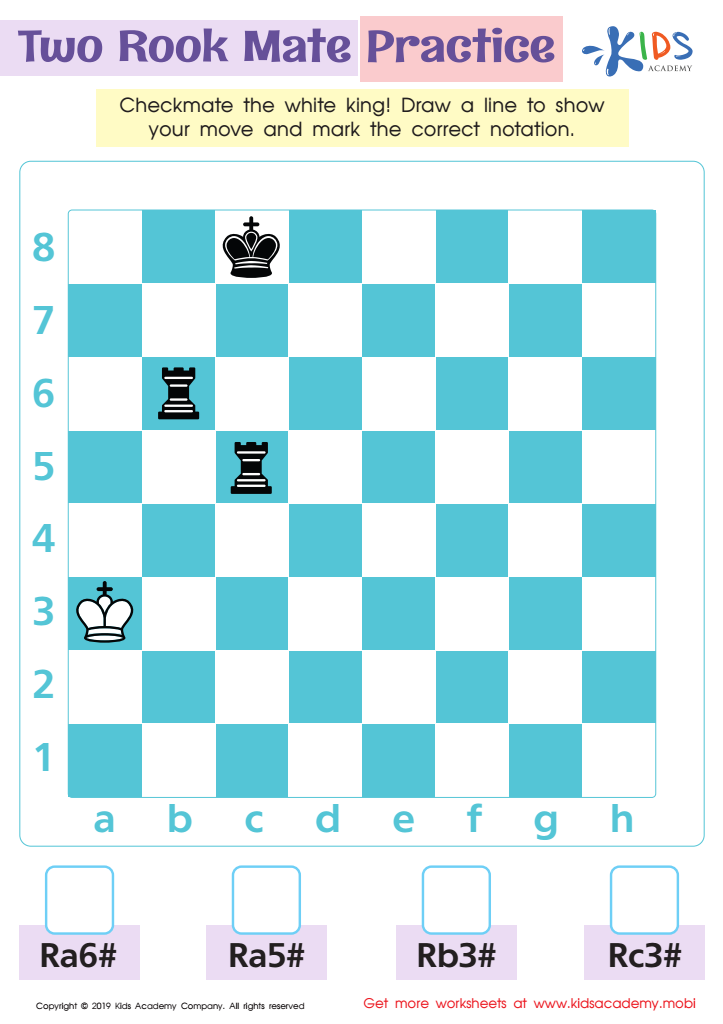
Two Rook Mate Practice Worksheet
Chess is all about checkmating your opponent. This free Two Rook Mate practice worksheet is a fun way for your mini strategist to do just that. They can draw a line showing their move then pick the correct notation for the mate! A great way for them to practice fine motor skills, too.
Two Rook Mate Practice Worksheet
Worksheet
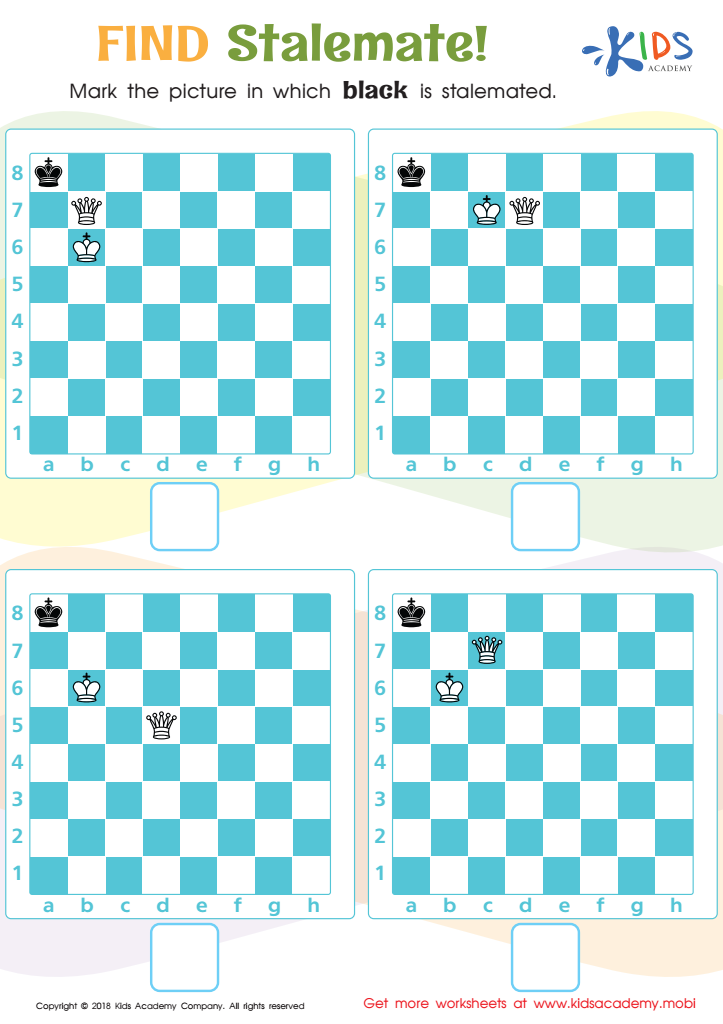
Find Stalemate! Worksheet
Teach your kids Chess and give them more than a hobby - equip them with critical thinking, rationale and problem-solving skills! This free worksheet helps them understand stalemates by examining various sample boards. By providing visual discernment and the joy of the game, your child's logical skills will soar!
Find Stalemate! Worksheet
Worksheet
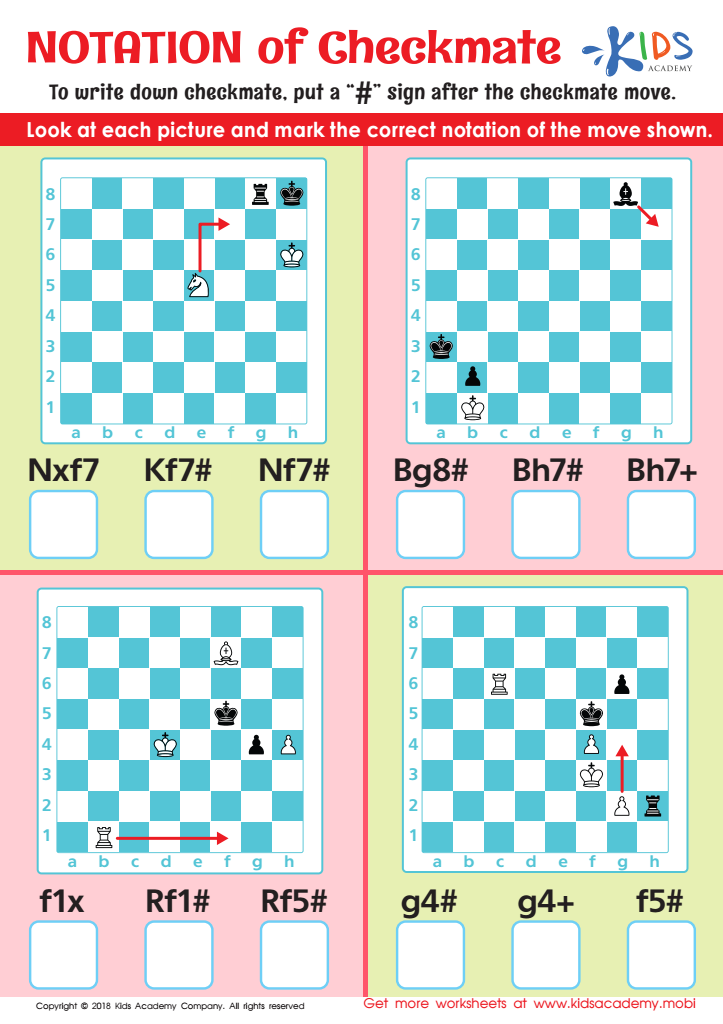
Notation of Checkmate Worksheet
Checkmate is the thrilling, ultimate move in chess! Teach your child to make it and notate it properly with this free worksheet. They'll love being able to capture the king and it's great for brain-building too! Have them look at the sample boards and place a # sign after the checkmate move for notation.
Notation of Checkmate Worksheet
Worksheet
Join Kids Academy for Free
Who is primarily going to use this learning content?





Introducing chess to 7-year-olds offers numerous cognitive and developmental benefits that can be influential during their formative years. Parents and teachers should consider chess as a valuable educational tool for several compelling reasons.
First, chess enhances critical thinking and problem-solving skills. The game requires players to anticipate their opponent's moves, recognize patterns, and strategize several steps ahead. Such mental exercises strengthen logical reasoning and analytical skills, which are crucial not just in academics but also in everyday decision-making.
Second, chess cultivates patience and discipline. Young children often struggle with impulse control, but chess's deliberate pace encourages them to think before acting. This mindfulness translates into better attention spans, improved focus, and a more thoughtful approach to tasks.
Moreover, chess boosts memory and informational retention. Remembering complex strategies and adapting them during gameplay exercises the brain, improving overall recall ability.
Chess also promotes social and emotional growth. Playing against others fosters a sense of sportsmanship and respect for opponents. Children learn to handle wins and losses gracefully, building emotional resilience and empathy.
Furthermore, studies link chess to academic improvement, particularly in math abilities and reading comprehension. The cognitive challenges presented by the game align closely with the skills required in these subjects.
Overall, the lessons learned from chess extend well beyond the board, making it a powerful tool for holistic child development.