Strategic thinking Chess Worksheets for 7-Year-Olds
3 filtered results
-
From - To
Unlock your child's potential with our engaging "Strategic Thinking Chess Worksheets for 7-Year-Olds." These carefully crafted worksheets are designed to enhance critical thinking and strategy skills through fun chess exercises tailored for young learners. Each worksheet focuses on introducing basic chess concepts and encouraging kids to think ahead, plan their moves, and develop problem-solving abilities. Perfect for beginners and young chess enthusiasts, our worksheets make learning chess accessible and enjoyable. Ignite your child’s love for the game and bolster their cognitive development today with our expertly designed chess activities.
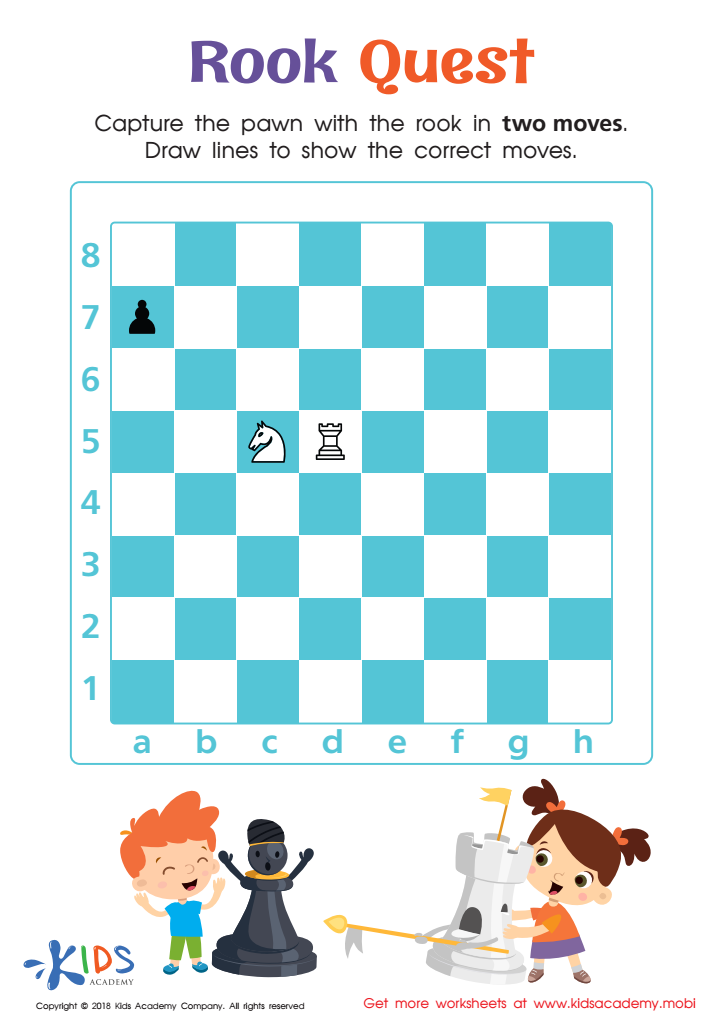
Rook Quest Worksheet
 Assign to My Students
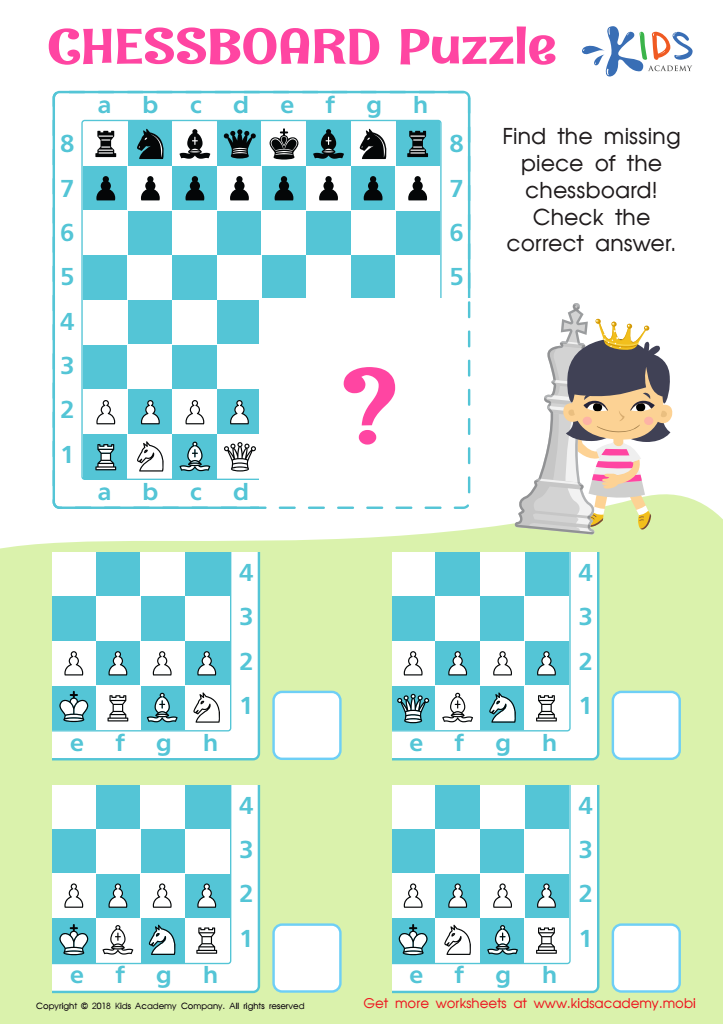
Chessboard Puzzle Worksheet
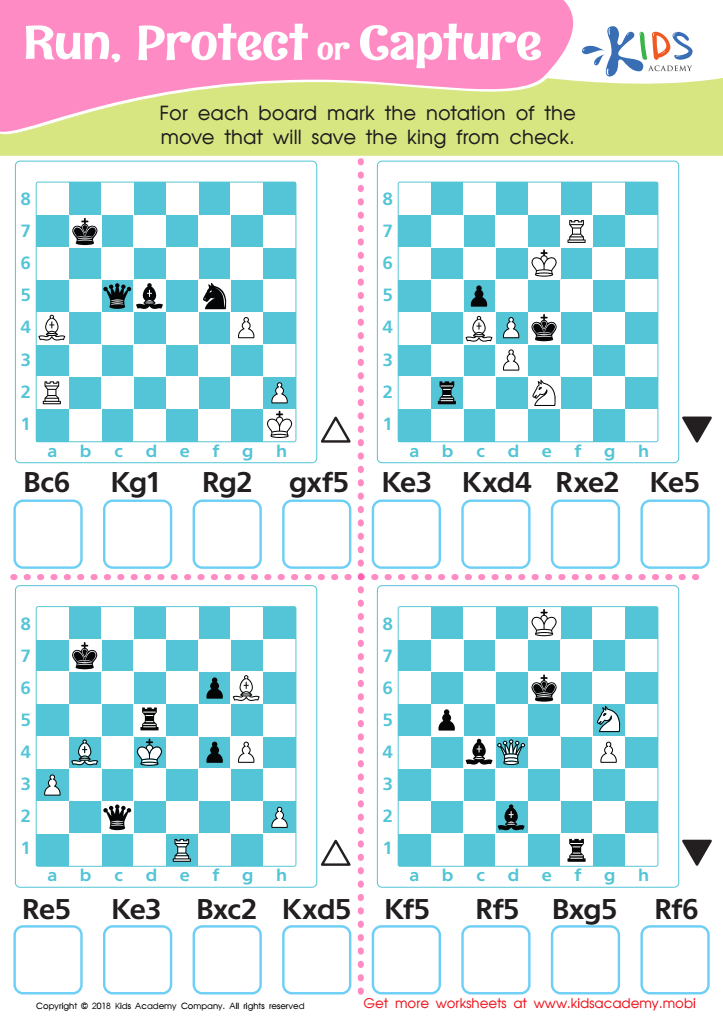
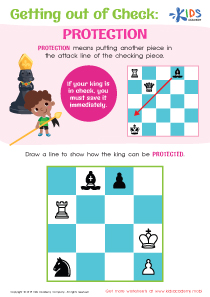
Run, Protect or Capture Worksheet







Parents and teachers should recognize the value of introducing strategic thinking through chess to 7-year-olds due to its numerous developmental benefits. At this age, children's brains are rapidly developing, and engaging in strategic games like chess can significantly enhance important cognitive skills. Chess encourages kids to think ahead and plan multiple steps in advance, bolstering their problem-solving abilities. Additionally, it enhances their critical thinking by requiring them to analyze different possible moves and outcomes.
Playing chess regularly also sharpens memory, as children must remember the rules, the positions of pieces, and previous moves. This mnemonic engagement can lead to better academic performance as well. Beyond cognitive skills, chess instills patience and delay of gratification, teaching kids to wait for the right opportunity rather than rushing into decisions.
Moreover, it cultivates emotional growth—handling wins and losses gracefully fosters sportsmanship and resilience. These life skills are indispensable for overall personal development. Interaction during games can also improve social skills, as children learn to communicate and respect their opponents.
By promoting chess, parents and teachers can provide a fun and intellectually stimulating activity that molds young minds into more strategic, patient, and socially adept individuals, laying down a strong foundation for future learning and life challenges.