Basic math concepts Worksheets for 7-Year-Olds
7 filtered results
-
From - To
Discover fun and engaging basic math concepts worksheets designed specifically for 7-year-olds at Kids Academy. These printable worksheets help young learners build fundamental math skills, including addition, subtraction, counting, and understanding place values. Our worksheets combine vibrant visuals and interactive activities to make learning enjoyable and effective. Perfect for both classroom use and at-home practice, the materials cater to various learning styles, ensuring every child can grasp key mathematical ideas. Help your 7-year-old develop a strong math foundation and love for numbers with Kids Academy’s expertly crafted worksheets.
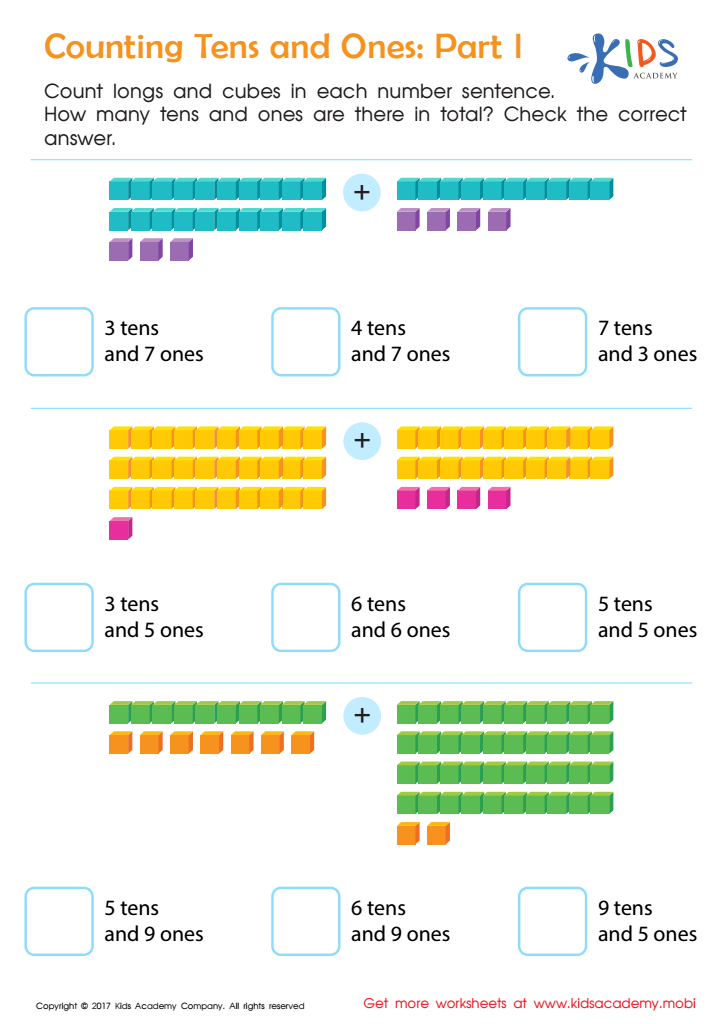
Counting Tens and Ones: Part 1 Worksheet
 Assign to My Students
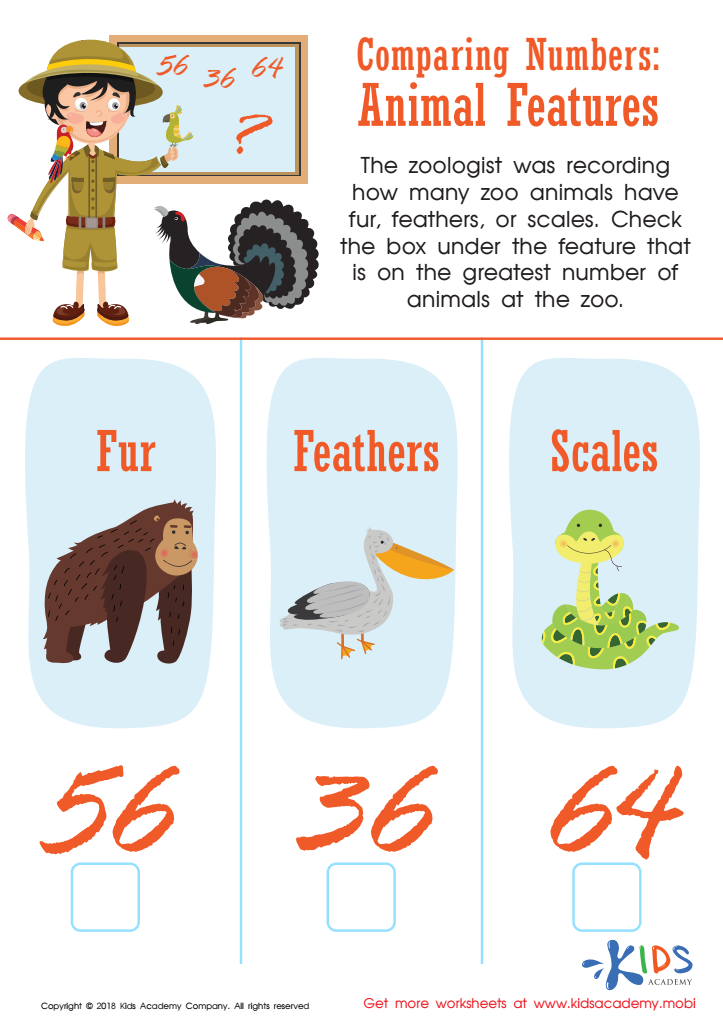
Animal Features Worksheet
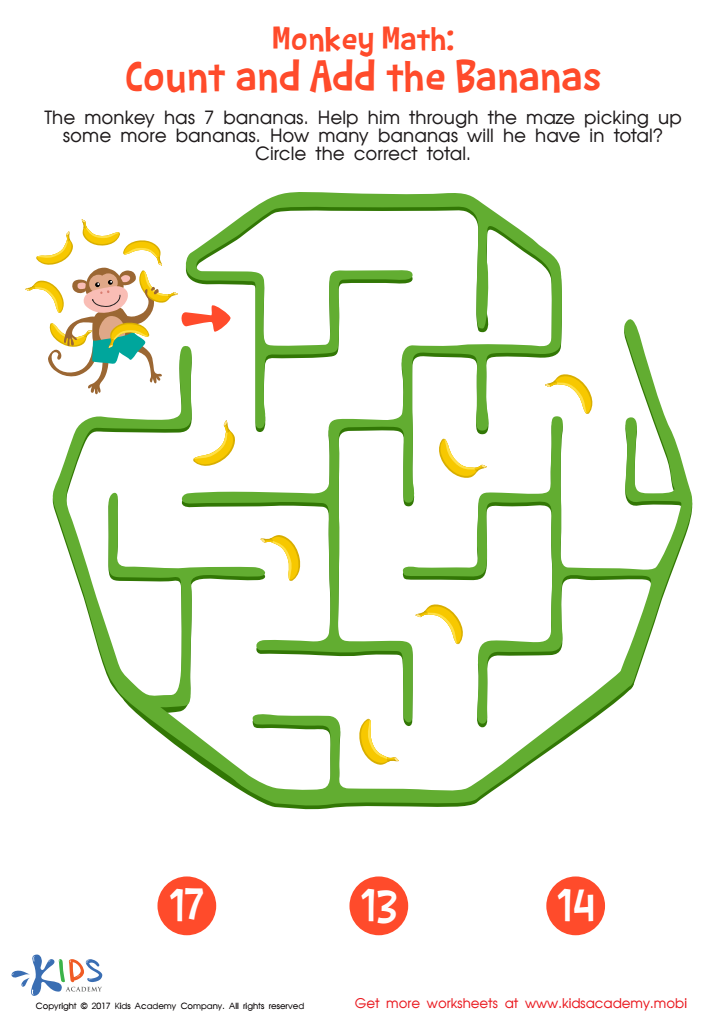
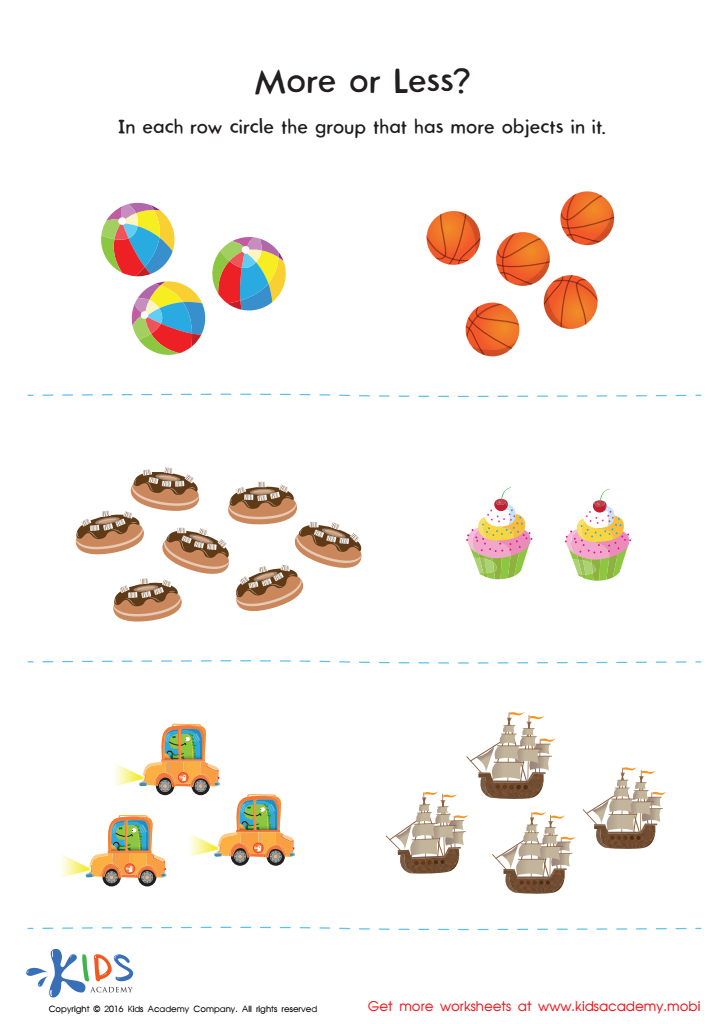
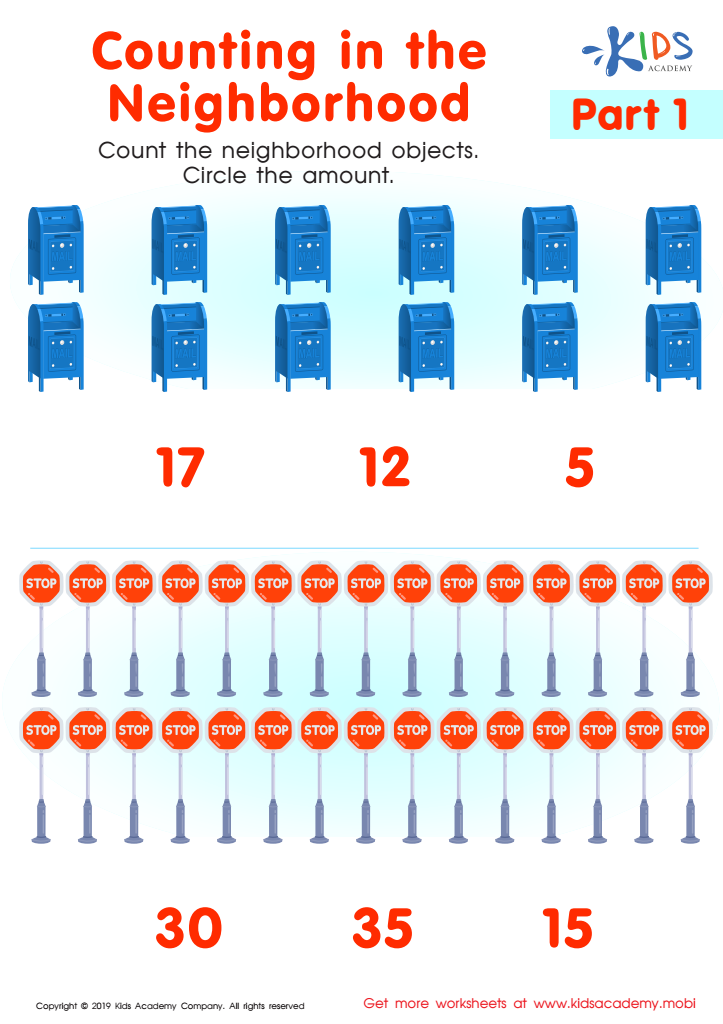
Counting in the Neighborhood Part1 Worksheet
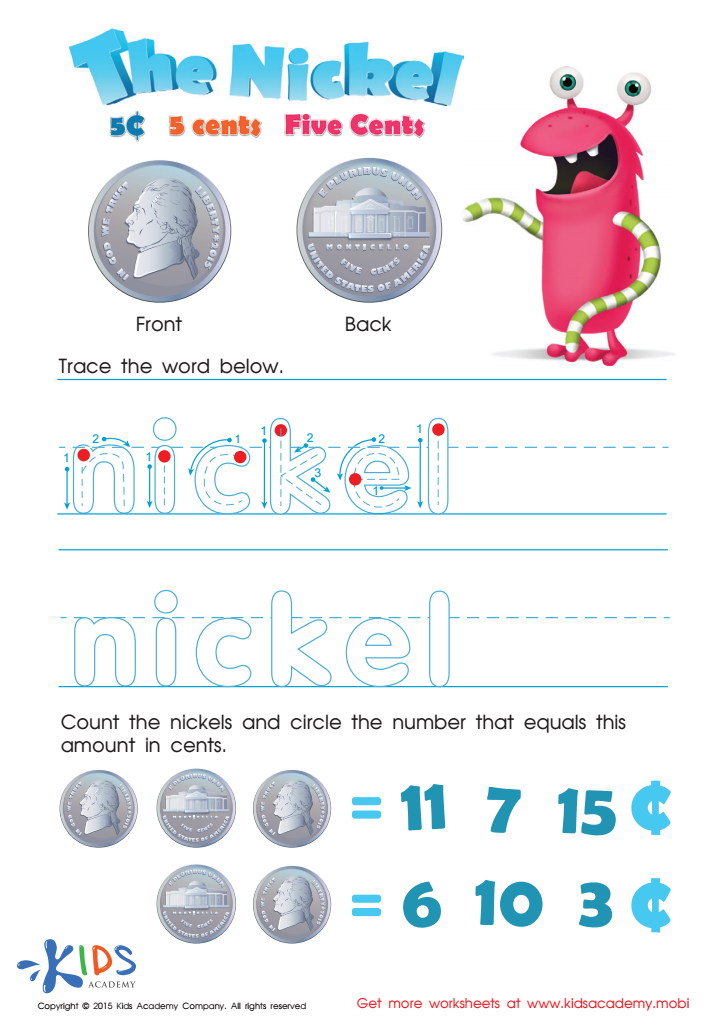
Five Cents or the Nickel Money Worksheet
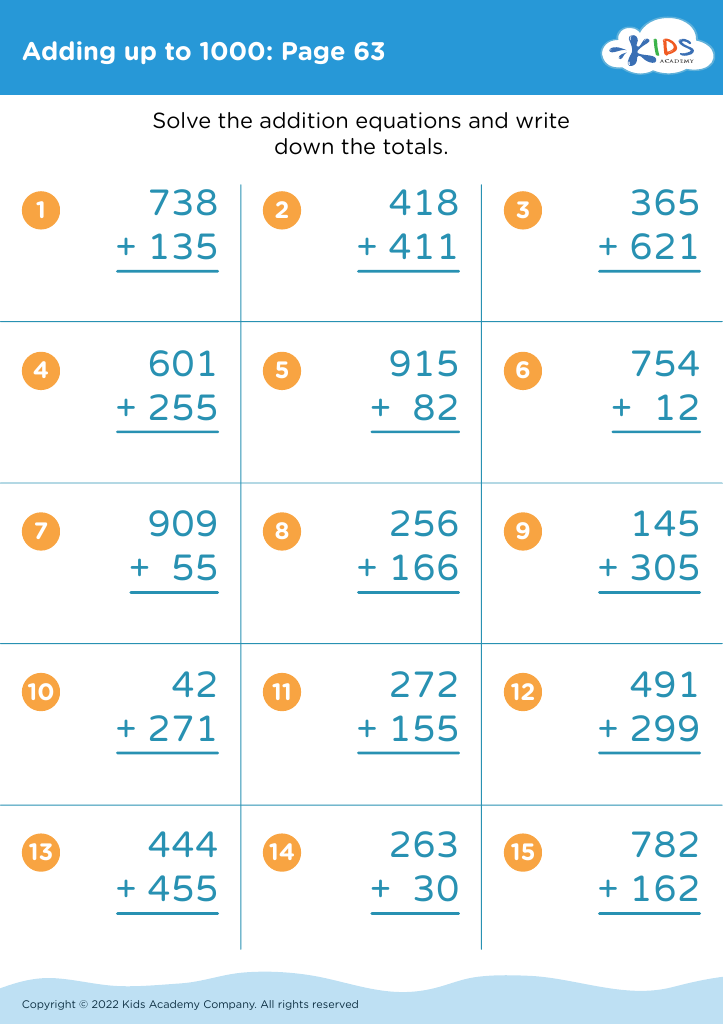







Understanding basic math concepts at a young age is crucial for children's cognitive development and long-term academic success. At the age of seven, children are at a pivotal stage where foundational skills in mathematics begin to take shape, forming the building blocks for more complex mathematical thinking. Early proficiency ensures that children develop confidence in their abilities, setting a positive trajectory for future learning.
Mathematics is not merely about numbers; it promotes logical thinking, problem-solving skills, and the ability to reason systematically. These skills transcend math and are applicable across academic disciplines and everyday life. For instance, understanding the concept of numbers, patterns, and basic operations like addition and subtraction helps children manage time, handle money, and grasp scientific concepts, leading to a well-rounded education.
Moreover, early math skills are predictive of later academic achievement. Studies show that early mathematical proficiency is a strong predictor of later success in various subjects, including reading and sciences. When parents and teachers invest time in nurturing these skills, they are effectively enhancing a child’s academic future.
Also, engaging with basic math concepts can be a joyful and interactive learning experience, fostering a love for learning. Games, puzzles, and practical activities make math tangible and exciting, promoting a lifelong interest and reducing any math-related anxiety.
In summary, caring about basic math concepts for 7-year-olds helps lay the groundwork for further educational success, cognitive skill development, and a positive, confident approach to learning difficulties.








