Comparing sizes Worksheets for 7-Year-Olds
6 filtered results
-
From - To
Discover our engaging "Comparing Sizes Worksheets" designed specifically for 7-year-olds! These worksheets provide a fun and interactive way for young learners to explore the concept of size comparison. Through a variety of exercises—such as comparing objects, arranging items by size, and answering questions—children enhance their critical thinking and analytical skills. Our resources feature colorful illustrations and relatable examples, making it easy for kids to understand and enjoy learning. Ideal for both classroom and home use, these worksheets aim to boost math skills while fostering a love for learning. Perfect for helping your child master size comparisons in no time!
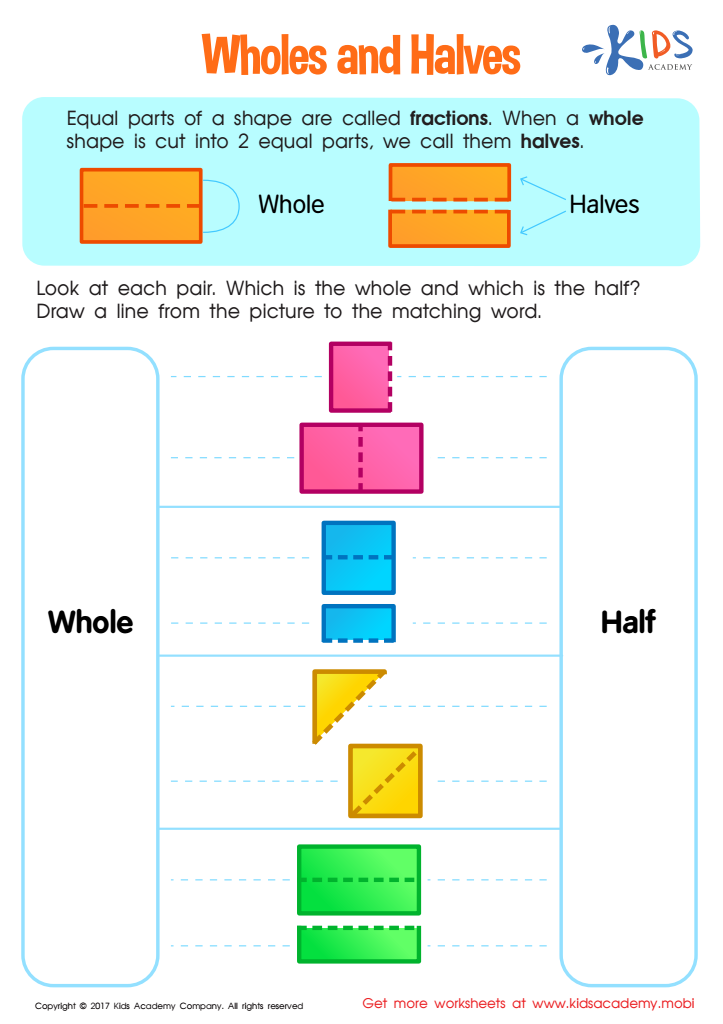
Wholes and Halves Worksheet
 Assign to My Students
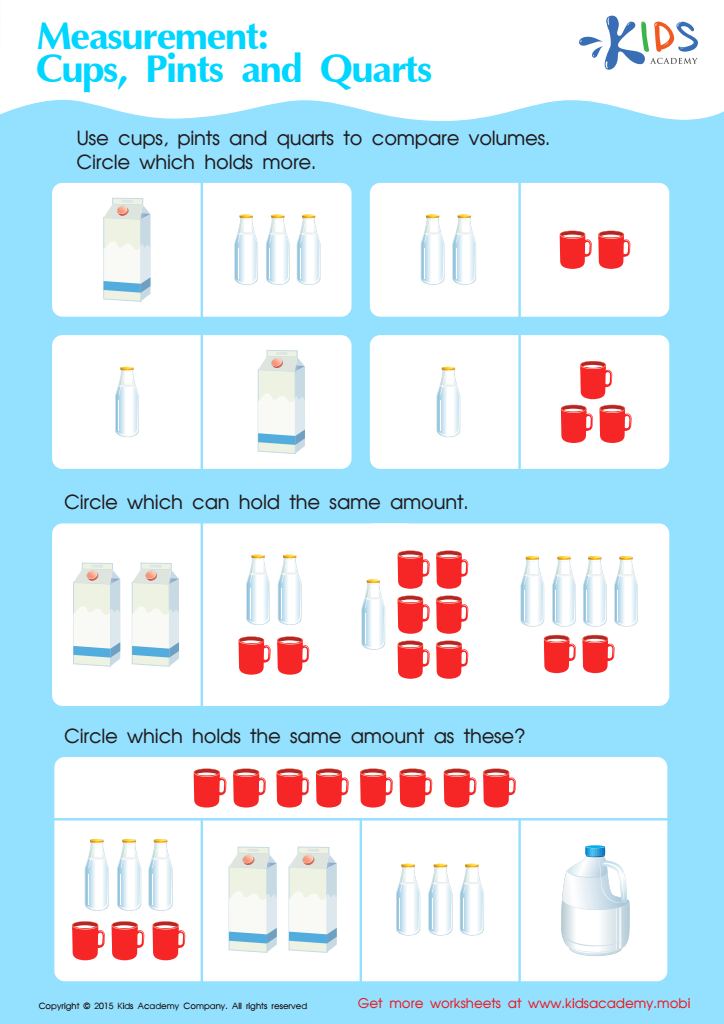
Measurement: Compare Volumes Worksheet
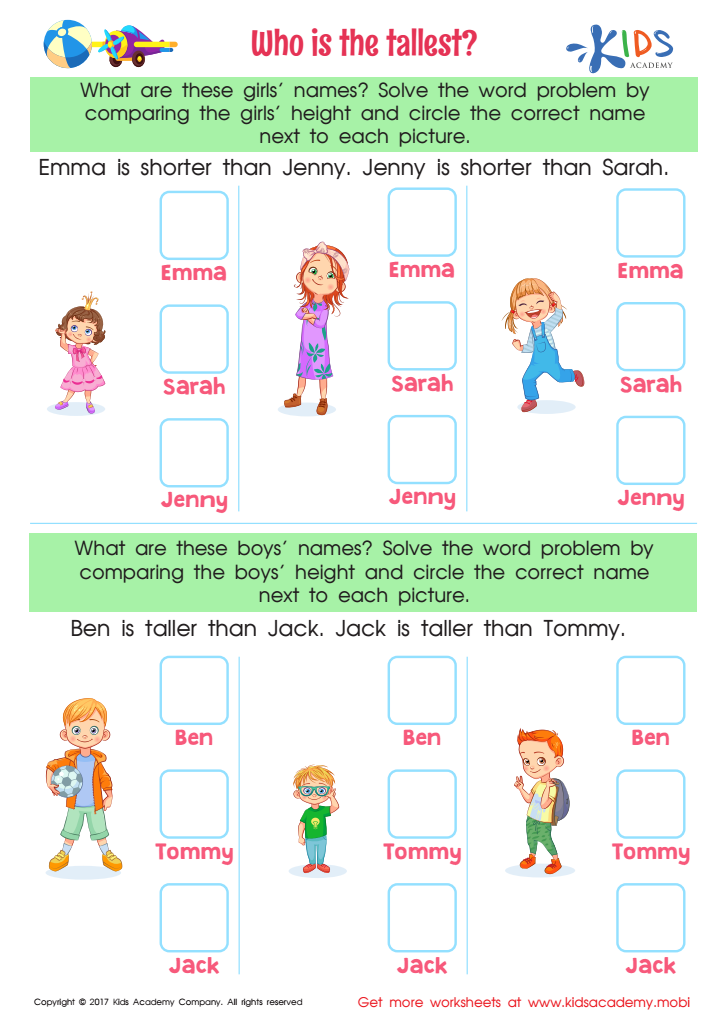
Who Tallest Printable
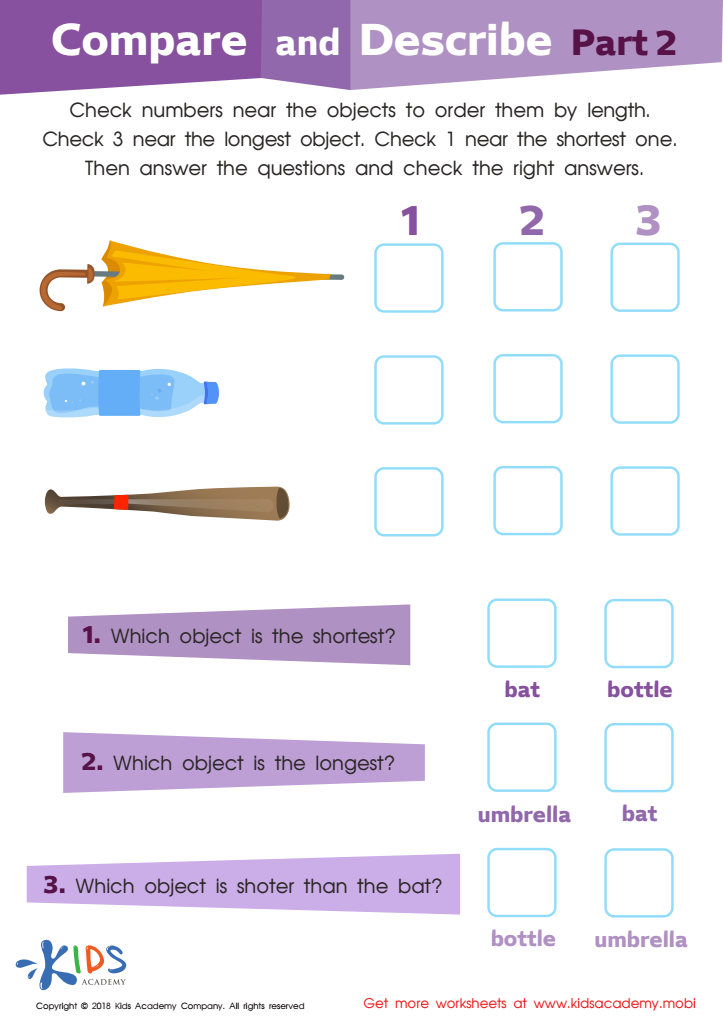
Compare and Describe: Part 2 Worksheet
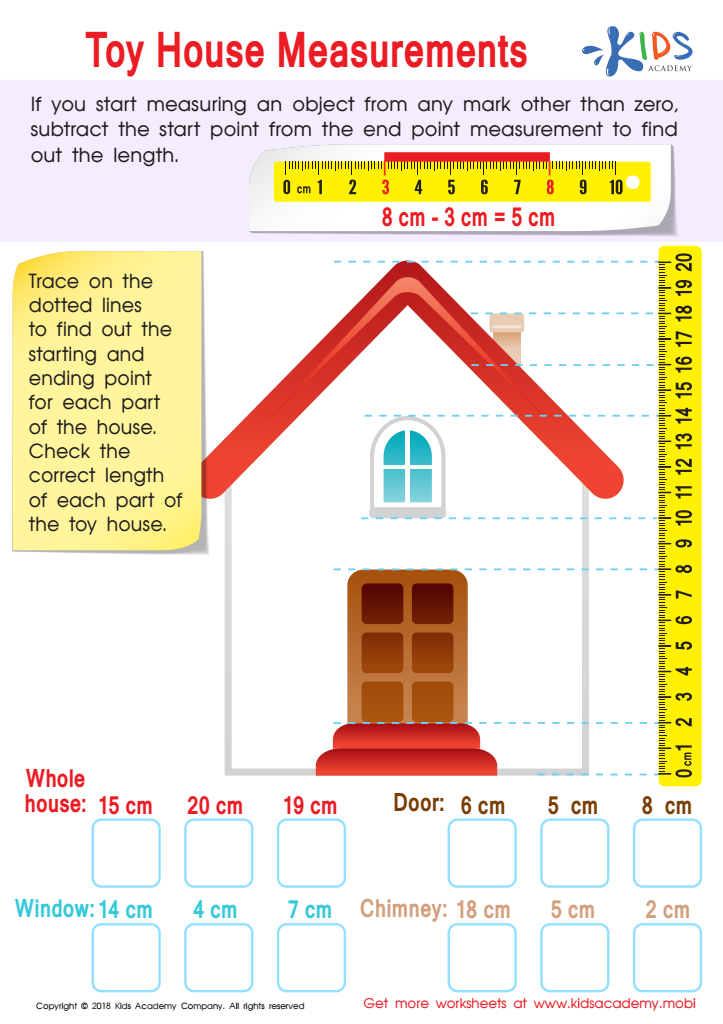
Toy House Measurements Worksheet







Comparing sizes is an essential developmental skill for 7-year-olds that plays a significant role in their cognitive and mathematical growth. At this age, children are becoming more curious about the world around them and are developing critical thinking skills. Learning to compare sizes enhances their ability to categorize and organize objects, which forms the foundation for more complex mathematical concepts. Teachers and parents should prioritize this skill because it can improve children's spatial awareness, which aids in the understanding of geometry and measurement.
Additionally, engaging in size comparison activities promotes problem-solving abilities and encourages children to use descriptive language. For instance, when comparing the heights of plants, objects, or even their classmates, children learn vocabulary related to measurement and size. These discussions not only enforce mathematical understanding but also facilitate social interactions.
Comparing sizes also integrates learning with hands-on activities, making lessons more engaging and relatable. This practical application helps solidify concepts, making them easier to grasp. Overall, fostering size comparison skills is not just about mathematics; it is crucial for building confidence, communication skills, and an interest in learning that can last a lifetime.








