
Mathematical skills Worksheets for 7-Year-Olds
4 filtered results
Difficulty Level
Grade
Age
-
From - To
Subject
Activity
Standards
Discover engaging and educational Mathematical Skills Worksheets designed specifically for 7-year-olds. These printable resources from Kids Academy focus on enhancing essential math skills, including addition, subtraction, multiplication, and division. They offer a variety of fun, interactive exercises that capture children's interest and promote their numerical understanding and problem-solving abilities. Perfect for classroom use or at-home practice, these worksheets help build a strong mathematical foundation through age-appropriate challenges that are both enjoyable and informative. Equip your child with the tools they need to succeed in math by exploring our extensive collection today!
Favorites
With answer key
Interactive
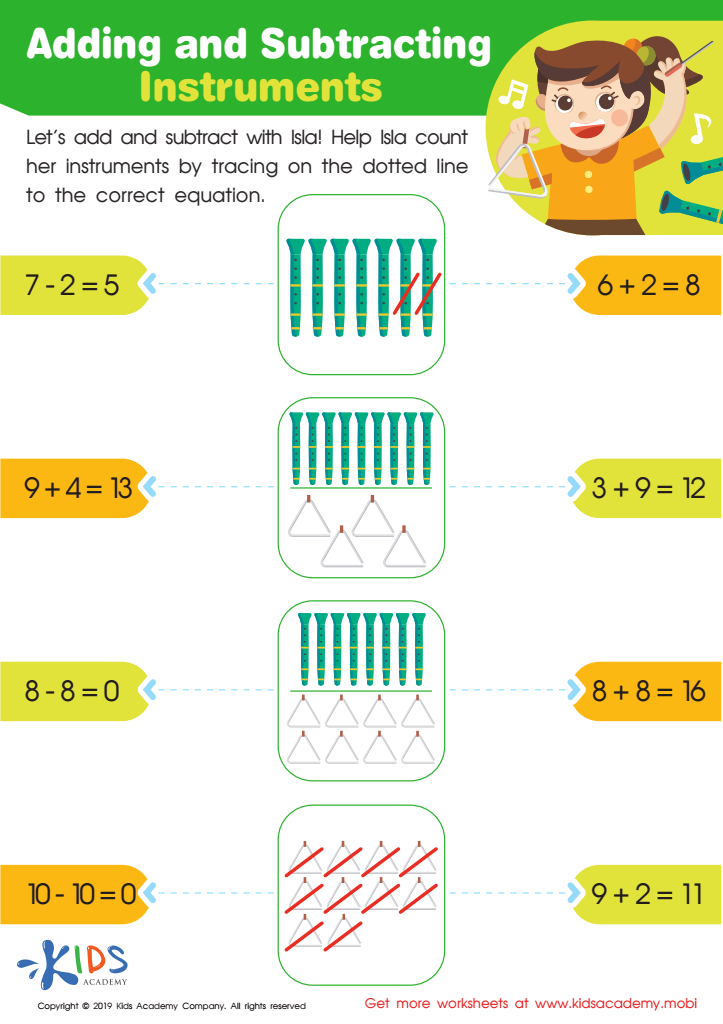
Adding and Subtracting: Instruments Worksheet
Children can help Isla count her musical instruments with this fun worksheet. The downloadable PDF gives them a chance to practice addition and subtraction by connecting pictures to equations. It's also a great way to learn the order of operations.
 Assign to My Students
Adding and Subtracting: Instruments Worksheet
Worksheet
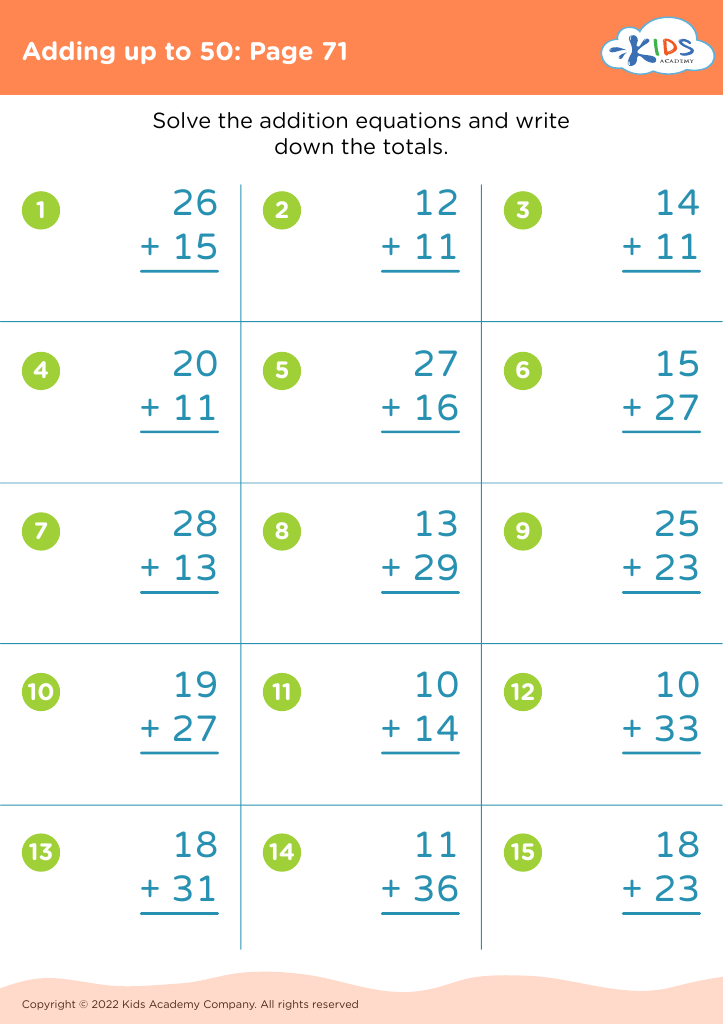
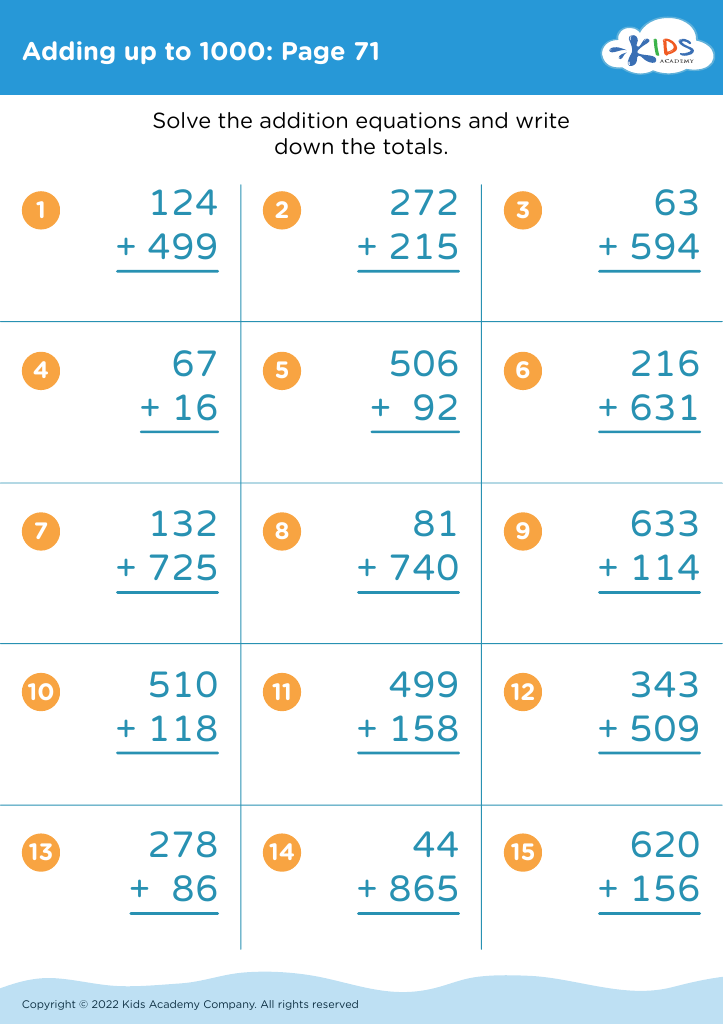
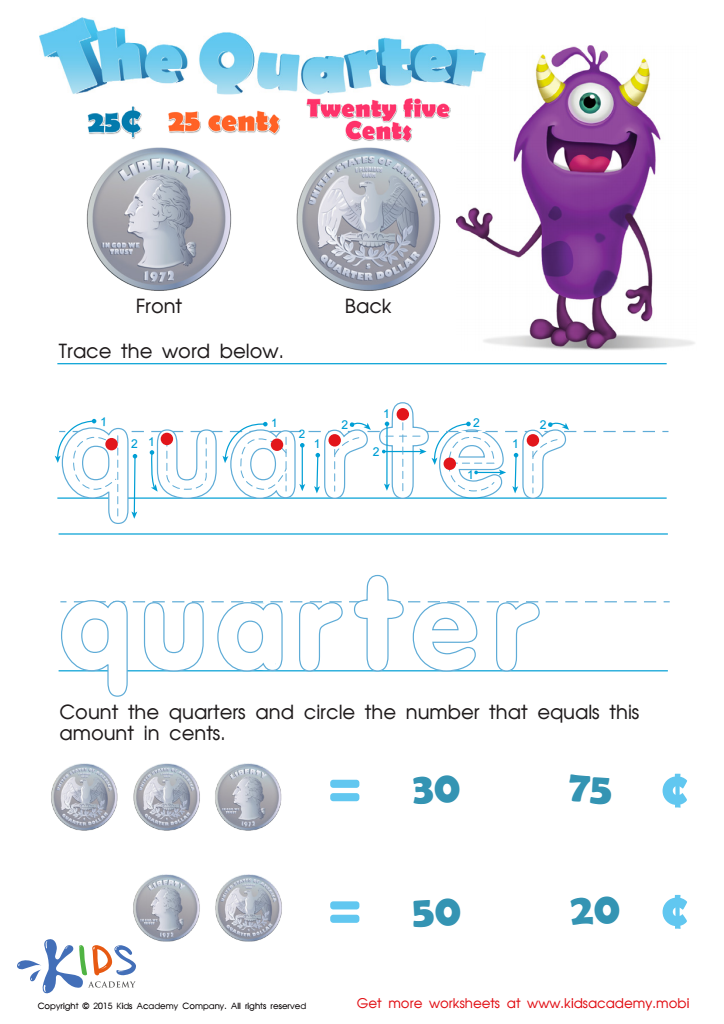
Twenty Five Cents or the Quarter Money Worksheet
Check out our new printable money games - learn to count money easily! With quarters, trace the word, count them and calculate the amount in cents. More worksheets at our website. Give it a try!
Twenty Five Cents or the Quarter Money Worksheet
Worksheet
Join Kids Academy for Free
Who is primarily going to use this learning content?






Mathematical skills for 7-year-olds are crucial for multiple reasons, both immediate and long-term. At this developmental stage, children begin to build on their basic understanding of numbers, shapes, and patterns, which forms the foundation for more complex problem-solving skills. These abilities are not only necessary for tackling higher mathematics in later school years but are also essential for everyday tasks such as telling time, handling money, and measuring ingredients in recipes.
Early math skills also significantly contribute to cognitive development. Understanding math concepts enhances logical thinking and improves memory. By solving math problems, children learn to think critically and develop persistence, learning to face and overcome challenges with confidence. These skills are applicable beyond mathematics, influencing capabilities in subjects like science and technology, which are increasingly relevant in today's digital age.
Moreover, early proficiency in math fosters a positive attitude towards learning. Success in mastering foundational math can boost a child's self-esteem and academic confidence, setting a trajectory for future scholastic achievement. Parents and teachers play crucial roles in this process by providing supportive environments, encouraging curiosity, and offering appropriate resources and reinforcement to ensure children develop strong mathematical foundations. Engaging with math at an early age sets children up for a lifetime of opportunities and success.








