
Pattern identification Worksheets for 7-Year-Olds
6 filtered results
Difficulty Level
Grade
Age
-
From - To
Subject
Activity
Standards
Our Pattern Identification Worksheets for 7-Year-Olds provide an engaging way for children to develop critical thinking and problem-solving skills. Designed with colorful illustrations and fun activities, these worksheets help kids recognize and predict patterns, fostering essential math and cognitive skills. Perfect for classroom or home use, each worksheet incrementally challenges children's abilities, making learning enjoyable and effective. Ideal for parents and teachers seeking resources to support early learning, our worksheets are a proven tool to boost a child’s confidence and academic growth. Download now to give your 7-year-old a head start in mastering pattern recognition!
Favorites
With answer key
Interactive
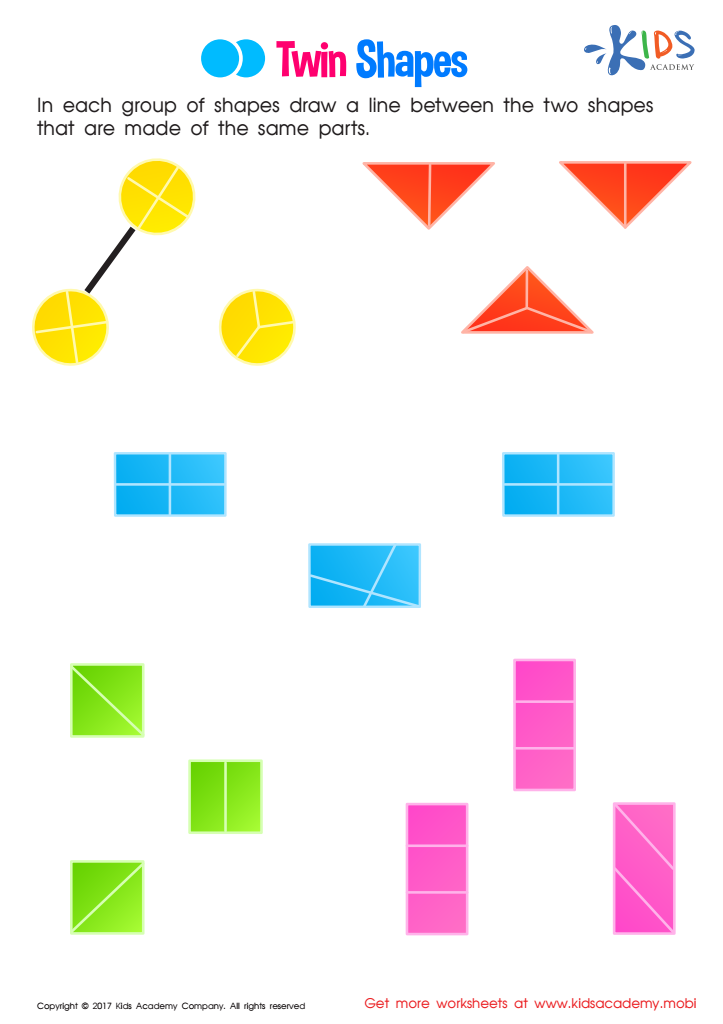
Twin Shapes Worksheet
Your students' goal in this worksheet is to find the twin shapes: drawing a line between two shapes made of the same parts. Likely, the first shapes encountered were circles, triangles, rectangles and squares - examples of which are seen frequently in everyday life. Encourage them to apply what they know and work out which is the twin shape!
 Assign to My Students
Twin Shapes Worksheet
Worksheet
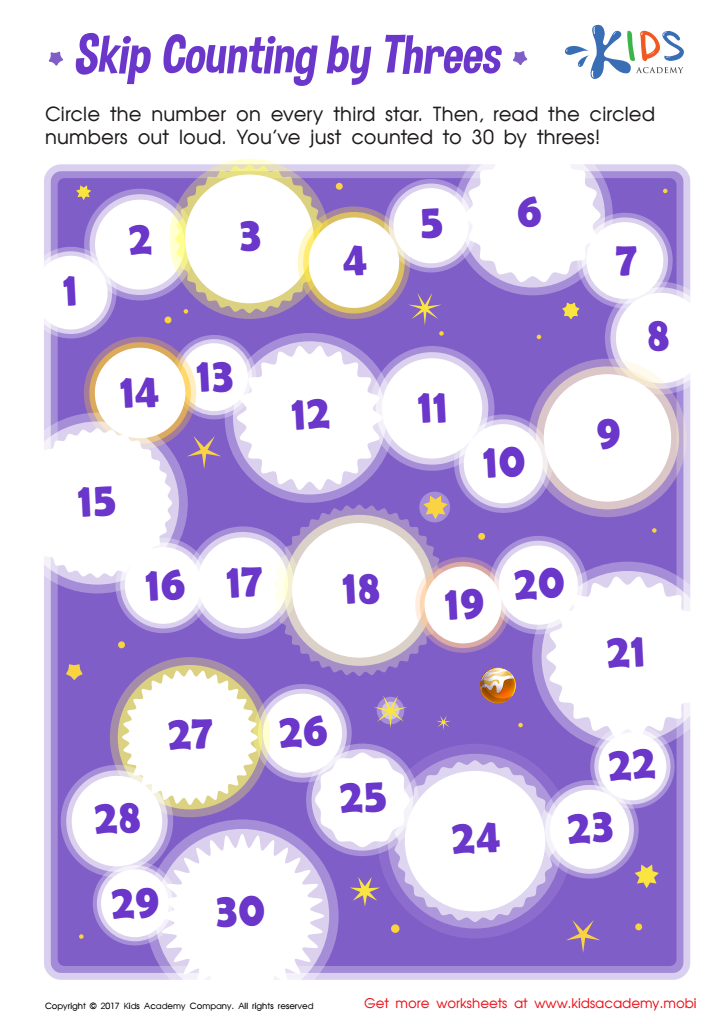
Skip Counting By Three Printable
Inspire your child with this star-themed skip counting worksheet! It offers a fun way to learn while providing a foundation for more advanced math skills, like adding, subtracting, and multiplication. It will help your child gain a sense of numeracy, practice problem solving, and stay ahead in math.
Skip Counting By Three Printable
Worksheet
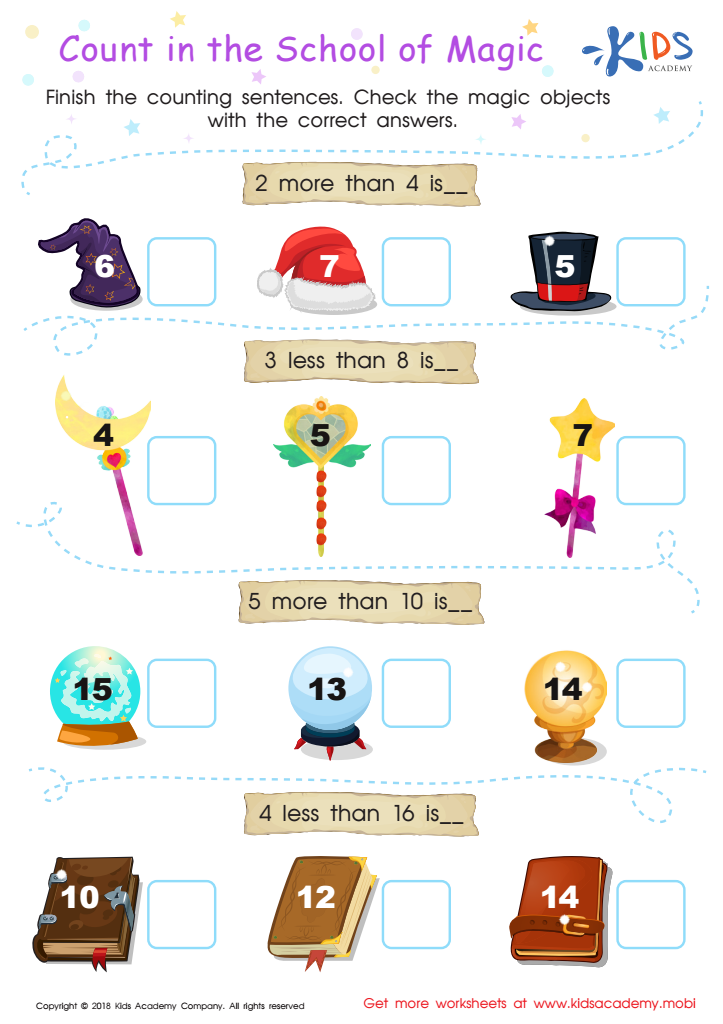
Count in the School of Magic Worksheet
Your math learners can explore the School of Magic with this worksheet. They'll read equations with addition and subtraction numbers under 20, count back and forth to find the answer, then complete the counting sentences. Fun pictures and easy accuracy make it an enjoyable and successful learning experience.
Count in the School of Magic Worksheet
Worksheet
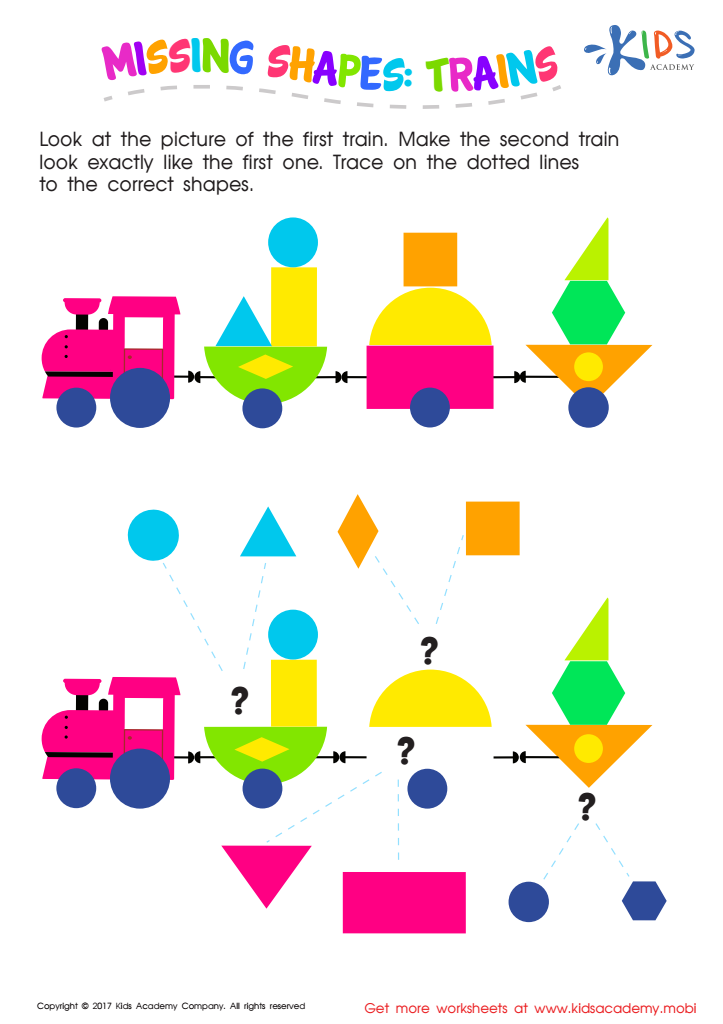
Missing Shapes: Trains Worksheet
Before beginning, ask your child what the object in the picture is, the sound it makes and where it can be found. If they know, confidently move on. Help them make the second train look like the first by tracing dotted lines. Hold their hand for guidance.
Missing Shapes: Trains Worksheet
Worksheet
Join Kids Academy for Free
Who is primarily going to use this learning content?







Pattern identification is a critical skill that should be nurtured in 7-year-olds by both parents and teachers, as it lays the foundation for several key areas of cognitive and academic development. At this stage in a child's life, their brains are highly receptive to recognizing and internalizing patterns, which are essential for understanding the world around them.
Patterns help children make sense of their environment, whether they're identifying a series of shapes, recognizing rhythms in music, or observing sequences in daily routines. These abilities are not only applicable to specific subjects like mathematics, where understanding number patterns can make arithmetic and algebra easier, but they also cross over into reading and writing. Recognizing patterns in phonics, syntax, and story structure can improve literacy skills.
Moreover, pattern recognition fosters critical thinking and problem-solving abilities. By learning to observe regularities and irregularities, children are better equipped to predict outcomes, solve puzzles, and develop logical reasoning skills. This not only boosts their academic performance but also enhances their creativity and adaptability.
Lastly, engaging in activities that promote pattern identification—such as playing puzzles, sorting objects, or exploring nature—can be inherently enjoyable, thereby making learning a positive and rewarding experience. Overall, pattern identification is a vital cognitive skill that supports a wide range of developmental milestones and enriches a child's educational journey.








