Check out this FREE "Shape identification" Trial Lesson for age 7!

Counting Faces 3D

Favorites
With answer key
Interactive
  • 7
  • Shape identification
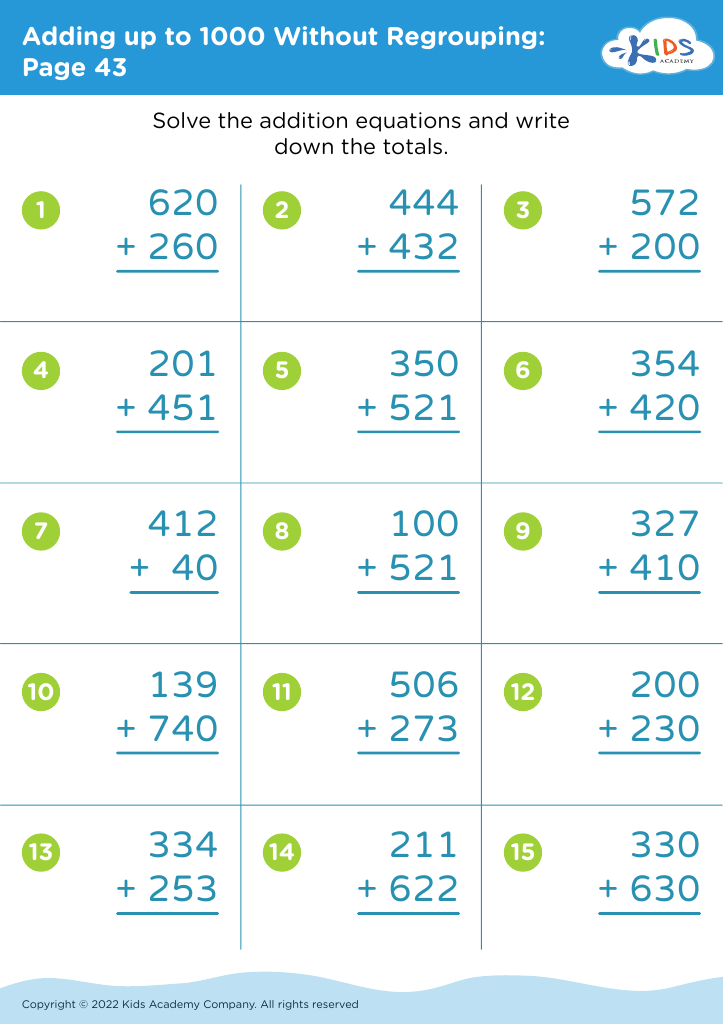
Adding up to 1000 Without Regrouping: Page 43
Worksheet
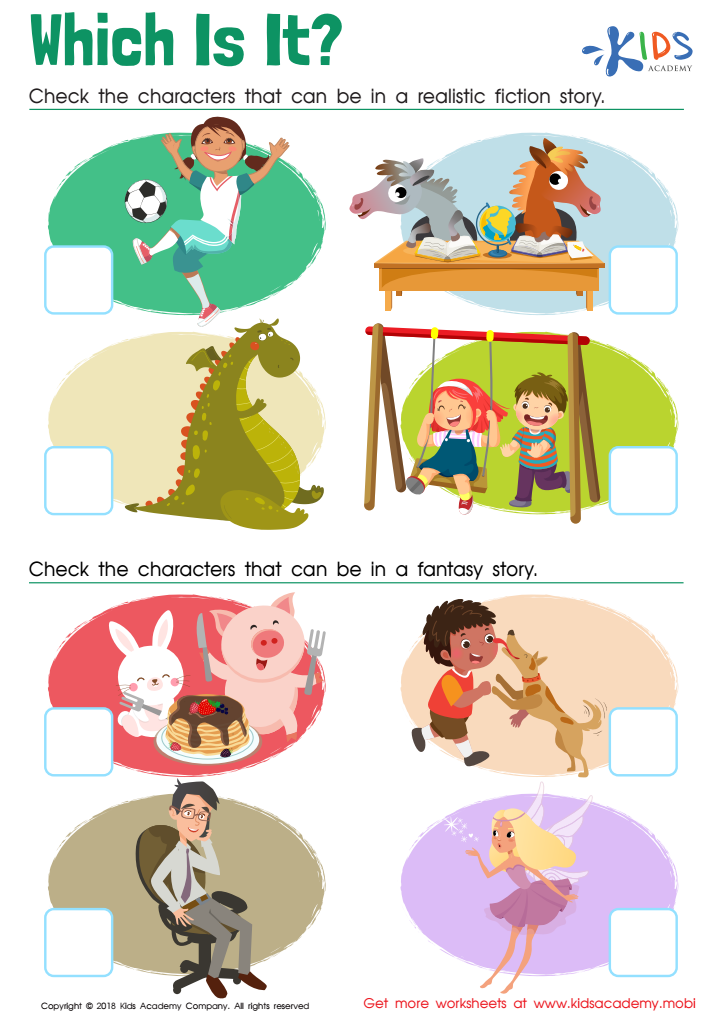
Which Is It? Worksheet

Which Is It? Worksheet

This colorful worksheet helps young readers identify elements of fact and fiction using fun picture clues. They can check off characters who exist in realistic fiction stories, which makes learning the difference between the two genres fun and engaging.
Which Is It? Worksheet
Worksheet
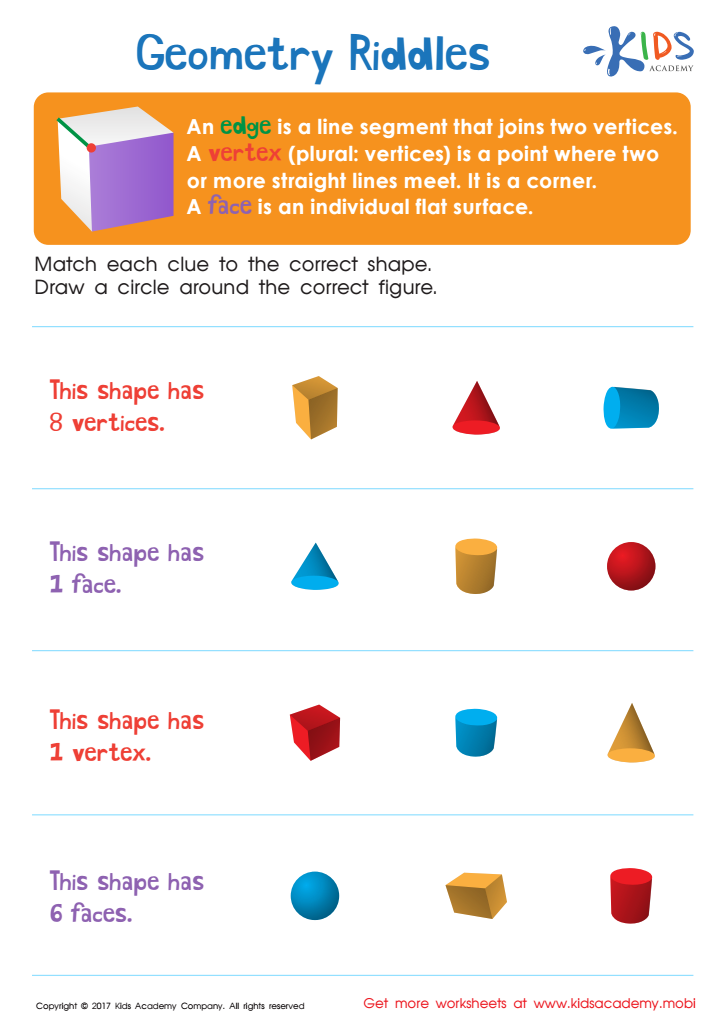
Geometry riddles worksheet

Geometry Riddles Printable

Review geometry terms with your child using this challenging worksheet of tricky riddles. Identifying and counting vertices, edges, and faces of shapes becomes fun as they solve the riddles!
Geometry Riddles Printable
Worksheet
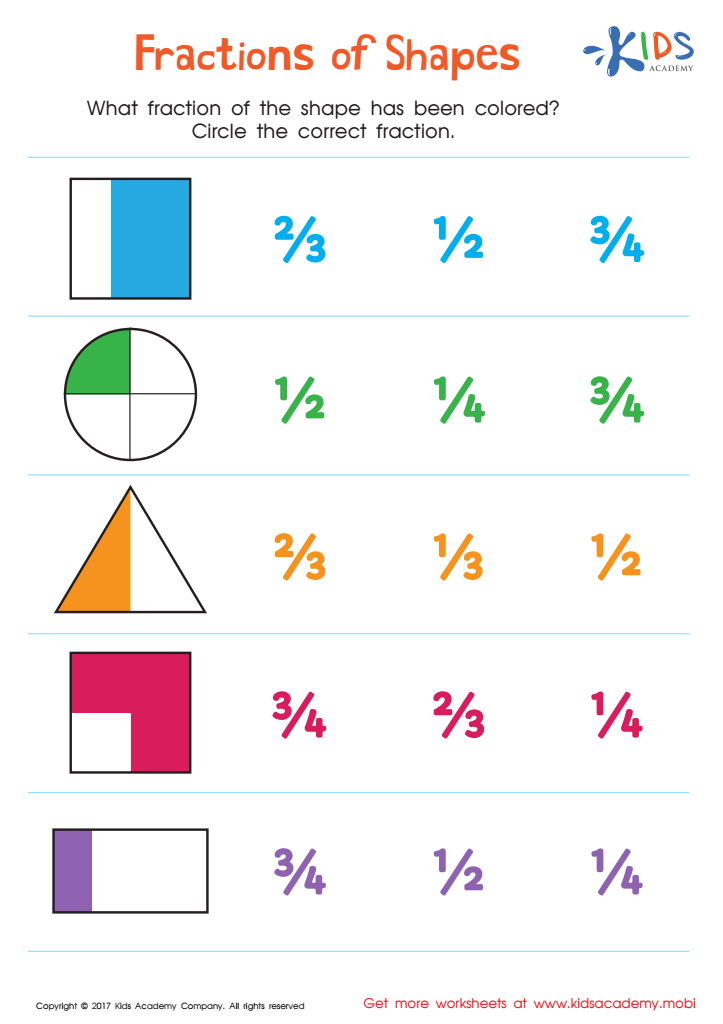
Fractions of shapes worksheet

Fractions of Shapes: Math Concept Worksheet
Fractions can be tricky, but with pictures to illustrate them, they become much easier to understand. Our fractions of shapes worksheet is a great way to help children visualize fractions and gain a better understanding of them.
Fractions of Shapes: Math Concept Worksheet
Worksheet
Check Memory Worksheet


Check Memory Worksheet
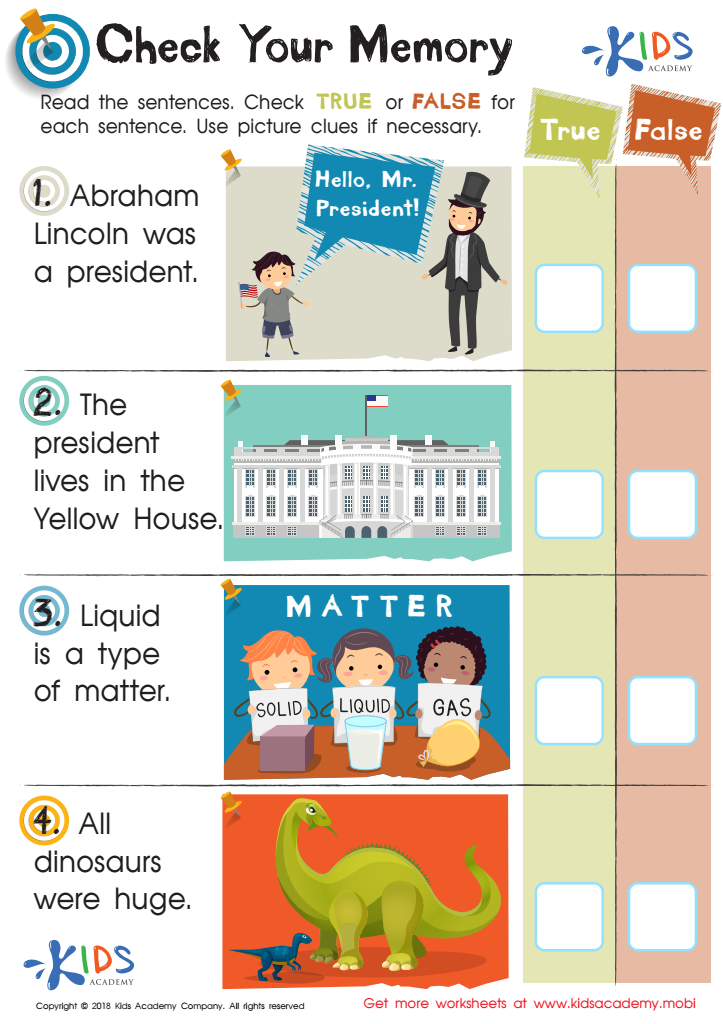
Assisting your kids with their homework and using worksheets is a great way for them to learn. The vibrant visuals in this printout can help stimulate the mind and motivate your child. Have them read the sentences and then point to the associated images. Afterwards, ask them to state True or False for each sentence. If they are still uncertain, offer them the picture clues to assist further.
Check Memory Worksheet
Worksheet
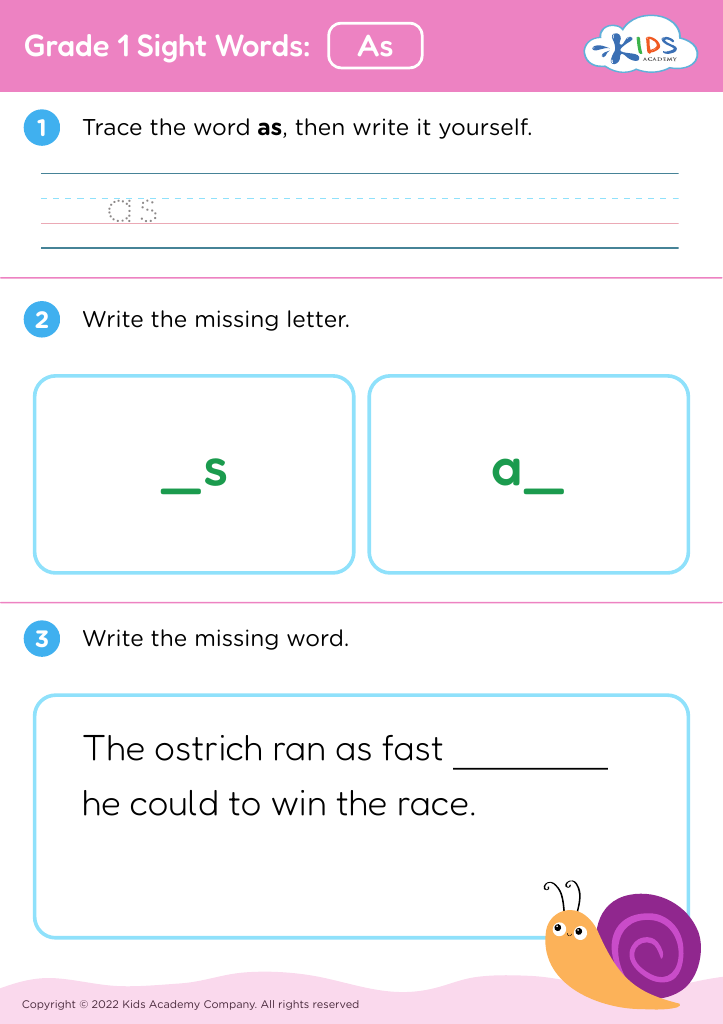
Grade 1 Sight Words: As

Grade 1 Sight Words: As

Grade 1 Sight Words: As
Worksheet


Shape identification is vital for 7-year-olds as it lays the foundation for various cognitive skills and future academic success. At this age, children are not only refining their visual-spatial awareness but also enhancing critical thinking and problem-solving abilities. Recognizing shapes helps them categorize and make sense of their environment, which is essential for subjects like mathematics and geometry.

Furthermore, understanding shapes promotes creativity in art and practical applications in architecture. It aids in developing fine motor skills through activities such as drawing and crafting by encouraging children to create and manipulate shapes.

Teachers and parents should encourage shape identification to support children's overall development. It fosters curiosity and boosts confidence as children express themselves through their understanding of shapes. Additionally, this knowledge aids in real-world applications, from understanding patterns in nature to navigating spatial relationships.

Promoting shape identification can also enhance conversational and descriptive language, as children discuss and compare different shapes. In summary, engaging children in shape identification is not just about learning; it is about holistic growth, building a strong academic foundation, and preparing children to navigate and interpret the world around them effectively.