Enhance your child's time-telling abilities with our engaging worksheets designed specifically for 7-year-olds. Our printable resources provide a fun and educational way to master essential clock-reading skills, from understanding analog clocks to practicing with digital time formats. Children will enjoy activities that reinforce both AM and PM concepts, as well as exercises for telling time to the nearest minute. With a variety of colorful illustrations and interactive challenges, these worksheets make learning about time enjoyable and effective. Perfect for classroom use or at-home learning, our time-telling skills worksheets empower young learners to become confident in managing their daily schedules!

Check out this FREE "Time-telling skills" Trial Lesson for age 7!

Cut Circles into Equal Parts and Name them as Fractions Halves and Wholes

Favorites
With answer key
Interactive
  • 7
  • Time-telling skills
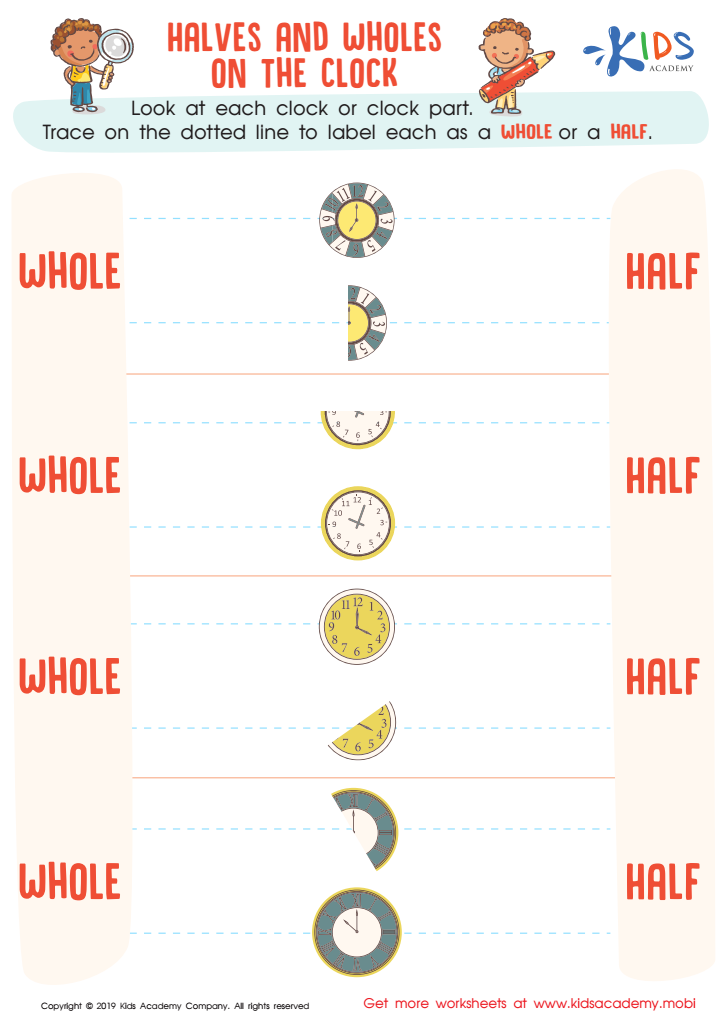
Halves and Wholes on the Clock Worksheet

Halves and Wholes on the Clock Worksheet

Ask your kids if they know the difference between a whole and a half. If not, explain it's when a whole is divided into two equal parts. Show them the worksheet with clocks and clock parts, and help them label each shape as a whole or a half by tracing on the dotted line.
Halves and Wholes on the Clock Worksheet
Worksheet
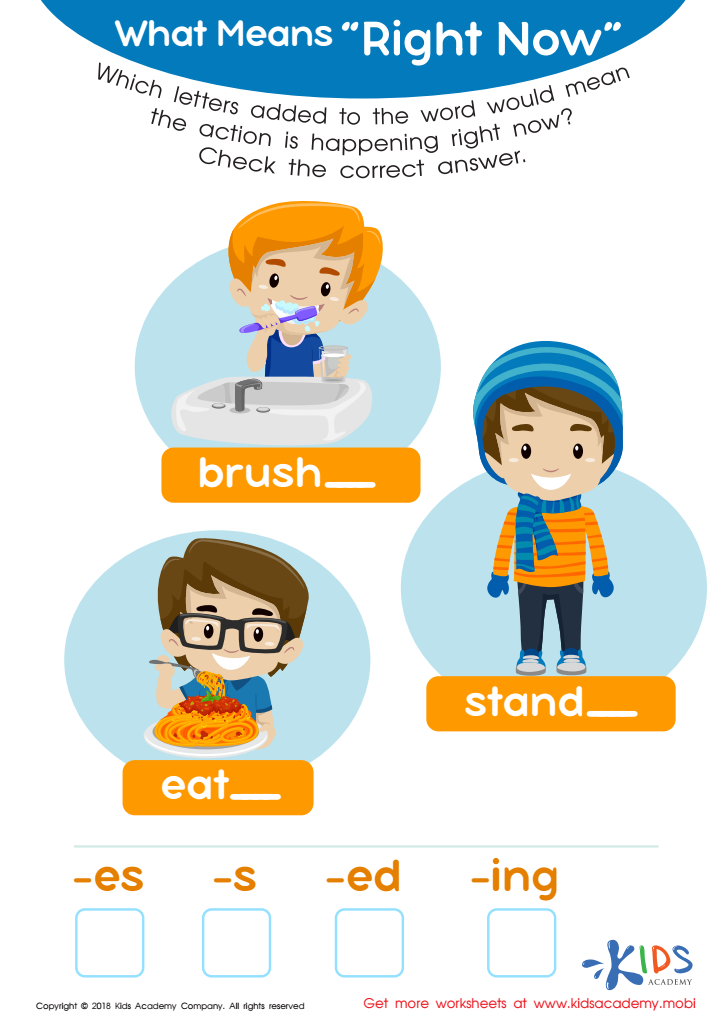
What Means "Right Now" Worksheet

What Means "Right Now" Worksheet

Explain present/past tense verbs to your kids, giving them simple examples. Ask which letters make a verb present tense; read the words aloud and help them check the correct answers.
What Means "Right Now" Worksheet
Worksheet
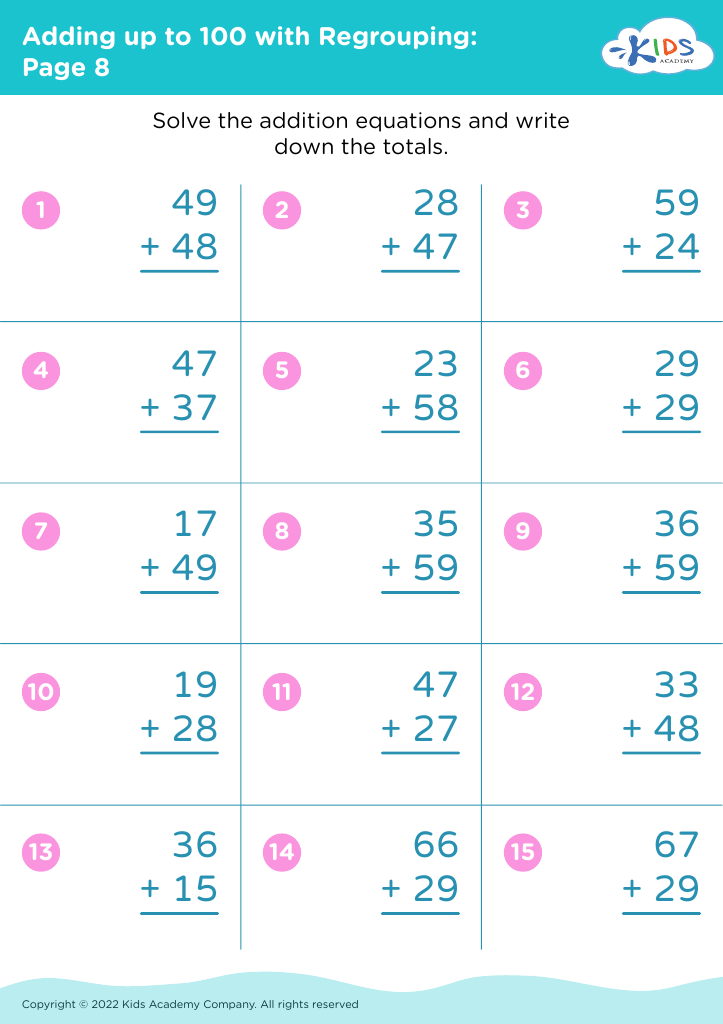
Adding up to 100 with Regrouping: Page 8
Worksheet
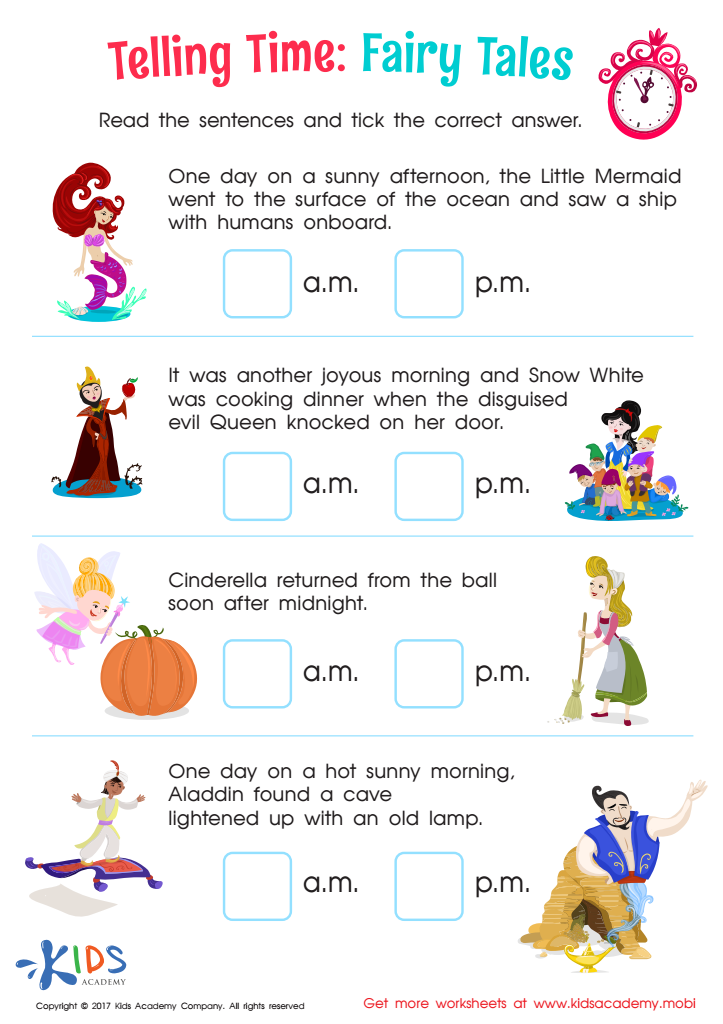
Telling time worksheet: fairy tales

Telling Time: Fairy Tales Worksheet

Bring your child's imagination to life with classic fairy tales! This colorful telling time worksheet has it all: The Little Mermaid, Cinderella, and more! Plus, your child will have fun learning to distinguish a.m. from p.m. with this charming worksheet.
Telling Time: Fairy Tales Worksheet
Worksheet
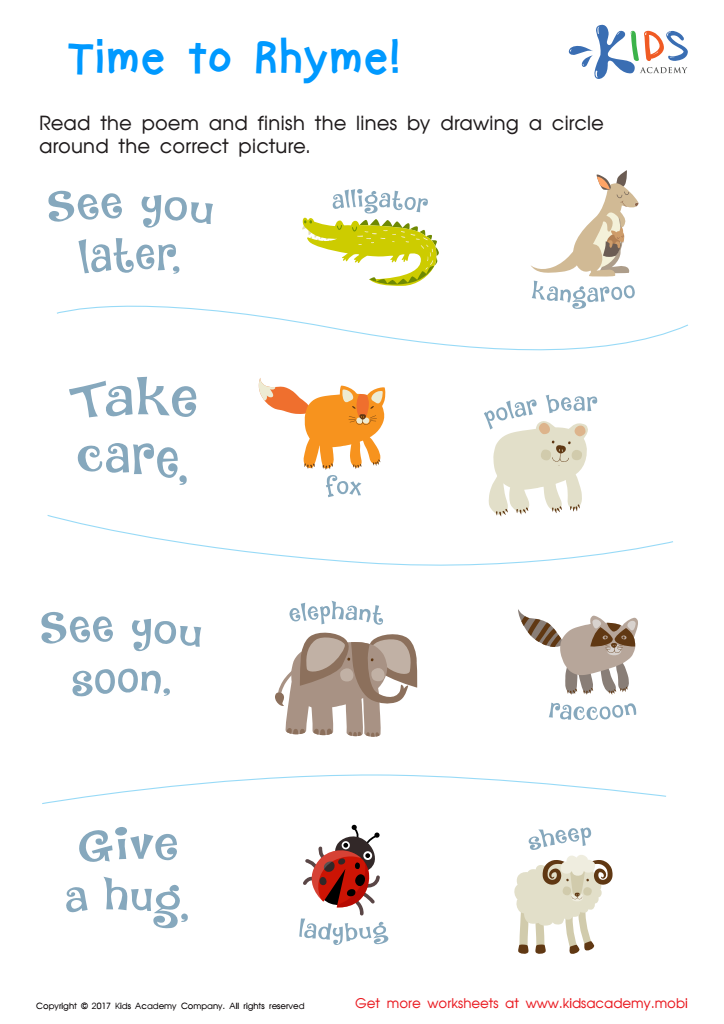
Rhyming Words Worksheet for Kindergarten

Time to Rhyme Rhyming Worksheet

This worksheet helps kids learn catchy sayings with rhymes, notice words and sounds that rhyme, and use problem solving to solve expressions. By using these expressions in everyday talk, kids gain the repetition needed to internalize the skills they've learned. Check out our nursery rhymes to further support them!
Time to Rhyme Rhyming Worksheet
Worksheet
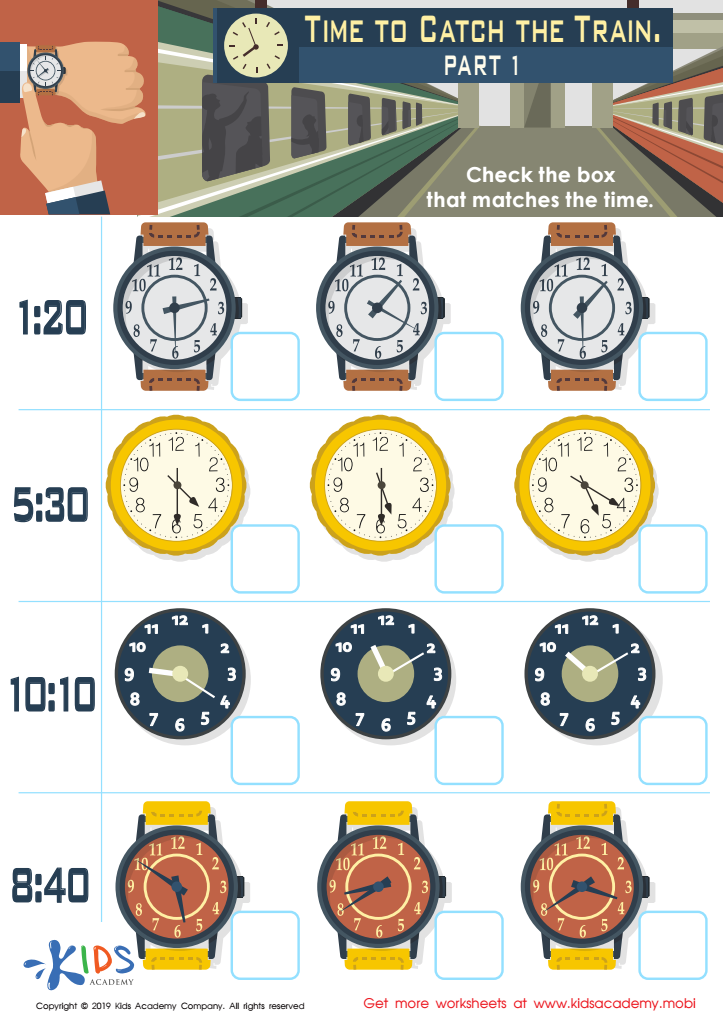
Time to Catch the Train Part 1 Worksheet

Time to Catch the Train Part 1 Worksheet

Time is essential for us; it lets us know when to do various things. Your kids likely wake up at a specified hour and prepare for the school bus. Demonstrate to them that time-telling is vital, and show them there are multiple ways to show time. Point to the time written on the left and the watches in the picture. Assist your children to check the box that corresponds to the time.
Time to Catch the Train Part 1 Worksheet
Worksheet
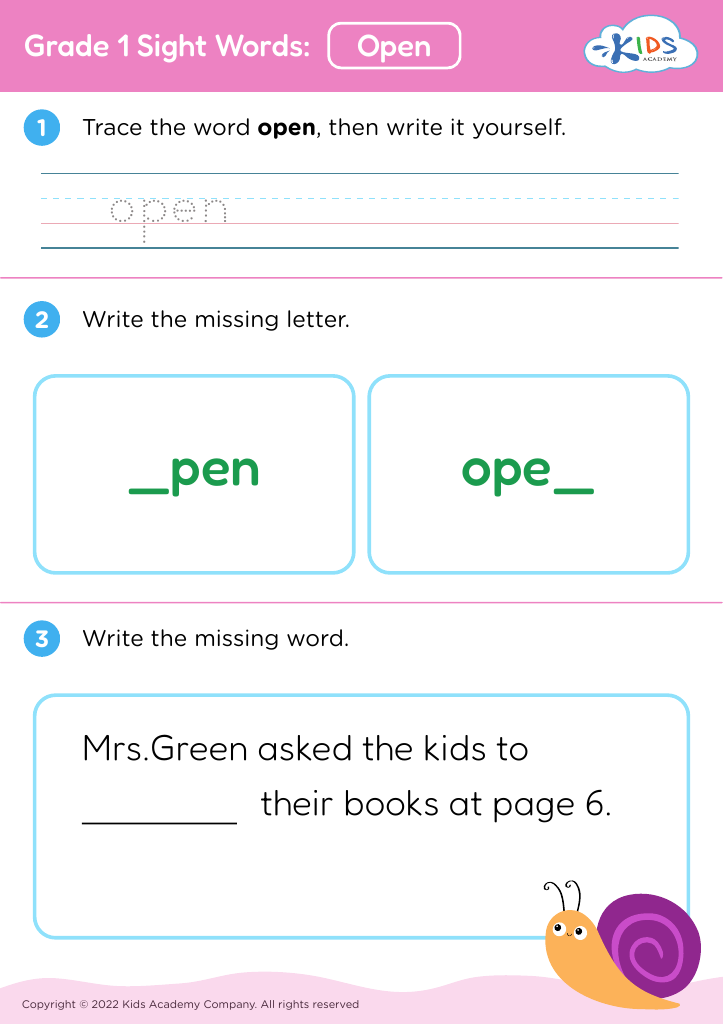
Grade 1 Sight Words: Open

Grade 1 Sight Words: Open

Grade 1 Sight Words: Open
Worksheet


Time-telling skills are essential for 7-year-olds as they play a crucial role in a child's development and everyday life. Mastering these skills enhances a child's understanding of routines and responsibilities, thereby fostering independence. By learning to tell time, children gain a sense of control over their schedules, which helps them manage activities such as school, chores, and leisure, thereby supporting time management skills that are vital as they grow older.

Furthermore, time-telling is intertwined with critical cognitive abilities including problem-solving, spatial awareness, and abstract thinking. As children grasp concepts like hours, minutes, and the functioning of both analog and digital clocks, they develop mathematical foundations that can enhance future learning.

In addition, good time-telling skills promote social and emotional growth. Knowing how to read time allows children to adhere to social norms, such as arriving on time for school or playdates, helping build friendships and a sense of belonging.

Ultimately, prioritizing time-telling skills empowers children to navigate their world more effectively, equipping them with essential tools for personal development and reinforcing the importance of structure and punctuality in their lives.