
Understanding habitats Worksheets for 7-Year-Olds
5 filtered results
Difficulty Level
Grade
Age
-
From - To
Subject
Activity
Standards
Discover the enchanting world of habitats with our "Understanding Habitats Worksheets for 7-Year-Olds"! Selected to shed light on various living environments, these engaging worksheets help young learners dive into topics like deserts, forests, oceans, and more. Designed to foster curiosity, each worksheet combines fun activities with educational content to enhance comprehension and retention. Ideal for home or classroom use, they support developing critical thinking, along with science and observational skills. Make exploring nature’s diversity an adventure your child will love! Check out the Kids Academy to unlock a realm of irresistible learning opportunities today.
Favorites
With answer key
Interactive
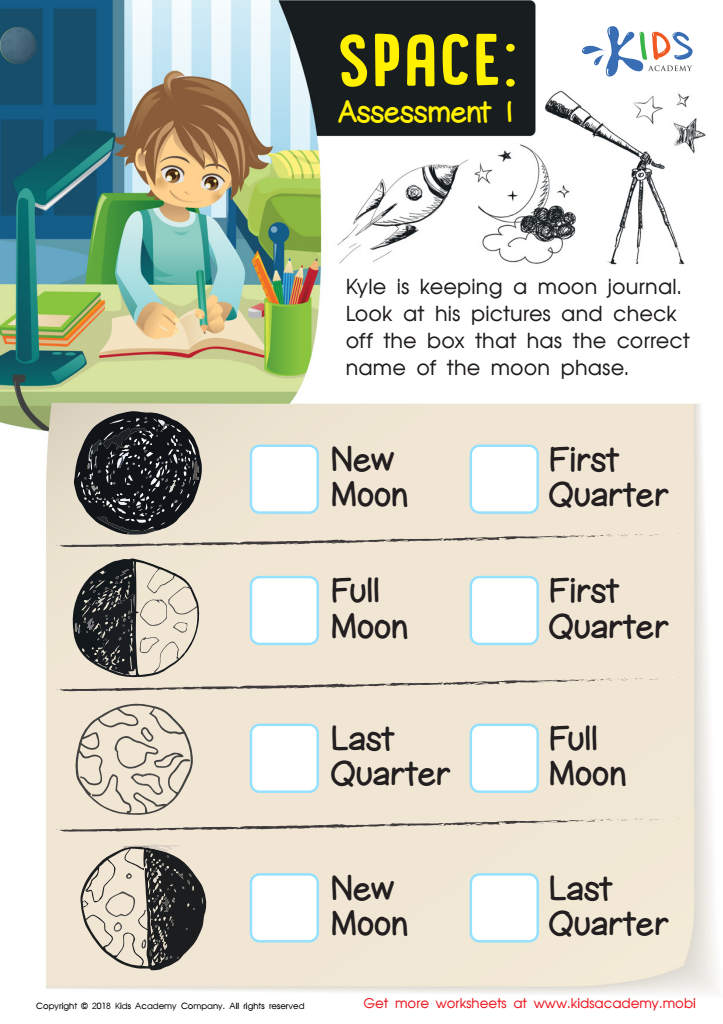
Space: Assessment 1 Worksheet
Introduce Kyle and his moon journal to your kids! Ask if they know what it is, or if they keep one too. Together, look at Kyle's pics and help them identify the phases of the moon. Have them check off the correct name of each. It's a great way to get kids interested in space!
 Assign to My Students
Space: Assessment 1 Worksheet
Worksheet
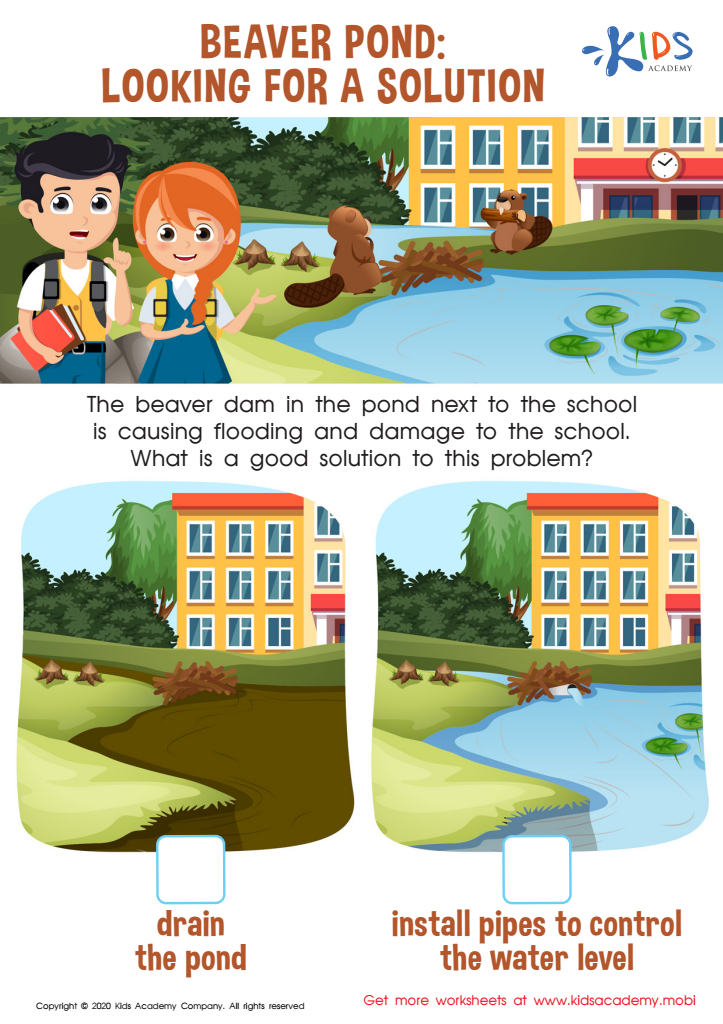
Beaver Pond: Looking for a Solution Worksheet
Beavers are building dams and flooding the local pond! Help your child practice problem-solving skills by reading through and selecting from possible solutions, with this fun PDF worksheet. See how your child's skills are improved!
Beaver Pond: Looking for a Solution Worksheet
Worksheet
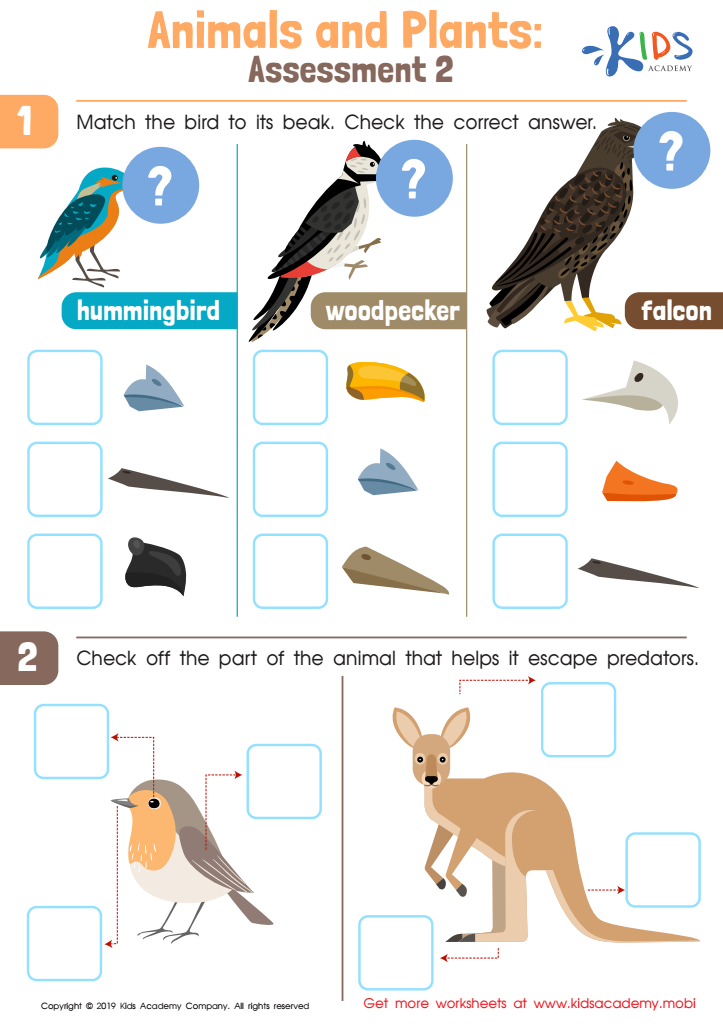
Animals and Plants: Assessment 2 Worksheet
This free PDF is ideal to quickly test your child's knowledge of animal adaptations. They'll select the right beak patterns for hummingbird, woodpecker and falcon, and identify which parts of animals help them escape predators. It's easy to assess your kid's understanding.
Animals and Plants: Assessment 2 Worksheet
Worksheet
Join Kids Academy for Free
Who is primarily going to use this learning content?






Understanding habitats is crucial for 7-year-olds because it lays a foundation for environmental awareness and appreciation of nature. At this age, children are naturally curious and ready to absorb information about the world around them. Learning about various habitats—such as forests, oceans, deserts, and wetlands—helps them understand how different plants and animals adapt and thrive in their specific environments.
This knowledge fosters a sense of responsibility and respect for wildlife and natural resources. It encourages children to think about the impacts of human activities on these habitats and the importance of conservation efforts. Moreover, learning about habitats can integrate seamlessly with subjects like science, geography, and even art, making education more interdisciplinary and engaging.
For parents and teachers, introducing this topic can be an excellent way to instill critical thinking skills and encourage children to ask questions about how living things are interconnected. This early exposure can also spark lifelong interests in biology, ecology, and environmental science, potentially guiding future academic and career pursuits. Overall, understanding habitats at a young age can cultivate a generation that values and actively participates in preserving our planet’s biodiversity. Therefore, it's important for both parents and teachers to prioritize this aspect of learning.








