Understanding sequencing Worksheets for 7-Year-Olds
10 filtered results
-
From - To
"Understanding Sequencing Worksheets for 7-Year-Olds" offers engaging and educational resources to help young learners develop crucial sequencing skills. These worksheets are designed to enhance children's ability to understand and organize events, stories, and processes in a logical order. Our worksheets feature fun, kid-friendly activities that promote critical thinking, comprehension, and problem-solving. By using relatable scenarios and colorful illustrations, kids stay motivated and engaged while mastering sequencing concepts. Perfect for both classroom and home use, these worksheets ensure that learning remains enjoyable and effective, helping set a foundational skill that is vital for future academic success.
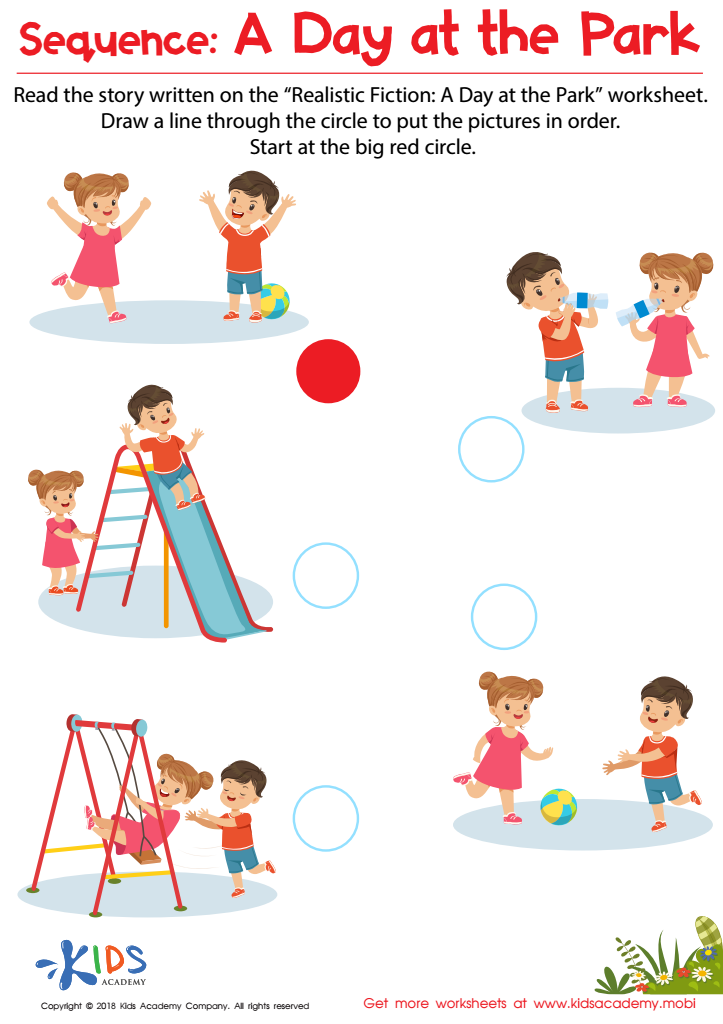
Sequence: A Day at the Park Worksheet
 Assign to My Students
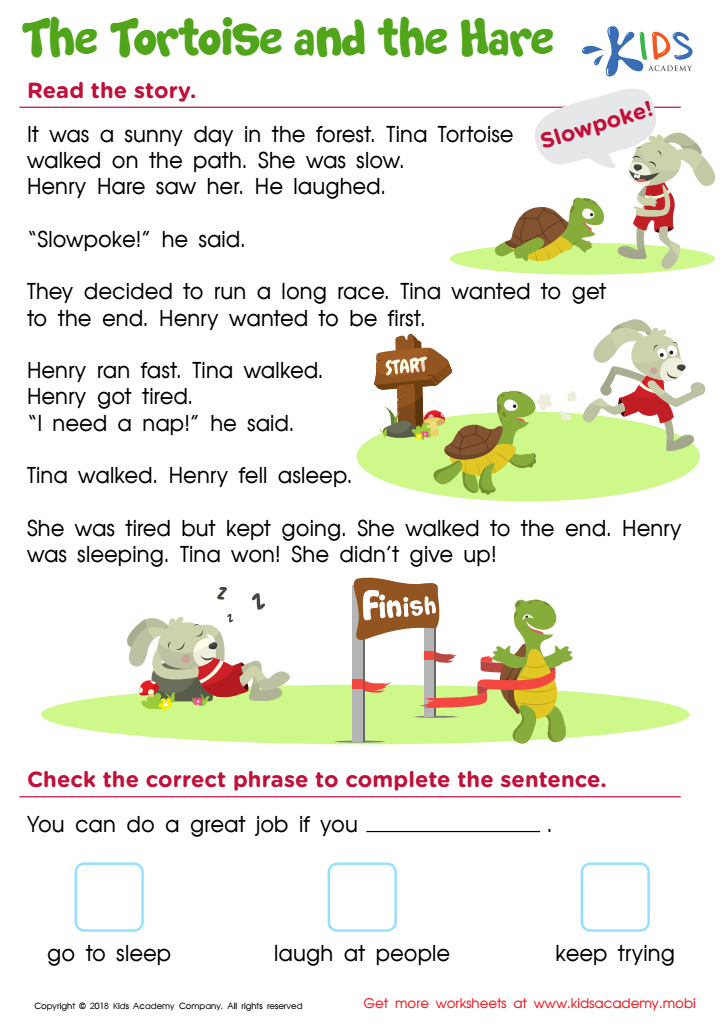
The Tortoise and the Hare Worksheet





Understanding sequencing is crucial for 7-year-olds as it underpins numerous essential skills in both academic and everyday contexts. Sequencing refers to the ability to understand and organize events, information, or actions in a specific, logical order. For young children, mastering this skill aids in reading comprehension, as it helps them grasp the narrative structure of stories — knowing what happens first, next, and last enhances their understanding and retention.
In mathematics, sequencing is foundational for learning concepts such as number order, patterns, and eventually more complex problem-solving strategies. Furthermore, following directions and daily routines heavily rely on recognizing and executing sequences. For instance, in a classroom setting, a child needs to follow multi-step instructions accurately, which is a form of sequencing.
Developing strong sequencing skills also enhances executive functioning, promoting better planning and organization abilities. Socially, children who can sequence can more easily engage in structured play, understand the flow of conversations, and relate events during interactions.
Lastly, academic curricula often incorporate sequencing activities (like sorting tasks, storytelling, or ordering events). Teachers and parents who prioritize this skill help set a solid foundation for children's future learning, problem-solving, and successfully navigating various life situations.








