
Visual discrimination Worksheets for 7-Year-Olds
10 filtered results
Difficulty Level
Grade
Age
-
From - To
Subject
Activity
Standards
Enhance your child's ability to recognize differences and similarities in images with our Visual Discrimination Worksheets for 7-Year-Olds. Designed to bolster critical learning skills, these engaging worksheets help children improve their attention to detail, concentration, and observational prowess. Perfect for young learners, our printable activities feature an array of captivating visuals that will keep them entertained while subtly enhancing their cognitive abilities. These worksheets are an excellent resource for both classroom and home use, providing foundational skills needed in reading, writing, and everyday problem-solving. Transform learning into a fun experience with our comprehensive collection today!
Favorites
With answer key
Interactive
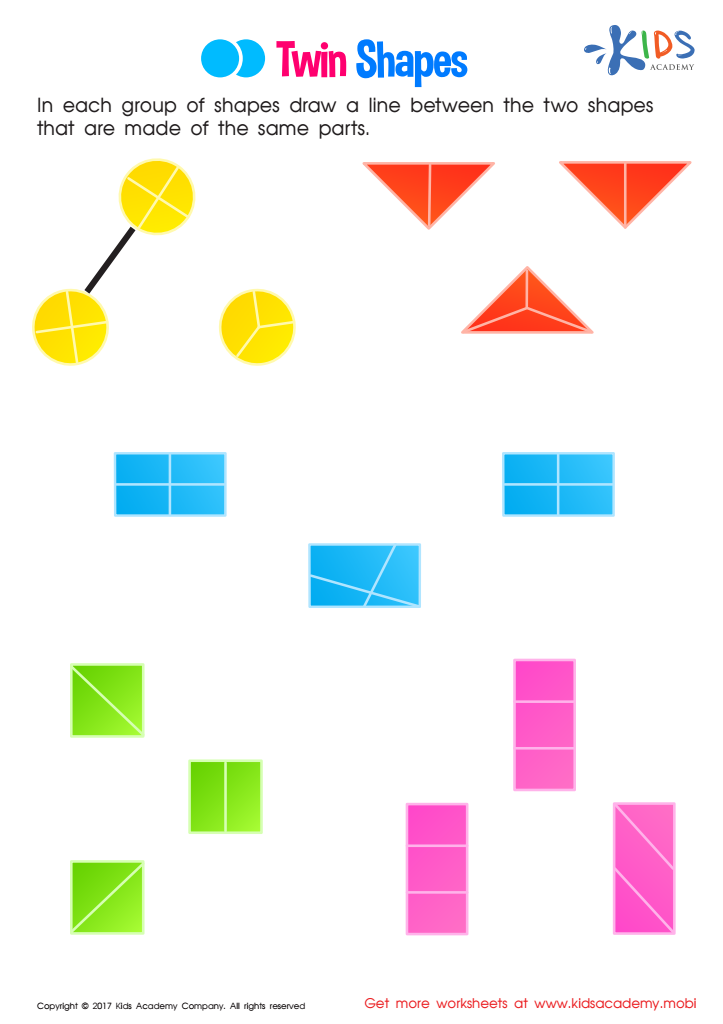
Twin Shapes Worksheet
Your students' goal in this worksheet is to find the twin shapes: drawing a line between two shapes made of the same parts. Likely, the first shapes encountered were circles, triangles, rectangles and squares - examples of which are seen frequently in everyday life. Encourage them to apply what they know and work out which is the twin shape!
 Assign to My Students
Twin Shapes Worksheet
Worksheet
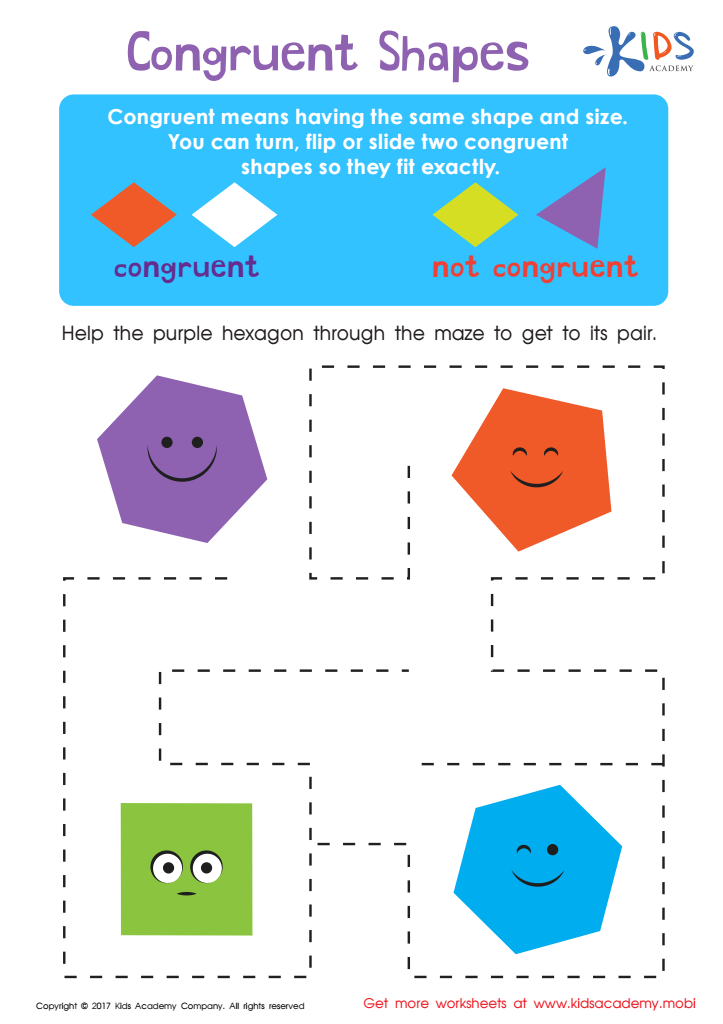
Congruent Shapes Worksheet
Help your child find the twin of the purple hexagon! This congruent shapes worksheet is great for increasing vocabulary while challenging mental rotation skills.
Congruent Shapes Worksheet
Worksheet
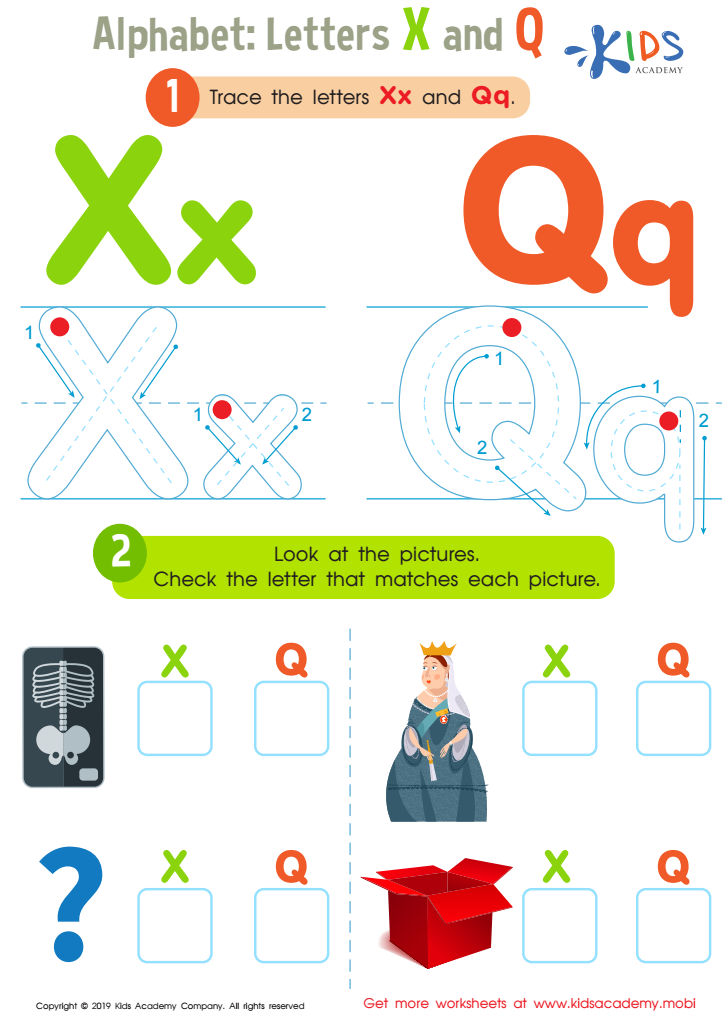
Letters X and Q Tracing Worksheet
Do you want your students to improve writing and letter recognition? This worksheet is a great place to start! Kids can trace the letters «X» and «Q» and identify pictures that match each letter. With a little encouragement, they'll do a great job!
Letters X and Q Tracing Worksheet
Worksheet
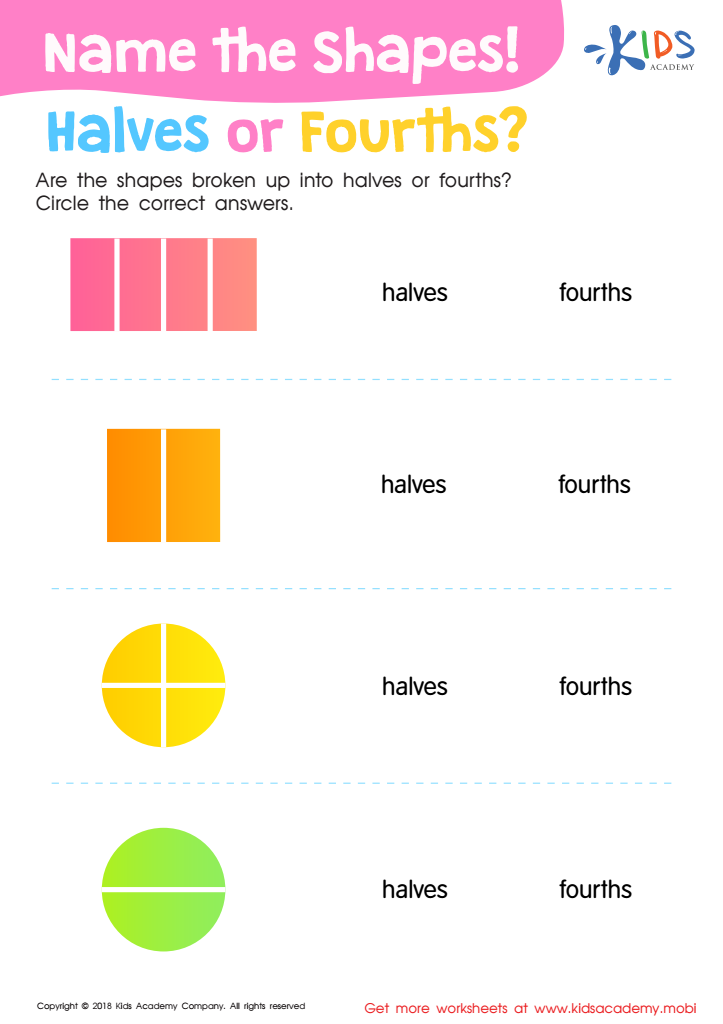
Name the Shapes Halves or Fourths? Worksheet
Before starting, ask your child if they understand what halves and fourths are. If they can answer correctly, move on with the worksheet. Help them circle the right option beside each shape, showing if it's split into halves or fourths.
Name the Shapes Halves or Fourths? Worksheet
Worksheet
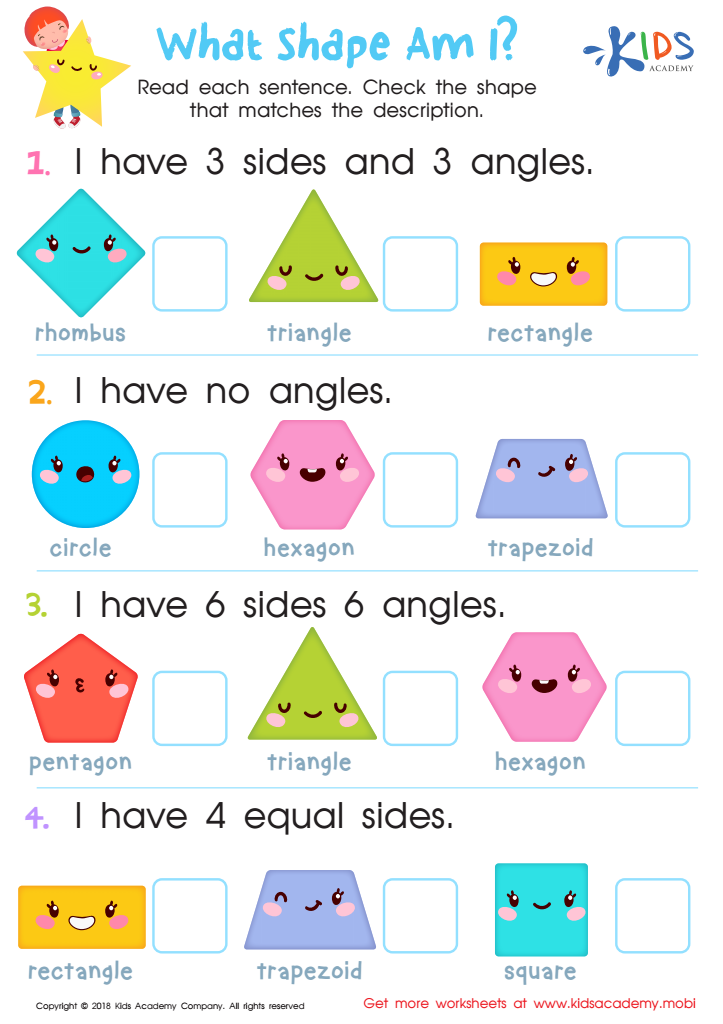
What Shape Am I? Worksheet
Help your child read each sentence in this colorful worksheet. Have them identify the shapes described and check the boxes. To prepare, ask simple questions like "How many sides does a triangle have?" and "Which shape has 4 equal sides?" Your child will become more skilled at shapes by the end of this activity.
What Shape Am I? Worksheet
Worksheet
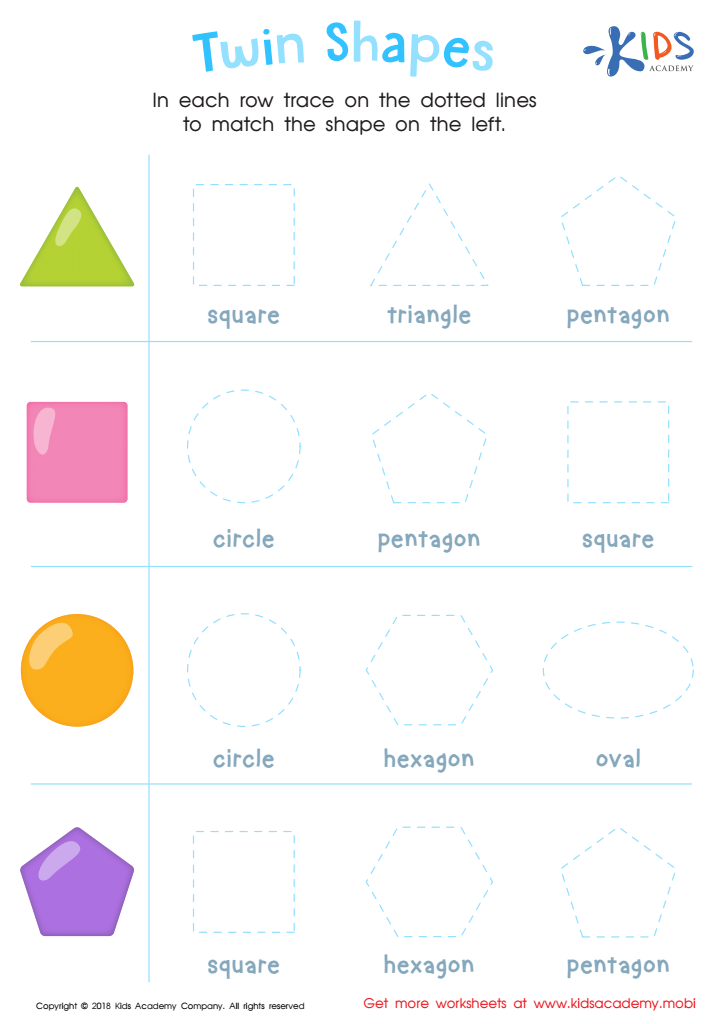
Twin Shapes Dot-to-Dot Worksheet
Test your child's ability to copy with this worksheet. Ask them to find and name the four shapes on the left. Then, they must match each with the dotted lines on the right. Help your child with all four shapes in this fun exercise.
Twin Shapes Dot-to-Dot Worksheet
Worksheet
Join Kids Academy for Free
Who is primarily going to use this learning content?







Visual discrimination is a fundamental skill for 7-year-olds as it greatly impacts their ability to learn and succeed in academic and everyday environments. For parents and teachers, fostering visual discrimination skills is crucial for several reasons.
First, it directly affects reading and writing abilities. Children must distinguish between letters and words that look similar, such as ‘b’ and ‘d’ or ‘was’ and ‘saw’, to read fluently and avoid confusion. This skill also aids in spelling and comprehension, as recognizing and differentiating similar shapes and patterns is essential.
Secondly, visual discrimination supports mathematical development. Identifying numbers, understanding patterns, and solving problems involve recognizing differences and similarities between various symbols and figures. Without strong visual discrimination, children may struggle with basic mathematical concepts, impacting their overall logical and analytical reasoning.
Moreover, visual discrimination is vital for daily tasks and social interactions. From picking the correct clothing to match an activity to reading social cues and facial expressions, this skill helps children navigate their environments more independently and confidently.
In essence, by nurturing visual discrimination skills in 7-year-olds, parents and teachers equip them with the tools necessary for academic success and everyday competency, paving the way for a more confident and capable individual.








